


Vitamin D deficiency is highly prevalent in India, yet no standardized guidelines exist for classifying vitamin D status or its prevention and treatment. Even more, there is no consensus specific to vitamin D supplementation for the Indian population, and there are inconsistencies in the cut-off values for deficiency, severe deficiency, and insufficiency across various existing guidelines.
An expert group of 41 endocrinologists from across India developed the consensus using the DELPHI method, achieving over 90% agreement on all recommendations. The consensus defines vitamin D deficiency, severe deficiency, and insufficiency, recommending supplementation strategies to maintain physiological 25(OH) D levels of 40–60 ng/mL (100–150 nmol/L).
Vit D3 Deficiency – Extent
Vitamin D deficiency is reported worldwide, both in sunshine-deficient and sunshine-sufficient nations, yet it continues to be one of the most underdiagnosed and undertreated nutritional deficiencies.
Findings of a systematic review and meta-analysis have shown that Vitamin D deficiency is highly prevalent among adults from South Asian countries. India is a heliophobic (sun-fearing) nation, with almost 490 million people deficient in vitamin D. In a multicenter study, more than half the Indian children or adolescents were reported to be vitamin D deficient or insufficient—a trend that also applies to Indian adults.
Why Sufficient Levels of Vit D3 are critical
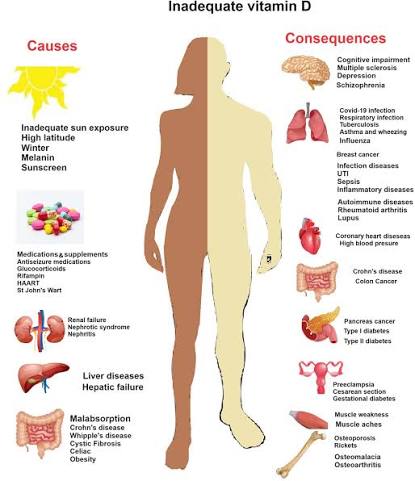
Sufficient serum levels of 25-hydroxyvitamin D (25[OH] D) are required to maintain the skeletal and extra-skeletal physiologic effects. Inadequate vitamin D status is prevalent worldwide, which, apart from the well-known skeletal effects, has also been related to autoimmune disorders, cardiovascular diseases, cancers, insulin resistance, inflammation, neurological disorders, poor pregnancy outcomes, and enhanced mortality risk.

Guidelines from India
The two major bodies, i.e. The Institute of Medicine (IOM) and the Endocrine Society (ES), have different opinions regarding the thresholds for defining Vitamin D deficiency, which are <12.5 ng/ml (31.25 nmol/L) and <20 ng/ml (50 nmol/L), respectively. This discrepancy occurs due to the interpretation of data surrounding the PTH plateau threshold. PTH levels are inversely associated with 25(OH) D.
Institute Of Medicine strictly believes that PTH values decline to a plateau at levels between 15 and 50 ng/ml (37.5 and 125 nmol/L), depending on age, race, ethnicity, body composition, renal function, and geographic location. Endocrine Society believes that PTH begins to plateau in adults who have serum 25-hydroxyvitamin D levels between 30 and 40 ng/ml (75 and 100 nmol/L). Hence the different in cut-off values.
It is also worth considering that the calcium absorptive performance at 20 ng/mL (50 nmol/L) of 25(OH) D is much lower than 34.4 ng/mL (86 nmol/L). This suggests that lower serum 25(OH) D levels may not provide the full benefit of calcium intake.
Recommendations and statements by Group of 41 Endocrinologists
Recommendation 1: Vitamin D deficiency, severe deficiency, and insufficiency can be defined as
-
Deficiency <20 ng/mL (50 nmol/L) of serum 25-hydroxyvitamin D
-
Severe deficiency <10 ng/mL (25 nmol/L) of serum 25-hydroxyvitamin D
-
Insufficiency: 20–30 ng/mL (50-75 nmol/L) of serum 25(OH) D levels.
Recommendation 2: Prevention of vitamin D deficiency in the general population is recommended irrespective of age, physical activity, and lifestyle.
Recommendation 3: The aim of vitamin D3 therapy should be to achieve a physiological 25(OH) D level (40–60 ng/mL or 100–150 nmol/L).
Recommendation 4: If disease-specific practice guidelines are unavailable, strategies for preventing vitamin D deficiency in high-risk groups should be similar to those for the general population.
Recommendation 5: The vitamin D supplement/replacement regimen in adults should be
-
Vitamin D sufficiency – cholecalciferol 60,000IU, once a month
-
Vitamin D insufficiency – cholecalciferol 60,000IU, once a week for 8 weeks (once sufficiency is achieved, transition to cholecalciferol 60,000 IU, once a month)
-
Vitamin D deficiency: Cholecalciferol 60,000 IU, once a week for 12 weeks (once sufficiency is achieved, transition to cholecalciferol 60,000 IU, once a month).
Recommendation 6: Adjusting the dosing regimen to the patient’s preference and supplementing weekly or monthly may positively impact adherence.
Recommendation 7: In the risk groups, the evaluation of vitamin D status, based on a serum 25(OH) D assay, is strongly recommended.
Heliophobia in Indians
With rising income levels, growth of services sector, glamour of white-collar jobs and increasing urbanization have fueled the Heliophobia in India – which is aversion to sun and sunlight. Further damage is being caused by mushrooming cosmetics and skin care companies with race to have highest Sun Protection Factor / SPF in their formulations, thus further indirectly propagating that sun exposure is not good for skin health.
Lesser Time Outside
Less and less Indians are spending time outside rather than inside what with swanky schools, colleges, universities and offices. Even if Indians do step out of homes / offices- this is generally early in the morning or late in the evenings when the levels of UV-B are low, which is critically important for conversion of skin cholesterol to Vit D3. This may potentially also be the reason why we are witnessing hypercholesteremia and associated CVDs in Indians
Darker Skin – Needs More Time Under the Sun
South Asians / Indians with relatively darker skin potentially require longer hours under the sun to help synthesize Vit D3 in the skin. Higher levels of melanin as in Indians mean that more and longer duration of sun exposure is required compared to lighter skin types
Dietary Habits
Although fancy surveys and newer data show that more Indians are non-vegetarians, however, food habits reveal the whole truth. Even among non-vegetarians, consumption of fatty fish, red meat from grass fed goat and sheep and egg yolk consumption is only occasional rather than a regular, daily dietary habit. Vegetarians and Vegans have only our best wishes and supplements to help them meet their daily dietary recommended levels of Vit D3
Vit D2 v/s Vit D3
Vitamin D3 is more effective than D2 at raising and maintaining blood levels of vitamin D because it is absorbed more efficiently and lasts longer in the body. D3 is produced naturally by the skin when exposed to sunlight and is found in animal-based foods, while D2 is plant-derived, primarily from fortified foods and supplements. For most people, D3 is the preferred form, but vegetarians and Vegans are forced to take D2 Supplements which may not truly be sufficient and efficient in overcoming Vit D3 deficiency. So choose wisely,
Source;
Indian Journal of Endocrinology and Metabolism 29(1):p 13-26, Jan–Feb 2025. | DOI: 10.4103/ijem.ijem_264_24