



Science of Nutrition, Lifestyle and Growth: Why Protein, Vitamins, Sleep and Exercise Matter for Height, Strength and Longevity
Height Doesn’t Depend Solely on Your Genes
Many Indian parents believe that height depends almost entirely on genetics. Others believe that one food, one supplement or one “height tonic” can dramatically increase height.
Neither is true. Once genetics establish a child’s growth potential, nutrition becomes one of the strongest modifiable influences on whether that potential is achieved – read that again, good nutrition is cornerstone of your height, health and longevity and this starts from pregnant women.
However, nutrition is not simply about eating enough food. The quality of calories, the quality of protein, the BIO-availability of vitamins and minerals, the health of your gut, the frequency of infections in childhood, sleep, and physical activity all interact with growth hormones to influence height.
Protein: The Building Block of Growth, Strength, Stmina and Longevity
When bones grow longer, muscles enlarge and organs develop, new proteins must constantly be synthesized. Every new cell requires amino acids. Without adequate dietary protein:
-
IGF-1 production declines / Growth plate activity slows
-
Muscle development is impaired / Immune function weakens.
Children do not simply need “more food.” They need adequate high-quality protein, largely animal proteins, whether you like this statement or not but your body and your child’s body – likes and actually preferrs only animal proteins.
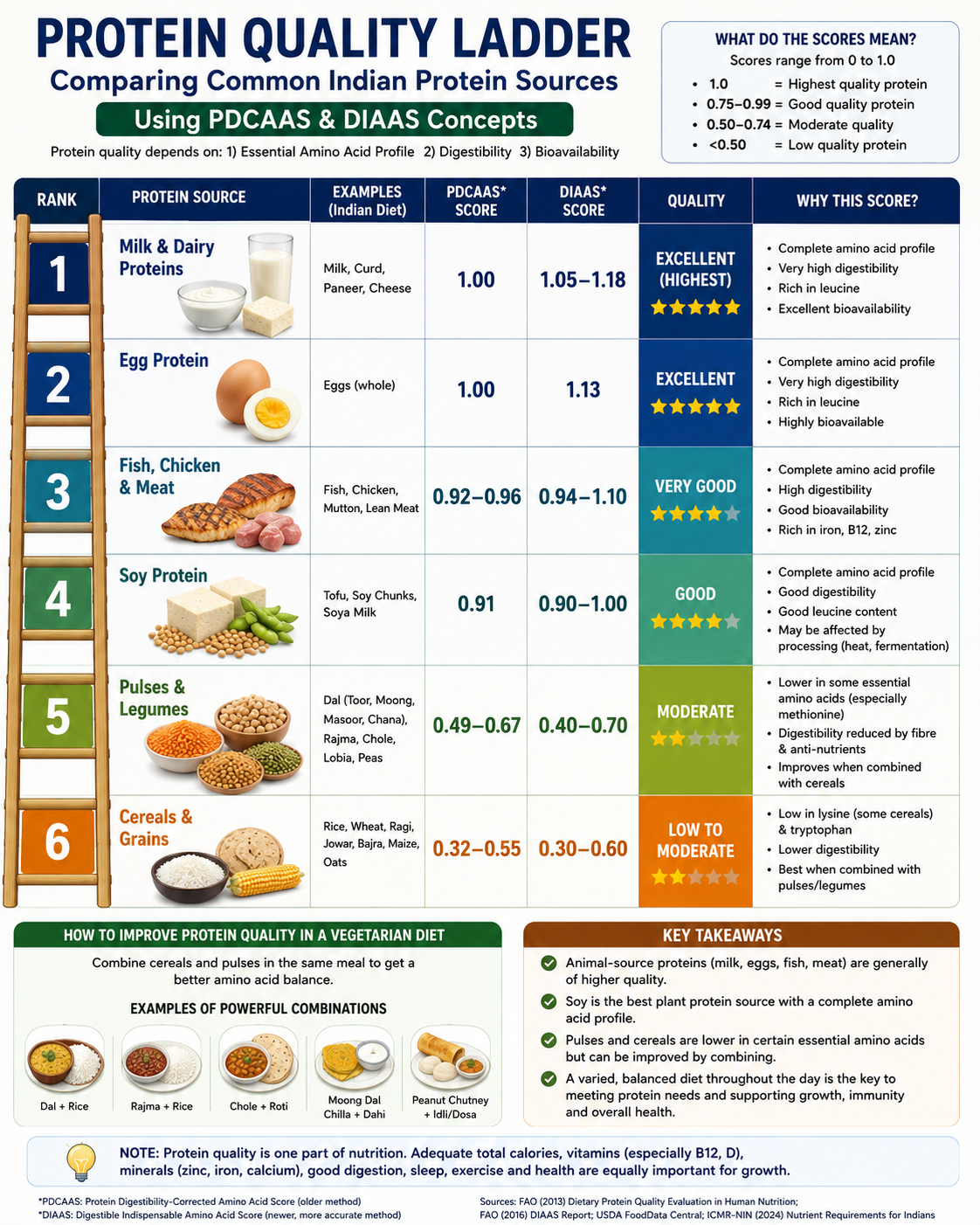
Protein Quality Matters as Much as Protein Quantity
One of the biggest misconceptions in nutrition is that all proteins are identical. They CERTAINLY are not. Proteins differ in: Essential amino acid composition, Digestibility and Bioavailability. Things which your doctore or pediatrician does not share with you. The human body requires nine essential amino acids that cannot be produced internally.
These must come from food. If even one essential amino acid is consistently lacking, protein synthesis becomes less efficient.
Importance of Leucine – Among essential amino acids, leucine plays a particularly important role. Leucine activates mTOR, a key cellular pathway involved in: Muscle protein synthesis, Bone formation and Growth
Foods naturally rich in leucine include: Milk, Yogurt, Cheese, Eggs, Fish, Mutton / Lamb Meat, Chicken – all animal origin foods. Plant Proteins – Soy foods and Lentils (have much lower concentration of Leucine than many animal proteins – hence our comment on unique value of animal origin proteins). Intelligentia misses the big picture with animal origin proteins – that animal origin proteins, meats come together with a bit of high quality animal fat and a whole host of vitamins and minerals, unlike plant foods which do have some not-so-good quality protein but also have high amounts of carbs, which serve only as cheap energy. Plant proteins come bundled with many-antinutritional factors as well.
Whether you like this above statement or not, whether this above statement confirms with your faith, maybe unfoundedly, or not – your body and nutrition science does not care about sentiments.
Adequate leucine intake is especially important during childhood and adolescence.
Animal Protein vs Plant Protein: What Does the Evidence Show?
This topic generates considerable debate. Current scientific evidence suggests:
Animal proteins generally have: Higher digestibility, More complete essential amino acid profiles, Greater leucine content, Higher vitamin B12 content and an ALMOST complete package of protein, fat and Vitamins and Minerals – with no anti-nutritional factors.
Plant proteins often contain: Lower digestibility due to fibre and phytates, Lower concentrations of some essential amino acids, No natural vitamin B12, no significant quantities of vitamins, minerals and fat. These are bundled with anti-nutritional factors such as Phytates, Oxalates and Lectins – hence we must be watchful before being “vegans”.
However, this does not mean vegetarian diets cannot support “some” growth – Well-planned vegetarian diets that provide sufficient energy, protein diversity, dairy (for lacto-vegetarians), fortified foods where appropriate, with adequate SUPPLEMENTAL micronutrients can POSSIBLE, HOPEFULLY AND WISHFULLY support growth – only compromise would be living with probably shorter heights, risk of sarcopenia later in life and Vitamin B12 deficiencies – all of whoich are very extensively common in Indians.
Vitamin B12: An Overlooked Growth Nutrient
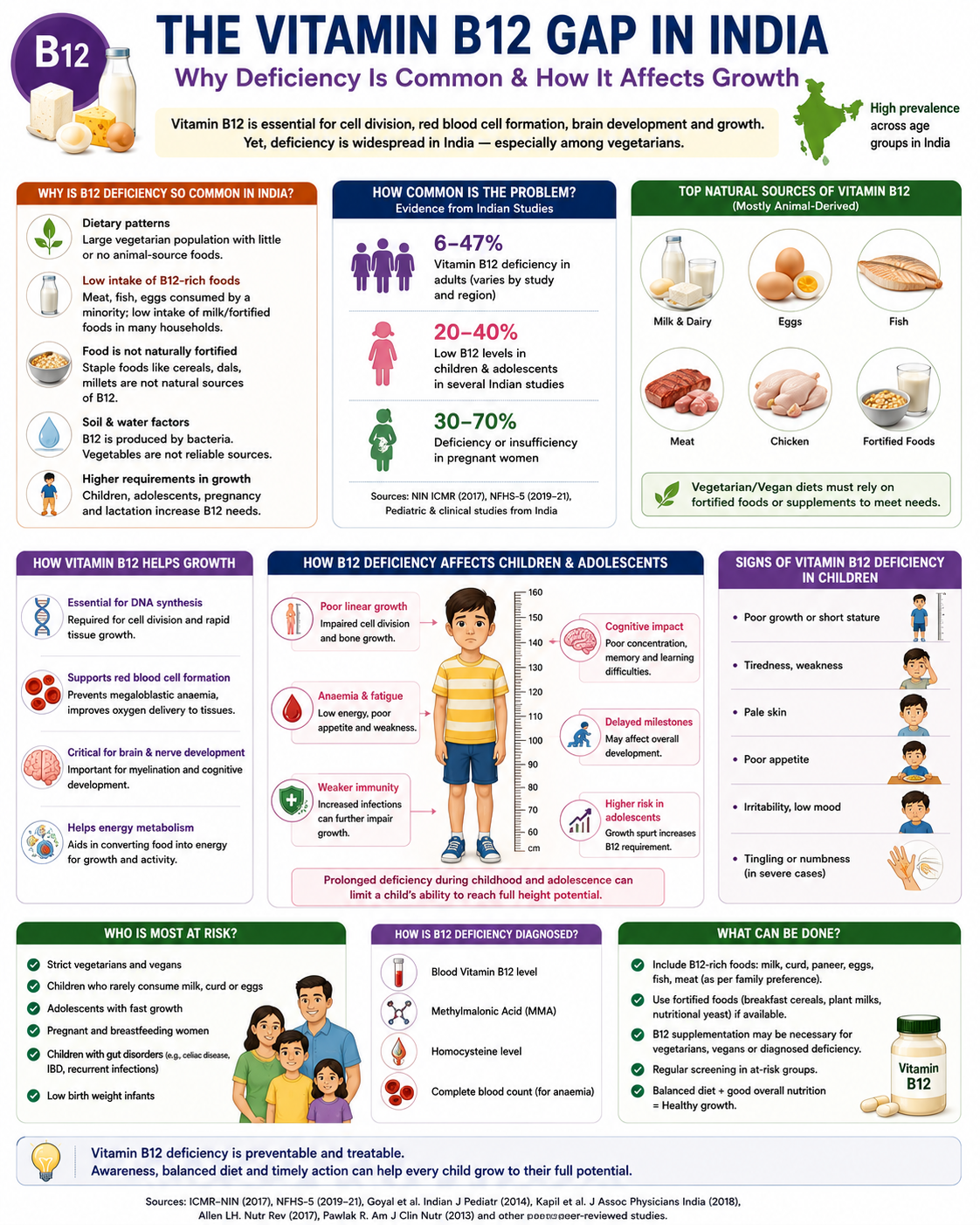
Vitamin B12 is essential for:
-
DNA synthesis
-
Cell division
-
Red blood cell formation
-
Nervous system development
Rapidly growing tissues require efficient DNA replication. Vitamin B12 deficiency therefore has the potential to impair normal growth when severe or prolonged.
Indian studies consistently report a high prevalence of Vitamin B12 deficiency, particularly among vegetarians and older children.
Zinc: The Mineral Most Closely Linked With Linear Growth
Our most favourite topic – Few minerals have attracted as much attention in childhood growth research as Zinc. Zinc participates in more than 300 enzyme systems. It supports:
-
Cell division
-
Protein synthesis
-
Immune function
-
Growth hormone signaling
-
IGF-1 activity
Meta-analyses suggest zinc supplementation can improve linear growth in zinc-deficient populations, although benefits are greatest where deficiency is present.
Common Indian dietary sources include: Meat, Dairy, Pumpkin seeds, Sesame seeds, Chickpeas, Lentils and Nuts
Phytates in whole grains and legumes reduce zinc absorption, hence making dietary diversity, i.e consumption of animal meats more important.
Iron: More Than an Anaemia Nutrient
Iron enables oxygen transport to growing tissues. Iron deficiency can reduce:
-
Physical activity
-
Appetite
-
Cognitive development
-
Overall growth in severe cases
India continues to report high rates of iron deficiency anaemia among children and adolescents. Iron-rich foods include: RED Meats, Fish, Eggs, Cheese, Green leafy vegetables
Consuming vitamin C-rich foods alongside plant-based iron sources potentially improves iron absorption.
Vitamin D and Calcium: Building Strong Bones
Height depends on healthy growth plates, but also on proper mineralization of new bone. Vitamin D promotes calcium absorption from the intestine. Calcium provides structural strength to the skeleton. Deficiency of either nutrient can impair normal bone development.
Children should obtain Vitamin D through safe sunlight exposure where feasible, diet and supplementation when indicated by healthcare professionals.
Iodine: Supporting Thyroid Hormones
Thyroid hormones regulate metabolism and are essential for normal growth. Iodine deficiency can impair thyroid hormone production and adversely affect physical and brain development. Universal salt iodization has greatly reduced iodine deficiency in India, but maintaining adequate intake remains important.
The Gut: An Often Forgotten Organ in Growth
Even the best diet cannot support growth if nutrients are poorly absorbed. Repeated gastrointestinal infections, intestinal inflammation and conditions such as environmental enteric dysfunction can reduce nutrient absorption and increase nutritional requirements.
Improving sanitation, safe drinking water and hygiene has contributed substantially to improvements in child growth worldwide.
Why Frequent Infections Slow Growth
Every infection diverts energy away from growth. Repeated illness may:
-
Reduce appetite
-
Increase nutrient losses
-
Increase inflammation
-
Raise energy expenditure
Vaccination, breastfeeding, hygiene and timely medical care indirectly support healthy growth by reducing the burden of infection.
Sleep: The Night-Time Growth Window
Children do not grow only while awake. Growth hormone secretion reaches its highest levels during deep sleep, particularly in the first part of the night.
Chronic sleep deprivation has been associated with poorer growth, obesity and adverse metabolic health. Recommended sleep duration varies by age, but maintaining consistent sleep schedules is an important part of healthy childhood development.
Physical Activity and Bone Growth
Regular physical activity supports: Bone strength, Muscle development, Coordination, Healthy body composition.
Weight-bearing activities such as running, jumping and outdoor play stimulate bone formation. Exercise does not make growth plates close early in healthy children. Instead, regular activity supports normal skeletal development.
Adolescence: The Second Opportunity for Growth
Puberty is characterized by the growth spurt, when children gain height rapidly. Peak height velocity usually occurs:
-
Earlier in girls than boys.
-
Before growth plate closure.
Adequate nutrition during adolescence remains essential because nutrient requirements increase substantially during this period. Once growth plates fuse, further natural height gain is no longer possible. Hence this opportunity should not be missed.
Can Height Supplements Make Children Taller?
The market is filled with powders, capsules and syrups claiming to increase height. There is no high-quality scientific evidence that over-the-counter “height supplements” increase adult height in healthy children with adequate nutrition.
Children with true nutritional deficiencies may benefit from correcting those deficiencies, but supplements cannot override genetic limits or reopen fused growth plates.
What Indian Families Can and Should Do
Parents cannot change their child’s genes. They can help create an environment that allows those genes to express their full potential. Evidence-based strategies include:
-
Ensure adequate energy intake
-
Provide age-appropriate, ANIMAL protein-rich meals, EVERY DAY
-
Include a variety of foods supplying essential amino acids
-
Prevent and treat vitamin and mineral deficiencies
-
Encourage regular physical activity
-
Maintain healthy sleep habits
-
Follow the national immunization schedule
-
Seek medical evaluation if growth slows or deviates from expected patterns
Key Takeaways
-
Nutrition influences how much of a child’s genetic height potential is achieved
-
High-quality protein is essential for bone and muscle growth
-
Well-planned vegetarian diets can support normal growth, but attention must be paid to protein quality, vitamin B12, zinc, iron, calcium and vitamin D
-
Frequent infections, poor gut health and inadequate sleep can impair normal growth
-
Puberty represents a second important window for height gain, but growth stops once growth plates fuse
-
There is no evidence that commercial “height boosters” increase adult height in healthy children
Conclusion
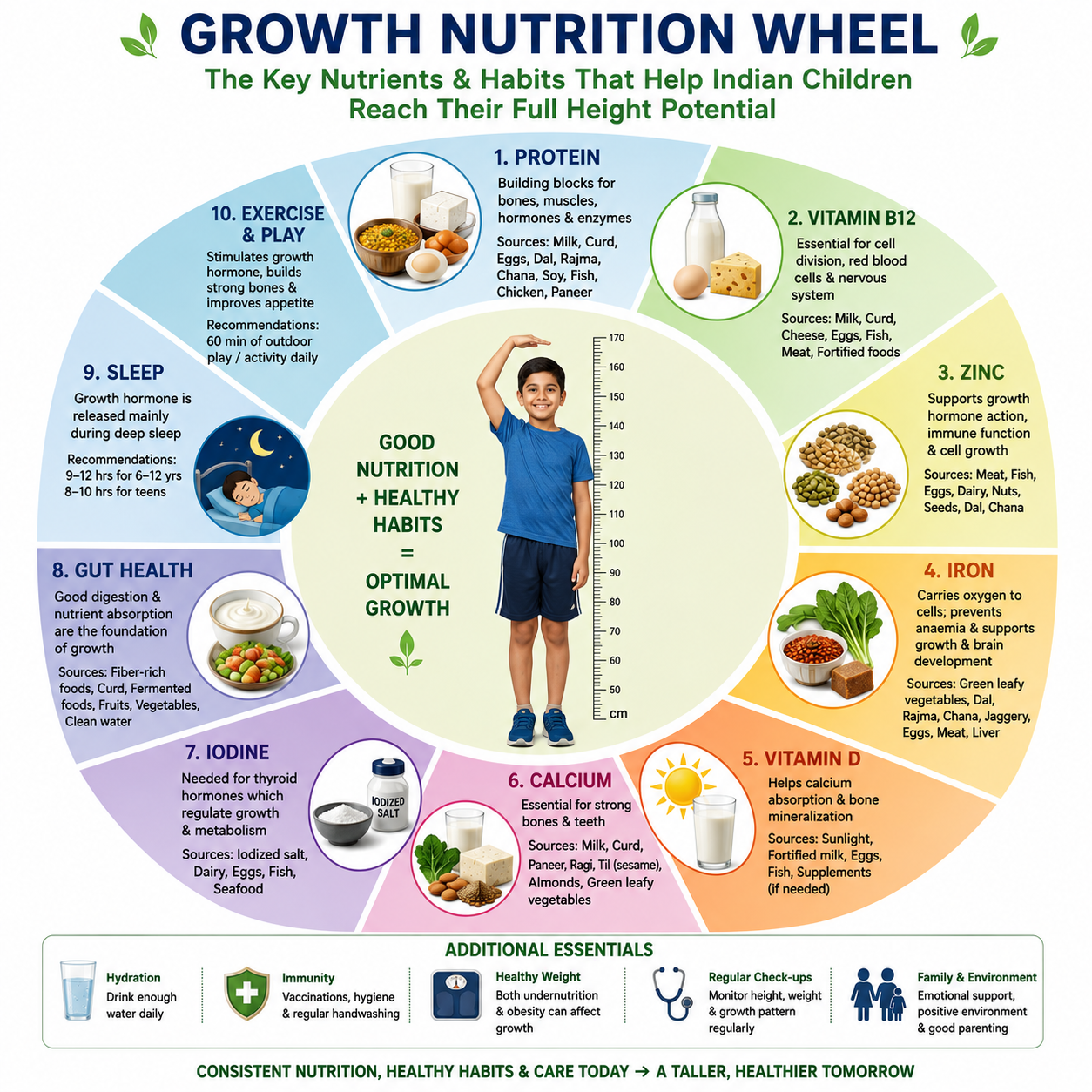
Height is not determined by a single nutrient or one dietary pattern.
It is the result of thousands of biological processes working together over nearly two decades of life.
When children receive adequate nutrition, good healthcare, healthy sleep, regular physical activity and a safe environment, they are far more likely to achieve the height their genes intended.
In Part 2 of this series, we will examine one of the most debated topics in nutrition:
Do Vegetarian Diets Affect Height? What the Science Really Says
Rather than relying on opinion, we will review the evidence from India and around the world, comparing vegetarian, lacto-vegetarian, vegan and omnivorous dietary patterns, and explain how families can support optimal growth regardless of their food choices.
References
-
Indian Council of Medical Research–National Institute of Nutrition (ICMR–NIN). Nutrient Requirements for Indians, 2024
-
World Health Organization. WHO Child Growth Standards
-
Indian Academy of Pediatrics. Growth Monitoring Guidelines
-
FAO. Dietary Protein Quality Evaluation in Human Nutrition (DIAAS Report)
-
Black RE, et al. Maternal and Child Undernutrition. The Lancet
-
Victora CG, et al. Maternal and Child Nutrition Series. The Lancet
-
Dror DK, Allen LH. The Importance of Animal-Source Foods for Child Growth and Development. Journal of Nutrition
-
Golden MH. The Role of Individual Nutrient Deficiencies in Growth. Nutrition Research Reviews
-
Brown KH, et al. Zinc Supplementation and Child Growth: Systematic Reviews and Meta-Analyses
-
UNICEF India. Child Nutrition and Stunting Reports
-
Indian Academy of Pediatrics. Recommendations on Complementary Feeding and Nutrition
-
de Onis M, Branca F. Childhood Stunting: A Global Perspective. Maternal & Child Nutrition