



Vit B12 and Folate Deficiency in Indians – Causes, Symptoms and Solutions
Among micronutrients, vitamin B12 (B12) and Folic Acid (FA) are critical as they are required for a number of metabolic and biological functions in Human Body.
Vit B12 and Folic Acid have overlapping biological functions in DNA synthesis and the development of red blood cells (RBC) and the myelin sheath, which are essential for normal growth and development. One central pathway for both is the methyl transfer reaction in the methionine cycle, which converts homocysteine (Hcy) to methionine. Folate is engaged in many methylation reactions covering DNA, proteins, phospholipids and neurotransmitter metabolism.
Vitamin B12 is only found in animal-source foods such as meat, poultry, fish and dairy products, while folate is abundant in both animal and plant foods.
Deficiency Symptoms
In Pregnant Women – B12 and FA deficiencies occur throughout the human lifecycle, with different outcomes. During pregnancy, they are associated with an increased risk of adverse outcomes such as neural tube defects and low birth weight, intrauterine growth retardation, miscarriage and pre-eclampsia [5–7].
In children – B12 and FA deficiency can result in megaloblastic anemia, poor growth and stunting, increased risk of infections, cognitive dysfunction, neurologic damage and brain atrophy in severe cases. There is also a high prevalence of the double burden of malnutrition, where multiple biomarkers of cardiovascular disorders (CVDs) are elevated even in undernourished children and adolescents.
In Adults – B12and FA deficiencies are associated with hyperhomocysteinemia, which is a CVD risk factor and during pregnancy, an imbalance in FA/B12 status has been associated with adverse birth outcomes [5] and adiposity and insulin resistance in the offspring
Deficiency Parameters / Limits
As per WHO guidelines, Vitamin B12 deficiency is defined as serum Vit B12 < 203 pg/mL (150 pmol/L; conversion factor: 0.738) and
Folic Acis deficiency as erythrocyte FA < 151 ng/mL (342 nmol/L; conversion factor: 2.266) for all age groups.
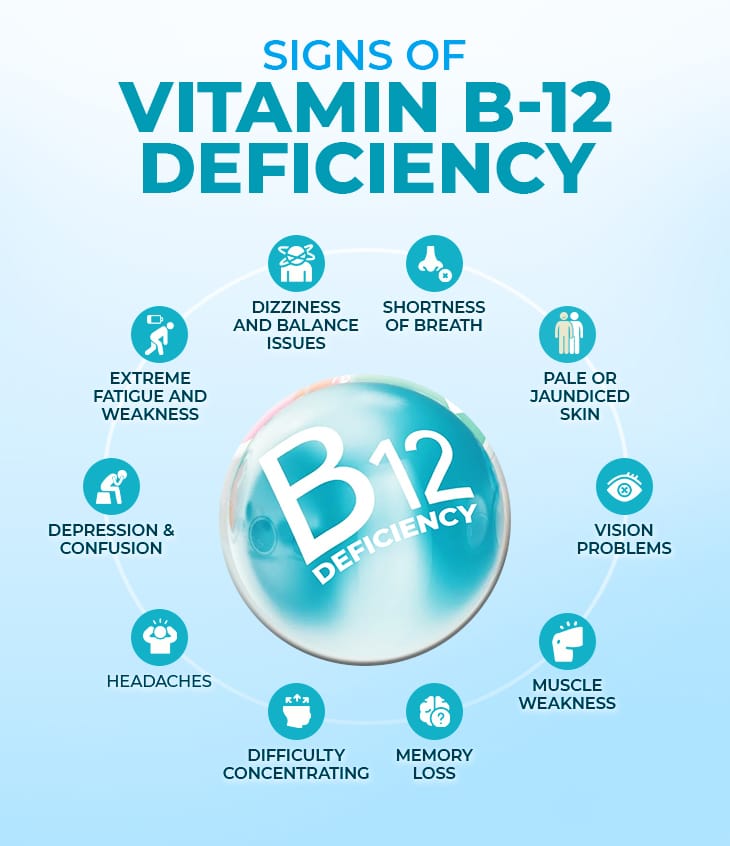
CNNS – Comprehensive National Nutrition Survey 2016-2018 Outcome
CNNS last conducted as a community-based cross-sectional survey among Indian children and adolescents in 29 states and the union territory of Delhi from February 2016 to October 2018 in collaboration with UNICEF, India and the Population Council, under the supervision of the Ministry of Health and Family Welfare, Government of India has very concerning findings.
Study Design – A total of 1,05,243 children and adolescents (preschool: 31,058, school-age: 38,355, adolescents: 35,830) were interviewed and their anthropometric data were collecte. Blood serum Vit B12 and erythrocyte Folic Acid concentrations were available for 33,880 and 38,750 children and adolescents respectively (preschool: 9976 and 11,004, school-age: 12,156 and 14,125 and adolescents: 11,748 and 13,621, respectively for Vit B12 and Folic Acid)
Findings – This CNNS study provided the serum Vit B12 and erythrocyte Folic Acid levels and their prevalence estimates in a representative sample of Indian children and adolescents at the national, state and regional levels.
The prevalence of B12 deficiency was high among adolescents (31%), with ~50% lower prevalence in preschool (13.8%) and school-age (17.3%) children. Similarly, the prevalence of FA deficiency was also higher in adolescents (35.6%) compared to preschool (22.8%) and school-age (27.6%) children.
Recent META-ANALYSIS2
In a recently published Meta-analysis – Twenty peer-reviewed studies were selected according to predefined inclusion criteria focusing on Indian populations. These studies included antenatal screening as well as community-based and hospital-based cohorts. A calculation used a variance-accommodating approach. The result was a pooled frequency of occurrence. Subgroup analyses used age group, gender, geographic location, and physiologic status, like pregnancy.
Results: In the 20 chosen articles, including 18,750 participants, the pooled frequency of inadequate Vit B12 / Cobalamin levels occurred in 51% (95% CI: 44%–57%).
Deficiency of Vit B12 was 65% of cases in Vegetarians, females in 55% of cases, adolescents in 49% of cases, and pregnant women in 67% of cases showed a higher frequency of occurrence.
The data reveal inadequate Vit B12 / cobalamin levels burdening the Indian subcontinent, especially women, vegetarians, and youth. These findings support health strategies being critically necessary, so programs must supplement, fortify food, and screen routinely in maternal health
Gender Differences: In the general population and rural elderly cohorts, no significant gender difference in prevalence has been found, but among adolescents, the deficiency was higher in boys than girls. A recent study among corporate employees found over 57% of men were deficient compared to nearly 50% of women.
Rural vs. Urban Areas: While some studies show variation, nationally representative data suggests no significant rural-urban difference in prevalence among children and adolescents
PREVALENCE OF FOLATE DEFICIENCY IN INDIA
Most school-based (19% – 52.2% deficiency) were published for the adolescent population, except for a hospital-based study which estimated a high prevalence (79.5%). The prevalence among pregnant women ranged from 17.5% to 29.4%, consistent across the studies.
Abnormalities Associated with Folate Deficiency
During pregnancy: The dietary recommendations are often doubled during pregnancy. Folate deficiency profoundly affects the growing fetus and placenta. The mother’s low serum folate level has been associated with miscarriage, low birth weight, preterm birth, and neural tube defects. Neural tube defects are due to the incomplete closure of the neural tube. This is a significant abnormality; hence, for the prevention of NTD in the newborn, folic acid supplementation during the preconception period and the first trimester has been made as a guideline.
Anemia: The classical and most common feature of folate deficiency is megaloblastic anemia. This is due to the inhibition of the maturation of the RBCs’ precursors; hence, large nucleated precursors of RBCs are released into the bloodstream.
Cardiovascular abnormalities: The primary mechanism by which folate deficiency leads to cardiovascular abnormalities is increased homocysteine levels. Folate is required for the conversion of homocysteine to methionine. And folate deficiency leads to increased serum homocysteine levels, known as hyperhomocysteinemia. Increase in the homocysteine levels leads to abnormal phenotypic plasticity in the vascular smooth muscles, leading to an increased risk of ischemic heart disease, thrombosis, atherosclerosis, and hypertension.
Neurological and cognitive abnormalities: Studies have shown that folate deficiency is linked to increased cerebrovascular accident risk. Folate deficiency markers increased in patients with distal symmetric neuropathy and other peripheral neuropathies. Reduced folate levels have also been linked with increased chances of neurodegeneration, leading to age-related dementia and Alzheimer’s disease. Folate supplementation effectively delays disease progression in such cases. Folate deficiency is associated with numerous psychiatric illnesses like depression and schizophrenia. Such patients are also found to have a poor response to antidepressants.
Abnormalities in vision: Folate is necessary for the normal functioning of the human eye. Folate deficiency has been linked to causing nutritional amblyopia, optic atrophy, maculopathy, open-angle glaucoma, diabetic neuropathy, and cataracts.
Developmental abnormality: Cerebral folate deficiency syndrome is characterized by reduced folate in the CSF but normal parameters in the serum. This is often due to the defect in the folate transporters present in the blood-brain barrier (BBB). The symptoms start appearing around 4-6 months of life. They have delayed development with decreased head growth, ataxia, and hypotonia.
Gastrointestinal (GI) abnormalities: GI features such as malabsorption, steatorrhea, and small intestinal villous atrophy are often seen in patients suffering from folate deficiency. But whether this association is, a cause or effect of folate deficiency is still a query. A study found that the presence of concurrent alcoholism and folate deficiency accelerated the occurrence of alcoholic liver disease (ALD). In this model, ALD was found to occur within three months, compared to 1 year, wherein alcoholism was present without folate deficiency.
Cancers: Folate deficiency leads to the misincorporation of uracil in DNA and hypomethylation of DNA. These two factors lead to the expression of genes involved in carcinogenesis and the induction of carcinogenesis. Breast, colorectal, and prostate cancer are associated with reduced folate levels.
Sources;
- Shalini, T.; Pullakhandam, R.; Ghosh, S.; Kulkarni, B.; Rajkumar,H.; Sachdev, H.S.; Kurpad, A.V.; Reddy, G.B. Prevalence of Vitamin B12 and Folate Deficiencies in Indian Children and Adolescents. Nutrients 2023, 15, 3026. https://doi.org/10.3390/nu15133026
- Sundarkumar JS, Shahul Hameed SK, SANSCOG Study Team and Ravindranath V (2021) Burden of Vitamin D, Vitamin B12 and Folic Acid Deficiencies in an Aging, Rural Indian Community Front. Public Health 9:707036. doi: 10.3389/fpubh.2021.707036
- India’s Unseen Nutritional Emergency: A Meta-analysis of Vitamin B12 Deficiency DOI : 10.61336/ejcm/25-05-49