


This is Part 3, Concluding Part of Our Series on Why Iron Tablets Don’t Work. Getting Iron Therapy Right: Practical, Evidence-Based Strategies to Improve Iron Absorption…
After decades of research, scientists have fundamentally changed the way we understand iron deficiency. The message is clear:
Iron deficiency is not simply about eating more iron—it is about helping your body absorb and use iron effectively.
For millions of Indians taking iron tablets, this distinction is crucial. A successful treatment plan depends on several factors:
-
Correct diagnosis
-
Identifying the cause of iron deficiency
-
Choosing the right iron preparation
-
Optimising iron absorption
-
Treating underlying inflammation when present
-
Monitoring treatment appropriately
Understanding these principles can improve treatment outcomes while avoiding unnecessary side effects and inappropriate supplementation.
Step 1: Confirm That Iron Deficiency Is Really the Problem
Not every anaemia is caused by iron deficiency. Several conditions can produce similar symptoms, including:
-
Vitamin B12 deficiency
-
Folate deficiency
-
Chronic kidney disease
-
Thalassaemia trait
-
Anaemia of chronic inflammation
-
Bone marrow disorders
-
Chronic infections
Before starting long-term iron supplements, healthcare professionals often recommend investigations such as: Complete blood count (CBC), Serum ferritin, Serum iron, Transferrin saturation (TSAT), Total iron-binding capacity (TIBC), C-reactive protein (CRP), when inflammation is suspected, Vitamin B12 and folate levels where appropriate
Treating the wrong cause of anaemia wastes valuable time and may delay appropriate care.
Step 2: Find Out Why Iron Levels Became Low
Iron deficiency is not a diagnosis—it is usually a sign that something else is happening. Common causes include: Increased iron requirements due to Pregnancy, Adolescence and Rapid childhood growth.
Blood loss– Heavy menstrual bleeding, Gastrointestinal ulcers, Haemorrhoids, Colon polyps and Gastrointestinal cancers
Reduced iron absorption- in Coeliac disease, Inflammatory bowel disease, Previous stomach surgery and Long-term acid-suppressing medication
Unless the underlying cause is identified, iron deficiency is likely to return.
Step 3: Maximise Iron Absorption
Research over the past decade has shown that how you take iron may influence how much your body absorbs.
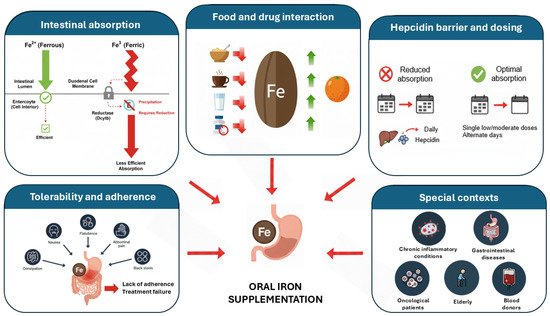
General evidence-based strategies include: Take iron on an empty stomach if tolerated.
Food—particularly foods rich in phytates, calcium or polyphenols—can reduce iron absorption. However, if stomach upset occurs, taking iron with a small amount of food may improve adherence, even if absorption is slightly reduced.
Combine iron with vitamin C-rich foods – Vitamin C converts iron into a form that is more easily absorbed. Good options include: Oranges, Amla (Indian gooseberry), Guava, Kiwi, Lemon and Sweet lime.
For most people consuming a balanced diet, taking iron with a vitamin C-rich meal or fruit is sufficient. Routine high-dose vitamin C supplementation is not necessary for everyone.
Separate iron from calcium-rich foods – Calcium can temporarily reduce iron absorption. When practical, avoid taking iron supplements together with: Milk, Cheese and Calcium supplements. Spacing them by a few hours may help minimise this interaction.
Avoid tea and coffee around iron tablets – Tea and coffee contain polyphenols and tannins that can significantly reduce absorption of non-haem iron. Waiting at least one to two hours before or after taking iron supplements is generally recommended.
Step 4: Understand That More Is Not Always Better
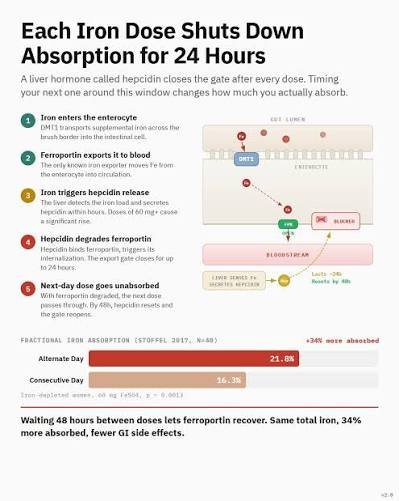
One of the most important lessons from hepcidin research is that larger doses are not automatically more effective. High oral iron doses stimulate hepcidin production, temporarily reducing intestinal iron absorption.
Several studies have shown that, in selected adults with uncomplicated iron deficiency, alternate-day dosing may improve fractional iron absorption compared with daily dosing. However, treatment should always be individualised.
Pregnant women, children, patients with severe anaemia and people with chronic illnesses may require different dosing schedules based on current clinical guidelines. Never change your prescribed treatment without discussing it with your healthcare provider.
Step 5: Be Patient—Iron Repletion Takes Time
One of the commonest reasons patients become discouraged is that improvement is often gradual. Although many people begin to feel less fatigued within a few weeks, rebuilding the body’s iron stores usually takes considerably longer. Typical expectations are:
-
Reticulocyte response: approximately 5–10 days
-
Haemoglobin: gradual improvement over 2–8 weeks (depending on severity and underlying cause)
-
Ferritin: often several months to replenish fully
For this reason, doctors frequently recommend continuing oral iron for about three months after haemoglobin normalises, although the exact duration depends on individual circumstances. Stopping treatment too early increases the risk of recurrent deficiency.
When Oral Iron May Not Be Enough
Despite careful treatment, some patients do not respond adequately to oral iron. Examples include:
-
Severe iron deficiency anaemia requiring rapid correction
-
Active inflammatory bowel disease
-
Chronic kidney disease
-
Persistent gastrointestinal malabsorption
-
Intolerance to oral iron despite dose adjustments
-
Ongoing blood loss exceeding replacement
In such situations, healthcare professionals may recommend intravenous iron therapy, which bypasses intestinal absorption and delivers iron directly into the bloodstream.
Modern intravenous iron preparations are generally safer than older formulations but should always be administered under appropriate medical supervision.
Practical Tips for Indians Taking Iron Supplements
If you have been prescribed oral iron:
✔ Take the medicine exactly as advised by your healthcare professional, alaternate days, if advised by your doctor, for Hepcidin Factor
✔ Continue treatment for the recommended duration, even after you begin feeling better
✔ Eat a balanced diet that includes iron-rich foods such as green leafy vegetables, pulses, beans, lentils, nuts and seeds. People who consume non-vegetarian foods must also obtain highly absorbable haem iron from red meat, poultry and fish
✔ Include vitamin C-rich fruits and vegetables to support non-haem iron absorption
✔ Discuss persistent side effects with your doctor rather than stopping treatment on your own. A different formulation or dosing schedule may improve tolerance
✔ If iron levels fail to improve despite good adherence, ask whether additional investigations are needed to identify ongoing blood loss, inflammation or disorders affecting iron absorption
Bottom Line
The discovery of hepcidin has transformed our understanding of iron deficiency.
We now know that the body carefully regulates iron absorption through an elegant biological system designed to protect us from both deficiency and overload. This explains why some people respond rapidly to iron therapy while others improve only slowly despite taking supplements regularly.
For millions of Indians, the message is reassuring: If your iron tablets are not working as expected, it does not necessarily mean you are doing something wrong.
It may mean that your body is responding to inflammation, underlying illness or altered iron regulation. The answer is rarely to keep increasing the dose.
Instead, successful treatment depends on finding the underlying cause, understanding the role of hepcidin, choosing the right treatment strategy INCLUDING ALTERNATE DAY USAGE and monitoring progress carefully.
As our understanding of iron biology continues to grow, medicine is moving away from a “one-size-fits-all” approach towards personalised iron therapy—an approach that promises better outcomes with fewer side effects.
Key Take-Home Messages
-
Hepcidin is the body’s master regulator of iron absorption and plays critical role in scheduling the usage of Iron Tablets
-
High hepcidin levels reduce iron absorption and trap stored iron inside cells
-
Chronic inflammation, obesity, chronic kidney disease and autoimmune diseases may increase hepcidin
-
More oral iron is not always better, because high doses temporarily increase hepcidin rather than your iron levels
-
Evidence certainly supports alternate-day dosing in selected adults with uncomplicated iron deficiency, but treatment must always be individualised
-
Correct diagnosis and identifying the underlying cause of iron deficiency are just as important as replacing iron
-
Never self-prescribe long-term iron supplements without appropriate medical evaluation, especially if symptoms persist despite treatment
Select References:
-
Camaschella C. Iron Deficiency. New England Journal of Medicine. 2015
-
Ganz T, Nemeth E. Iron Homeostasis in Host Defence and Inflammation. Nature Reviews Immunology
-
Ganz T. Hepcidin and Iron Regulation. American Society of Hematology (ASH)
-
Stoffel NU, et al. Oral Iron Supplements Increase Hepcidin and Reduce Iron Absorption. Blood. 2015
-
Stoffel NU, et al. Iron Absorption from Supplements Is Greater with Alternate-Day Than Consecutive-Day Dosing. The Lancet Haematology. 2017
-
Weiss G, Ganz T, Goodnough LT. Anemia of Inflammation. Blood. 2019
-
World Health Organization. Guideline on Daily Iron Supplementation and Use of Ferritin Concentrations to Assess Iron Status