



Sole ojective of these write ups is to help Indians understand COMMON Nutritional Deficiencies and take care of their own health, leading ultimately to, hopefully, No Visits to Hospitals. In our endeavor, we share details on yet another very common health issue in Indians – Thyroid Issues. This is Part 2 of 2-Part Series. Have a look at evidence. For Part 1 – Pls Click Here.
Which Vitamins and Minerals Actually Help the Thyroid? A Scientific Review of the Evidence…
If you search online for “thyroid supplements”, you’ll find hundreds of products promising to “boost thyroid function”, “repair the thyroid naturally” or “reverse hypothyroidism”. Most contain long lists of vitamins and minerals—iodine, selenium, zinc, iron, magnesium, vitamin D, vitamin B12 and others.
But an important question remains: Which of these nutrients actually have strong scientific evidence behind them?
The answer is surprisingly nuanced. Some nutrients are absolutely essential for producing thyroid hormones. Without them, normal thyroid function is impossible.
Others appear to improve thyroid health only in people who are deficient. Some show encouraging results in laboratory and observational studies but have produced inconsistent findings in clinical trials. And a few are widely marketed despite having very limited scientific support.
Here, we examine every major vitamin and mineral linked with thyroid health using evidence from international guidelines, systematic reviews, meta-analyses, randomised controlled trials and Indian research.
Understanding the Thyroid’s Nutrient Factory
The thyroid gland is unlike any other organ. Every day it manufactures thyroid hormones using iodine, amino acids, specialised enzymes and antioxidant systems. This process is remarkably demanding.
The thyroid consumes oxygen rapidly. It continuously produces hydrogen peroxide as part of hormone synthesis. It depends on several enzymes that require trace minerals as cofactors.If even one component becomes deficient, hormone production may become less efficient.
This explains why thyroid physiology depends on multiple nutrients working together in a symphony rather than a single “thyroid vitamin”.
Iodine: The Building Block of Thyroid Hormones
No nutrient is more fundamental than iodine. Every molecule of thyroxine (T4) contains four iodine atoms. Every molecule of triiodothyronine (T3) contains three. Without iodine, thyroid hormone synthesis simply cannot occur.
What has changed in India – For decades, iodine deficiency caused endemic goitre across many Himalayan states and inland regions. The introduction of Universal Salt Iodisation transformed public health. Today, severe iodine deficiency has declined dramatically.
However, researchers now recognise a different challenge. Excess iodine can also disturb thyroid function. Large amounts may trigger or worsen autoimmune thyroid disease in genetically susceptible individuals through mechanisms such as the acute Wolff–Chaikoff effect, in which the thyroid temporarily reduces hormone synthesis to protect itself from excessive iodine exposure.
For most Indians, using iodised salt in recommended household quantities provides sufficient iodine. Additional high-dose iodine supplements are rarely necessary unless advised by a healthcare professional.
Evidence Rating
★★★★★ Strongest evidence
Selenium: The Most Important Mineral After Iodine
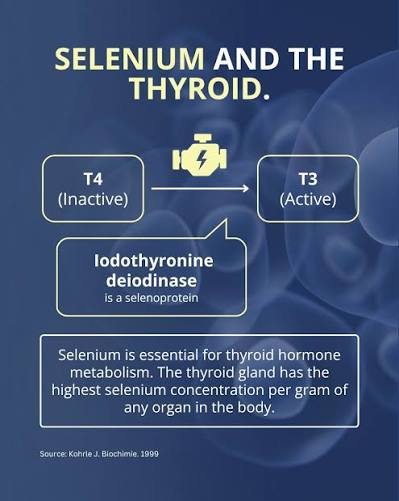
If iodine is the raw material, selenium is the thyroid’s maintenance engineer. Remarkably, gram for gram, the thyroid contains one of the highest concentrations of selenium in the human body.
Why – Because thyroid hormone production generates large amounts of reactive oxygen species. Without antioxidant protection, these molecules could damage thyroid cells.
Selenium-dependent enzymes—including glutathione peroxidases and thioredoxin reductases—neutralise these oxidants and protect thyroid tissue.
Equally important, selenium is required for the family of iodothyronine deiodinase enzymes, which convert inactive T4 into metabolically active T3.
What do clinical trials show – This has been one of the most intensively studied areas in thyroid nutrition. Several randomised trials have shown that selenium supplementation can reduce anti-thyroid peroxidase (anti-TPO) antibody levels in some patients with Hashimoto’s thyroiditis.
Some studies also report modest improvements in quality of life and thyroid ultrasound appearance. However, improvements in antibody levels have not consistently translated into clinically meaningful outcomes, such as preventing hypothyroidism, reducing levothyroxine requirements or improving long-term thyroid function.
For this reason, major endocrine societies do not recommend routine selenium supplementation for every patient with autoimmune thyroid disease. The most appropriate candidates are individuals with documented selenium deficiency or selected patients after discussion with their endocrinologist.
Evidence Rating
★★★★☆ Strong evidence for specific situations
Iron: The Missing Link in Many Indian Women
Iron deficiency affects hundreds of millions of Indians, particularly adolescent girls and women of reproductive age. Its impact on thyroid function is often underestimated.
Iron is required for thyroid peroxidase (TPO), the enzyme responsible for attaching iodine to thyroglobulin during thyroid hormone synthesis. When iron stores are depleted:
-
TPO activity declines
-
Thyroid hormone production may become less efficient
-
TSH may increase
-
Symptoms of hypothyroidism may become more pronounced
Studies have also shown that iron deficiency can reduce the effectiveness of iodine supplementation in iodine-deficient populations. This interaction has major public health implications because iron deficiency and thyroid disorders commonly coexist in India.
Correcting iron deficiency should therefore be considered an important component of thyroid care whenever deficiency is confirmed. Link to a Meta-Analysis and Review – Here
Evidence Rating
★★★★☆ Strong evidence
Zinc: Supporting Hormone Production and Cellular Action
Zinc is involved in more than 300 enzyme systems. Its role in thyroid physiology extends beyond hormone production. Research suggests zinc contributes to:
-
TSH synthesis in the pituitary gland
-
T4-to-T3 conversion
-
Thyroid hormone receptor function
-
DNA transcription regulated by thyroid hormones
-
Immune function
Several small clinical studies have shown improvements in thyroid hormone profiles after correcting zinc deficiency. However, larger high-quality trials remain limited. Current evidence supports replacing documented zinc deficiency but does not justify routine supplementation in all patients with thyroid disease.
Evidence Rating
★★★☆☆ Moderate evidence
Vitamin D: The Autoimmune Connection
Vitamin D has become one of the most researched nutrients in autoimmune medicine. Unlike iodine or iron, vitamin D does not directly participate in thyroid hormone synthesis. Instead, it influences immune regulation.
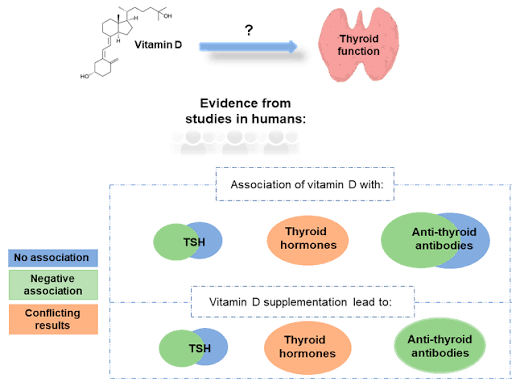
Hashimoto’s thyroiditis and Graves’ disease occur because the immune system mistakenly attacks the thyroid. Numerous observational studies have found lower vitamin D concentrations in patients with autoimmune thyroid disease than in healthy controls.
Meta-analyses suggest vitamin D supplementation may modestly reduce anti-TPO antibody levels in some individuals. However, evidence that supplementation restores thyroid hormone production or reverses hypothyroidism remains inconsistent.
Current endocrine guidelines recommend correcting vitamin D deficiency for skeletal and general health. Any thyroid-specific benefits should be considered a possible additional advantage rather than a primary indication.
Evidence Rating
★★★☆☆ Moderate evidence
Vitamin B12: Frequently Overlooked
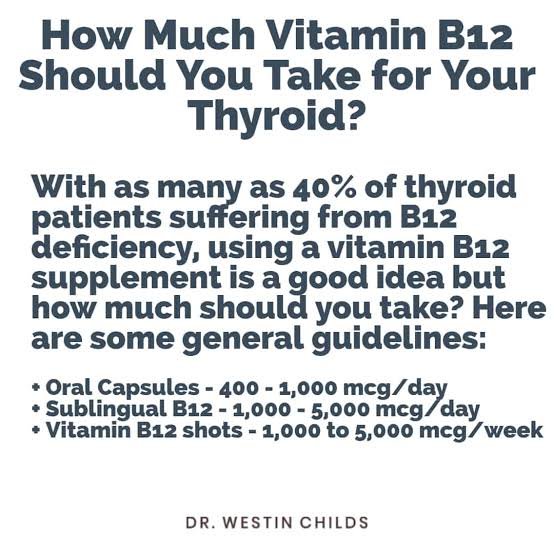
Vitamin B12 deficiency is common among Indians because of dietary patterns and, in some individuals, impaired absorption. Patients with Hashimoto’s thyroiditis are at increased risk because autoimmune thyroid disease often coexists with autoimmune gastritis and pernicious anaemia.
Vitamin B12 deficiency does not cause hypothyroidism. However, it produces symptoms remarkably similar to those seen in hypothyroidism:
-
Fatigue
-
Poor concentration
-
Memory difficulties
-
Tingling in the hands and feet
-
Weakness
Correcting B12 deficiency can substantially improve these symptoms, even though thyroid hormone levels remain unchanged. A link to Systematic Review and Meta-Analysis on Role of Vit B12 in Hypothyroidism.
Evidence Rating
★★★☆☆ Moderate evidence
Magnesium: An Emerging Area
Magnesium plays an essential role in ATP production, cellular energy metabolism, nerve function and muscle contraction.
Although magnesium deficiency may contribute to fatigue and muscle symptoms commonly reported in hypothyroidism, direct evidence that magnesium supplementation improves thyroid hormone production remains limited.
Researchers continue to investigate possible interactions between magnesium status, oxidative stress and autoimmune thyroid disease. At present, supplementation should primarily be aimed at correcting documented deficiency.
Evidence Rating
★★☆☆☆ Limited evidence
Vitamin A: An Underappreciated Nutrient
Vitamin A influences thyroid physiology through several mechanisms. It appears to regulate TSH secretion, influence iodine metabolism and interact with thyroid hormone signalling pathways.
Studies from populations with vitamin A deficiency suggest supplementation may improve thyroid function when iodine deficiency is also present. However, evidence supporting routine vitamin A supplementation for thyroid disease is insufficient.
Given the potential toxicity of excessive vitamin A intake, supplementation should only be considered when clinically indicated.
Evidence Rating
★★☆☆☆ Limited to moderate evidence
What About Other Trace Minerals?
Researchers have investigated several additional minerals, including copper, manganese, chromium and molybdenum. At present:
-
Human studies are limited.
-
Results are inconsistent.
-
No major thyroid guideline recommends routine supplementation.
More research is needed before these nutrients can be considered part of evidence-based thyroid care.
Ranking the Evidence
Nutrient |
Main Role |
Evidence |
Clinical Message |
|---|---|---|---|
Iodine |
Thyroid hormone synthesis |
★★★★★ |
Essential, but avoid excessive intake |
Selenium |
T4-to-T3 conversion and antioxidant defence |
★★★★☆ |
May benefit selected patients with autoimmune thyroid disease |
Iron |
Thyroid peroxidase activity |
★★★★☆ |
Correct deficiency whenever present |
Zinc |
Hormone metabolism and receptor function |
★★★☆☆ |
Replace deficiency rather than supplement routinely |
Vitamin D |
Immune regulation |
★★★☆☆ |
Correct deficiency; thyroid-specific benefits remain under investigation |
Vitamin B12 |
Neurological health; commonly deficient in autoimmune thyroid disease |
★★★☆☆ |
Important to diagnose and treat if deficient |
Magnesium |
Cellular energy metabolism |
★★☆☆☆ |
Emerging evidence only |
Vitamin A |
Thyroid regulation and iodine interaction |
★★☆☆☆ |
Useful where deficiency exists |
What Is the Biggest Take-Home Message?
After reviewing hundreds of scientific studies, one conclusion stands out. There is no single “thyroid vitamin.” Instead, thyroid health depends on a carefully coordinated network of nutrients. Hence consumption of Non-Neg Protein becomes critically important as a single food provides a multitude of Vitamins and Minerals required for Thyroid Health.
Correcting genuine deficiencies—particularly iodine, iron and, in selected cases, selenium—can support normal thyroid physiology.
Taking Levothyroxine the Right Way
Many patients unknowingly reduce the effectiveness of their thyroid medication. For best absorption:
-
Take levothyroxine with plain water on an empty stomach
-
Wait at least 30–60 minutes before eating breakfast (or follow the regimen advised by your doctor)
-
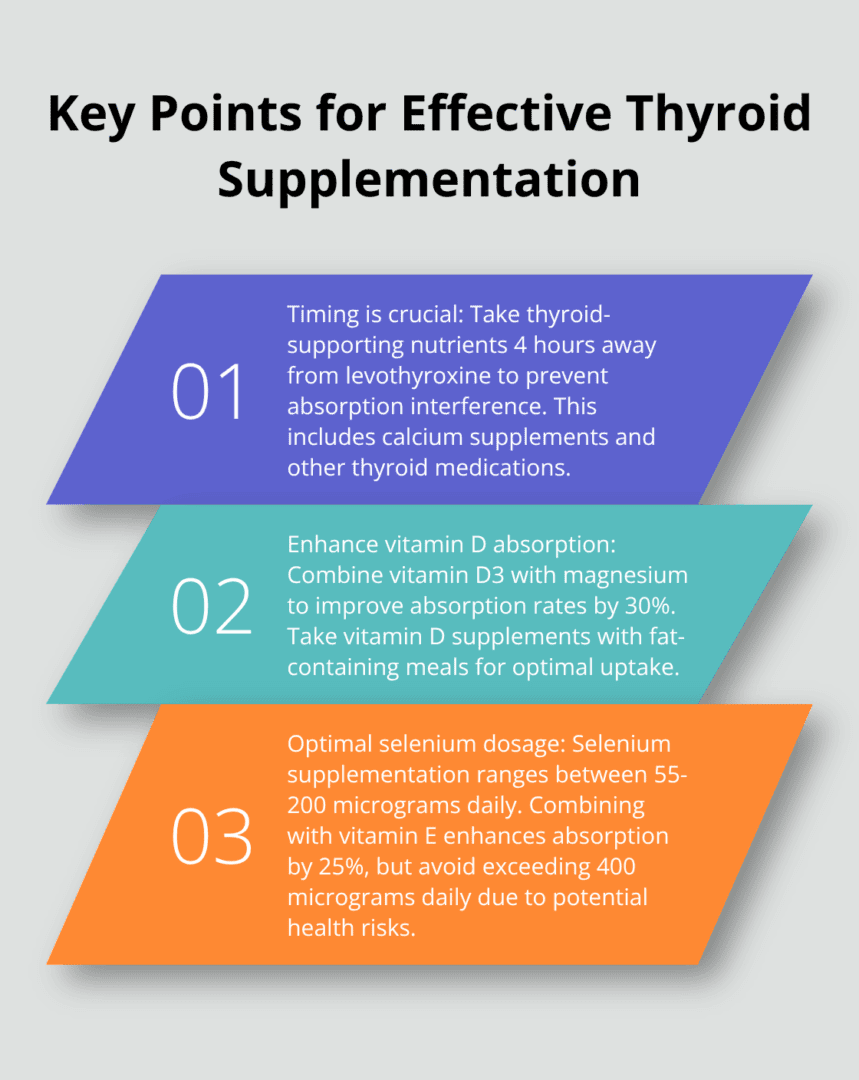
Keep a gap of at least four hours between levothyroxine and iron, calcium or magnesium supplements
-
Take the medicine consistently at the same time each day
Small improvements in medication timing can sometimes produce noticeable improvements in thyroid control.
The most effective approach is targeted, evidence-based nutrition guided by appropriate understanding of different food sources supplying multiple vitamins and minerals in a single portion. A perusal of this website shares all such details and some more. Healthy Thyroid to You.