



This is Part 4 of Our 5 Part Series on Gut Health and Muscle Loss in Indians. You can peruse Part1 here, Part 2 and Part 3 of the Series here.
Good News: Your Gut Microbiome Can Change
One of the most exciting discoveries in microbiome science is that the gut is remarkably adaptable. Unlike your genes, your gut microbiome is constantly changing. Every meal, every walk, every night of good sleep, every unnecessary course of antibiotics—and even chronic stress—can influence the balance of microbes living inside your intestine.
Studies have shown that meaningful changes in microbial composition can occur within days to weeks after improving diet, increasing physical activity, or consuming more dietary fibre. While long-standing dysbiosis may take longer to improve, these findings offer an encouraging message:
It is never too late to start supporting your gut. For Indians over 40, restoring gut health may become one of the most effective strategies for protecting muscle, improving metabolic health and extending healthy years of life.
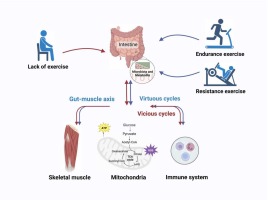
Think Beyond Protein Alone
For many years, advice for preventing muscle loss was simple: Eat more protein. and Exercise regularly. These remain essential, but we now know they are only part of the solution.
If the gut is unhealthy, muscles may not fully benefit from even the best diet because inflammation, poor nutrient absorption and anabolic resistance continue to interfere with muscle repair. Healthy muscles require four things working together:
Adequate high-quality protein.
A healthy gut microbiome.
Regular resistance exercise.
Correction of vitamin and mineral deficiencies.
When these four pillars work together, the body is far better equipped to preserve muscle throughout ageing.
Fermented Foods: Traditional Wisdom Supported by Modern Science
Long before probiotics became popular, Indian households regularly consumed naturally fermented foods. These include:
Homemade curd
Buttermilk
Idli
Dosa
Kanji
Fermented rice preparations
Traditional fermented vegetables in some regions
These foods can help introduce beneficial microorganisms and support microbial diversity, although the exact probiotic content varies depending on preparation methods. Choose products with minimal added sugar and avoid highly processed “probiotic” drinks that are high in sweeteners.
Protein Quality Matters More with Age
After the age of 40–50 years, muscles become less responsive to dietary protein because of anabolic resistance.This means that quality becomes just as important as quantity.
Aim to include a source of high-quality protein at each main meal. Good options include:
For non-vegetarians
Eggs
Fish
Chicken
Red meat
Milk
Greek yoghurt
Paneer
For vegetarians
Soy foods
Tofu
Paneer
Milk
Curd
Mixed dals
Lentils
Chickpeas
Rajma
Quinoa
Distributing protein evenly across breakfast, lunch and dinner is generally more effective than consuming most of it in a single evening meal.
Leucine: The Amino Acid That Switches on Muscle Building
Among all amino acids, leucine plays a particularly important role in stimulating muscle protein synthesis. Foods naturally rich in leucine include:
Whey protein
Milk
Yoghurt
Paneer
Eggs
Chicken
Fish
Red Meat
Older adults often require a higher leucine intake than younger adults to maximise muscle protein synthesis. For individuals unable to meet protein requirements through diet alone, healthcare professionals may recommend protein supplements or leucine-enriched formulations, depending on individual needs.
PHGG: A Promising Prebiotic for Indian Diets
One prebiotic receiving increasing scientific attention is Partially Hydrolysed Guar Gum (PHGG). Derived from guar beans, PHGG is:
Low in viscosity
Well tolerated
Easily mixed with beverages
Slowly fermented by beneficial gut bacteria
Research suggests PHGG may: Increase beneficial bacteria such as Bifidobacterium, Enhance short-chain fatty acid production, Improve bowel regularity, Reduce intestinal inflammation and Support gut barrier function.
Because guar is widely cultivated in India, PHGG represents a particularly relevant prebiotic for Indian populations. While evidence regarding direct effects on sarcopenia is still emerging, its benefits for gut health make it an interesting area of ongoing research.
What About Butyrate Supplements?
Butyrate is one of the most important short-chain fatty acids produced by gut bacteria. Rather than taking butyrate supplements immediately, most experts recommend supporting your body’s own butyrate production by increasing intake of diverse dietary fibres and prebiotics.
Supplemental butyrate may be appropriate in selected clinical situations, but more high-quality human studies are needed before routine use can be recommended for preventing sarcopenia.
Do Probiotics Help?
Interest in probiotics has grown enormously over the past decade. Certain strains of Lactobacillus and Bifidobacterium have shown promising effects on gut health, immune regulation and inflammatory markers. However, not all probiotics are the same.
Benefits are strain-specific, meaning one probiotic cannot automatically be assumed to provide the same effects as another. Current evidence suggests probiotics may complement—but should not replace—a fibre-rich diet, regular exercise and adequate nutrition.
Exercise Is a Powerful Microbiome Therapy
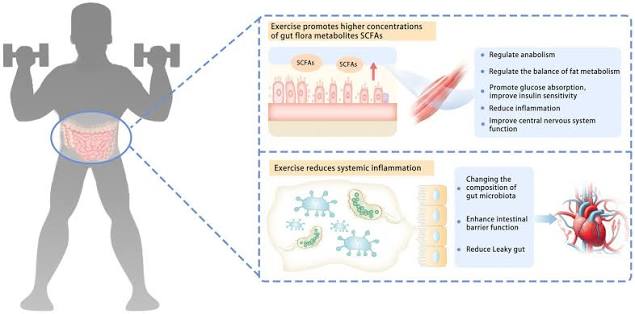
Perhaps the most overlooked “probiotic” is physical activity. Regular exercise has been associated with:
Greater microbial diversity
Higher abundance of butyrate-producing bacteria
Better insulin sensitivity
Reduced inflammation
Improved gut barrier integrity
For preserving muscle, resistance training is particularly important. Simple activities include: Chair rises, Squats, Stair climbing, Resistance bands, Light dumbbells and Body-weight exercises. Combined with regular walking or cycling, these activities help maintain both muscle mass and a healthier gut microbiome.
Correct Hidden Vitamin and Mineral Deficiencies
Many Indians have deficiencies that silently impair muscle function. Particular attention should be paid to:
Vitamin D
Vitamin B12
Iron
Zinc
Magnesium
These nutrients are involved in: Muscle contraction, Energy production, Nerve function, Immune regulation and Protein synthesis. Deficiencies should ideally be identified through appropriate clinical assessment and corrected under the guidance of a healthcare professional.
Stress Management Supports the Gut–Muscle Axis
Persistent psychological stress affects the gut through the gut–brain axis. Helpful strategies include: Mindfulness or meditation, Yoga, Praanayam / Breathing exercises, Time outdoors, Social interaction and Regular physical activity.
Reducing chronic stress may help lower inflammation and support a healthier intestinal environment.
Avoid Unnecessary Antibiotics
Antibiotics remain essential when prescribed for bacterial infections. However, unnecessary or repeated use can disrupt the gut microbiome. Never self-medicate with antibiotics or stop prescribed courses prematurely. Responsible antibiotic use protects both individual health and the broader community.
Key Message
Although many questions remain unanswered, one message is becoming increasingly clear: Healthy ageing depends on far more than simply adding years to life. It requires preserving the strength, mobility and independence that make those years meaningful.
For millions of Indians, protecting the gut microbiome may become one of the most effective ways to support muscle health, improve metabolic resilience and reduce the burden of age-related disease.
The gut and muscles are not separate organs working independently. They are partners in a complex biological conversation that begins early in life and continues throughout ageing. By nourishing both, we may be able to age not only longer—but stronger.
Key Take-Home Messages
-
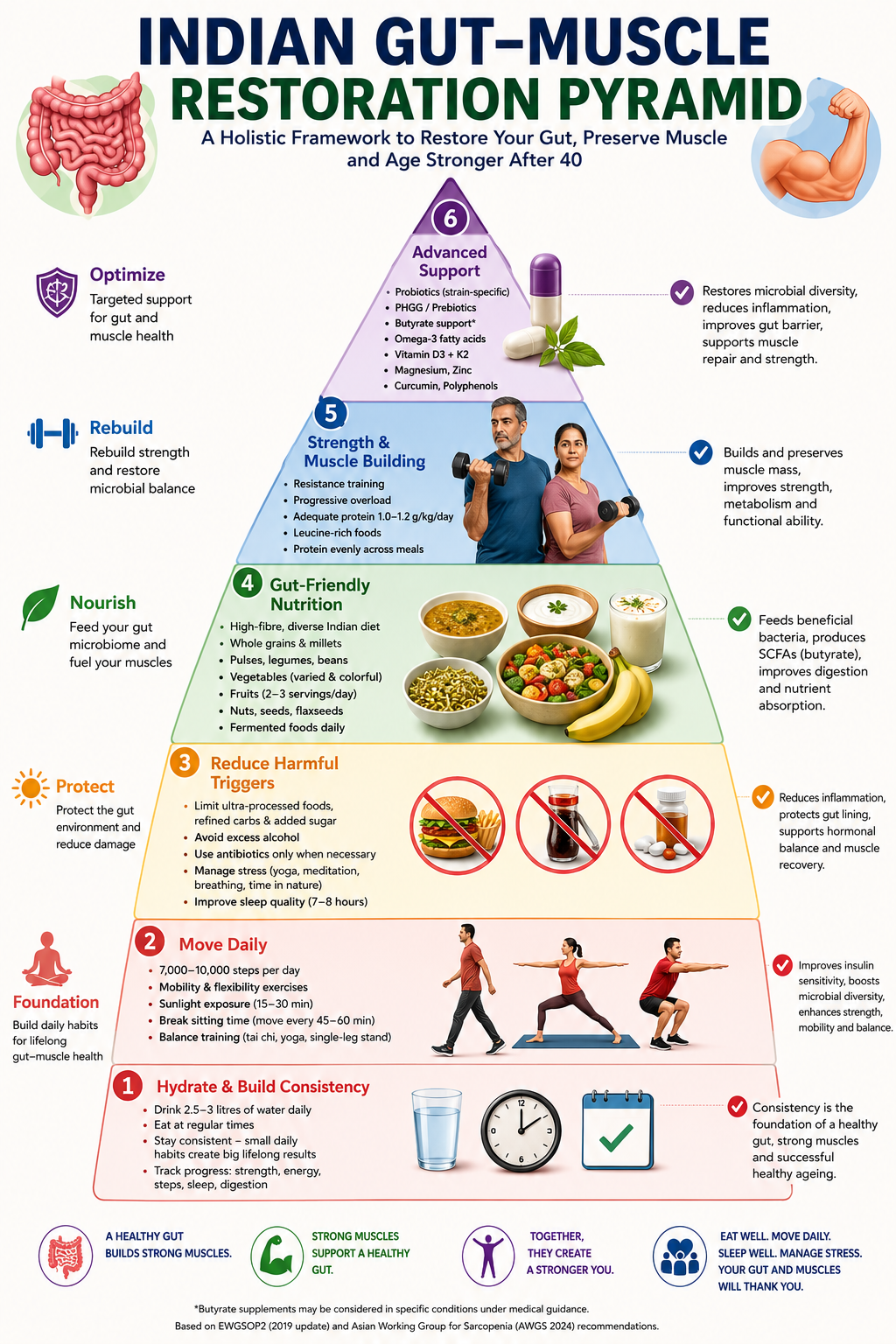
A healthy gut microbiome is emerging as a third pillar of sarcopenia prevention, alongside adequate protein intake and resistance exercise
-
Diverse, fibre-rich Indian diets support beneficial gut bacteria that produce metabolites such as butyrate, which help maintain intestinal health and reduce inflammation
-
High-quality protein, particularly when distributed evenly across meals, is essential for preserving muscle as we age
-
Regular resistance training improves both muscle strength and the diversity of the gut microbiome
-
Correcting vitamin D, vitamin B12, iron, zinc and magnesium deficiencies is important for optimal muscle function
-
Probiotics and prebiotics may provide additional benefits, but they work best as part of a comprehensive lifestyle approach rather than as stand-alone solutions
-
Healthy ageing is no longer viewed solely as preventing disease—it is about maintaining physical function, metabolic health and independence for as long as possible
Select References
-
Bhattacharya S, Bhadra R, Schols AMWJ, Sambashivaiah S. Gut microbial dysbiosis as a limiting factor in the management of primary and secondary sarcopenia: an Asian Indian perspective. Curr Opin Clin Nutr Metab Care. 2020
-
Cruz-Jentoft AJ, et al. Sarcopenia: Revised European Consensus on Definition and Diagnosis (EWGSOP2). Age and Ageing. 2019
-
Chen LK, et al. Asian Working Group for Sarcopenia: 2019 Consensus and 2024 Update
-
Ticinesi A, et al. The Gut–Muscle Axis in Ageing and Sarcopenia. Nutrients
-
Grosicki GJ, Fielding RA, Lustgarten MS. Gut Microbiota and Skeletal Muscle Ageing. Journal of Cachexia, Sarcopenia and Muscle
-
Picca A, et al. Gut Dysbiosis and Muscle Ageing. Nutrients
-
Recent reviews (2021–2026): Nature Reviews Gastroenterology & Hepatology, Gut, The Lancet Healthy Longevity, Cell Host & Microbe, and Clinical Nutrition