



Height and Bone Developments in Children
Childhood linear growth represents a sensitive biomarker of cumulative somatic health, adequate cellular nutrition, and harmonious skeletal development.
Globally—and within the Indian subcontinent in particular—millions of children fail to achieve their genetically determined height potential. While public health initiatives have traditionally targeted macronutrient deficits, protein-energy malnutrition, and primary micronutrient deficiencies (such as Iron, Iodine, and Vitamin A), persistent skeletal growth faltering suggests that essential bone-matrix regulatory cofactors are missing from standard interventions.
One such critical cofactor is Vitamin K2, specifically menaquinone-7 (MK-7). Vitamin K2 acts as the mandatory enzymatic trigger for osteocalcin, a non-collagenous protein secreted by osteoblasts that binds ionic calcium directly into the hydroxyapatite matrix of developing bones.
Without adequate Vitamin K2, osteocalcin remains inactive (undercarboxylated), rendering bone remodeling sluggish and compromise-prone.
Despite its recognized role in bone mineralization, empirical evidence linking continuous MK-7 supplementation directly to longitudinal height gain in pediatric cohorts has remained scarce.
This comprehensive review analyzes landmark research—a 3-year longitudinal study evaluating 1,150 children in Hanoi, Vietnam—which provides longitudinal evidence of MK-7’s impact on pediatric height trajectories.
By synthesizing these observational findings alongside the stark epidemiological reality of childhood stunting and skeletal growth faltering in India, this paper outlines a strategy for integrating Vitamin K2 into pediatric bone health frameworks.
Indian Context: Epidemiology of Skeletal Stunting and Growth Deficits
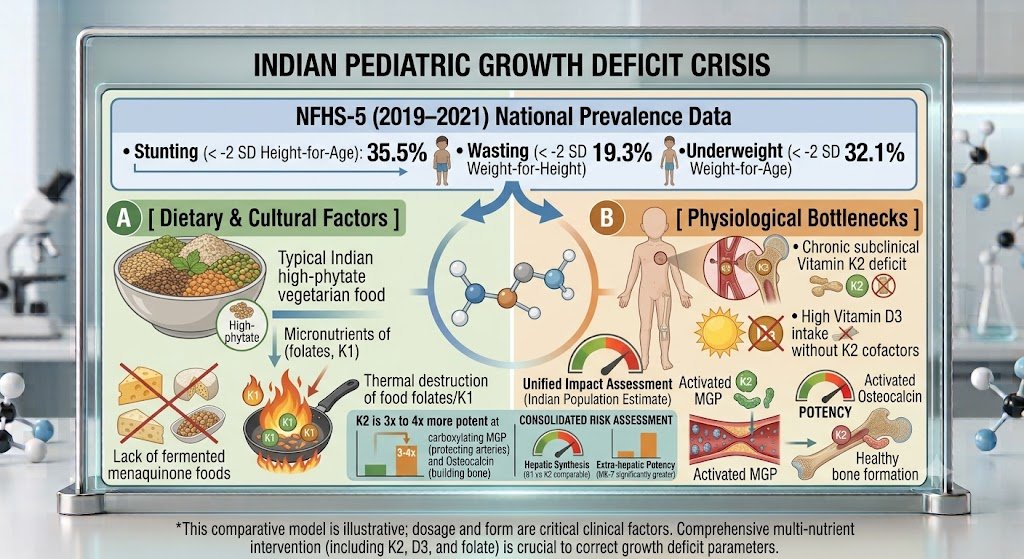
India continues to carry one of the heaviest global burdens of childhood linear growth deficits. Data from the National Family Health Survey-5 (NFHS-5, 2019–2021) reveals that 35.5% of Indian children under five years of age are stunted (height-for-age Z-score below -2 standard deviations from the WHO growth standard), while 32.1% are underweight.
While this represents a marginal improvement from the 38.4% stunting rate documented in NFHS-4 (2015–2016), the absolute numbers indicate that tens of millions of Indian children are trapped in a state of compromised physical stature and sub-optimal skeletal accumulation.
Etiological Drivers of Height Shortfalls in Indian Children
The inability of Indian children to reach their target mid-parental height potential is driven by a complex interplay of socioeconomic, nutritional, and biochemical factors:
-
The Vegetarian & High-Phytate Dietary Landscape: Over 70% of the Indian population consumes traditional cereal- and legume-heavy diets. High concentrations of phytates and oxalates in these foods act as potent antinutrients, chelating divalent cations like Calcium (Ca+), Magnesium (Mg²), and Zinc (Zn²) in the gut lumen, drastically lowering their fractional intestinal absorption
-
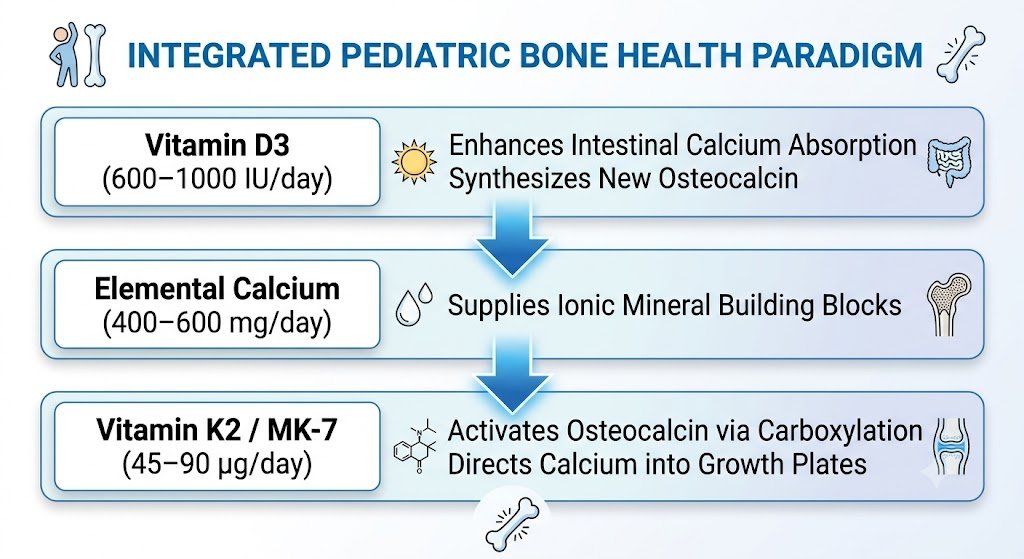
The “Calcium–Vitamin D3–Vitamin K2” Disconnect: Public health initiatives and clinical pediatric practice in India aggressively promote Vitamin D3 and Calcium supplementation. However, Vitamin D3 merely stimulates the intestinal absorption of calcium and upregulation of osteocalcin synthesis; it does not activate osteocalcin. Without Vitamin K2, newly synthesized osteocalcin remains in an inactive, undercarboxylated state (ucOC), leading to inadequate calcium deposition in the long-bone growth plates (epiphyses)
-
Absence of Dietary Menaquinones: Natural Vitamin K2 (MK-7) is synthesized primarily by specific bacterial fermentations. The richest dietary source, natto (fermented soybean), is entirely absent from Indian culinary habits. While small amounts of short-chain menaquinones (MK-4) exist in dairy fat and egg yolks, modern industrial processing and low-fat dietary trends have stripped these micro-nutrients from daily childhood diets
-
Severe Subclinical Vitamin K Deficiency: Emerging observational data across Asian pediatric cohorts indicates that over 80% of children with short stature present with subclinical Vitamin K2 deficiency (characterized by elevated circulating levels of uncarboxylated osteocalcin), compared to a significantly lower prevalence in children with normal height trajectories
Role of Vitamin K2 (MK-7) and Epiphyseal Bone Growth
Linear height growth in children occurs at the epiphyseal growth plates located at the ends of long bones (such as the femur and tibia).
This dynamic process requires continuous chondrocyte proliferation, cartilage matrix secretion, osteoblast recruitment, and precise hydroxyapatite mineral deposition.
Enzymatic Activation of Osteocalcin
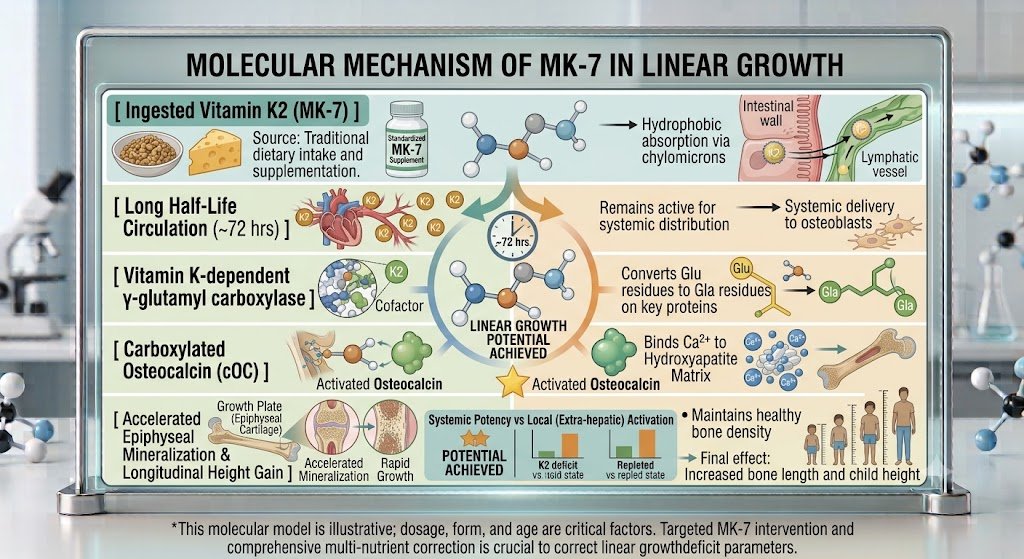
Osteocalcin is a small, 49-amino-acid non-collagenous protein produced by osteoblasts during bone formation. In its initial state, osteocalcin contains three glutamic acid (Glu) residues that have low affinity for calcium ions.
Vitamin K2 acts as an essential cofactor for the enzyme gamma-glutamyl carboxylase (GGCX). This enzyme converts the three Glu residues on osteocalcin into gamma-carboxyglutamic acid (Gla) residues. This carboxylation event structuralizes the protein, creating a high-affinity binding pocket for ionic calcium (Ca²).
Once carboxylated, active osteocalcin anchors calcium directly to the collagenous matrix within the growth plate, stimulating osteoblast differentiation, accelerating bone length expansion, and promoting longitudinal skeletal progression.
Why MK-7 Superiority Matters for Pediatric Physiology
Menaquinone-7 (MK-7) possesses distinct pharmacokinetic advantages over plant-derived Vitamin K1 (phylloquinone) and short-chain Vitamin K2 (MK-4):
-
Extended Half-Life: While Vitamin K1 and MK-4 are cleared from systemic circulation within 1 to 2 hours, MK-7 exhibits a long clearance half-life of approximately 72 hours
-
Extra-Hepatic Tissue Distribution: The liver retains the vast majority of absorbed Vitamin K1 to synthesize blood-clotting factors. In contrast, MK-7 easily bypasses hepatic clearance, circulating steadily to reach extra-hepatic target tissues like the skeletal system and epiphyses
-
Consistent Tissue Saturation: Due to its long half-life, daily MK-7 supplementation leads to stable blood levels, providing steady carboxylation of osteocalcin around the clock
Vietnam Study Analysis: MK-7 Supplementation and Pediatric Growth
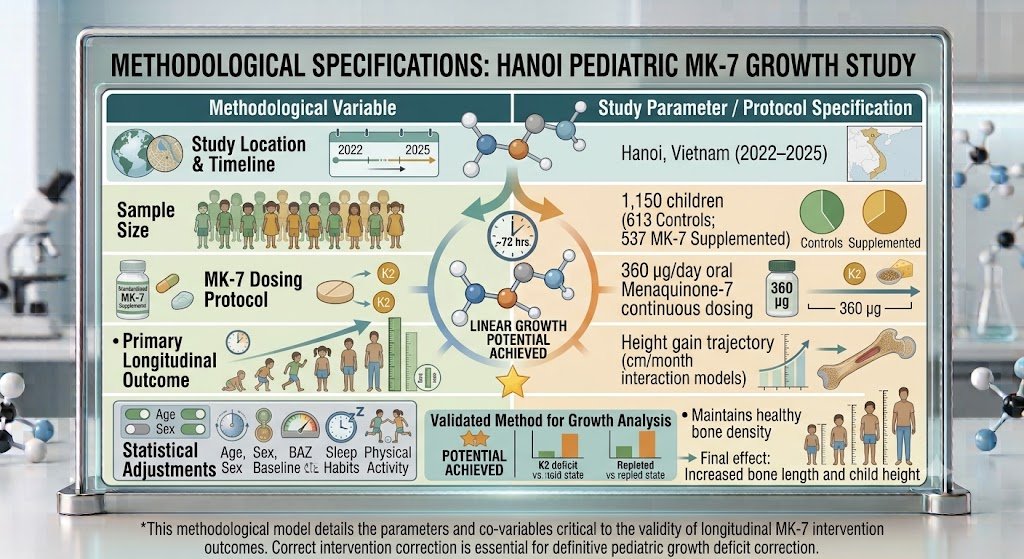
To understand whether MK-7 supplementation translates into measurable physical growth, researchers conducted a longitudinal observational trial in Hanoi, Vietnam, spanning 2022 to 2025.
Study Methodology & Design
-
Cohort Size & Demographics: 1,150 apparently healthy children aged 6–14 years
-
Control Group: 613 children receiving standard care without MK-7.
-
Intervention Group: 537 children receiving 360 mcg/day of oral MK-7
-
-
Measurement Datasets: A total of 3,491 repeated longitudinal height measurements collected over three years
-
Pubertal Stratification: Recognizing that growth velocities change dramatically during puberty, the investigators stratified participants into no-puberty and pre-puberty subgroups
-
Statistical Modeling: Multivariable linear regression and initial mixed-effects models were employed. To account for follow-up imbalances after early visits, the primary regression analysis evaluated the interaction between MK-7 supplementation and follow-up duration (beta-estimate representing rate of height gain in cm/month), adjusted for baseline age, sex, baseline body mass index-for-age Z-score (BAZ), early sleep habits, and physical activity levels.
Key Analytical Findings
1. Baseline Effect vs. Cumulative Time-Dependent Effect
The study revealed that MK-7 supplementation alone was not independently associated with immediate height gain at baseline. Simply introducing MK-7 did not produce a sudden spike in height. However, a statistically significant positive interaction emerged between MK-7 supplementation and follow-up duration.
This demonstrates that Vitamin K2 operates through a cumulative biological mechanism—steady supplementation gradually accelerates linear growth velocity over time rather than producing acute, immediate gains.
2. Subgroup-Specific Sensitivity
-
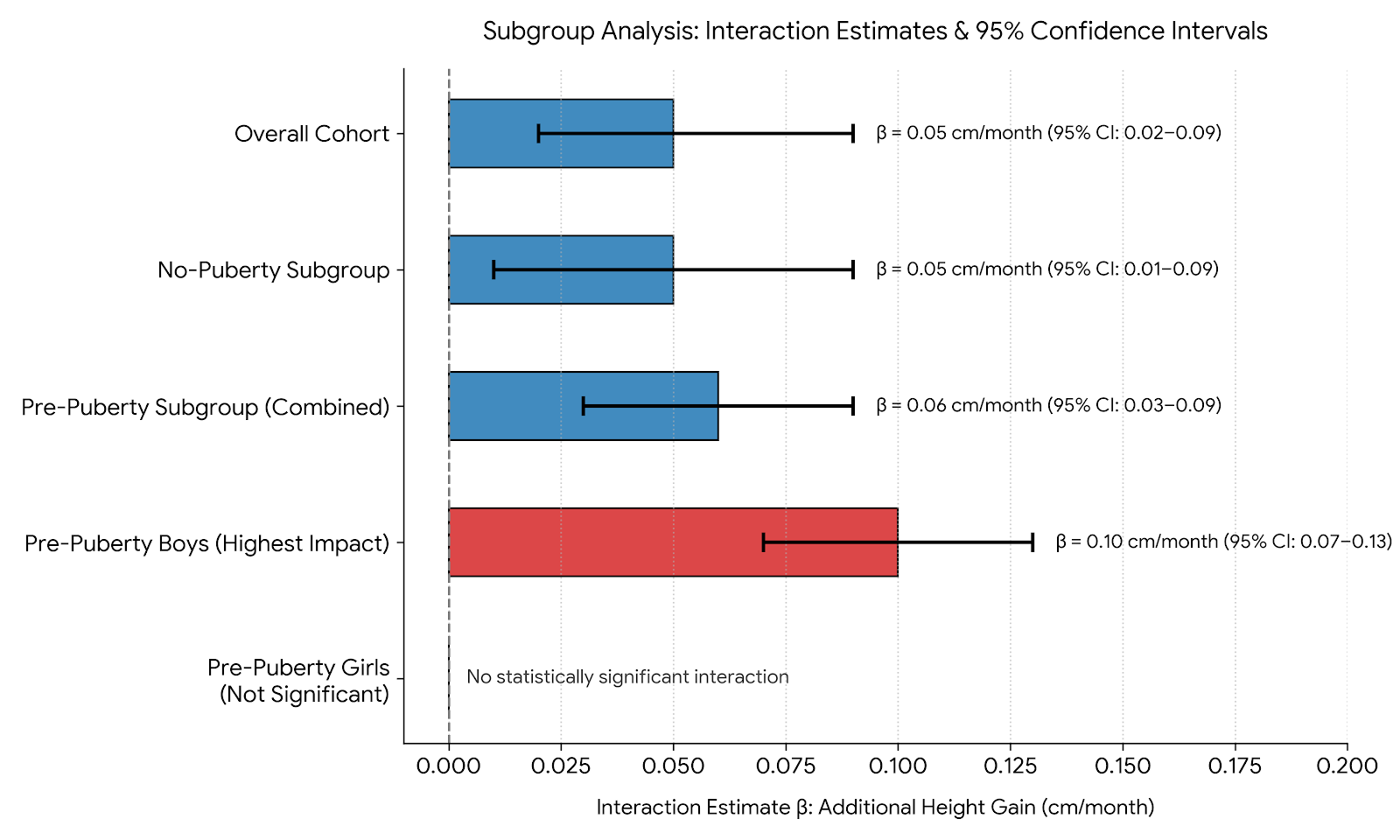
The Pre-Pubertal Advantage: The strongest growth response was observed in children in pre-pubertal stages. Pre-puberty represents a critical “window of opportunity” where epiphyseal plates are open and bone turnover is exceptionally responsive to matrix mineralization cofactors
-
Sex-Specific Divergence: The largest interaction estimate occurred among pre-puberty boys, who achieved an additional height gain of beta = 0.10 cm/month (95% CI: 0.07 – 0.13). Over a 12-month period, this translates to an extra 1.2 cm of height gain per year directly attributable to the cumulative interaction of MK-7. Conversely, pre-pubertal girls did not display a statistically significant height interaction, suggesting differences in hormonal timing, growth spurt dynamics, or epiphyseal maturation rates between sexes.
3. Methodological Nuances and Limitations
The study authors cautioned that while the findings are promising, several limitations must be acknowledged:
-
Observational Design: Being observational rather than a randomized placebo-controlled trial (RCT), residual confounding cannot be completely ruled out.
-
Follow-up Imbalance: Substantial loss to follow-up occurred after the initial assessment, forcing investigators to restrict primary regression models to baseline and first follow-up observations to maintain statistical validity.
Translational Application: Strategy for the Indian Pediatric Population
Translating the Hanoi study findings to India offers a potential strategy for addressing the national child stunting challenge. Because Southeast Asian and South Asian children share similar dietary profiles—characterized by low dairy intake, high phytate consumption, and minimal fermented foods—the physiological impact of MK-7 is directly relevant to Indian pediatric care.
Addressing the Height Deficit in Indian Children
-
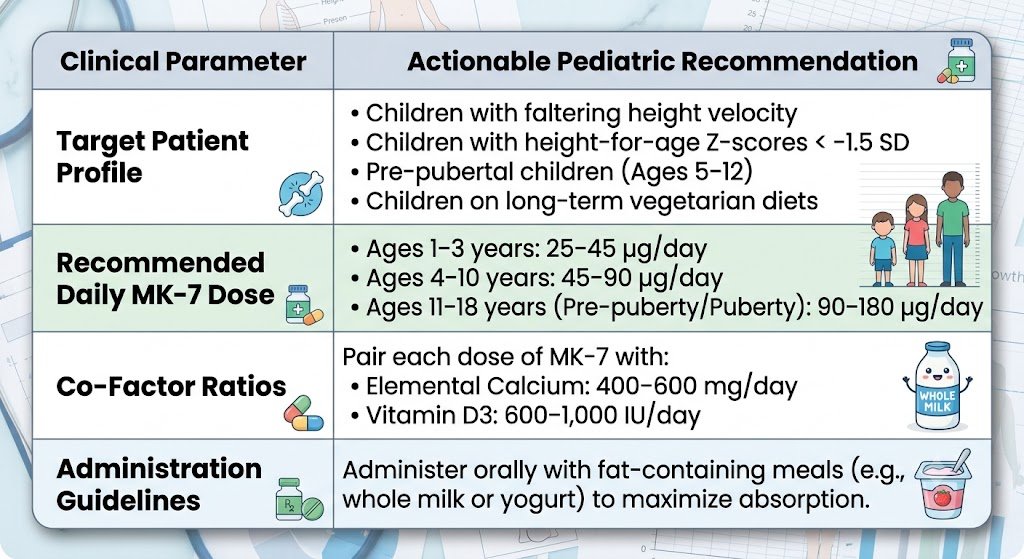
Target the Pre-Pubertal Window: The study confirms that the maximum height response to MK-7 occurs during pre-puberty (beta = 0.10 cm/month in boys). Public health interventions in India should target children aged 5 to 11 years, capitalizing on this responsive growth window before epiphyseal fusion occurs.
-
Shift from Monotherapy to “Triple-Nutrient” Frameworks: Current Indian clinical protocols rely heavily on Calcium + Vitamin D3 dual therapy. These guidelines should be updated to a Triple-Nutrient Paradigm (Calcium + D3 + MK-7). Vitamin D3 increases calcium absorption and osteocalcin production, while MK-7 ensures that calcium is directed into the bone matrix rather than being excreted or deposited in soft tissue.
-
Continuous, Long-Term Dosing: The study demonstrates that MK-7 does not produce instant results; its benefits accumulate over time. Supplemental regimens must emphasize uninterrupted daily intake for at least 12 to 36 months to produce tangible height gains.
-
Counteracting Phytate-Induced Deficits: In high-phytate vegetarian Indian diets, fractional calcium absorption is naturally lower. Adding MK-7 ensures that the calcium that does get absorbed is efficiently targeted to epiphyseal bone tissue.
Clinical Practice Guidelines for Pediatricians
For Indian pediatricians, endocrinologists, and clinical dietitians seeking to integrate Vitamin K2 into daily practice, the following evidence-backed recommendations provide a structured framework:
Safety and Tolerability Profile
Menaquinone-7 possesses an outstanding safety profile in pediatric populations. As a fat-soluble nutrient with no documented upper limit toxicity in healthy children, high-dose MK-7 (up to 360 mcg/day, as used in the Hanoi trial) shows no adverse metabolic effects, liver toxicity, or abnormal hypercoagulability. Because Vitamin K2 specifically carboxylates extra-hepatic proteins, it does not induce pathological blood clotting in children with normal coagulation profiles.
Strategic Conclusions and Policy Roadmap for Indian Children
The 3-year Hanoi longitudinal study provides important evidence connecting continuous Vitamin K2 (MK-7) supplementation with accelerated linear growth velocity in children, particularly among pre-pubertal boys.
For India—where over one-third of children under five suffer from stunting and millions fail to reach their full height potential due to sub-optimal bone mineralization—these findings carry significant public health implications:
-
Nutritional Policy Integration: National nutritional programs (such as POSHAN Abhiyaan and the PM-POSHAN School Mid-Day Meal Scheme) should consider evaluating Vitamin K2 alongside traditional micronutrient fortification programs
-
Pediatric Clinical Practice: Healthcare providers should look beyond Calcium and Vitamin D3 monotherapies, adopting an integrated approach that includes MK-7 to ensure effective bone mineralization
-
Future Research Imperatives: Randomized, double-blind, placebo-controlled trials (RCTs) focused on Indian pediatric cohorts are needed to confirm optimal dosing strategies, explore sex-specific responses, and quantify long-term height outcomes across the subcontinent