


This is our longest but most comprehensive and most researched piece yet – promise, each and every second spent on this piece is much more than worth it.
Imagine two adults standing side by side.
One is a 48-year-old Indian man with a Body Mass Index (BMI) of 23 kg/m², a waist circumference of 92 cm, and a seemingly healthy appearance. The other is a 48-year-old European man with a BMI of 28 kg/m². Conventional wisdom might suggest that the second individual is at greater risk of developing type 2 diabetes because of his higher BMI.
Decades of research tell a different story – Asian Indian Phenotype
The Indian man is often more likely to develop type 2 diabetes, metabolic dysfunction-associated steatotic liver disease (MASLD), hypertension, and cardiovascular disease—even though he weighs significantly less and has significantly “lower and normal” BMI. This striking observation has puzzled scientists for years and has led to one of the most important concepts in modern metabolic medicine: the Asian Indian phenotype.
India is home to one of the largest populations of people living with diabetes. More concerning is that many Indians develop diabetes 5–10 years earlier than Western populations and at much lower BMI levels than westerners. In many cases, Indians who appear lean by conventional standards are found to have significant insulin resistance, excess visceral fat, fatty liver and impaired glucose metabolism. This disconnect between body weight and metabolic health has profound implications for screening, prevention, and treatment.
Understanding why this happens is essential—not only for people already living with diabetes but also for the millions of Indians who believe that a normal weight automatically protects them from metabolic disease.
India: The Diabetes Capital of the World?
India has witnessed one of the fastest increases in diabetes globally over the past three decades. Rapid urbanization, changes in dietary habits, reduced physical activity, longer life expectancy, and genetic susceptibility have all contributed to this growing burden.
According to estimates from the International Diabetes Federation (IDF), India has more than 100 million adults living with diabetes, with many more affected by prediabetes. Large national studies such as ICMR-INDIAB have also shown that the prevalence of diabetes and prediabetes continues to rise in both urban and rural areas, highlighting that the epidemic is no longer confined to cities.
The consequences extend far beyond elevated blood glucose. Diabetes substantially increases the risk of cardiovascular disease, kidney disease, vision loss, nerve damage, and certain cancers. Importantly, these complications often begin years before diabetes is formally diagnosed, underscoring the importance of early identification and prevention.
A Different Kind of Metabolic Risk
One of the most important discoveries in metabolic medicine is that not all obesity looks the same. Similarly, not all lean individuals are metabolically healthy.
Researchers have described a subgroup of people who appear lean externally but have metabolic characteristics commonly associated with obesity. These individuals may have:
- Excess visceral fat surrounding internal organs
- Reduced skeletal muscle mass
- Fat accumulation in the liver
- Increased insulin resistance
- Chronic low-grade inflammation
- Elevated triglycerides
- Lower HDL (“good”) cholesterol
This condition has been described as Metabolically Obese, Normal Weight (MONW) or, more colloquially, Thin Outside, Fat Inside (TOFI).
South Asians—and particularly Indians—are disproportionately represented in this group.
What Is the Asian Indian Phenotype?
The term Asian Indian phenotype refers to a distinctive pattern of body composition and metabolism observed among people of Indian origin. Compared with many European populations, Indians tend to develop metabolic diseases at lower levels of overall body weight because of differences in how fat is distributed and how the body responds to insulin. Several characteristics define this phenotype:
- Higher percentage of body fat despite a normal BMI
- Greater accumulation of visceral (abdominal) fat
- Lower skeletal muscle mass
- Higher insulin resistance
- Increased liver fat
- Greater tendency to develop metabolic syndrome
These features can be present even in individuals who are not overweight according to conventional BMI categories.
Why BMI Doesn’t Tell the Whole Story
BMI has long been used as a simple way to classify body weight. It is calculated by dividing weight in kilograms by the square of height in metres. While BMI is useful for population-level assessments, it has important limitations when applied to individuals—especially Indians.
BMI measures total body weight, not body composition. It cannot distinguish between:
- Muscle and fat
- Subcutaneous fat and visceral fat
- Healthy weight and unhealthy fat distribution
Two individuals with the same BMI may have very different metabolic profiles. One may have more muscle and less visceral fat, while the other may carry excess abdominal fat and have a much higher risk of diabetes.
Recognizing these differences, several expert groups recommend lower BMI cut-offs for Asian populations, reflecting their higher metabolic risk at lower body weights.
The Hidden Fat You Cannot See
When most people think of body fat, they imagine the fat beneath the skin. However, the fat that poses the greatest metabolic threat is often invisible.
Visceral fat accumulates deep within the abdominal cavity, surrounding organs such as the liver, pancreas, and intestines. Unlike subcutaneous fat, visceral fat is metabolically active. It releases inflammatory molecules, free fatty acids, and hormones that interfere with normal insulin signaling.
This helps explain why someone with a relatively slim appearance may still have a high risk of diabetes. Excess visceral fat contributes to:
- Insulin resistance
- Fatty liver disease
- Elevated blood triglycerides
- Increased inflammation
- High blood pressure
For Indians, waist circumference often provides a better indication of metabolic risk than BMI alone.
Why Diabetes Appears Earlier in Indians
Another striking feature of diabetes in India is the age at diagnosis. Compared with many Western countries, Indians often develop:
- Prediabetes in their 30s
- Type 2 diabetes in their 40s
- Cardiovascular disease at younger ages
Earlier onset means that individuals are exposed to high blood glucose for a longer period, increasing the lifetime risk of complications affecting the heart, kidneys, eyes, nerves, and brain.
This earlier onset also has significant economic consequences, affecting productivity and increasing healthcare costs during the most active years of life.
Screening Should Begin Earlier
Given these unique characteristics, relying solely on BMI may delay diagnosis in many Indians.
Individuals should consider metabolic screening—particularly if they have a family history of diabetes or central obesity—even if they appear lean. Routine assessments may include:
- Fasting blood glucose
- HbA1c
- Lipid profile
- Waist circumference
- Blood pressure
- Liver function tests where appropriate
Early identification allows lifestyle interventions to begin before irreversible damage occurs.
Why Are Indians More Susceptible to Diabetes?
One of the biggest misconceptions about diabetes is that it develops simply because people eat too much sugar or become overweight. While diet and physical inactivity are major contributors, they are only part of the story.
For Indians, the risk of diabetes begins much earlier—often before birth—and is shaped by a complex interaction between genetics, fetal nutrition, body composition, muscle mass, visceral fat, and the environment.
Scientists now recognize that the “Asian Indian phenotype” is not caused by a single gene or a single lifestyle factor. Instead, it reflects decades of biological adaptation interacting with rapid modernization.
This combination explains why millions of Indians develop insulin resistance, fatty liver, and type 2 diabetes despite having a BMI considered “normal” by international standards.
“Thin Outside, Fat Inside” (TOFI) Phenomenon
One of the most important concepts in metabolic medicine is TOFI—Thin Outside, Fat Inside. A person with TOFI may:
- Have a normal BMI
- Wear regular-sized clothing
- Look lean externally
- Yet carry dangerous amounts of fat around internal organs
This hidden fat is known as visceral fat, and it behaves very differently from the fat just beneath the skin.
Unlike subcutaneous fat, visceral fat acts like an active endocrine organ. It continuously releases hormones, inflammatory proteins, and fatty acids that interfere with insulin action throughout the body. This explains why many Indians who appear slim develop:
- Prediabetes
- Type 2 diabetes
- Fatty liver disease
- High triglycerides
- High blood pressure
long before they become visibly overweight.
Visceral Fat: Most Dangerous Fat in the Body
Not all body fat is harmful. Subcutaneous fat, found beneath the skin, serves as an energy reserve and helps regulate body temperature.
Visceral fat is different. It surrounds organs including:
- Liver
- Pancreas
- Intestines
- Kidneys
This fat is metabolically active. Research shows visceral fat releases:
- Tumor Necrosis Factor-alpha (TNF-α)
- Interleukin-6 (IL-6)
- Monocyte Chemoattractant Protein-1 (MCP-1)
- Free fatty acids
These molecules create a state of chronic low-grade inflammation, often called metaflammation. Unlike the inflammation associated with infections, metaflammation is silent. There is:
- no fever,
- no pain,
- no obvious symptoms.
Yet over many years it gradually damages:
- insulin receptors,
- blood vessels,
- pancreatic beta cells,
- liver cells.
This persistent inflammatory environment is one of the earliest biological changes preceding diabetes.
Liver Becomes Overloaded
Excess visceral fat continuously releases fatty acids directly into the portal vein. The portal vein carries blood from the intestines to the liver. As a result, the liver receives an excessive supply of fat every day. Initially, the liver stores these fats.
Over time:
- fat accumulates,
- insulin sensitivity declines,
- glucose production increases,
- fatty liver develops.
This condition, now called Metabolic Dysfunction-Associated Steatotic Liver Disease (MASLD), is closely linked to diabetes.
Studies show that fatty liver often develops years before diabetes is diagnosed, making it an early warning sign of metabolic dysfunction.
Pancreas Cannot Keep Up Forever
The pancreas contains specialized cells called beta cells. These cells produce insulin.
When insulin resistance develops, the pancreas initially responds by producing larger amounts of insulin. This phase is called compensatory hyperinsulinemia.
Blood glucose remains normal because insulin production increases. However, this compensation has limits. Years of overwork eventually exhaust beta cells, leading to:
- Insulin production begins to decline
- Blood sugar rises
- Prediabetes appears
Without intervention, type 2 diabetes follows.
Indians Have Lower Beta-Cell Reserve
One of the most important discoveries over the past two decades is that South Asians appear to have reduced beta-cell functional reserve compared with many European populations. This means: when insulin resistance develops, the pancreas has less capacity to compensate. Consequently, diabetes develops earlier, at lower BMI, and with less overall obesity.
Several studies suggest that impaired beta-cell function is a major reason why diabetes develops so rapidly among Indians.
Muscle: The Forgotten Organ in Diabetes Prevention
Most discussions about diabetes focus on body fat. Far less attention is paid to skeletal muscle, even though it is the body’s largest site of glucose disposal.
After every meal: approximately 70–80% of circulating glucose is removed from the bloodstream by skeletal muscle. Healthy muscle acts like a sponge. It absorbs glucose. Stores glycogen. Burns energy. Improves insulin sensitivity.
Unfortunately, many Indians have relatively lower muscle mass than Western populations—even at similar BMI. This phenomenon is sometimes called sarcopenic adiposity, meaning:
less muscle,
more fat,
higher metabolic risk.
Why Do Indians Have Less Muscle?
Researchers believe multiple factors contribute.
1. Childhood Undernutrition
Millions of Indians experience inadequate nutrition during pregnancy and early childhood. This limits muscle development during critical growth periods. The effects may persist throughout life.
2. Low Protein Intake and Poor Quality Protein Intake
Large segments of the Indian population consume less protein than recommended. Contributing factors include:
- cereal-dominant diets,
- vegetarian eating patterns,
- economic limitations,
- poor dietary diversity.
Lower protein intake reduces muscle protein synthesis. Over decades, muscle mass gradually declines.
3. Physical Inactivity
Urban lifestyles have dramatically reduced daily movement. Desk jobs, screen time, motorized transport, and reduced manual labor contribute to progressive muscle loss.
4. Aging
Beginning around age 30, adults naturally lose muscle each decade. Without resistance exercise and adequate protein, this process accelerates.
Why Less Muscle Means More Diabetes
Lower muscle mass means:
less glucose storage,
lower insulin sensitivity,
higher blood glucose after meals,
greater stress on pancreatic beta cells.
Even relatively small reductions in muscle mass substantially increase diabetes risk. This explains why strength training has become one of the most effective strategies for preventing type 2 diabetes.
The Thrifty Genotype Hypothesis
Scientists have long wondered why South Asians appear particularly susceptible to diabetes. One influential explanation is the Thrifty Genotype Hypothesis. Thousands of years ago, food shortages were common. Individuals whose genes efficiently stored energy during times of abundance were more likely to survive famine.
These “energy-saving” genes became advantageous. Today, our environment has changed dramatically. Instead of famine, many people experience: continuous food availability, high-calorie – calorie sufficient, nutrition deficient – diets, physical inactivity.
Genes that once protected survival now predispose people to obesity and diabetes. Although no single “thrifty gene” has been identified, several diabetes-associated genetic variants have been discovered in South Asian populations. Researchers now believe diabetes results from the combined effects of hundreds of genetic variations interacting with modern lifestyles.
The Thrifty Phenotype Hypothesis
Another influential theory focuses not on genes, but on nutrition before birth. Known as the Thrifty Phenotype Hypothesis, it proposes that poor fetal nutrition permanently programs metabolism. If a fetus develops in an environment with limited nutrients,
its organs adapt for survival. These adaptations include:
- smaller pancreas,
- fewer beta cells,
- altered insulin sensitivity,
- reduced muscle development,
- greater energy conservation.
If that child later grows up in an environment with abundant calories, the mismatch greatly increases diabetes risk.
Evidence from India
Several landmark studies have supported this concept. One of the best known is the Pune Maternal Nutrition Study. Researchers observed that babies born with lower birth weight were significantly more likely to develop insulin resistance and metabolic disease later in life. Importantly, many of these individuals never became obese.
Instead, they developed the characteristic Indian metabolic phenotype:
- central obesity,
- fatty liver,
- insulin resistance,
- diabetes.
This work helped establish the importance of maternal nutrition in preventing future diabetes.
Diabetes Begins Before Symptoms Appear
One of the biggest challenges is that diabetes develops silently. Long before blood glucose becomes abnormal, many biological changes have already occurred. These include:
✓ increasing visceral fat
✓ declining muscle mass
✓ chronic inflammation
✓ fatty liver
✓ insulin resistance
✓ elevated fasting insulin
✓ impaired beta-cell function
By the time diabetes is diagnosed a DECADE or more later, these processes may have been progressing for 10–15 years. This underscores why prevention must begin much earlier than most people realize.
Gut Microbiome: Your Hidden Metabolic Organ
Inside every healthy human intestine lives an astonishing community of microorganisms collectively known as the gut microbiome. This ecosystem contains:
- Around 38 trillion microorganisms
- More than 1,000 bacterial species
- Millions of unique genes
- A metabolic capacity that rivals many human organs
Far from being passive passengers, these microbes perform essential functions that influence digestion, immunity, vitamin synthesis, inflammation, and metabolism. Many scientists now refer to the gut microbiome as a “forgotten organ” because of its profound impact on human health.
Over the past decade, research has shown that the gut microbiome also plays a central role in obesity, insulin resistance, fatty liver disease, cardiovascular disease, and type 2 diabetes. For Indians, whose metabolic risk is already elevated because of the Asian Indian phenotype, maintaining a healthy gut microbiome may be especially important.
The Gut–Pancreas–Liver Connection
Traditionally, diabetes was viewed as a disease involving only the pancreas and insulin. Modern science paints a much broader picture. The gut, liver, pancreas, immune system, and brain constantly communicate through a complex network known as the gut–liver–pancreas axis. Every meal influences this communication.
Food not only nourishes us—it also feeds trillions of gut bacteria. In response, these microbes produce metabolites that can either support metabolic health or promote disease.
When the microbiome is balanced, these metabolites help regulate appetite, improve insulin sensitivity, strengthen the intestinal barrier, and reduce inflammation. When the microbiome is disrupted—a condition called gut dysbiosis—the opposite occurs. Harmful bacterial products enter the bloodstream, inflammation increases, insulin signaling deteriorates, and the liver begins to accumulate fat.
This helps explain why poor gut health is increasingly recognized as an early contributor to diabetes rather than merely a consequence of it.
What Is Gut Dysbiosis?
A healthy gut contains a diverse community of beneficial bacteria that coexist in balance. Gut dysbiosis occurs when this balance is disturbed. It is typically characterized by:
- Reduced microbial diversity
- Loss of beneficial bacteria
- Overgrowth of potentially harmful bacteria
- Reduced production of beneficial metabolites
- Increased intestinal permeability
Several factors common in modern lifestyles contribute to dysbiosis, including:
- Diets low in fibre
- High intake of refined carbohydrates
- Frequent consumption of ultra-processed foods
- Excess saturated fat
- Excessive sugar intake
- Physical inactivity
- Chronic psychological stress
- Poor sleep
- Repeated or unnecessary antibiotic use
These factors are increasingly prevalent in urban India, paralleling the country’s rapidly rising rates of obesity, fatty liver disease, and type 2 diabetes.
Beneficial Bacteria: Tiny Allies for Metabolic Health
Researchers have identified several bacterial groups that are consistently associated with better metabolic health. Among the most important are Faecalibacterium prausnitzii, Roseburia, Akkermansia muciniphila, Bifidobacterium, and certain species of Lactobacillus. These microbes perform several beneficial functions:
- Ferment dietary fibre
- Produce short-chain fatty acids
- Strengthen the intestinal barrier
- Reduce inflammation
- Improve insulin sensitivity
- Support healthy immune regulation
People with obesity, fatty liver disease, or type 2 diabetes often have lower levels of these beneficial organisms. Although microbiome profiles vary across populations, reduced abundance of butyrate-producing bacteria is a consistent finding in many metabolic disorders.
Short-Chain Fatty Acids: Small Molecules with Big Effects
One of the microbiome’s most important contributions to human health is the production of short-chain fatty acids (SCFAs). The three principal SCFAs are:
- Acetate
- Propionate
- Butyrate
These molecules are produced when gut bacteria ferment dietary fibre that reaches the large intestine. Among them, butyrate has attracted particular attention because of its broad metabolic benefits.
Butyrate serves as the primary energy source for cells lining the colon. It helps maintain the integrity of the intestinal barrier, reducing the leakage of bacterial toxins into the bloodstream. It also exhibits anti-inflammatory effects and influences glucose metabolism through several pathways. Experimental studies suggest that higher butyrate production is associated with improved insulin sensitivity, reduced liver fat, better appetite regulation, and lower systemic inflammation.
Intestinal Barrier: A Protective Wall
The lining of the intestine forms a highly selective barrier. It allows nutrients to enter the bloodstream while preventing harmful bacteria and toxins from crossing into the body.
This barrier depends on specialized proteins known as tight junctions, together with a healthy mucus layer and a balanced microbiome. When gut dysbiosis develops, the intestinal barrier may become more permeable. This phenomenon is sometimes described as increased intestinal permeability.
Although the popular term “leaky gut” is often oversimplified, increased permeability is recognized in scientific literature as an important contributor to chronic inflammation in several metabolic diseases.
Lipopolysaccharides: Tiny Molecules with Major Consequences
Certain bacteria possess components called lipopolysaccharides (LPS) in their outer membranes. When the intestinal barrier becomes compromised, small amounts of LPS can enter the bloodstream. This process has been termed metabolic endotoxemia.
Even low concentrations of circulating LPS can activate the immune system, triggering chronic inflammation that interferes with insulin signaling. Animal and human studies suggest that metabolic endotoxemia contributes to:
- insulin resistance,
- fatty liver,
- obesity,
- beta-cell stress.
Ultra-Processed Foods and the Microbiome
Ultra-processed foods (UPFs) are increasingly common in both urban and semi-urban India. These products are often high in:
- refined starch,
- added sugars,
- unhealthy fats,
- salt,
- emulsifiers,
- preservatives,
- artificial flavorings.
Several studies suggest that diets rich in UPFs are associated with reduced microbial diversity and lower abundance of beneficial bacteria. Some food additives may also alter the intestinal mucus layer or influence microbial composition, although research in this area is ongoing. Replacing UPFs with minimally processed foods remains one of the most consistent dietary recommendations for improving overall metabolic health.
Micronutrients and Diabetes: More Than Just Blood Sugar
While calories and carbohydrates receive most attention, several micronutrients play important roles in glucose metabolism.
Magnesium
Magnesium participates in hundreds of enzymatic reactions, many of which are involved in insulin signaling and glucose utilization. Low magnesium status has been associated with insulin resistance and an increased risk of type 2 diabetes.
Vitamin D
Vitamin D receptors are present in pancreatic beta cells and immune cells. Observational studies have reported associations between low vitamin D status and increased diabetes risk. However, supplementation appears to be most beneficial in individuals who are genuinely deficient rather than in those with adequate levels.
Vitamin B12
Vitamin B12 deficiency is relatively common in India, particularly among vegetarians and older adults. Long-term use of metformin, one of the most commonly prescribed diabetes medications, can further reduce vitamin B12 absorption.
Periodic monitoring of B12 status is therefore recommended for individuals taking metformin over extended periods.
Zinc
Zinc is essential for insulin synthesis, storage, and secretion. It also supports antioxidant defenses and immune function.
Although severe zinc deficiency is uncommon, inadequate intake may contribute to impaired glucose regulation, particularly in populations consuming diets high in phytates and low in animal-source foods.
Chromium
Chromium has long been investigated for its role in insulin action. While deficiency is rare, supplementation has shown mixed results in clinical trials, and routine chromium supplementation is not universally recommended for diabetes prevention.
Good News: Type 2 Diabetes Is Often Preventable
After reading about genetics, fetal programming, gut bacteria, visceral fat, inflammation and insulin resistance, it is easy to conclude that diabetes is inevitable for Indians. Fortunately, that is not what the scientific evidence shows.
Although Indians have a higher biological susceptibility, genes are not destiny. Large clinical trials from around the world—including the Diabetes Prevention Program (DPP) in the United States and the Finnish Diabetes Prevention Study—have consistently demonstrated that lifestyle modification can reduce the risk of developing type 2 diabetes by approximately 58% among people with prediabetes. Similar findings have been reported in Asian populations, although the exact magnitude of benefit varies depending on age, baseline risk, and adherence to lifestyle changes.
The key message is simple: Your genetic risk may load the gun, but your lifestyle often determines whether the trigger is pulled.
Why Early Detection Matters More for Indians
One of the biggest challenges is that type 2 diabetes develops silently. Many people have:
- normal energy levels,
- no pain,
- no obvious symptoms,
- no noticeable weight gain,
yet their blood sugar has already begun to rise. Studies suggest that insulin resistance may develop 10–15 years before diabetes is diagnosed. During this period, damage to blood vessels, nerves, kidneys, eyes and the liver may already be underway.
For Indians, waiting until symptoms appear often means missing the best opportunity for prevention.
Who Should Be Screened?
Many experts now recommend that Indians undergo metabolic screening earlier and more frequently than populations with lower baseline risk. Screening is particularly important if you have:
- A family history of diabetes as all may have similar food habits
- A waist circumference above recommended limits
- High blood pressure
- Elevated triglycerides
- Low HDL cholesterol
- Fatty liver disease
- Polycystic ovary syndrome (PCOS)
- History of gestational diabetes
- Sedentary lifestyle
- Sleep apnea
- Prediabetes
Even individuals with a normal BMI should consider screening if one or more of these risk factors are present.
Beyond BMI: Better Ways to Assess Risk
Although BMI remains useful for population studies, it should not be the only tool used to evaluate metabolic health in Indians. More informative measures include:
Waist Circumference
Excess abdominal fat is more strongly associated with diabetes than overall body weight.
South Asian-specific cut-offs are generally lower than those used for Western populations because metabolic risk begins earlier.
Waist-to-Height Ratio
Many experts recommend maintaining a waist circumference less than half your height. This simple measure correlates well with visceral fat and cardiometabolic risk.
Body Composition
Where available, body composition analysis can estimate:
- Body fat percentage
- Skeletal muscle mass
- Visceral fat
These measurements often provide more useful information than body weight alone.
Building Muscle: One of the Best Investments in Metabolic Health
As discussed in Part 2, skeletal muscle is responsible for disposing of the majority of glucose after meals. Maintaining or increasing muscle mass improves:
- Insulin sensitivity
- Glucose uptake
- Basal metabolic rate
- Functional independence with aging
Resistance Training
Current evidence supports incorporating resistance exercises at least two to three times per week. Examples include:
- Body-weight exercises
- Resistance bands
- Free weights
- Weight machines
Even older adults benefit substantially from strength training when it is performed safely and progressively.
Physical Activity: Every Step Counts
Exercise improves glucose metabolism through mechanisms that extend beyond weight loss. Benefits include:
- Increased insulin sensitivity
- Reduced visceral fat
- Improved mitochondrial function
- Better cardiovascular fitness
- Reduced inflammation
A combination of:
- aerobic activity,
- resistance training,
- flexibility exercises,
provides the greatest overall benefit. Importantly, prolonged sitting has independent adverse effects on metabolic health. Breaking up sedentary time with short periods of movement throughout the day is associated with improved glucose control.
Nutrition: Quality Matters More Than Fad Diets
There is no single “diabetes diet” suitable for everyone. However, several consistent principles emerge from high-quality research.
Emphasize
- Vegetables as well as animal proteins
- Fruits
- Whole grains
- Legumes
- Nuts
- Seeds
- Adequate animal protein
- Healthy fats – ideally animal origin
- Fibre-rich foods
Limit
- Sugar-sweetened beverages
- Refined flour products
- Ultra-processed foods
- Excess added sugars
- Frequent consumption of fried foods
Dietary patterns such as the Mediterranean diet and traditional plant-forward diets have shown benefits for insulin sensitivity and cardiovascular health. In the Indian context, these principles can be adapted using locally available foods while preserving cultural preferences.
Sleep: The Overlooked Pillar of Metabolic Health
Modern lifestyles have dramatically reduced average sleep duration. Poor sleep affects hormones that regulate:
- appetite,
- glucose metabolism,
- stress,
- insulin sensitivity.
Short sleep duration and obstructive sleep apnea have both been associated with increased diabetes risk. Adults should aim for consistent, sufficient, high-quality sleep, recognizing that sleep needs vary between individuals.
Stress and Cortisol
Chronic psychological stress stimulates the release of cortisol, the body’s principal stress hormone. Persistently elevated cortisol can:
- Increase appetite
- Promote visceral fat accumulation
- Raise blood glucose
- Worsen insulin resistance
Stress management techniques such as mindfulness, yoga, regular physical activity, and social support may therefore contribute to overall metabolic health.
Importance of Maternal Nutrition
One of the most important lessons from the thrifty phenotype hypothesis is that diabetes prevention begins long before adulthood. Optimizing maternal health before and during pregnancy may influence the lifelong metabolic health of the next generation. Key priorities include:
- Adequate maternal nutrition
- Appropriate gestational weight gain
- Prevention and treatment of gestational diabetes
- Breastfeeding where possible
- Healthy complementary feeding during infancy
These early-life interventions have the potential to reduce future diabetes risk at the population level.
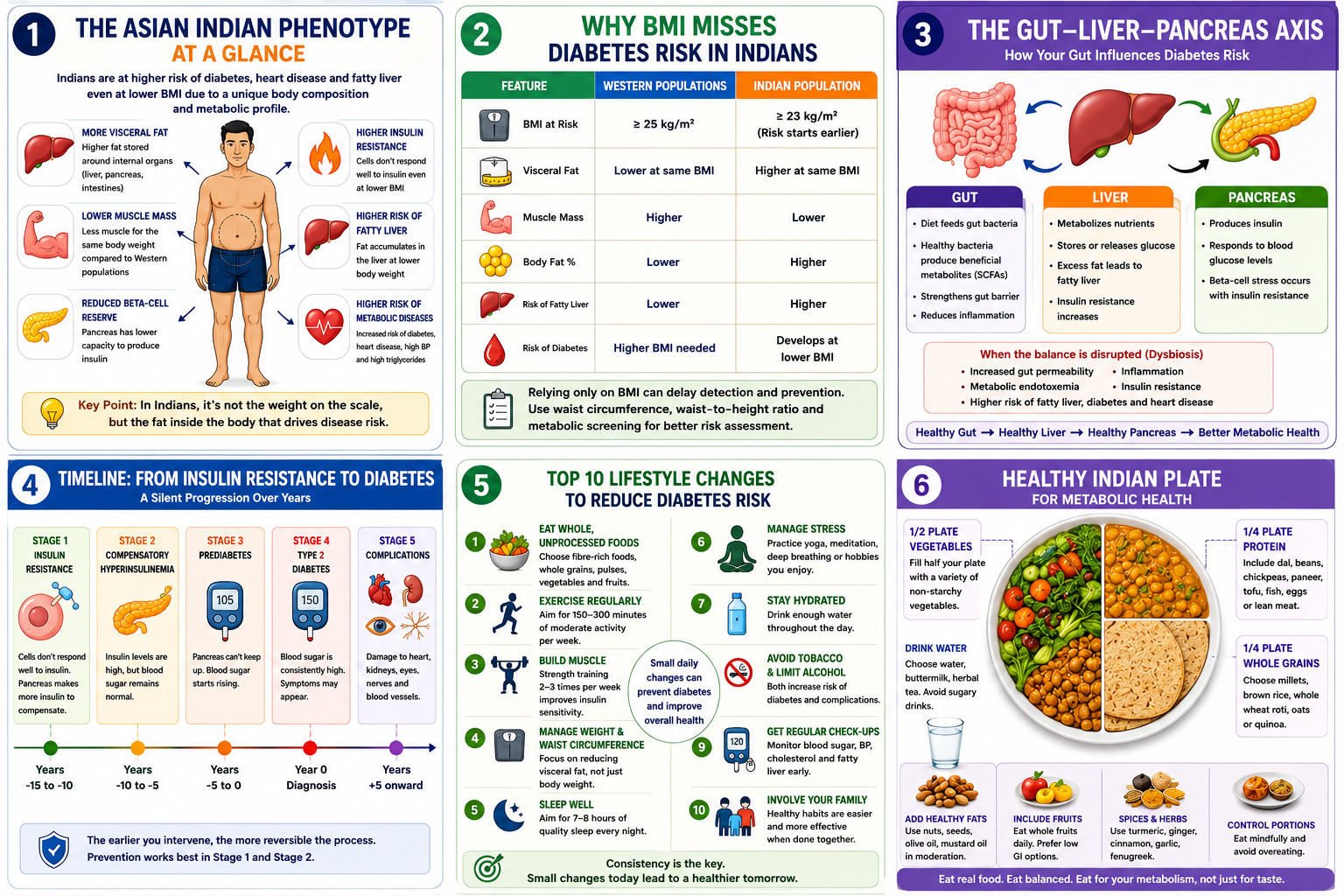

Common Myths About Diabetes in Indians
Myth 1: “I’m slim, so I can’t get diabetes.”
Reality: Many Indians develop diabetes despite having a normal BMI because of excess visceral fat, lower muscle mass, and insulin resistance.
Myth 2: “Only sugar causes diabetes.”
Reality: Diabetes results from a complex interaction between genetics, diet, physical inactivity, body composition, inflammation, and metabolic health.
Myth 3: “If my fasting glucose is normal, I’m healthy.”
Reality: Insulin resistance often develops years before fasting glucose becomes abnormal.
Myth 4: “Medication alone is enough.”
Reality: Lifestyle modification remains a cornerstone of diabetes prevention and management, even when medications are required.
Myth 5: “Diabetes is inevitable if it runs in my family.”
Reality: Family history increases risk but does not guarantee disease. Healthy lifestyle choices can substantially reduce that risk.
Frequently Asked Questions
Why do Indians get diabetes even if they are not overweight?
Many Indians have a higher proportion of visceral fat, lower muscle mass, and greater insulin resistance at lower BMI compared with many Western populations. This combination increases diabetes risk despite a normal body weight.
Is BMI accurate for Indians?
BMI is useful but has limitations. Waist circumference, waist-to-height ratio, body composition, and metabolic screening often provide a more complete assessment of risk.
Can diabetes be prevented?
Yes. Lifestyle interventions—including healthy eating, regular physical activity, maintaining muscle mass, adequate sleep, and weight management—have been shown to reduce the risk of developing type 2 diabetes in high-risk individuals.
What is the Indian phenotype?
The Asian Indian phenotype refers to a characteristic pattern of body composition and metabolism that includes greater visceral fat, lower muscle mass, increased insulin resistance, and higher metabolic risk at lower BMI.
Is fatty liver related to diabetes?
Yes. Fatty liver disease and type 2 diabetes frequently occur together and share common underlying mechanisms such as insulin resistance and visceral fat accumulation.
Conclusion
Diabetes epidemic in India cannot be explained by obesity alone. Many Indians develop metabolic disease despite appearing lean because of a unique combination of genetics, early-life programming, body composition, visceral fat distribution, gut microbiome changes, and modern lifestyle factors.
The good news is that this increased susceptibility is reversible. Evidence consistently shows that maintaining a healthy diet, preserving muscle mass, staying physically active, getting adequate sleep, managing stress, and identifying metabolic risk early can significantly reduce the likelihood of developing type 2 diabetes.
Rather than focusing exclusively on body weight, Indians should aim for metabolic health—a broader concept that includes healthy body composition, good insulin sensitivity, balanced nutrition and an active lifestyle.
As our understanding of the Asian Indian phenotype continues to evolve, it is becoming increasingly clear that prevention must begin early, screening must begin sooner and health should be judged by far more than the number displayed on a weighing scale.
Thanks for reaching thus far – Do Share with Your Loved Ones – Lets Make Every Indian Healthier, Quickly and Scientifically.
References – not a comprehensive list
- Yajnik CS. The insulin resistance epidemic in India: fetal origins and the Asian Indian phenotype. The Lancet.
- Narayan KMV, Mohan V, et al. Diabetes epidemiology in India. The Lancet Diabetes & Endocrinology.
- ICMR–INDIAB Study Group. National diabetes prevalence studies.
- International Diabetes Federation (IDF). Diabetes Atlas (latest edition).
- Dey P. Gut microbial signatures associated with the Indian lean MASLD phenotype. Frontiers in Nutrition. 2025.
- Taylor R. Pathogenesis of type 2 diabetes. Cell Metabolism.
- Nature Reviews Endocrinology. Reviews on insulin resistance and beta-cell dysfunction.
- Nature Reviews Gastroenterology & Hepatology. Reviews on the gut–liver axis.
- Gut. Reviews on gut microbiota and metabolic disease.
- NEJM, BMJ, and JAMA reviews on diabetes prevention and management.