



This is part of our special series: Evidence-Explained™ specifically and particularly dedicated for fellow Indians, as we come across Heart Attacks, Strokes and unfortunate sudden deaths on daily basis among our friend circles. Knowing about a potential risk is half-battle won and the rest half being mitigation of certain specific, risk factors. This write up helps you understand both the risk as well as potential risk mitigation steps, thoroughly evidence-based. Read on…
Atherosclerosis—the gradual accumulation of fatty plaques within arterial walls—is often misunderstood as a disease of old age. Clinical events like myocardial infarctions (heart attacks) or ischemic strokes typically occur in later life, leading many to assume that the underlying disease process begins shortly before symptoms arise.
Cardiovascular diseases (CVD) are the leading cause of morbidity and mortality worldwide including India, with atherosclerosis / Plaque in arteries, as its predominant underlying pathology. Plaque may start developing early in life and is driven by multiple factors, leading to arterial cholesterol accumulation, inflammation and endothelial dysfunction. Yet, atherosclerosis / plaque formation often remains asymptomatic, silent, until advanced stages trigger stable angina or acute events like myocardial infarction, stroke, peripheral artery disease, or sudden death.
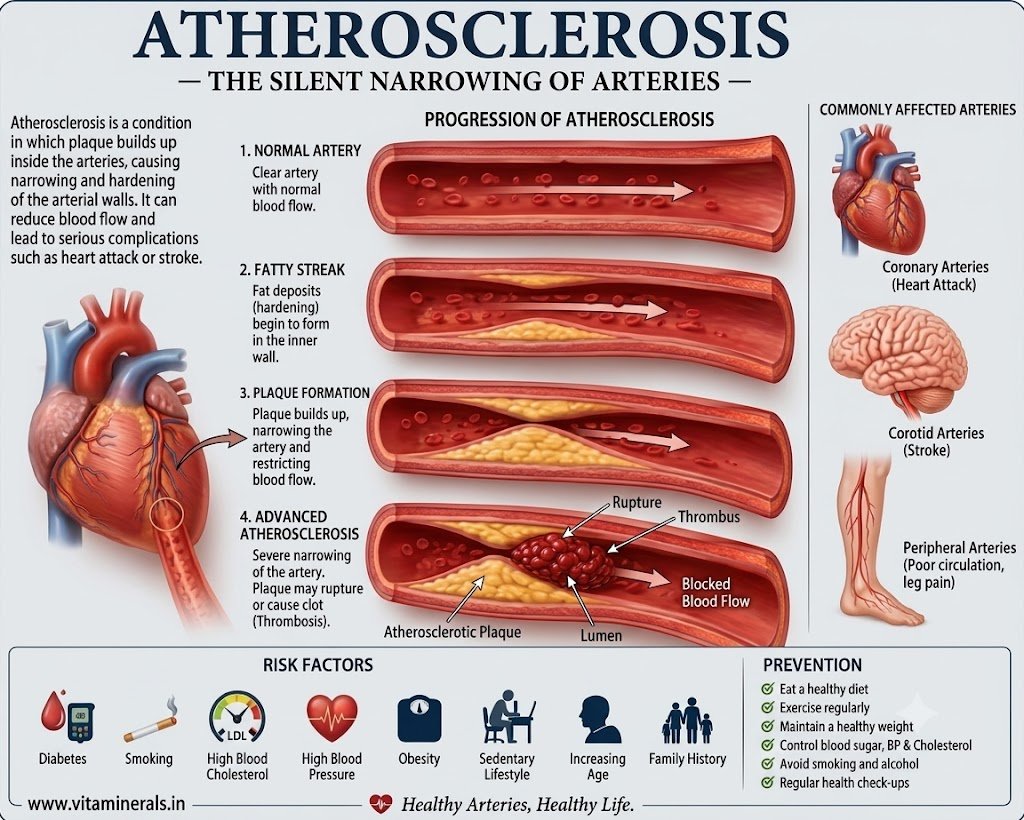
What is Silent Atherosclerosis?
- Definition: It is a systemic, progressive disease where fatty deposits harden the arterial walls (endothelium) in the heart, neck (carotid), or legs (femoral)
- The “Silent” Nature: It progresses hidden in the body. Many people only discover it after a sudden, severe cardiac event like a heart attack or a stroke
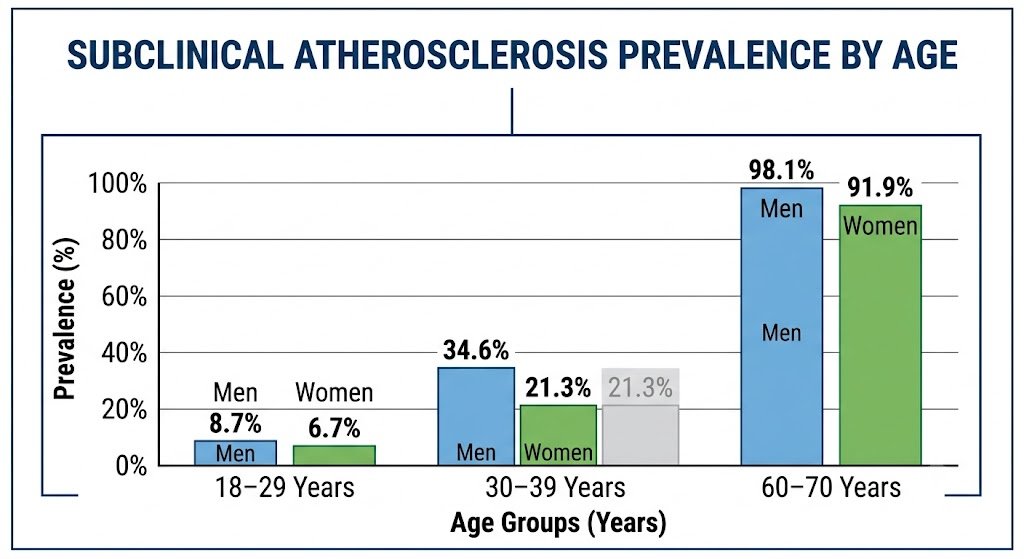
- Early Onset: Advanced imaging studies show that plaque formation can begin in early adulthood (affecting about 1 in 13 young adults aged 18–29) and grows exponentially with age
Prevalence and Impact in Indians
- Premature Onset: Indians experience coronary artery disease (CAD) roughly 10 to 20 years earlier than Western populations. The median age for a first heart attack in Indians is around 53 years, with 5% to 10% occurring in people under 40
- High Cardiac Burden: India accounts for a disproportionately high share of the global cardiovascular disease burden. Studies indicate that CAD incidence in young Indians (12%–16%) is higher than in most other ethnic groups
- Unique Risk Factors: South Asians often develop atherosclerosis and visceral fat (belly fat surrounding internal organs) even at a lower body mass index (BMI). High rates of genetic predisposition, metabolic syndrome, elevated lipoprotein(a) levels and diabetes strongly accelerate this silent epidemic in the Indian population
-
Missed by Standard Tools: Conventional risk calculators frequently under-identify young or thin individuals at high risk because standard screenings miss hidden, non-obstructive systemic plaque accumulation
Recent large-scale imaging data confirms a different biological reality: atherosclerosis is a silent, progressive condition that often begins in early adulthood.
The Data: Prevalence Across Age & Sex
A landmark study published in the New England Journal of Medicine (NEJM) evaluated 16,808 adults aged 18 to 70 years who had no prior history or clinical symptoms of cardiovascular disease. Using non-invasive imaging across multiple vascular beds, researchers evaluated the prevalence of subclinical (silent) arterial plaque.
Overall, 57.1% of asymptomatic individuals had detectable subclinical atherosclerosis.
Age-Stratified Breakdown
-
18–29 Years: Plaque was already present in 8.7% of men and 6.7% of women.
-
30–39 Years: Prevalence rose sharply to 34.6% of men and 21.3% of women.
-
60–70 Years: Only 1.9% of men and 8.1% of women were entirely free of detectable plaque. Over 90% of individuals in this age bracket exhibited subclinical disease.
Consistency Across Studies: The PESA Cohort
These findings align with earlier data from the Progression of Early Subclinical Atherosclerosis (PESA) study, which evaluated 4,051 asymptomatic adults aged 40 to 54 years. PESA demonstrated that 63% of participants (71% of men and 48% of women) had multi-focal subclinical plaque, frequently in the femoral and carotid arteries before appearing in the coronary arteries.
Pathophysiology & Sex Differences
Atherosclerosis begins when circulating Apolipoprotein B (ApoB)-containing lipoproteins (primarily Low-Density Lipoprotein, or LDL) cross the vascular endothelium into the arterial intima.
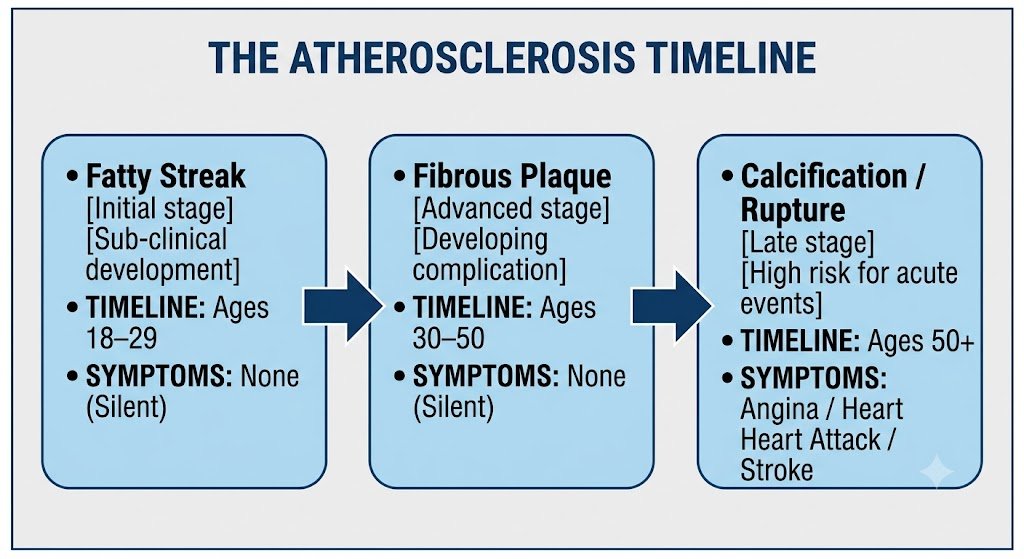
Once trapped, these particles undergo oxidation, triggering an immune response. Macrophages engorge these lipids to become foam cells, forming early fatty streaks that eventually calcify and form fibrous plaques.
The Estrogen Transition in Women
Men develop plaque earlier and accumulate a higher overall plaque burden in midlife. Women maintain a lower risk trajectory through young adulthood, followed by a steeper acceleration during the perimenopausal transition:
-
Estrogen Protection: 1,7 beta-estradiol upregulates endothelial nitric oxide synthase (eNOS), maintains arterial compliance and keeps LDL oxidation low.
-
Post-Menopausal Acceleration: The loss of endogenous estrogen during menopause coincides with adverse lipid shifts (increased ApoB and LDL-C), central adiposity accumulation, and elevated systemic inflammation, causing female risk curves to converge toward male levels later in life.
Clinical Implications: Plaque vs. Imminent Event
It is critical to distinguish between plaque presence and imminent risk:
-
Plaque Presence ≠ Immediate Heart Attack: Millions of adults live with stable, calcified plaques without experiencing acute events.
-
Burden Equals Risk: The absolute volume, extent (number of vascular territories involved), and structural composition (vulnerable vs. stable plaque) directly correlate with long-term major adverse cardiovascular events (MACE).
Atherosclerosis typically remains silent for 30 to 50 years. The primary event—such as a plaque rupture triggering a thrombosis—often occurs without prior warning signs.
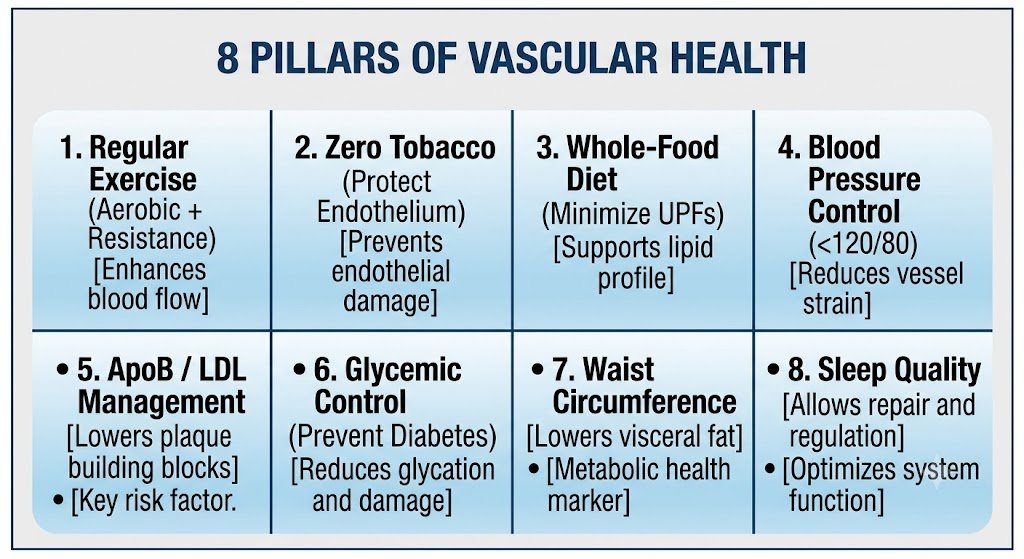
8 Evidence-Based Pillars of Vascular Protection
Because subclinical plaque accumulation is driven by modifiable metabolic and mechanical forces, targeted lifestyle and pharmacological interventions can halt progression and stabilize existing lesions.
-
Regular Aerobic + Resistance Exercise: Aerobic activity increases vascular shear stress, stimulating endothelial nitric oxide production. Resistance training improves skeletal muscle glucose disposal, lowering systemic hyperinsulinemia
-
Zero Tobacco Exposure: Cigarette smoke and vaporized nicotine induce endothelial dysfunction, accelerate LDL oxidation, and promote a pro-thrombotic intravascular state
-
Nutrient-Dense Diet: Emphasize whole, minimally processed foods high in soluble fiber and polyphenols while eliminating Ultra-Processed Foods (UPFs) rich in refined oils and sugars
-
Blood Pressure Optimization: Maintain blood pressure below target thresholds (<120/80 mmHg). Elevated hydrostatic pressure causes mechanical strain on vessel walls, facilitating endothelial micro-tears and lipid entry
-
ApoB & LDL-C Management: ApoB represents the total count of atherogenic particles. Lowering lifetime exposure to elevated ApoB significantly reduces plaque retention within the arterial wall
-
Glycemic Control: Chronic hyperglycemia causes non-enzymatic glycation of vascular proteins (Advanced Glycation End-products, or AGEs), cross-linking collagen and rendering blood vessels stiff and vulnerable to inflammation
-
Visceral Adiposity Management: Maintain a healthy waist-to-height ratio (<0.50). Visceral fat secretes pro-inflammatory adipokines (TNF-alpha, IL-6) that accelerate arterial remodeling
-
Sleep Hygiene: Prioritize 7–9 hours of continuous sleep. Sleep fragmentation activates stress pathways, raising nocturnal blood pressure and systemic inflammation
Diagnostic Context: Who Should Be Screened?
These population-level findings do not imply that every adult needs advanced imaging such as CT Coronary Angiography (CTCA) or carotid ultrasound.
-
Primary Risk Stratification: Standard clinical evaluation relies on blood pressure monitoring, comprehensive lipid panels (including ApoB and Lipoprotein(a)), HbA1c, and clinical risk calculators.
-
Targeted Imaging (CAC Scoring): Coronary Artery Calcium (CAC) scoring is most useful in borderline or intermediate-risk individuals where the treatment decision (e.g., initiating lifelong statin therapy) remains uncertain. A CAC score of zero provides a strong “reassurance window,” whereas a non-zero CAC score confirms subclinical disease and guides aggressive risk-factor optimization.
References & Key Literature
-
NEJM Subclinical Atherosclerosis Study: Fernández-Friera, L., et al. (2015). Normal Impact of Cardiovascular Risk Factors Over the Spectrum of Age in the PESA Study. Journal of the American College of Cardiology, 65(14), 1453–1463.
-
PESA Study Cohort: Fuster, V., et al. (2017). The Progression of Early Subclinical Atherosclerosis (PESA) Study: JACC Focus Issue. Journal of the American College of Cardiology, 70(3), 297–313.
-
Lifetime ApoB Exposure: Ference, B. A., et al. (2017). Low-density lipoproteins cause atherosclerotic cardiovascular disease: evidence from genetic, epidemiologic, and clinical intervention studies. European Heart Journal, 38(32), 2459–2472.
-
Cardiovascular Disease in Women: El Khoudary, S. R., et al. (2020). Menopause Transition and Cardiovascular Disease Risk: Implications for Timing of Early Prevention. Circulation, 142(25), e506–e532.