


Indians are “Calorie Sufficient – Nutrients Deficient”. Read that again to realize the hidden strong message for Indian masses who are paradoxically facing – Malnutrition as well as Obesity, at the same time.
The nutritional deficiencies are fuelling a METABOLIC DISEASES AVALANCHE in Indians – and that, Dear Gentle Reader, may also explain why roughly half of India’s top major hospital chains, are partly or majorly owned by over 20 active PE operators who have invested billions in the sector and are still hungry for more. Your poor metabolic health is ensuring rich fiscal health for the investors.
As commendable as it maybe, while targeted food safety nets like the Public Distribution System (PDS) and POSHAN Abhiyaan have helped decrease acute starvation and child stunting, but these same, potentially nobel programmes have India facing a peculiar paradox.
Hon. Prime Minister of India has extensively claimed of delivering PDS Ration to almost 800 Million Indians – and this PDS Ration comprises largely Wheat and Rice with a bit of pulses added – the exact cereals which are now turning out to be Cereal Killers of Metabolic Health of Indians.
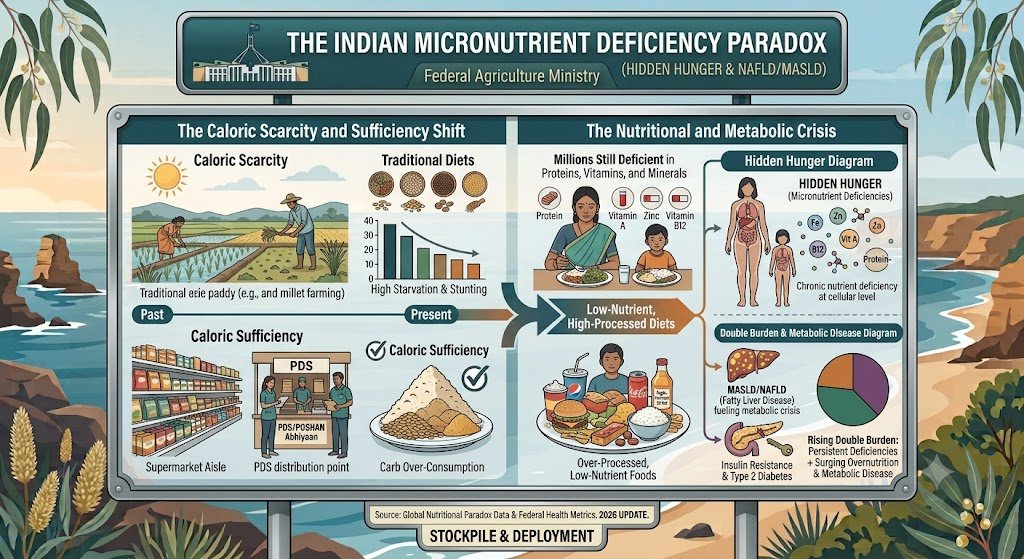
The nation has shifted from a state of caloric scarcity to a state of caloric sufficiency BUT accompanied by deep nutritional vulnerability. Millions of Indian plates are filled with carbohydrates and remain woefully deficient in essential proteins, vitamins and minerals.
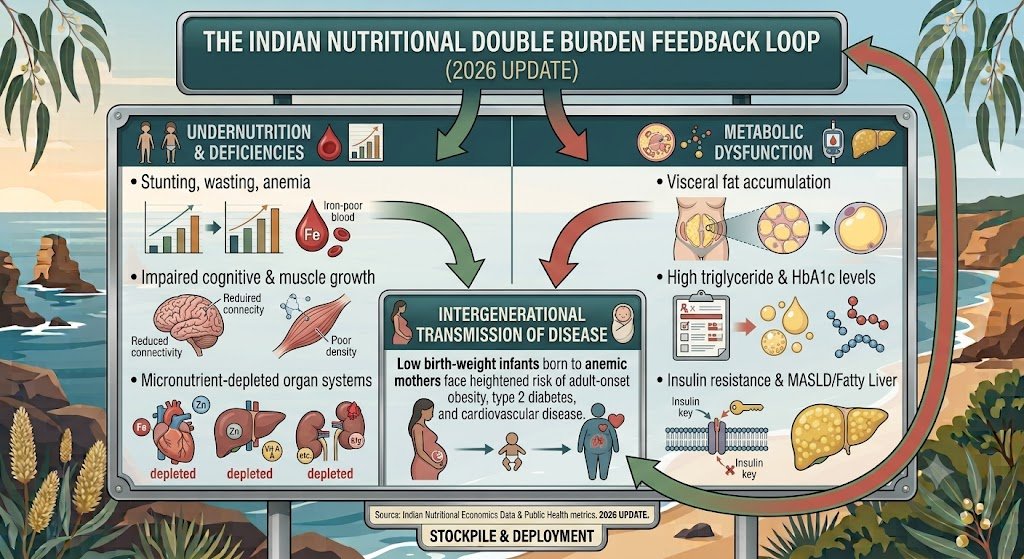
This condition—known clinically as Hidden Hunger (Micronutrient Deficiencies)—operates alongside a rising Double Burden of Malnutrition. Over-processed, low-nutrient diets are fueling metabolic diseases like Type 2 Diabetes and Non-Alcoholic Fatty Liver Disease (NAFLD/MASLD), even as persistent micronutrient deficiencies continue to affect women and children nationwide.
3 Structural Pillars of India’s Nutritional Crisis
1. The Hidden Hunger Epidemic (Iron, B12, & Vitamin D)
-
Widespread Anemia: Data from the National Family Health Survey (NFHS-5) and Ministry of Health updates indicate that 67.1% of children under five and 59.1% of adolescent girls in India suffer from anemia. Anemia in India is a complex condition; while low intake of bioavailable iron is a major factor, poor gut health, folate and Vitamin B12 deficiencies, and chronic inflammation also contribute.
-
Vitamin B12 Deficiencies: More than 70% of the population exhibits sub-optimal serum Vitamin B12 levels. Because animal-source foods are the primary natural source of cobalamin, traditional high-carbohydrate vegetarian diets—when unsupplemented—often lead to chronic B12 deficiencies, resulting in neurological symptoms, elevated homocysteine levels, and fatigue.
-
Vitamin D Shortages: Despite abundant sunlight across the Indian subcontinent, clinical studies reveal that 70% to 80% of urban and rural Indians are Vitamin D deficient. Factors such as high skin melanin, urban indoor lifestyles, air pollution, and limited dietary vitamin D intake combine to impair bone mineralization and weaken immune response.
2. The Affordability Gap & The “Cereal-Centric” Trap
According to the UN FAO State of Food Security and Nutrition in the World (SOFI) Report, the average cost of a balanced, healthy diet in India stands at $4.11 Purchasing Power Parity (PPP) per person per day.
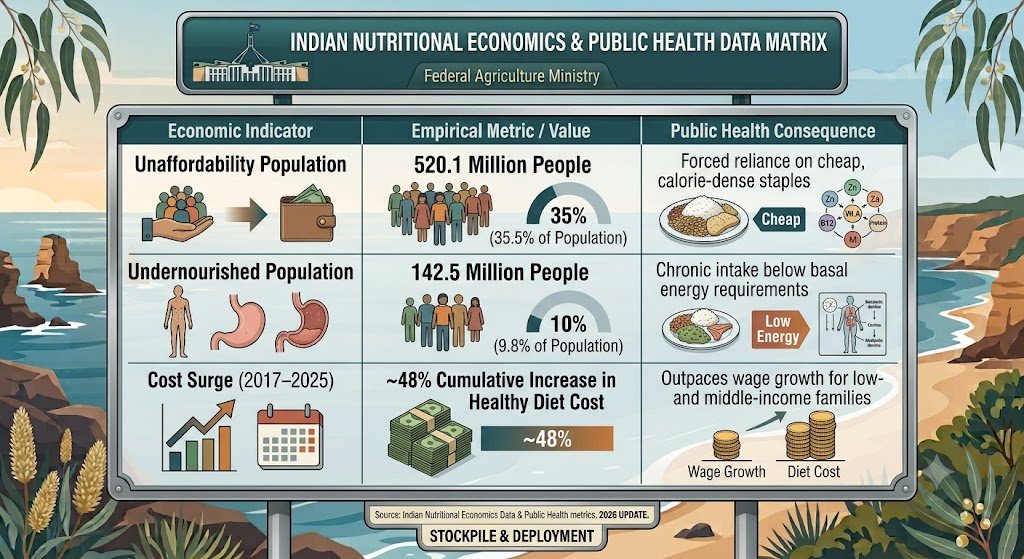
Because vegetables, pulses, nuts, dairy, and animal proteins have experienced higher inflation than price-subsidized cereals (wheat and rice), lower- and middle-income households often default to carbohydrate-rich meals. The stomach is filled, but the body remains severely deprived of essential nutrients.
3. The Double Burden & The “Asian Indian Phenotype”
India is simultaneously experiencing a rise in non-communicable diseases (NCDs). This phenomenon is driven by the Asian Indian Phenotype, a unique physiological profile characterized by:
-
Higher body fat percentage at lower Body Mass Index (BMI) levels.
-
Increased visceral (abdominal) adiposity.
-
Lower skeletal muscle mass.
-
Pronounced tendencies toward early insulin resistance.
When an individual with this phenotype consumes a cereal-heavy diet rich in refined carbohydrates, ultra-processed snack foods, and industrial seed oils, the risk of developing Type 2 Diabetes, hypertension, and fatty liver disease increases significantly—even in individuals who appear lean.
Comparative Data Breakdown: Micronutrients & Metabolism
The table below contrasts standard daily intakes across typical Indian households with the clinical target recommendations issued by the Indian Council of Medical Research – National Institute of Nutrition (ICMR-NIN):
Nutrient / Component |
Typical Average Intake (Urban/Rural Mix) |
ICMR-NIN Recommended Target |
Clinical Deficiency Outcome |
Dietary Protein |
~30–40 g/day (Mostly low quality) |
0.83 g / kg body weight / day |
Sarcopenia, low metabolic rate, muscle loss |
Dietary Fiber |
~15–20 g/day |
30–40 g/day (from pulses, millets, vegetables) |
Dysbiosis, rapid glucose spikes, constipation |
Iron (Bioavailable) |
High phytate-bound iron; low bioavailability |
19 mg/day (Men) | 29 mg/day (Women) |
Anemia, impaired work productivity, chronic fatigue |
Vitamin B12 |
< 1.0 mcg/day (Vegetarian default) |
2.2 mcg/day |
Neuropathy, megaloblastic anemia, cognitive slowing |
Refined Carbohydrates |
> 70% of total daily calories |
< 45–50% of total daily calories |
Hyperinsulinemia, NAFLD, Type 2 Diabetes |
Inferences: Why Traditional Dietary Shifts Failed
-
The Phytate-to-Iron Problem: Simply eating leafy greens often fails to correct iron deficiency. High concentrations of phytates and tannins in Indian unleavened breads (chapattis) and teas inhibit non-heme iron absorption. Without concurrent Vitamin C intake (which enhances iron absorption), most dietary iron passes unabsorbed.
-
Protein Quality Deficit: Many Indian diets rely on a single pulse or lentil (dal) to meet protein needs. However, individual pulses are incomplete proteins, lacking essential amino acids like methionine. Without combining cereals and pulses in appropriate ratios (e.g., 3:1), or incorporating high-biological-value sources (dairy, eggs, meat, fish, soy), amino acid utilization remains low.
-
The Ultra-Processed Trap: Urbanization has accelerated the intake of packaged, low-cost “junk” foods—high in refined palm oil, sodium, and simple sugars. These foods provide inexpensive calories while competing with whole foods, aggravating micronutrient deficiencies.
Actionable Interventions for Indian Households & Clinical Practice
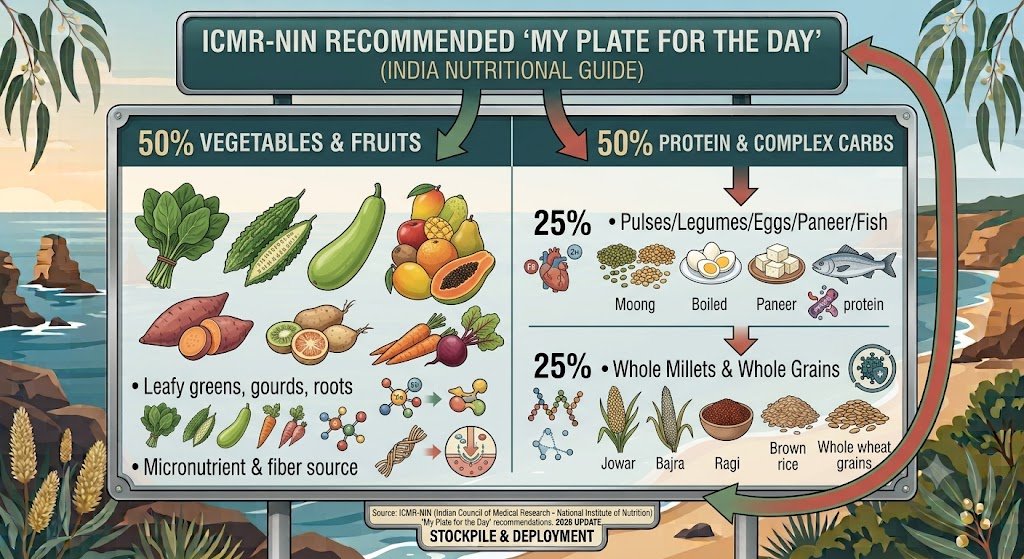
1. Implement the “My Plate for the Day” Rule (ICMR-NIN Standard)
Re-balance the traditional Indian plate away from rice or roti dominance:
-
50% of the Plate: Fresh vegetables, green leafy greens, and whole fruits.
-
25% of the Plate: Protein-dense foods (pulses, legumes, paneer, meat, eggs, chicken or fish).
-
25% of the Plate: Complex, low-glycemic carbohydrates (millets like Ragi, Jowar, Bajra, or unpolished red/brown rice).
2. Bioavailability Hack: Combine Iron with Vitamin C
-
Always squeeze fresh lemon juice over dal, chana, or green leafy vegetables just before serving. Ascorbic acid converts ferric iron (Fe^3+) into soluble ferrous iron (Fe^2+), increasing intestinal absorption up to threefold.
-
Avoid drinking tea, coffee, or milk within 45 minutes of main meals, as polyphenols, tannins, and calcium inhibit iron binding.
3. Targeted Micronutrient Testing & Supplementation
-
Annual Blood Panel: Every Indian adult over age 25 should complete an annual screen for Serum Ferritin, Vitamin B12, 25-hydroxy Vitamin D, Fasting Insulin, and HbA1c.
-
B12 Protocol for Vegetarians: Because plant foods do not naturally supply B12, vegetarians should consider periodic oral or sub-lingual methylcobalamin supplementation under clinical guidance.
-
Vitamin D Replacement: Safe sun exposure (30–40 minutes near midday) should be paired with physician-directed Vitamin D3 supplementation when blood levels fall below 30 ng/mL.
4. Reduce Refined Carbohydrates & Seed Oils
-
Shift away from refined wheat flour (maida) and polished white rice.
-
Limit deep-fried snacks and reused cooking oils, which generate harmful trans fats and advanced glycation end-products (AGEs) that worsen insulin resistance and liver fat accumulation.
While PDS remains a commendable initiative, this however, is creating a healthcare emergency in form of high burden of non-communicable diseases, i.e. Metabolic Diseases in a vast majority of population.
Few states in India, have instituted / tried to initiate, Eggs in Mid-Day Meals at Schools but political controversies are leaving a lot to be desired on healthcare front. That a former Finance Minister of current dispensation died of complications from Type 2 Diabetes and a current Roadways Minister has undergone Bariatric Surgery, should only spur the planners to look at Balanced Nutrition (Non-Veg + Veg) as a national emergency.
Institutional & Clinical References
-
ICMR-National Institute of Nutrition (NIN). (2024). Dietary Guidelines for Indians: A Manual. Indian Council of Medical Research, Ministry of Health and Family Welfare, Government of India.
-
Food and Agriculture Organization (FAO), IFAD, UNICEF, WFP, & WHO. (2026). The State of Food Security and Nutrition in the World (SOFI) 2026: Understanding and Addressing the High Cost of a Healthy Diet. Rome.
-
Ministry of Health and Family Welfare (MoHFW), Government of India. (2021). National Family Health Survey (NFHS-5) 2019–21: India Fact Sheet. International Institute for Population Sciences (IIPS).
-
Anemia Mukt Bharat (AMB) Dashboard. (2025). Quarterly Progress & Interventional Review. Ministry of Health and Family Welfare, Government of India.