



In millions of Older Indian households, the day used to begin with an age-old ritual: pouring a glass of water kept overnight in a copper vessel (tamra jal) or sipping a warm mug of water before brushing. Practiced for generations under Ayurvedic principles as Usha Paan (dawn hydration), this habit has often been dismissed in modern clinical circles as harmless folk tradition lacking rigorous clinical backing – just until now, there now is just a perfect proof, if your Doctor ever needed or dismissed this practice.
The big question: Are Modern Indians drinking enough water?
From starting the current mornings with a cup of tea to finishing the evenings with another, many Indians have deeply ingrained drinking habits that may not always prioritised plain drinking water and certainly not the timings thereof.
Office workers spend long hours in air-conditioned rooms, commuters travel in hot and humid conditions, outdoor workers sweat heavily, and older adults may deliberately restrict fluids because of risk of frequent urinations.
Meanwhile, traditional advice about drinking water on an empty stomach, carrying a water bottle throughout the day, or avoiding water immediately before or after meals or bedtime remains common in Indian households.
But what does clinical science actually tell us about increasing daily water intake?
A clinical study published in Nutrients (PMID: 32340375, PMCID: PMC7231288) provides concrete clinical evidence validating timed water intake. The 12-week open-label randomized controlled trial examined the physiological effects of structured, timed hydration on healthy adults. The findings offer promising strategies for India’s public health landscape, which struggles under the dual burden of hypertension and chronic kidney disease (CKD).
The Trial: What the Science Shows
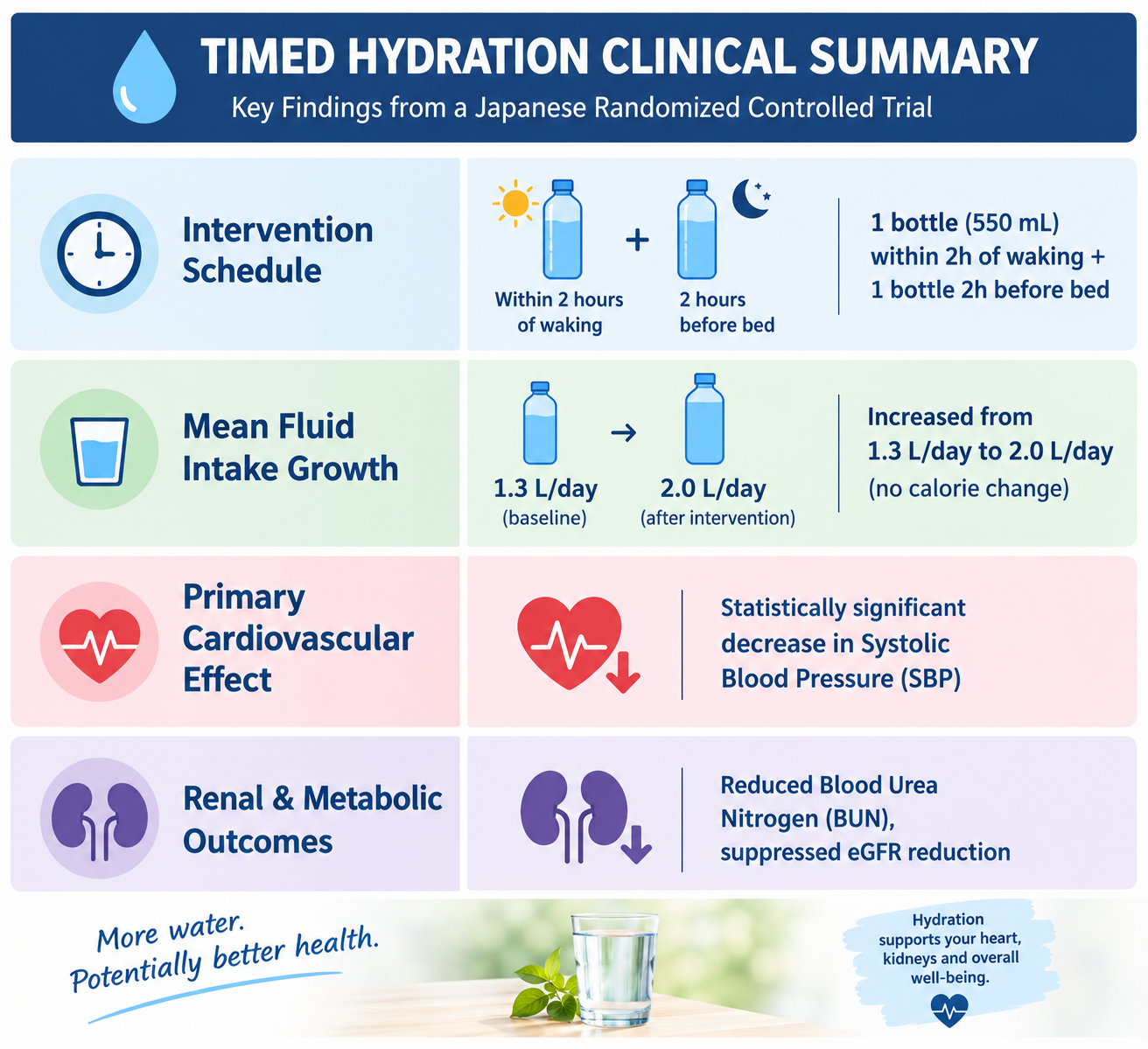
The study evaluated 55 healthy adults (24 men and 31 women) with fasting blood glucose levels in the pre-diabetic or borderline range (90–125 mg/dL) over 12 weeks. Participants were split into two arms: a control group maintaining their normal fluid intake and an intervention group instructed to drink two additional 550 mL bottles of water daily—one within two hours of waking up and another two hours before bedtime.
Core Findings & Physiological Impact
-
Systolic Blood Pressure Reduction: The intervention group showed a statistically significant decrease in systolic blood pressure (SBP). In the intervention group, average systolic blood pressure declined from 123.8 mmHg at baseline to 117.4 mmHg at 12 weeks, a reduction of 6.4 mmHg. The change over time within that group was statistically significant. Diastolic blood pressure did not change significantly, however,
-
Water supplementation appeared to influence gut microbiome balance, which correlated directly with lowered blood pressure and enhanced thermoregulation (increased basal body temperature).
-
Renal Protection & Waste Dilution: The extra hydration significantly reduced Blood Urea Nitrogen (BUN) levels and suppressed the natural decline in estimated Glomerular Filtration Rate (eGFR). Diluting metabolic waste products alleviates filtration stress on the kidneys.
-
Blood urea nitrogen decreased: in the intervention group, BUN fell from 15.6 to 13.8 mg/dL between baseline and week eight.
-
A potentially favourable eGFR pattern: the control group showed a decline in estimated filtration measurements over the study period, while the researchers reported that supplementation suppressed this reduction
-
-
Glycemic Neutrality: Contrary to some popular wellness claims, structured water intake did not lower fasting blood glucose or significantly alter arginine vasopressin levels. The researchers did not find a statistically significant reduction in fasting glucose attributable to the intervention. However, its safety profile and vascular benefits make it an effective complementary habit.
Indian Context: Countering Cultural Habits and Climate Stress
These clinical findings carry direct relevance for the Indian populace. High blood pressure is a major cardiovascular risk factor. Indians also face substantial burdens of diabetes, abdominal obesity and premature cardiovascular disease. Hydration is not a substitute for blood pressure screening, salt reduction, physical activity or medication when indicated. Nevertheless, maintaining adequate fluid intake is a sensible component of a broader preventive-health routine.
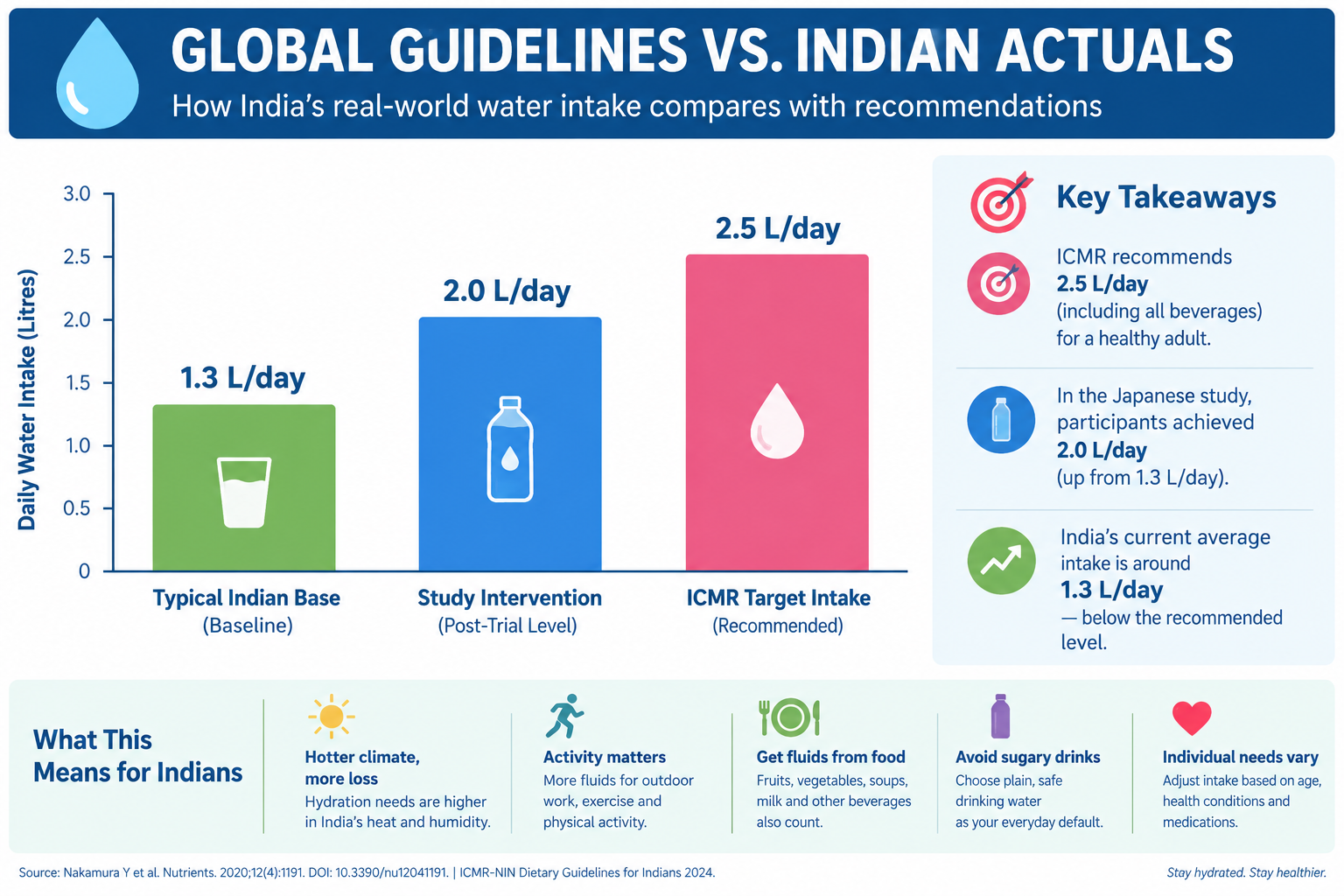
According to the Indian Council of Medical Research (ICMR) and the National Institute of Nutrition (NIN), healthy adults in India require roughly 2.0 to 2.5 liters of total fluid daily—a threshold that escalates significantly during hot summer months or under high physical exertion. Yet, broad segments of the urban and rural population live in states of chronic mild dehydration.
Why Traditional Indian Lifestyles Exacerbate Dehydration
-
High-Sodium, Spicy Diets: Traditional Indian cooking rely on salt, spices, pickles (achaar), and fried snacks (namkeen). High sodium consumption increases osmotic pressure in the bloodstream, straining vascular walls and raising blood pressure unless counterbalanced by adequate fluid intake.
-
Substituted Hydration: In urban centers, plain water is frequently replaced with sugary beverages, packaged juices, or excessive tea (chai) and coffee. While chai provides brief comfort, caffeine acts as a mild diuretic, while sugar contributes to metabolic stress.
-
Ignoring Winter Thirst: During northern Indian winters or inside climate-controlled air-conditioned offices, the body’s thirst mechanism suppresses itself. Individuals often consume under 1 liter of plain water daily, increasing urine concentration and crystallite precipitation risks.
Addressing India’s Dual Epidemics: Hypertension and Kidney Health
The finding that timed water intake lowers systolic blood pressure and preserves kidney filtration rate (eGFR) arrives at a critical juncture for Indian preventive healthcare:
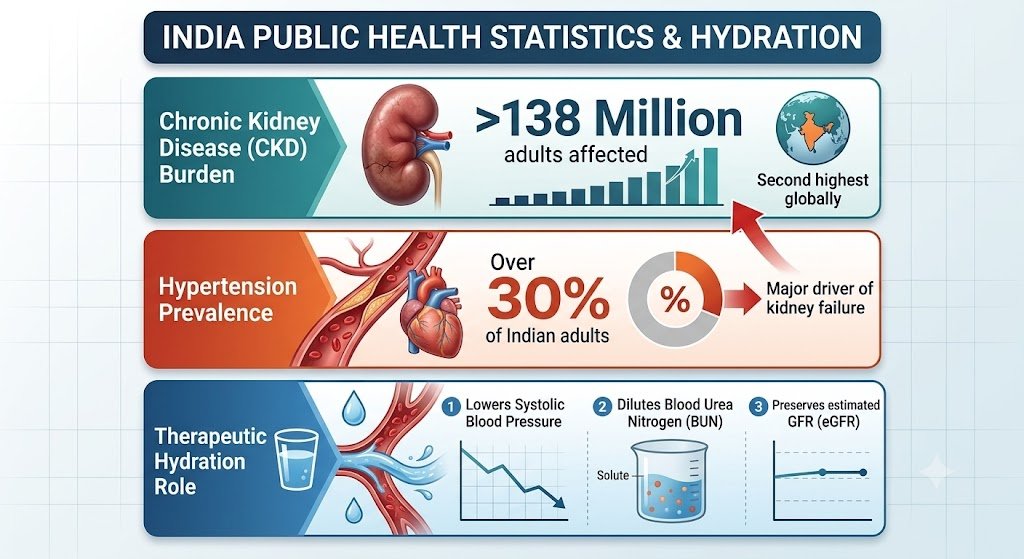
India bears the second-highest global burden of Chronic Kidney Disease (CKD), affecting over 138 million individuals. A dominant driver of this crisis is uncontrolled hypertension, which damages the delicate capillary beds (glomeruli) within the kidneys over time.
By simply introducing 1.1 liters of water at designated times (550 mL post-waking and 550 mL pre-bedtime), individuals can lower systemic vascular pressure and reduce waste concentrations like urea in the blood, helping buffer the kidneys against long-term deterioration.
Can you drink too much water?
Yes. Excessive water intake can dilute blood sodium, causing a potentially dangerous condition called hyponatraemia. The risk is influenced by how quickly water is consumed, kidney function, certain medications and medical conditions.
A sensible approach is to:
-
Drink regularly rather than forcing large volumes at once
-
Increase intake when heat, sweating or activity raises fluid losses
-
Avoid treating a fixed target as compulsory if you are already adequately hydrated
-
Follow medical advice if you have kidney disease, heart failure, cirrhosis or a prescribed fluid restriction
-
Seek medical attention for severe confusion, seizures or other serious symptoms after excessive fluid intake
Practical Blueprint: Adapting Timed Hydration for Indian Households
Translating these scientific findings into daily life requires minimal effort and fits into familiar Indian daily schedules:
1. The Morning Routine (Usha Paan Updated)
-
Action: Within two hours of waking (ideally right after getting up), drink 550 mL (roughly 2 standard brass/copper glasses or 1 standard copper bottle) of plain, room-temperature, or lukewarm water
-
Mechanism: Rehydrates the body after 7–8 hours of night-time respiratory fluid loss, lowers resting morning blood pressure spikes, and stimulates bowel motility
2. The Evening Ritual
-
Action: Consume 550 mL of plain water two hours before going to sleep
-
Mechanism: Prevents overnight hemoconcentration (thickening of the blood during sleep), dilutes blood urea nitrogen levels, and reduces cardiac strain without forcing frequent nocturnal bathroom trips
3. Complementary Traditional Beverages
While plain water served as the clinical standard in the trial, traditional Indian drinks like buttermilk (chaas with minimal salt), tender coconut water, and sol kadhi can supplement mid-day fluid targets. However, these should complement, rather than replace, the core morning and evening plain water regimen.
Bridging Ancient Wisdom and Modern Clinical Practice
The Nutrients study confirms that ancient Indian wellness practices like Usha Paan are backed by modern clinical evidence. Increasing daily water intake from a meager baseline of 1.3 liters to an adequate 2.0 liters through structured, timed hydration provides a simple, zero-cost, and non-pharmacological strategy for health management.
For a nation tackling rising rates of hypertension and metabolic health challenges, returning to the simple habit of starting and ending the day with a glass of water represents a powerful step toward long-term cardiovascular and renal wellness.