



A 24-year G20 analysis by Indian researchers reveals persistent and rising cancer risks in India. The prevention message is clear: tobacco and areca nut cessation, HPV vaccination, healthy weight, physical activity, lower alcohol exposure and timely screening can potentially change the trajectory.
A new study by researchers associated with India’s National Centre for Disease Informatics and Research (NCDIR) has analysed long-term incidence and mortality patterns for breast, cervical and oral cancers across G20 countries, using age-standardised trends and age-period-cohort modelling.
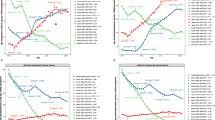
The study, published in the Journal of Public Health in April 2026, examined mortality data from 1996–2020 and incidence data from 1998–2017. Its central message is striking: while several high-income G20 countries have achieved declining or stable cancer risks, important cancer risks remain persistent or are increasing in countries including India, China and Turkey. In particular, male oral-cancer incidence increased in India and China.
For India, this is more than a statistical observation. It identifies three cancers where prevention, early detection and timely treatment can make a measurable difference.
India carries a very large burden of these three cancers
The latest GLOBOCAN 2022 estimates provide perspective. Copy of this Report can be accessed here – India-fact-sheet
India recorded approximately 1.41 million new cancer cases and 916,827 cancer deaths in 2022. Breast cancer was the country’s most common cancer, followed by lip/oral-cavity cancer and cervical cancer.
Cancer |
New cases, India 2022 |
% of all cancers |
Deaths |
Key population |
|---|---|---|---|---|
Breast |
192,020 |
13.6% |
98,337 |
Predominantly women |
Lip/oral cavity |
143,759 |
10.2% |
79,979 |
Predominantly men |
Cervix uteri |
127,526 |
9.0% |
79,906 |
Women |
Total |
463,305 |
32.8% |
258,222 |
— |
Thus, these three cancers together represented nearly one-third of India’s estimated new cancer cases in 2022 and more than a quarter of cancer deaths.
Among Indian women, breast cancer accounted for 26.6% and cervical cancer for 17.7% of new cancers. Among Indian men, oral cancer alone accounted for 15.6% of new cancers, making it the leading cancer in men.
What the G20 age-period-cohort study tells us
A conventional cancer trend tells us whether incidence is rising or falling. An age-period-cohort analysis goes further. It attempts to distinguish:
-
Age effects: how cancer risk changes as people grow older;
-
Period effects: changes affecting people across multiple age groups during a particular period, such as new diagnostic technology, screening, treatment or widespread exposure;
-
Cohort effects: differences between generations born in different periods, reflecting changes in lifestyle, environment, reproductive patterns, tobacco exposure, infections and other long-term influences.
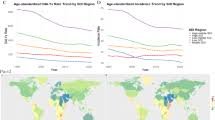
The NCDIR-linked analysis found that breast cancer incidence generally declined or plateaued across many high-socio-demographic-index G20 countries, while increases were observed in countries such as South Korea and China.
Cervical cancer declined in several high- and lower-middle-SDI countries, but China showed a marked increase.
The oral-cancer picture was more heterogeneous. Male oral-cancer incidence declined in countries such as France and Germany but increased in India and China. The age-period-cohort analysis also identified persistent or increasing risks in India, China and Turkey compared with progressive cohort declines in several high-SDI countries.
This is not simply an ageing-population story. If ageing were the only explanation, the prevention response would be limited. The cohort findings suggest that exposures and behaviours experienced by successive generations matter. That makes prevention particularly important.
Breast cancer: India’s risk profile is changing
Breast cancer is now India’s most common cancer overall and the most common cancer among Indian women.
A 2026 systematic review and meta-analysis by NCDIR researchers examined 1,871 publications, of which 31 studies met the inclusion criteria, and identified several risk factors associated with breast cancer among Indian women. These included later menopause, delayed first pregnancy/childbirth, higher age at marriage, central obesity and family history of cancer. Higher physical activity was associated with lower risk.
A separate 2026 Indian meta-analysis of 19 studies similarly found associations between breast cancer and central obesity, family history, tobacco use and several reproductive factors. However, these studies are predominantly observational and should not be interpreted as proving that every individual factor causes cancer. What can Indian women do?
1. Keep waist circumference and body weight under control – Post-menopausal adiposity is particularly relevant because adipose tissue contributes to hormonal and metabolic changes associated with breast-cancer risk.
2. Stay physically active – Regular physical activity is associated with lower risk of several cancers, including breast cancer. WHO recommends regular physical activity and healthy weight as part of cancer prevention.
3. Avoid tobacco – Smoking and tobacco exposure have established cancer associations and should not be considered only a lung-cancer issue.
4. Minimise alcohol exposure – Alcohol is a Group 1 carcinogen and is causally associated with breast cancer. IARC estimates that obesity and alcohol together accounted for more than 250,000 breast-cancer cases globally in 2022.
5. Know your family history – A strong family history of breast or ovarian cancer warrants discussion with a clinician about individual risk assessment and, where appropriate, genetic counselling.
6. Do not wait for a lump to become large – India’s public-health programme includes clinical breast examination for women aged 30–65 years, with screening traditionally scheduled at five-year intervals.
The 2026 JCO Global Oncology review argues that organised early diagnosis with clinical breast examination and rapid diagnostic pathways may be more feasible and equitable for India than attempting population-wide mammography in all settings.
Cervical cancer: potentially the most preventable of the three
Cervical cancer is fundamentally different.
Most cervical cancers are caused by persistent infection with oncogenic human papillomavirus (HPV). This creates an unusually powerful prevention opportunity because vaccination can prevent the initiating infection and screening can identify precancerous disease before invasive cancer develops.
India recorded approximately 127,526 new cervical cancers and 79,906 deaths in 2022. India has now taken a major step.
In February 2026, India launched a nationwide HPV vaccination campaign targeting approximately 1.15–1.2 crore 14-year-old girls, with free vaccination through government health facilities. By September 2026, the Government reported that more than 80 lakh HPV vaccine doses had been administered.
This is potentially one of the most important long-term cancer-prevention interventions in India’s history. But vaccination is not a substitute for screening.
WHO recommends cervical screening because HPV vaccination does not eliminate every oncogenic HPV type and vaccinated women can still develop cervical precancer.
What Indian women can do
Vaccination: Ensure eligible adolescent girls receive HPV vaccination according to the national programme or appropriate medical advice.
Screening: Women in the recommended screening age group should participate in cervical-cancer screening even if vaccinated.
India’s population-based programme targets women aged 30–65 years for cervical-cancer screening. Existing Indian programme guidance has used VIA at five-year intervals, while contemporary evidence increasingly supports high-performance HPV testing where feasible.
Do not ignore symptoms: Abnormal vaginal bleeding, bleeding after intercourse, unusual discharge or pelvic symptoms require medical assessment rather than waiting for the next screening appointment.
Oral cancer: India’s most preventable major cancer problem
The oral-cancer story may be the most distinctly Indian. India recorded approximately 143,759 new lip/oral-cavity cancers and 79,979 deaths in 2022.
Around 75% of cases occurred in men, with 107,812 male cases compared with 35,947 female cases. The major preventable exposures are well established:
Tobacco + areca nut + alcohol
Smoked tobacco, smokeless tobacco and areca-nut products are particularly important in the Indian context. IARC identifies smokeless tobacco and areca nut as leading causes of oral cancer in countries where these products are widely used.
The combination of tobacco and alcohol is especially concerning because the risks can interact. The most powerful oral-cancer prevention intervention is behavioural.
For an Indian consumer, the message is unusually simple:
Do not smoke.
Do not chew tobacco.
Do not use gutka, khaini, zarda or similar products.
Avoid areca nut/supari, including products marketed as “natural” or tobacco-free.
Keep alcohol consumption as low as possible.
For someone already using tobacco or areca nut, stopping now is beneficial.
Oral cancer also illustrates why screening and prevention need to be integrated. Visual examination of the mouth is relatively simple and inexpensive, particularly in high-risk populations, but screening only works if suspicious lesions are investigated and treated promptly. India’s national programme targets people aged 30–65 years for oral visual examination.
Any persistent oral ulcer, white or red patch, unexplained lump, difficulty chewing/swallowing or reduced mouth opening should be assessed by an appropriate clinician or dentist rather than self-treated.
Common prevention strategy across all three cancers
The three cancers are biologically different, but several prevention strategies overlap.
Action |
Breast |
Cervical |
Oral |
|---|---|---|---|
Avoid tobacco |
✓ |
✓ |
Very important |
Avoid/minimise alcohol |
✓ |
— |
✓ |
Maintain healthy weight |
✓ |
— |
— |
Regular physical activity |
✓ |
General health |
General health |
HPV vaccination |
— |
★★★★★ |
HPV-related subset |
Cancer screening |
✓ |
★★★★★ |
★★★★★ |
Family-risk assessment |
✓ |
— |
— |
Avoid areca nut |
— |
— |
★★★★★ |
Early evaluation of symptoms |
✓ |
✓ |
✓ |
WHO estimates that approximately 37% of new cancer cases globally in 2022—around 7.1 million cases—were attributable to preventable causes, including tobacco, infections, alcohol, high BMI, physical inactivity and air pollution.
A 2026 Lancet Global Health analysis further estimated that 48% of cancer deaths among people diagnosed with cancer in 2022 were potentially avoidable, through primary prevention, early detection and improved curative treatment.
These are population-level estimates, not a promise that an individual can prevent cancer through lifestyle alone.
A practical Indian cancer-prevention checklist
For an Indian family, a sensible prevention strategy can be remarkably straightforward:
Every day
-
Do not smoke or use smokeless tobacco.
-
Avoid areca nut/supari and gutka.
-
Remain physically active.
-
Base the diet predominantly on vegetables, fruits, pulses, whole grains and minimally processed foods.
-
Maintain a healthy waist and body weight.
-
Avoid excessive alcohol.
Every year
-
Review weight, waist circumference, blood pressure, glucose and other metabolic risk factors.
-
Review tobacco/alcohol exposure.
-
Discuss significant family cancer history with a physician.
At the appropriate age
-
Participate in oral, breast and cervical cancer screening through the national programme or an appropriate healthcare provider.
-
Ensure adolescent girls receive HPV vaccination according to current Indian recommendations.
-
Do not delay investigation of persistent breast, cervical or oral symptoms.
Bottom line
The 2026 G20 age-period-cohort analysis provides a warning—but also a roadmap.
India’s burden of breast, cervical and oral cancer is substantial, yet these cancers are not equally inevitable.
HPV vaccination can prevent much cervical cancer; tobacco and areca-nut cessation can substantially reduce oral-cancer risk; healthy weight, physical activity and lower alcohol exposure can reduce breast-cancer risk; and organised screening can shift diagnosis toward earlier, more treatable disease.
For Indians, cancer prevention is therefore not one intervention. It is a life-course strategy: prevent the exposure, vaccinate where appropriate, maintain metabolic health, screen at the right age, and investigate symptoms early.
References / source set
-
Nath A, Thangavel G, Sathishkumar K, Sarveswaran G, Pujar P. Trend and age-period-cohort analysis of breast, cervical, and oral cancer incidence and mortality in G20 countries (1996–2020). Journal of Public Health, 2026; DOI: 10.1007/s10389-026-02742-y. NCDIR lists the publication among its 2026 cancer publications.
-
IARC/WHO Global Cancer Observatory. GLOBOCAN 2022 — India Fact Sheet. India: 1,413,316 new cancer cases and 916,827 deaths; breast, lip/oral cavity and cervical cancers are the three leading cancers by incidence.
-
Vijayakumar S, Ramamoorthy T, George AD, Nath A. Understanding female breast cancer risk in the Indian population: Evidence from a systematic review and meta-analysis. Cancer Epidemiology, 2026;100:102979. DOI: 10.1016/j.canep.2025.102979.
-
Seshadri JG, Garg R, et al. Comprehensive Meta-analysis of Risk Factors for Breast Cancer among Indian Women. Journal of Mid-life Health, 2026;17(1):130–140.
-
Shastri S, Shastri S. Cancer Screening in India: Lessons, Limitations, and Pragmatic Solutions for the Next Decade. JCO Global Oncology, 2026;12:e2600018. DOI: 10.1200/GO-26-00018.
-
WHO. Cervical cancer fact sheet, 3 July 2026. HPV vaccination, screening and timely treatment are the principal prevention and control strategies.
-
IARC. Oral Cancer Prevention — IARC Handbooks of Cancer Prevention, Volume 19. Evidence on tobacco, smokeless tobacco, areca nut, alcohol and oral-cancer screening.
-
WHO. Cancer fact sheet, 3 July 2026. Evidence on tobacco, alcohol, obesity, physical inactivity, diet, infections, vaccination and early detection.
-
IARC/WHO. Four in ten cancer cases could be prevented globally, February 2026; based on Nature Medicine analysis of 30 preventable causes.
-
IARC. Avoidable deaths through primary prevention, early detection and curative treatment of cancer worldwide. The Lancet Global Health, 2026.
-
Government of India, Ministry of Health & Family Welfare. National Programme for Prevention and Control of Non-Communicable Diseases (NP-NCD), including population-based screening for oral, breast and cervical cancers in people aged 30+.
-
Government of India, PIB. India Administers 80 Lakh HPV Vaccine Doses, September 2026.
-
Government of India, PIB. Update on NP-NCD, March 2026 — 34.71 crore oral-cancer, 16.24 crore breast-cancer and 8.73 crore cervical-cancer screening records as of February 2026.