Evidence-based guide for Indian youth, parents, educators and healthcare professionals
This write up is about an extremely important and often less discussed issue of increasing instances of Depression in Indian children and youth. India is home to the world’s largest youth and adolescent population—with roughly 253 million individuals aged 10–19 years and massive cohorts of young adults. And this youth, future of country needs to be well taken care from all diseases and certainly from Depression, as even 1 suicide is way too many and its our endeavour to minimise suicides by Indian youth. Read on for the details…
Anxiety and depression among young people are not simply problems of academic pressure, excessive mobile-phone use or a lack of resilience. They can be associated with sleep difficulties, family conflict, social isolation, physical illness, injury, tobacco use and other overlapping personal and social circumstances.
Depression – What Actually is Depression
Depression is a common and serious mental health condition characterized by persistent sadness, loss of interest or pleasure in activities (anhedonia), and functional impairment lasting for two weeks or longer, accompanied by physical, cognitive, and emotional symptoms.
Prevalence Rates – What the Data Says:
According to the National Mental Health Survey, the prevalence of mental disorders among Indian adolescents (aged 13–17) is approximately 7.3%, way higher than global average of around 4.5%
Regional and school-based screenings in India show a wider range, with clinical or school-based studies reporting depressive symptoms in anywhere from 15% to 40% of school-going adolescents and students
Studies focusing on young adults (such as university or college students) indicate high co-burdens of stress, anxiety, and depression, with prevalence estimates for depression often crossing 25% to 48% depending on screening tools like PHQ-9 or DASS-21
Demographic Patterns:
Gender: Female adolescents and young women frequently report higher rates of depressive and anxiety symptoms in regional surveys, whereas young males account for a disproportionately higher rate of completed suicides
Age: Older adolescents and young adults (classes X–XII, ages 15–29) face sharper spikes in depression due to academic pressures and transition stress
What the Evidence Says
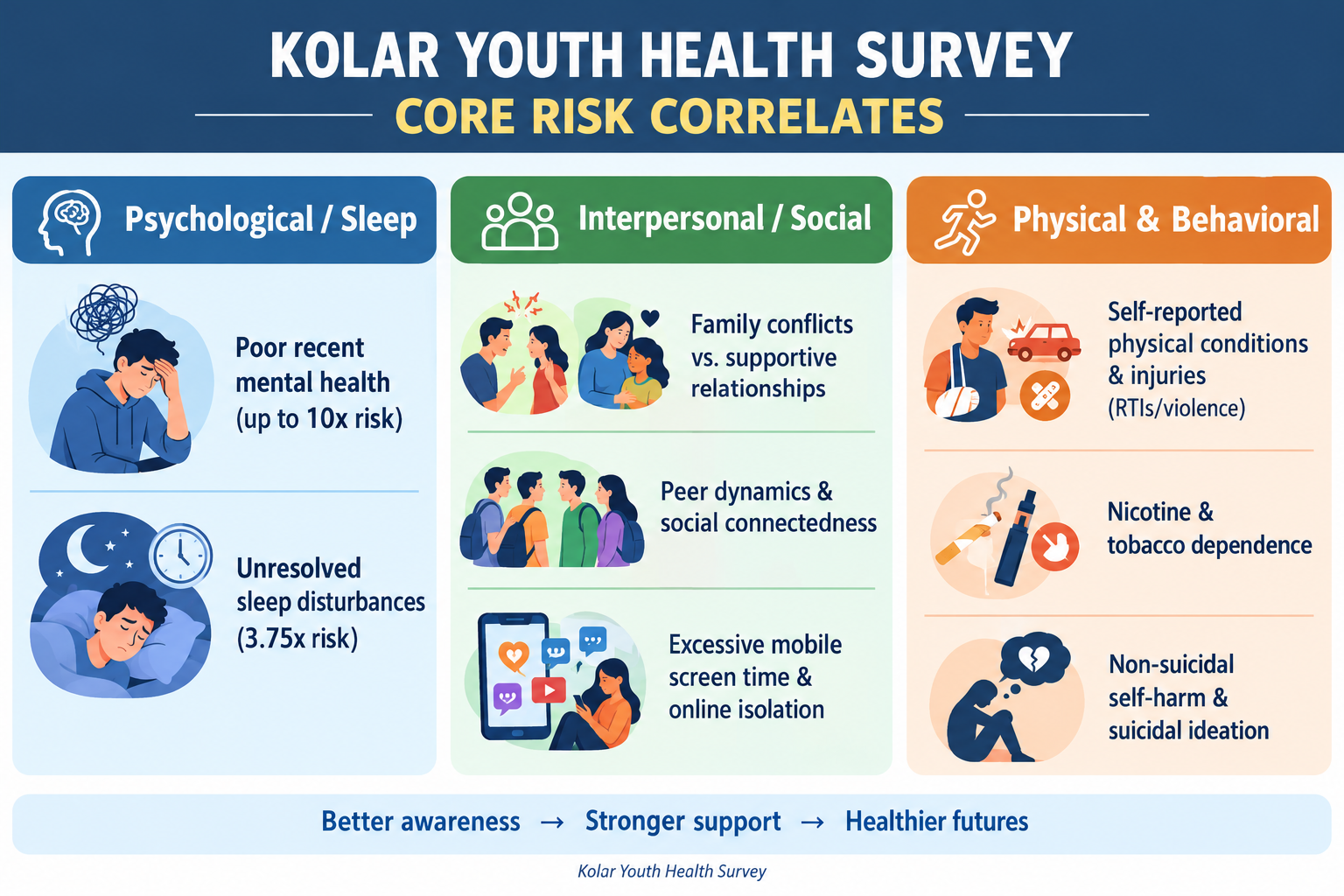
The Kolar Youth Health Survey, conducted in Karnataka, provides an important India-specific evidence. A study published in the Journal of Research in Health Sciences examined 5,072 young people aged 15–30 years and identified multiple factors associated with anxiety and depression.
Three findings deserve particular attention:
Poor self-reported recent mental health was associated with 10.20 times the adjusted odds of screening positive for depression
Screening positive for anxiety was associated with 9.40 times the adjusted odds of screening positive for depression
Sleep problems in the preceding 30 days were associated with 3.75 times the adjusted odds of screening positive for depression
The study also identified family conflict, social relationships, technology use, diagnosed health conditions, tobacco dependence, injury and self-harm-related factors as relevant correlates.
Prevalence of health issues among youth in Kolar
For Indian families, the central message is practical: recognise persistent distress early, listen without blame, assess sleep and physical health, ask about safety and seek appropriate professional support. These findings identify associations, not proven causes, and cannot predict an individual young person’s future.
Inside the Kolar Youth Health Survey
The paper, “Correlates of Anxiety and Depression Among Youth in India,” was published in the Journal of Research in Health Sciences, volume 26, issue 1, article e00668, with DOI 10.34172/jrhs.11330. The authors included Nidhi Saraswat and colleagues. The paper appeared online in October 2025 and in the 2026 journal issue.
Study characteristic
Details
Location
Kolar district, Karnataka
Participants
5,072 young people
Age range
15–30 years
Sampling
Two-stage cluster sampling, with probability proportional to population size
Coverage
Urban and rural communities across six talukas
Depression screening
Patient Health Questionnaire-9 (PHQ-9)
Anxiety screening
Generalized Anxiety Disorder-7 (GAD-7)
Analysis
Multivariable logistic regression
Study design
Cross-sectional analysis
The survey collected information on mental and physical health, sleep, tobacco and other behaviours, injury, violence, family communication, social relationships and technology use. Researchers analysed these variables to identify characteristics associated with positive anxiety and depression screens. [1,2]
Its inclusion of urban and rural communities and young people in different circumstances makes it valuable for understanding youth health beyond a single college or hospital. However, Kolar is one district, and the findings should not be treated as nationally representative estimates for every Indian state or population group.
An important clinical distinction: PHQ-9 and GAD-7 are screening tools, not standalone diagnostic tests. A positive result indicates that further assessment may be appropriate; it does not automatically establish a clinical diagnosis.
The key findings and what they mean for families
Anxiety and depression frequently overlap
Young people who screened positive for anxiety had 9.40 times the adjusted odds of screening positive for depression (95% confidence interval [CI]: 5.61–15.74).
This does not mean that anxiety inevitably causes depression, or that every anxious young person is 9.4 times as likely to develop it in the future. It describes an adjusted association between two screening outcomes measured in a cross-sectional study.
Nevertheless, the finding has an important clinical implication: when a young person seeks help for anxiety, assessment should also consider low mood, loss of interest, hopelessness, sleep and daily functioning. Someone presenting with depression should also be asked about excessive worry, panic symptoms and related difficulties.
Poor recent mental health is a major warning signal
Poor self-reported mental health during the preceding 30 days was associated with 10.20 times the adjusted odds of a positive depression screen (95% CI: 5.85–17.77).
Some overlap between the reported mental-health difficulty and the depression questionnaire is possible. The result should therefore not be interpreted as proof of an independent cause.
Its practical message is to take distress seriously. Statements such as “I cannot cope,” “I am not myself” or “nothing interests me anymore” deserve a compassionate response, particularly when accompanied by withdrawal, persistent low mood or declining functioning.
Sleep problems warrant attention
Sleep problems in the preceding 30 days were associated with 3.75 times the adjusted odds of screening positive for depression (95% CI: 2.07–6.78). [1]
Sleep and mental health can influence each other. Anxiety, examination pressure, family conflict and late-night online activity may interfere with sleep. Poor sleep can then make concentration, emotional regulation and everyday coping more difficult. Depression itself can also disrupt sleep.
Families should ask about sleep quality, regularity, screen habits, stress, snoring, medicines and other symptoms rather than assuming that tiredness or late waking reflects laziness.
Family conflict and social relationships matter
Serious family conflicts in the preceding 12 months were associated with higher odds of anxiety (adjusted odds ratio [AOR] 1.89; 95% CI: 1.09–3.27). The study also examined family affection, friendships and social connectedness. [1]
In India, young people may be balancing academic and career expectations, financial responsibilities, relationship decisions and family expectations. The study does not establish that any one of these explains its results.
Ordinary disagreements are part of family life. Repeated humiliation, threats, violence or the absence of a safe person to approach are different. Families can help by listening without immediate criticism, avoiding comparisons with siblings or peers, and making it safer to discuss failure and uncertainty.
Supportive friendships also matter. Withdrawal, bullying, exclusion or relationship breakdown may signal distress. The quality and safety of relationships are more important than simply counting friends.
Screen use, physical illness, tobacco and injury
Technology use was among the variables examined in the Kolar analysis. Excessive or difficult-to-control use may become concerning when it displaces sleep, physical activity, work, education or face-to-face relationships, or exposes a young person to harassment and harmful content. However, the study does not prove that screen time alone causes anxiety or depression.
The analysis also identified self-reported diagnosed health conditions, tobacco dependence, injury—including road-traffic injuries and violence—and self-harm or suicide-related factors among the relevant correlates.
These findings support a broader assessment. Persistent pain, chronic illness, traumatic experiences and substance use can complicate mental-health difficulties. Clinicians should consider both physical and psychological contributors.
Self-harm and suicidal thoughts must never be dismissed as attention-seeking. Non-suicidal self-injury and suicidal behaviour are not identical, but both warrant a careful, compassionate assessment of distress and safety.
Differences between age groups and localities
Participants aged 26–30 had higher adjusted odds of screening positive for depression than the reference age group (AOR 2.10; 95% CI: 1.25–3.52). Participants living in Kolar Gold Fields (KGF) also had higher adjusted odds than those in the reference taluka (AOR 2.04; 95% CI: 1.048–3.987).
These associations do not establish why the differences occurred. Economic circumstances, access to care, population characteristics or unmeasured factors could contribute. They should guide further investigation—not stigmatise older youth or residents of a particular locality.
How common are these problems?
A separate analysis of the broader Kolar Youth Health Survey included 4,852 participants aged 15–30 and reported the following weighted estimates. [2]
Indicator
Kolar estimate
Screen-positive depression
11.5%
Screen-positive anxiety
10.9%
Poor sleep quality
26.9%
Non-suicidal self-injury
2.4%
Suicidal thoughts
2.9%
Suicidal planning
1.7%
Suicide attempt reported
1.0%
These figures come from a separate analysis with a different analytic sample. They should not be attributed directly to all 5,072 participants in the correlates paper.
The World Health Organization estimates that approximately one in seven people aged 10–19 globally experiences a mental-health condition, with anxiety and depression among the leading causes of illness and disability in adolescence. This global estimate covers a different age range and uses different methods, so it is not directly comparable with Kolar’s screening estimates.
India’s National Mental Health Survey 2015–16 remains an important national reference, but its diagnostic methods, age groups and timing differ from those of the Kolar survey.
The responsible conclusion is that youth mental health is a significant public-health concern, but there is no single prevalence figure that accurately describes every Indian youth population.
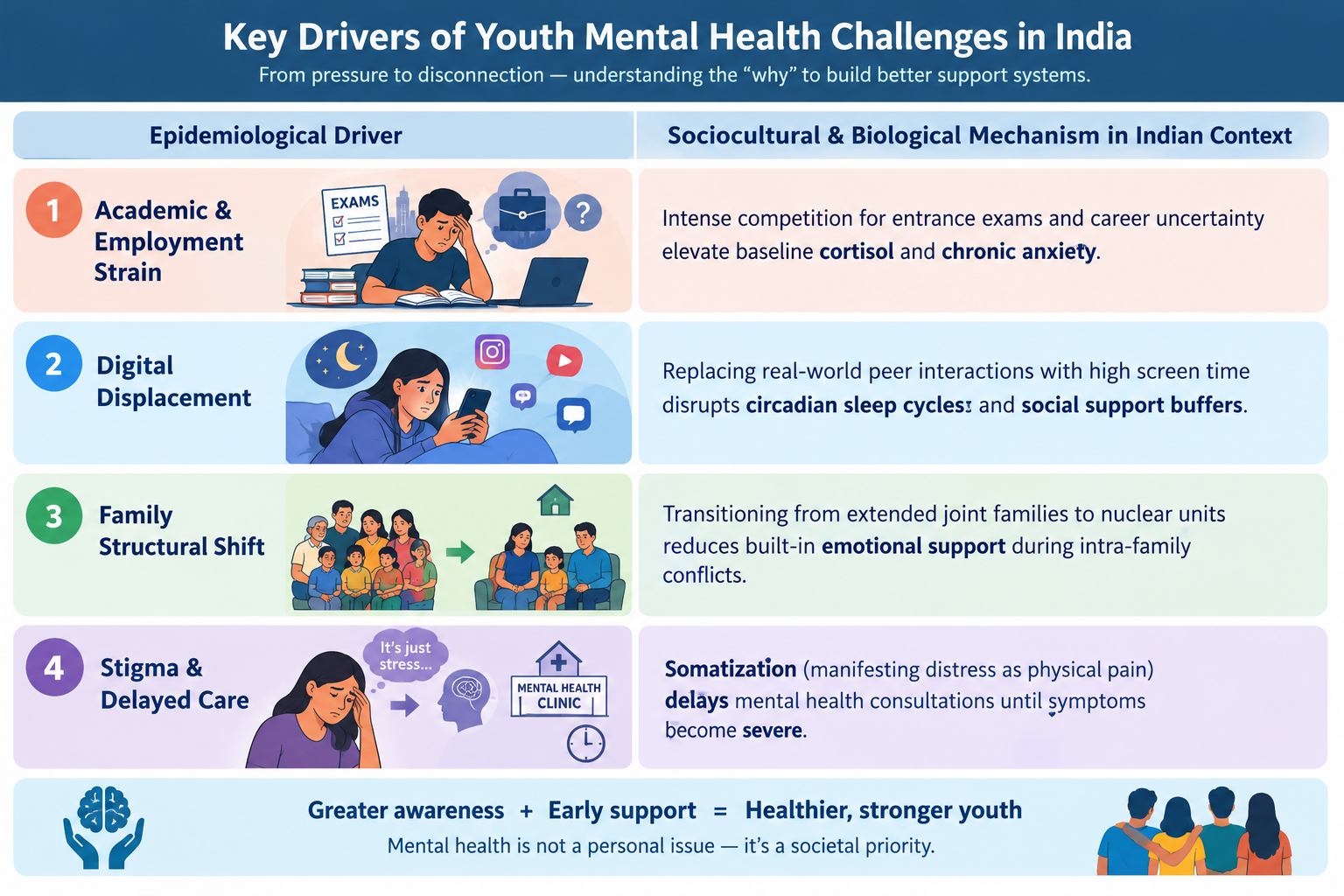
Why might Indian young people are Increasingly Depressed?
The Kolar study identifies correlates rather than proving causal pathways. The following explanations are consistent with established clinical understanding, but should not be treated as causes demonstrated by this particular survey.
Academic and career pressure: Competitive examinations, coaching schedules, job insecurity and fear of disappointing family can create sustained stress. Support includes realistic goals, alternative plans and separating personal worth from performance.
Family expectations and conflict: Disagreements about careers, relationships, marriage, independence or finances can become harmful when communication involves humiliation, threats or coercion.
Disrupted sleep: Irregular schedules, shift work, stress, late-night screen use and medical sleep disorders may contribute. Persistent problems deserve assessment.
Bullying and isolation: Cyberbullying, harassment, exclusion and unhealthy social comparison may worsen distress. Young people need safe relationships and support, not simply instructions to socialise.
Physical illness and injury: Pain, disability, chronic disease and traumatic experiences can affect mood and functioning. Medical contributors should be considered when clinically indicated.
Nicotine, alcohol and other substances: Some young people use substances to cope, but dependence, withdrawal and disrupted sleep can complicate mental health.
Economic strain and unequal access to care: Cost, travel, stigma, lack of privacy and shortages of trained professionals can delay help, particularly for people with limited resources.
No single factor explains every case. Often, several pressures overlap.
A Practical Action Plan for Young Indians and Families
Step 1: Recognise warning signs – Arrange a professional assessment when symptoms persist, worsen or interfere with everyday life. Warning signs include:
Persistent sadness, hopelessness, irritability or loss of interest.
Excessive worry, panic symptoms or difficulty switching off anxious thoughts.
Major changes in sleep, appetite, energy or concentration.
Withdrawal from friends, family, study or work.
Increasing use of tobacco, alcohol or other substances to cope.
Thoughts of self-harm, death or suicide.
Symptoms can present differently between individuals. A young person may appear angry, exhausted or disengaged rather than openly sad.
Step 2: Seek assessment when needed – A doctor, psychologist, psychiatrist or qualified counsellor can help assess symptoms and identify appropriate next steps. PHQ-9 and GAD-7 may support this process, but neither replaces a clinical evaluation.
Assessment should consider symptom duration, severity, functioning, physical health, substance use, personal circumstances and immediate safety.
Step 3: Protect sleep and build a manageable routine – Try a consistent waking time, a regular wind-down routine and fewer stimulating online activities before bed. Avoid using nicotine or alcohol as sleep aids. Persistent sleep difficulties, significant daytime sleepiness or symptoms such as loud snoring and breathing pauses warrant medical advice.
Regular meals, daylight, meaningful activities, movement and supportive contact can help establish structure. WHO recommends that people aged 5–17 average at least 60 minutes of moderate-to-vigorous physical activity daily across the week; adults should generally aim for 150–300 minutes of moderate-intensity aerobic activity weekly, or an equivalent amount of vigorous activity. These are general health recommendations, not substitutes for mental-health treatment. [5]
Step 4: Make technology use intentional – Protect sleep from notifications, take breaks from harmful online interactions, and preserve time for meals, exercise and face-to-face relationships. Focus on whether phone use is causing problems rather than assuming all screen use is harmful.
Step 5: Improve family communication – Parents and caregivers can start with three questions:
“What has been hardest for you recently?”
“What do you wish we understood better?”
“Would you like me to listen, help solve a problem, or help you find professional support?”
Listen before advising. Avoid ridicule, threats and comparisons. If there is abuse or the home environment is unsafe, prioritise safety and seek help from a trusted adult or professional.
Step 6: Use evidence-based treatment – Treatment depends on the individual’s needs and may include:
Psychological therapy: Cognitive behavioural therapy (CBT) and other evidence-based approaches
Medical assessment: To evaluate physical contributors, coexisting conditions and treatment needs
Medication: Appropriate for some people after clinical assessment and monitoring by a qualified prescriber
Follow-up: To review symptoms, functioning, safety, side effects and progress
WHO recommends evidence-based psychosocial interventions for adolescents with emotional symptoms, including approaches such as group-based CBT where appropriate. Do not start, stop or change psychiatric medication without medical advice.
Step 7: Respond urgently to self-harm or suicidal thoughts – If a young person may be in immediate danger:
Stay with them if it is safe to do so.
Ask calmly and directly whether they are thinking about suicide and whether they have a plan or access to means.
Seek urgent medical help. Call India’s emergency number 112 if immediate danger exists.
Where safe, reduce access to medicines or other potentially lethal means.
Involve a trusted, responsible support person; do not promise to keep an immediate safety risk secret.
India’s Tele-MANAS provides free, round-the-clock mental-health support at 14416 or 1-800-891-4416. It can help callers find support and next steps, but it does not replace emergency care when someone is in immediate danger. For minors, involve a safe adult whenever possible. If a parent or caregiver is the source of danger, approach another trusted adult or appropriate protection service.
What schools, employers and health services should do
Setting
Priority actions
Schools and colleges
Confidential counselling, anti-bullying procedures, trained staff and clear crisis-response pathways.
Families
Open communication, attention to sleep, supportive relationships and early help-seeking.
Primary care
Assess mood, anxiety, sleep, physical health, substance use and safety when appropriate.
Employers and training institutions
Address bullying, harassment, unsafe conditions and excessive workload; make support accessible.
Health systems
Strengthen links between primary care, district mental-health services, counsellors and specialist care.
Policymakers
Expand affordable services, protect privacy and evaluate outcomes across different communities.
India’s National Mental Health Programme includes district-level mental-health services, while Tele-MANAS offers a national telephone-based access point for support. Services must be accessible, confidential and connected to further care to be effective.
A Realistic 30-day Starting Plan
For someone with mild or emerging difficulties who is safe and functioning, the following may help while arranging care when needed.
Period
Practical action
Days 1–3
Identify the main concern, tell a trusted person and arrange an assessment if needed
Week 1
Establish a consistent waking time and one manageable daily activity
Week 2
Schedule contact with a supportive person and address one practical stressor
Week 3
Review screen habits, tobacco or alcohol use, sleep and any ongoing physical symptoms
Week 4
Review progress; seek or continue professional care if symptoms persist
This plan is not a reason to delay treatment for severe symptoms, suicidal thoughts or significant functional impairment. Progress may be gradual, and needing more help is not a personal failure.
Limitations and the Next Research Priorities
The Kolar study is valuable, but it has limitations.
First, its cross-sectional design cannot establish whether a risk factor preceded anxiety or depression. Second, screening results are not equivalent to clinical diagnoses. Third, a single district cannot represent all of India’s linguistic, cultural, economic and geographic diversity.
Fourth, self-report may be affected by recall, stigma or reluctance to disclose sensitive experiences. Finally, statistical adjustment cannot eliminate all confounding.
The reported odds ratios should therefore not be interpreted as the percentage of cases that could be prevented by changing a particular factor.
Future Indian research should include longitudinal follow-up, repeated assessments, wider geographic coverage and evaluations of interventions delivered through families, schools, primary care and community services.
Conclusion
The Kolar Youth Health Survey shows that anxiety and depression among young people are associated with overlapping psychological, social, behavioural and physical-health factors. The strongest reported associations included poor recent mental health, coexisting anxiety and depression, and sleep problems.
The practical response is not to blame families, phones, schools or young people. It is to recognise distress early, listen without judgement, investigate relevant health and social concerns, and make evidence-based care easier to access.
Mental-health difficulties are treatable. Early support can protect relationships, education, work, physical health and future opportunities.
References
Saraswat N, Banandur P, Sukumar GM, Giboy SL, Anniappan AB. Correlates of anxiety and depression among youth in India: findings from a large-scale population-based cross-sectional study. Journal of Research in Health Sciences. 2026;26(1). doi:10.34172/jrhs.11330. Full text
Prevalence of health issues among youth in Kolar—findings from a large-scale population-based cross-sectional study. Journal of Family Medicine and Primary Care. 2026. Full text
World Health Organization. Mental health of adolescents. 1 September 2025. WHO fact sheet
Ministry of Health and Family Welfare, Government of India; NIMHANS. National Mental Health Survey of India, 2015–16: Prevalence, Pattern and Outcomes. Official report
World Health Organization. WHO Guidelines on Physical Activity and Sedentary Behaviour. 2020. Guideline
World Health Organization. Guidelines on mental health promotive and preventive interventions for adolescents: Helping Adolescents Thrive.
India has made substantial progress in maternal and child health, yet maternal nutrition remains a critical public-health priority. Antenatal care routinely emphasises iron, folic...
A 24-year G20 analysis by Indian researchers reveals persistent and rising cancer risks in India. The prevention message is clear: tobacco and areca nut...
Social Media is littered with extensive and many a times un-substantiated information on daily protein requirements for Indians and sources of best protein for...