


India has made substantial progress in maternal and child health, yet maternal nutrition remains a critical public-health priority. Antenatal care routinely emphasises iron, folic acid, calcium and other essential nutrients. While folic acid and iron have long dominated maternal health campaigns across South Asia, clinical nutritionists and neurodevelopmental researchers are calling attention to a critical nutrient gap: choline.
Choline — an essential nutrient required for fetal growth, brain development and normal cellular function — deserves far greater attention in discussions about pregnancy nutrition than currently.
Choline contributes to the formation of cell membranes, production of acetylcholine (a neurotransmitter involved in memory and nervous-system function), lipid transport and the regulation of several processes involved in early brain development. During pregnancy, the developing fetus depends substantially on the mother’s nutrient supply, making adequate maternal choline intake particularly relevant.
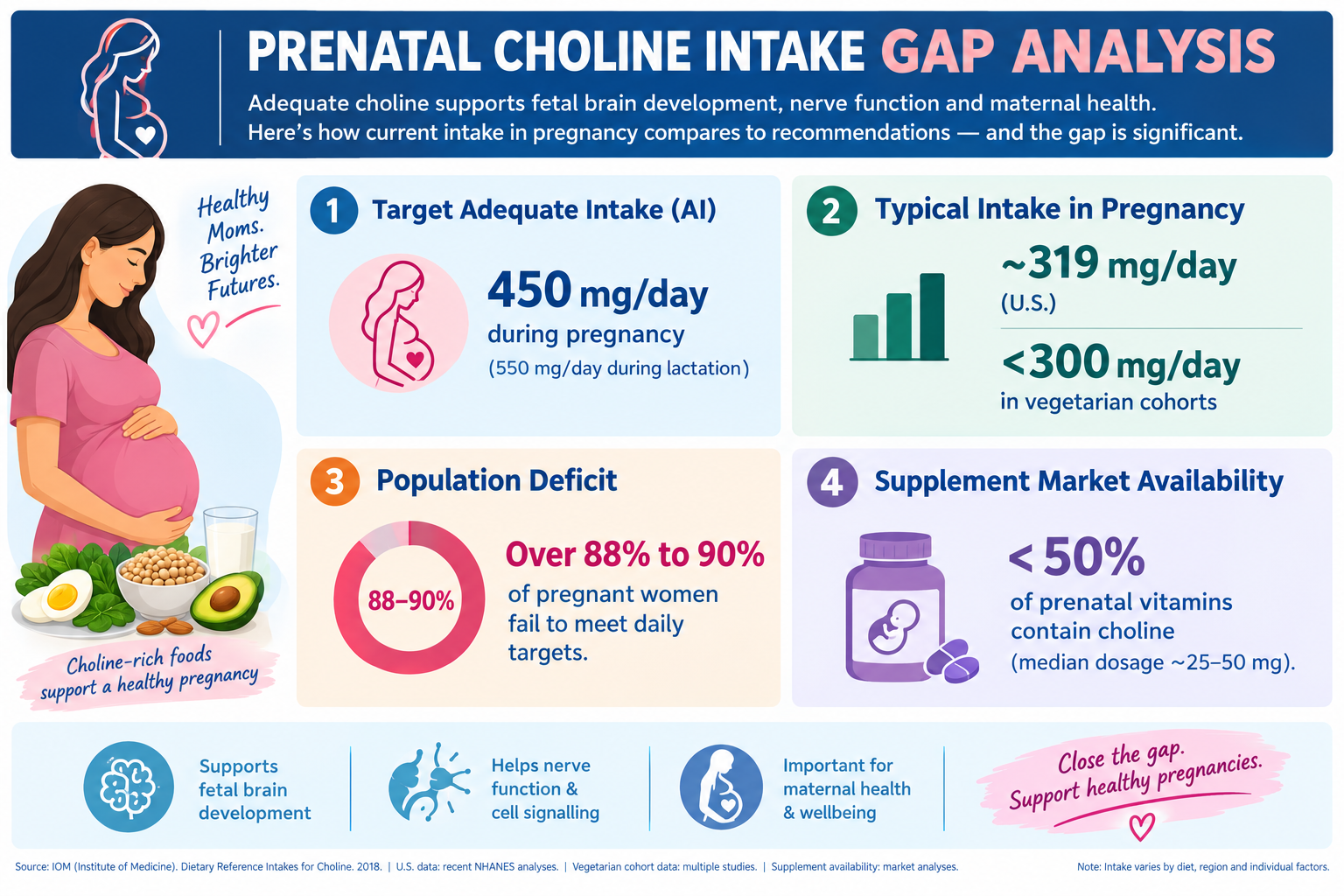
The US National Institutes of Health (NIH) identifies an Adequate Intake (AI) of 450 mg of choline per day during pregnancy and 550 mg per day during lactation and may serve as guide for Indians too.
Choline Intake by Indians and Pregnant Women
For India, the important question is not simply whether choline is essential. It is whether Indian women of reproductive age and pregnant women obtain enough of it from their everyday diets — and whether routine antenatal nutrition advice adequately accounts for this nutrient.
Required for cellular structural integrity, neurotransmitter synthesis, and stem-cell proliferation in the developing fetal brain, choline is officially classified as an essential nutrient. However, dietary intake surveys and formulation audits indicate that most pregnant women fall significantly short of recommended intake levels, posing preventable risks to neurocognitive health.
Why choline matters for fetal growth and development
Choline is sometimes grouped with B vitamins because of its overlapping roles in metabolism, but it is a distinct essential nutrient. The human body can produce some choline, primarily in the liver, but endogenous production is generally insufficient to meet all requirements.
Its importance during pregnancy extends across several biological functions.
Fetal brain and central nervous system development
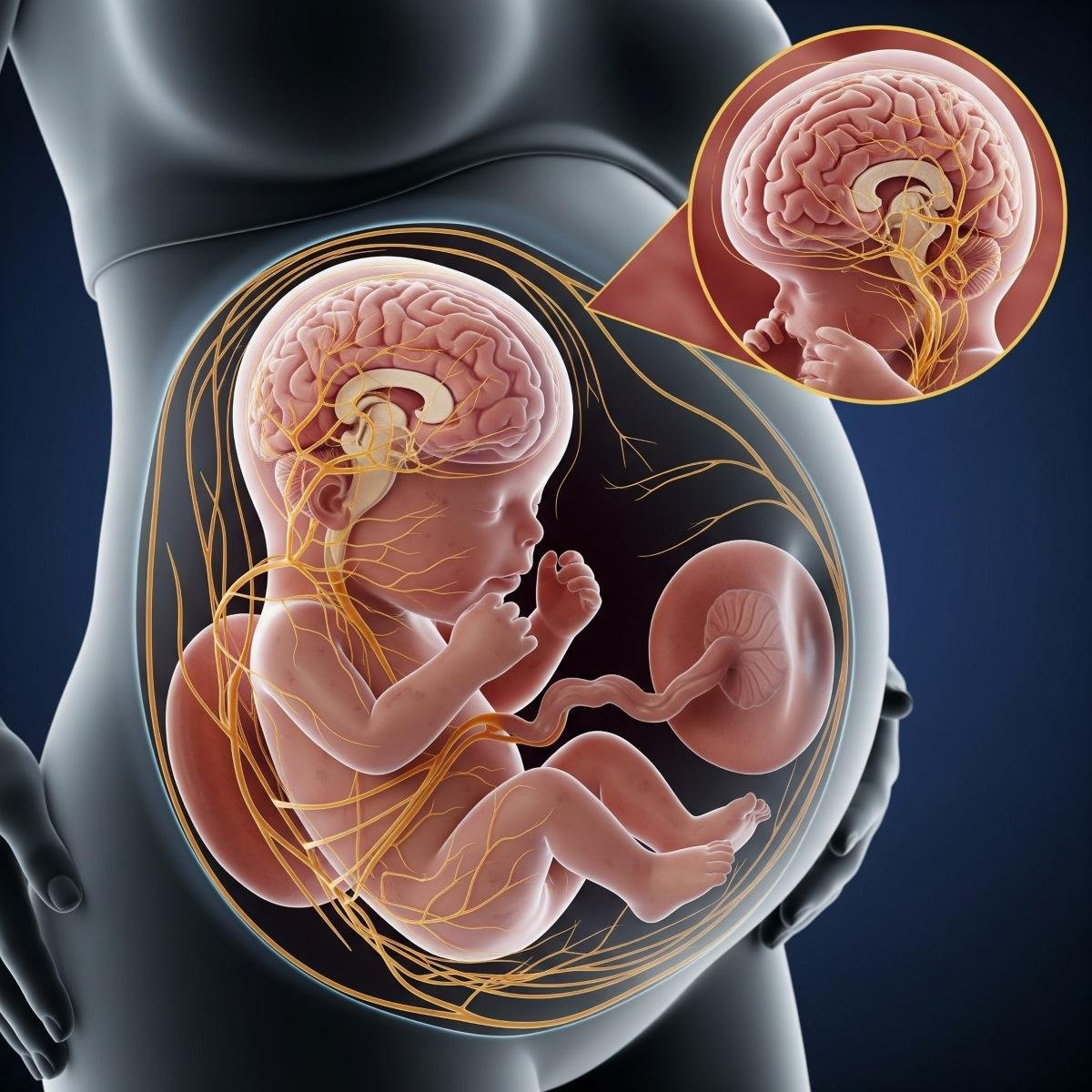
Choline supports phospholipid production, including phosphatidylcholine and sphingomyelin, which help form cell membranes. It also contributes to acetylcholine synthesis and normal nervous-system function.
Choline acts as a primary precursor for acetylcholine, a neurotransmitter regulating memory, mood, and muscle control, as well as phosphatidylcholine, a principal structural phospholipid in cell membranes.
During the second and third trimesters, when fetal neural progenitor cells proliferate rapidly, maternal choline demand surges.
-
Hippocampal Architecture: Animal and human cohort studies demonstrate that higher maternal choline availability permanently alters the physical structure of the fetal hippocampus—the brain’s memory center—improving information processing speed and cognitive endurance.
-
Epigenetic Regulation: Choline donates methyl groups via conversion to betaine. This pathway works alongside active folate (L-5-MTHF) to regulate gene expression, protect against neural tube defects (NTDs), and prevent placental dysfunction.
-
Placental Vascular Health: Adequate choline levels support normal placental growth and blood vessel development, reducing systemic stress markers during late-stage gestation.
Deficiency in Indians: why this deserves attention
India’s maternal nutrition challenge must be considered within its own dietary, social and epidemiological context.
According to the National Family Health Survey (NFHS-5, 2019–21), 52.2% of pregnant women aged 15–49 years were anaemic. This is a well-established indicator of the scale of maternal nutritional vulnerability, although anaemia is not a marker of choline deficiency. The distinction matters: evidence of deficiencies in iron or other nutrients cannot be used to calculate the prevalence of inadequate choline intake.
India also has substantial dietary diversity. Many households rely on cereal-based meals, dals, pulses and vegetables, while the frequency of egg, dairy, fish and meat consumption varies by region, income, household practices and individual dietary preferences. These patterns could influence choline intake, but their actual effects need to be quantified using Indian dietary data.
Indian Dietary Challenge: High Needs, Low Intake
While global health bodies set the Adequate Intake (AI) for choline at 450 mg/day during pregnancy and 550 mg/day during lactation, achieving this through standard dietary habits presents unique challenges in India.
Vegetarian and Plant-Based Diets
The primary dietary sources of concentrated choline are animal-derived foods like egg yolks, liver, poultry, and fish. Because a large portion of the Indian female population observes vegetarian, lacto-vegetarian, or plant-leaning diets, daily intake frequently dips below 250 mg/day. Plant sources like soybeans, lentils, and cruciferous vegetables provide choline, but require high volume consumption to reach therapeutic thresholds.
Cooking Methods and Nutrient Losses
Traditional Indian cooking methods involving prolonged boiling or deep frying can lead to nutrient leaching, reducing the final bioavailable choline content in legumes and milk products.
Indian foods that can contribute choline
A practical strategy for Indian families is to assess the overall diet before considering supplementation. Choline occurs in both animal-derived and plant-derived foods, although concentrations vary considerably.


Examples of foods that can contribute Choline include:
-
Eggs: Particularly useful for people who consume eggs; the yolk contains much of the egg’s choline
-
Milk, curd and paneer: Contribute smaller amounts alongside protein and other nutrients
-
Soybeans and soy products: Useful options for vegetarian diets
-
Dals, beans and other pulses: Contribute choline as part of a varied plant-based diet
-
Fish and poultry: Can contribute meaningful amounts for families that consume these foods.
-
Cruciferous vegetables: Such as cabbage and cauliflower, which contribute smaller quantities.
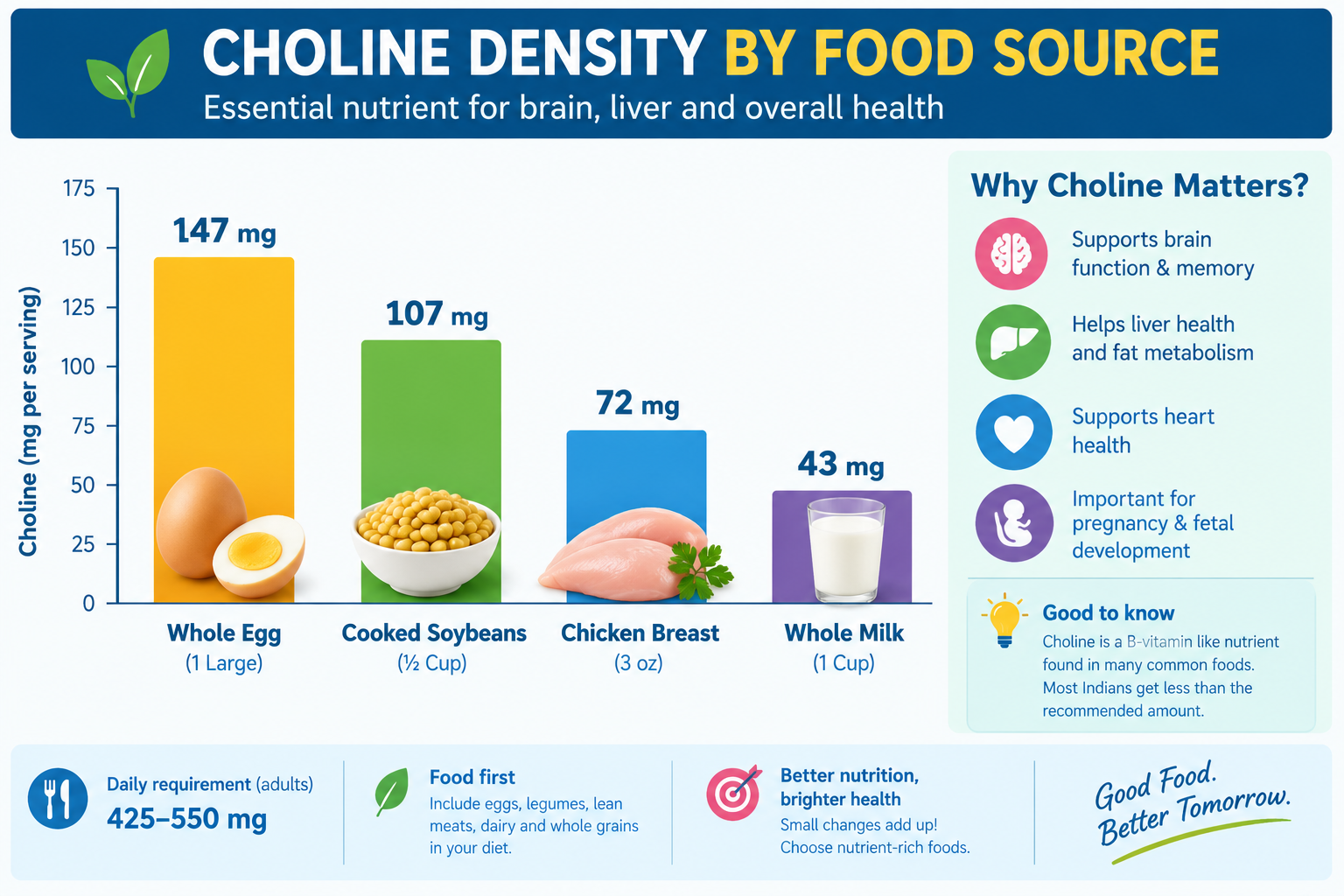
The US NIH food-composition database provides illustrative values of approximately 147 mg in one large hard-boiled egg, 107 mg in half a cup of roasted soybeans, 43 mg in one cup of milk and 72 mg in a 3-ounce serving of cooked chicken breast. These are US food-reference values and serving definitions; actual amounts in Indian foods depend on food variety, portion size and preparation.
The Indian Food Composition Tables (IFCT 2017), published by ICMR–National Institute of Nutrition, are an important national resource for analysing the nutrient composition of Indian foods. However, a food’s inclusion in the IFCT should not be taken as proof that a particular nutrient has been quantified for every item. Indian choline calculations should use verified nutrient-specific entries rather than extrapolating from protein or total-fat content.
Are vegetarian Indian women at greater risk?
This is an important research question, but it requires a careful answer.
Choline is present in plant foods, so vegetarian diets are not inherently deficient. Nevertheless, eggs, meat, fish and some dairy foods can be useful contributors, and people who avoid these foods may have fewer concentrated dietary sources.
For Indian women following vegetarian or vegan diets, practical considerations include:
-
Whether the diet regularly includes pulses, soy foods, nuts, seeds and other varied foods
-
Whether dairy or eggs are consumed, where compatible with personal preferences
-
Whether the overall diet provides sufficient energy, protein, folate, vitamin B12, iron, iodine and other nutrients needed during pregnancy
-
Whether food aversions, nausea, restricted diets or food insecurity are reducing dietary variety
The NIH notes that people following vegan diets or avoiding eggs may benefit from an assessment of whether choline supplementation is appropriate. This is a reason for individualised nutritional review, not a basis for labelling all vegetarian pregnant women as deficient.
Do Indian prenatal supplements contain enough choline?
Prenatal multivitamins vary in composition. A product labelled “prenatal” or “complete pregnancy nutrition” should not automatically be assumed to contain a meaningful quantity of choline.
The NIH reports that a 2022 evaluation of 188 prenatal supplements marketed in the United States found that 40% contained choline, with a median of only 25 mg per serving among products that included it. This is evidence about the US market, not a survey of prenatal supplements sold in India.
For Indian consumers, the practical approach is to check the product’s nutrition panel and confirm:
-
Whether choline is included
-
The amount per daily serving, expressed in milligrams
-
Whether the label specifies the choline-containing ingredient and its actual choline contribution
-
Whether combining products could lead to unnecessary or excessive intake
A clinician or registered dietitian can help determine whether dietary intake is likely to be adequate and whether a supplement is appropriate.
Conclusion: Choline deserves a place in India’s maternal nutrition conversation
Choline is an essential nutrient with important roles in fetal growth, cell-membrane formation, nervous-system function and brain development. International guidance identifies an AI of 450 mg/day during pregnancy, and research has raised questions about whether low intake may be associated with adverse developmental outcomes.
-
Reformulating Prenatals: Because over 50% of commercial prenatal supplements contain no choline—and those that do supply only nominal doses (10 to 50 mg)—formulators must prioritize higher-density, highly soluble salts like choline bitartrate or combined methyl donor matrices.
-
Pairing with Active Folate (L-5-MTHF): Since choline and folate share overlapping biochemical pathways in one-carbon metabolism, combining bioavailable L-5-MTHF with choline optimizes neural tube closure and epigenetic programming, bypassing genetic MTHFR conversion barriers.
-
Routine Clinical Screening: Gynaecologists should evaluate dietary intake during early preconception visits, offering targeted dietary plans or supplementation to ensure pregnant and lactating mothers consistently reach the 450–550 mg/day threshold.