


This is our Special 3-Part Series on Benign Prostate Hyperplasia in Indian Males – a silent, epidemic affecting vast majority of Indian males. This series helps your understand the condition in its totality and helps you with lifestyle and nutritional practices to help manage this condition. If you or your loved ones have any Prostate issues, do share widely. Part 1 for your perusal, Part 2 and 3 follow.
Benign Prostatic Hyperplasia (BPH) and associated Lower Urinary Tract Symptoms (LUTS) represent a major, underdiagnosed health burden among aging Indian men.
As India undergoes a demographic shift toward an aging population, the prevalence of Benign Prostate Hyperplasia is accelerating alongside urbanizing lifestyle changes.
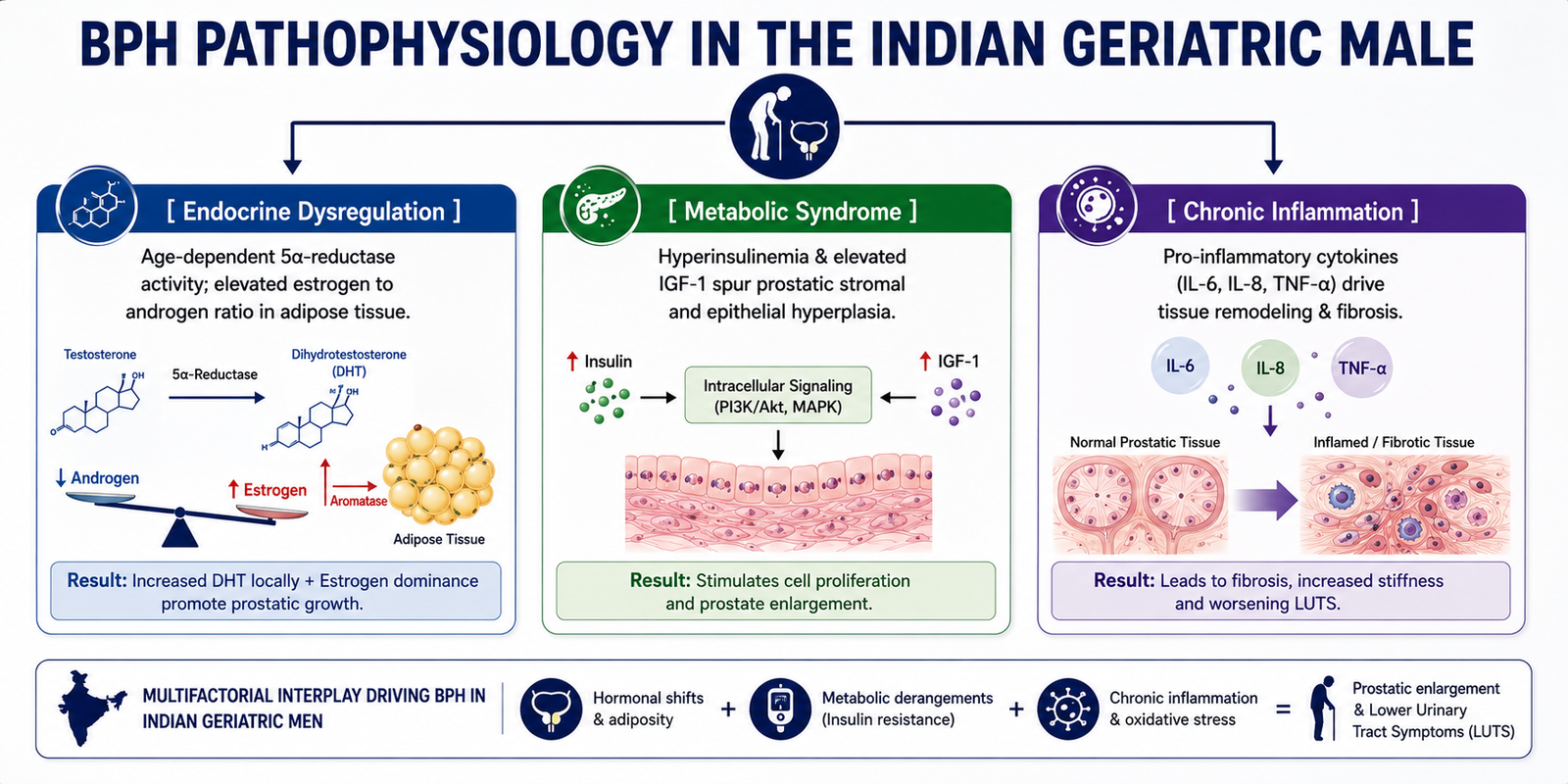
While age-related androgen alterations—specifically dihydrotestosterone (DHT) activity—remain fundamental to BPH pathogenesis, accumulating epidemiological and clinical evidence demonstrates that metabolic syndrome, chronic systemic inflammation, and the “thin-fat Indian” phenotype act as potent drivers of accelerated prostatic growth.
Benign prostatic hyperplasia (BPH) is the non-malignant enlargement of the prostate gland. It refers to stromal and glandular epithelial hyperplasia that occurs in the periurethral transition zone of the prostate gland.
It clinically manifests with irritative (frequency, urgency, nocturia) and obstructive symptoms (straining to initiate urination, hesitancy, a weak and interrupted urine stream, and a sensation of incomplete bladder emptying).
1. Epidemiological Landscape of BPH in India
India’s demographic profile is shifting rapidly. According to data from the Ministry of Statistics and Programme Implementation (MOSPI) and global aging reports, India’s elderly population (individuals aged 60 years and older) is projected to surpass 194 million by 2031, accounting for nearly 15% of the total population.
This demographic surge directly correlates with an increased incidence of progressive urological conditions in primary care settings.

Prevalence & Demographic Realities
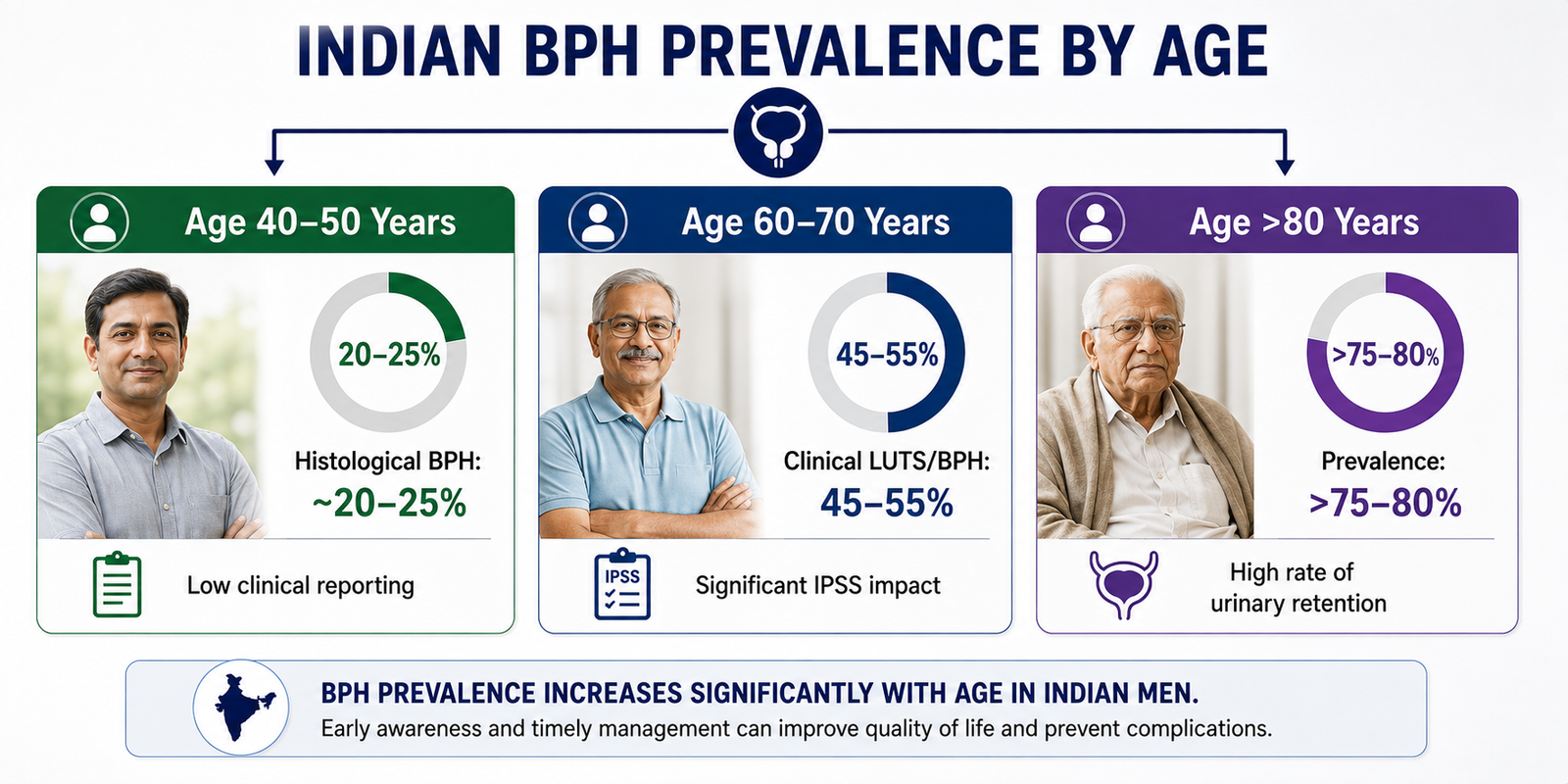
Population-based epidemiological studies across India indicate that histological BPH begins in the fourth decade of life, with clinical manifestations becoming prominent past age 50:
-
Age 50–60 years: ~30–40% prevalence of LUTS attributable to BPH
-
Age 60–70 years: ~45–55% clinical prevalence (Sharma et al., Indian J Urol)
-
Age >80 years: Exceeds 75–80% in community-dwelling elderly cohorts
Urban vs. Rural Disparities
The clinical presentation of BPH in India displays a stark urban-rural divide:
-
Urban Settings: Higher reported rates of LUTS driven by earlier screening, greater diagnostic availability (transrectal/transabdominal ultrasound, serum PSA, uroflowmetry), higher awareness, and lifestyle risk factors such as high-calorie, processed diets and sedentary habits
-
Rural Settings: Symptoms are frequently normalized as an inevitable consequence of aging. Patients often present late in disease progression, experiencing severe complications such as acute urinary retention (AUR), bilateral hydronephrosis, obstructive uropathy, secondary vesical calculi, or recurrent urinary tract infections (UTIs)
2. Pathophysiology and Classical Hormonal Dynamics
Prostatic growth is regulated by an intricate balance between cell proliferation and programmed cell death (apoptosis).
In BPH, this equilibrium shifts toward proliferation within the periurethral transition zone of the prostate.
1. The Dihydrotestosterone (DHT) Axis
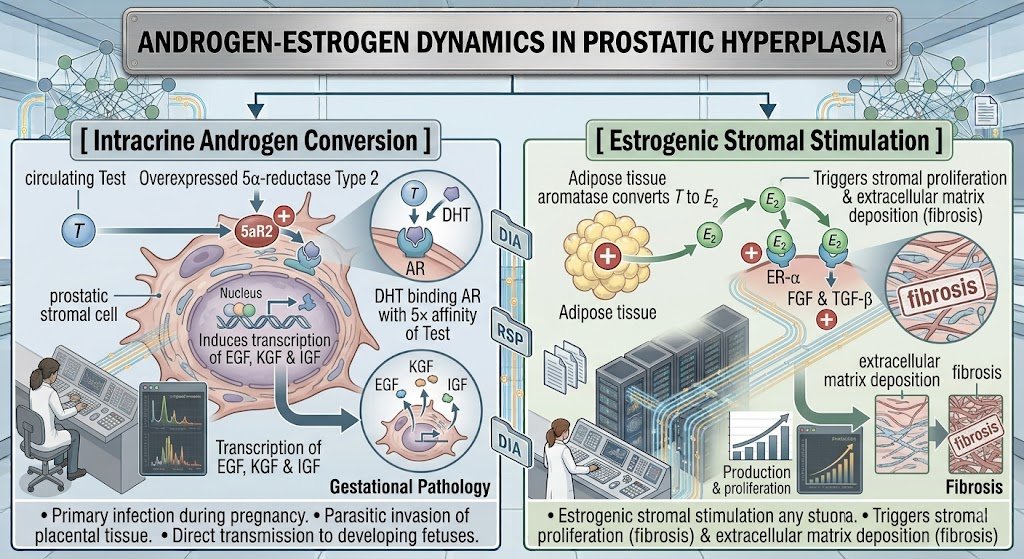
While circulating serum testosterone levels decline with advancing age, intraprostatic concentrations of Dihydrotestosterone (DHT) remain elevated.
-
Free testosterone (T) passively diffuses into prostatic stromal and epithelial cells
-
The enzyme 5-alpha-reductase (predominantly Type 2 isoenzyme in prostatic tissue) converts testosterone into DHT
-
DHT binds intracellular androgen receptors (AR) with roughly five times greater affinity than testosterone, stabilizing the receptor complex
-
Activated AR complexes translocate to the nucleus, binding to androgen response elements (AREs) to stimulate transcription of key growth factors: Epidermal Growth Factor (EGF), Keratinocyte Growth Factor (KGF/FGF-7), and Insulin-like Growth Factor (IGF)
2. Estrogen-Androgen Ratio Shifts
As men age, peripheral aromatization of androgens to estrogens increases—particularly within visceral adipose tissue:
-
Increased serum beta-estradiol relative to free testosterone stimulates prostatic stromal cells
-
Estrogen acts via Estrogen Receptor Alpha (ER-alpha) to promote cell survival, inflammation, and stromal proliferation, while Estrogen Receptor Beta (ER-beta) mediated anti-proliferative signaling becomes downregulated
3. The “Thin-Fat Indian” Phenotype & Metabolic Drivers
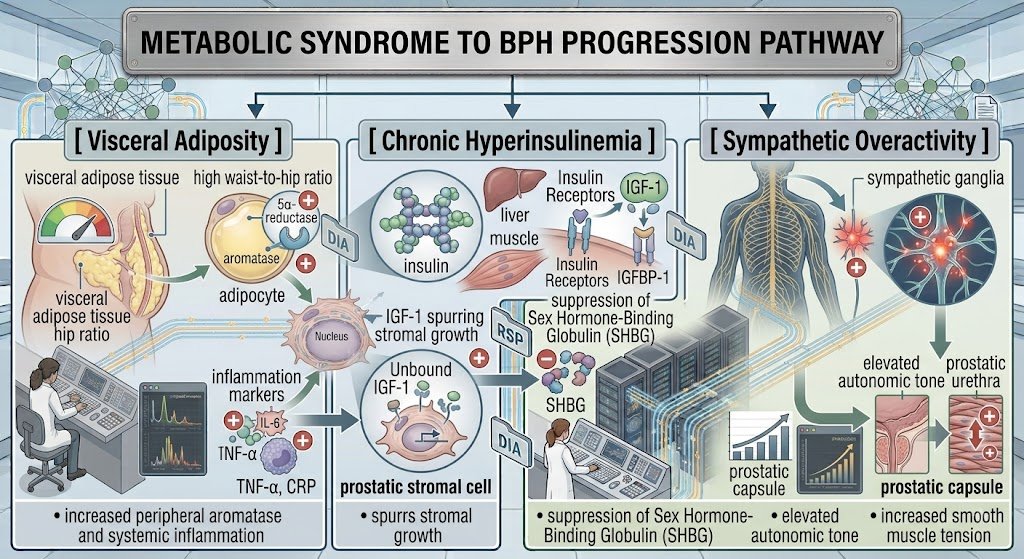
Standard BMI thresholds frequently underestimate metabolic risk in South Asian populations. The “Thin-Fat Indian” phenotype—characterized by normal overall BMI alongside elevated visceral adiposity, high waist-to-hip ratio, and low skeletal muscle mass (sarcopenia)—plays a direct role in accelerating BPH progression.
Hyperinsulinemia and the IGF-1 Axis
Visceral obesity leads to central insulin resistance and compensatory hyperinsulinemia:
-
Direct Prostatic Mitogenesis: Insulin acts as a direct growth factor on prostatic stromal and epithelial cells
-
IGF-1 Bioavailability: Hyperinsulinemia downregulates liver production of Insulin-like Growth Factor Binding Proteins (IGFBP-1 and IGFBP-3), increasing circulating free IGF-1. Free IGF-1 acts on prostatic IGF-1 receptors to promote cell division and suppress apoptosis
-
SHBG Suppression: Elevated insulin suppresses hepatic synthesis of Sex Hormone-Binding Globulin (SHBG), increasing the biologically active free fractions of both testosterone and estradiol
Type 2 Diabetes Mellitus (T2DM) & Diabetic Cystopathy
The high prevalence of T2DM in India complicates BPH presentations:
-
Accelerated Prostate Growth: Clinical trials show that diabetic men exhibit significantly higher annual prostate volume growth rates (1.5 – 2.5 cm^3/year) compared to non-diabetic controls (0.5 -1.0 cm^3/year)
-
Bladder Dysfunction Synergy: Hyperglycemia contributes to diabetic cystopathy (microvascular damage to detrusor innervation), worsening storage symptoms (frequency, nocturia, urgency) alongside mechanical bladder outlet obstruction (BOO)
Metabolic Factor |
Biological Mechanism |
Clinical Outcome in BPH |
Visceral Adiposity |
Increased aromatase activity & TNF-alpha/IL-6 expression |
Accelerated stromal proliferation & fibrosis |
Hyperinsulinemia |
Downregulated IGFBP-1/3 elevated free IGF-1 |
Increased cellular mitosis in transition zone |
Dyslipidemia |
Accumulation of intracellular lipid droplets & oxidized LDL |
Prostatic inflammation & cellular membrane oxidation |
Low SHBG |
Higher unbound fraction of circulating bioavailable T and E |
Prolonged tissue exposure to trophic hormones |
4. Chronic Prostatic Inflammation & Tissue Remodeling
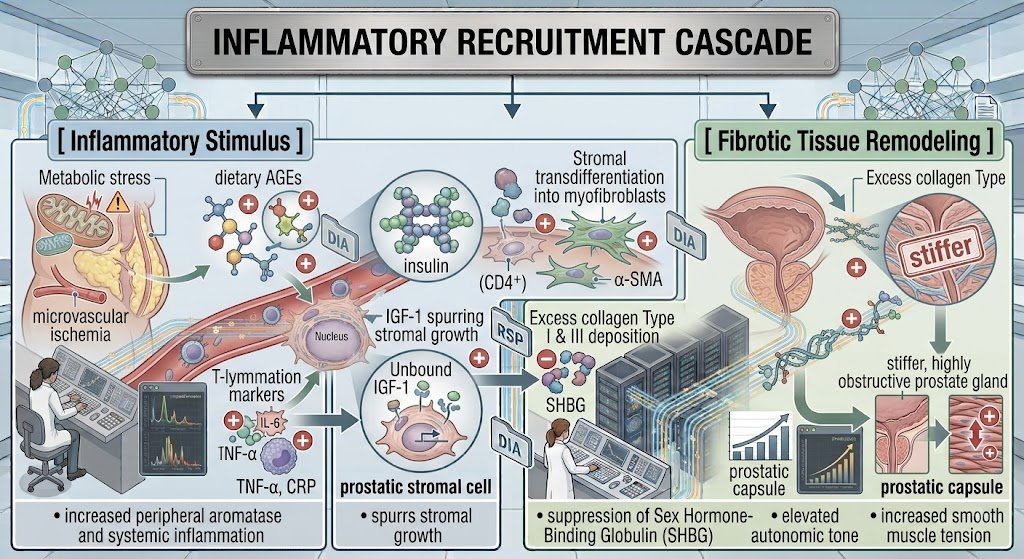
Histopathological analyses of transurethral resection of the prostate (TURP) specimens from Indian centers consistently reveal chronic inflammatory infiltrates in >75% of specimens, even in the absence of acute bacterial prostatitis.
-
Inflammatory Recruitment: Metabolic stress, tissue hypoxia, dietary advanced glycation end-products (AGEs), and microvascular ischemia recruit CD4+ T-lymphocytes and macrophages into prostatic tissue
-
Cytokine Signalling: Infiltrating immune cells secrete pro-inflammatory cytokines, notably Interleukin-6 (IL-6), Interleukin-8 (IL-8), and Transforming Growth Factor-Beta 1 (TGF-beta1).
-
Stromal Transdifferentiation: TGF-beta1 drives the transdifferentiation of quiescent prostatic fibroblasts into active myofibroblasts, stimulating collagen deposition (Type I and III). This process increases the mechanical stiffness of the prostate gland, exacerbating dynamic bladder outlet obstruction.
5. Clinical Implications for Primary Care & Geriatric Practice
Understanding BPH as a systemic metabolic-endocrine disorder rather than an isolated urological issue alters the approach to clinical evaluation in older Indian men:
-
Routine Metabolic Screening: Male patients presenting with LUTS should be evaluated for metabolic syndrome, including fasting blood glucose, HbA1c, lipid panel, waist circumference, and blood pressure.
-
Differentiating Storage vs. Voiding Symptoms: Utilizing the standardized International Prostate Symptom Score (IPSS) helps isolate whether symptoms stem predominantly from mechanical obstruction (BOO) or metabolic/diabetic detrusor hyperreflexia.
-
Early Baseline Diagnostics: Performing serum Prostate-Specific Antigen (PSA), digital rectal examination (DRE), uroflowmetry, and post-void residual (PVR) volume ultrasound ensures timely identification of patients requiring early pharmacological intervention or specialist referral.
References & Academic Bibliography
-
Sharma, M., et al. (2018). Epidemiological patterns and burden of Lower Urinary Tract Symptoms (LUTS) secondary to BPH in aging Indian males. Indian Journal of Urology, 34(2), 112–118
-
Vignozzi, L., et al. (2016). Metabolic syndrome and benign prostatic hyperplasia: Old concepts and new perspectives. Nature Reviews Urology, 13(3), 136–144
-
Egan, K. B. (2016). The epidemiology of benign prostatic hyperplasia associated with lower urinary tract symptoms: Prevalence and incident rates. Urologic Clinics of North America, 43(3), 289–297
-
Devlin, H. L., et al. (2021). Metabolic determinants of prostate growth: Insulin, IGF-1, and systemic inflammation. Prostate Cancer and Prostatic Diseases, 24(1), 45–56
-
Roehrborn, C. G. (2011). Pathology of benign prostatic hyperplasia. International Journal of Impotence Research, 20(S3), S11–S18
-
De Nunzio, C., et al. (2012). The metabolic syndrome and benign prostatic hyperplasia: A new challenge for the urologist. European Urology, 61(3), 560–570
-
ICMR Guidelines for Management of Type 2 Diabetes & Metabolic Health in Elderly Indians (2023). Indian Council of Medical Research, New Delhi