



India faces a severe metabolic health crisis: over 101 million Indians live with Type 2 Diabetes Mellitus (T2DM), and an additional 136 million are prediabetic (ICMR-INDIAB Study).
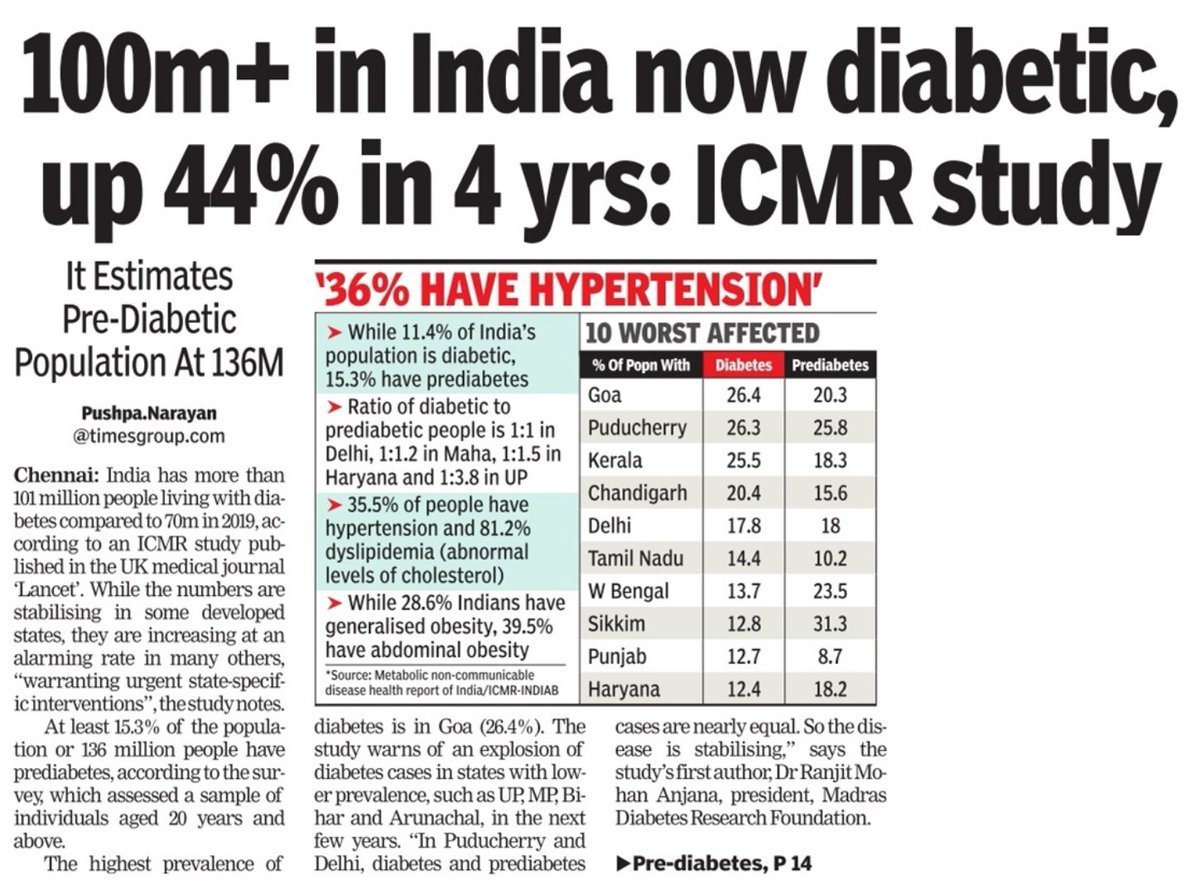
While genetics, sedentary lifestyles, and high-carbohydrate diets are well-documented contributors, modern metagenomic research has revealed an internal driver: gut microbiome dysbiosis.
A pivotal study by Das et al., titled “Metagenomic Analysis of Gut Microbiome in Non-Treated Distinct Sub-Populations of Type 2 Diabetes Patients from India” (Frontiers in Microbiology, 2018), provided direct molecular evidence of how microbial breakdown accelerates metabolic disease in urban Indians.
1. Context & The Indian Gut Paradigm
Historically, traditional Indian diets—balanced diet, rich in plant fibers, legumes, complex carbohydrates, bit of animal proteins and fermented foods—favored a Prevotella-dominated enterotype. This microbial ecosystem efficiently ferments complex dietary fibers into short-chain fatty acids (SCFAs) like acetate, propionate, and butyrate. Butter, especially home made butter is a good source of Butyrate and now you may recall why your parents tried feeding hiome made butters.
However, rapid urbanization across Indian metro and tier-2 cities has shifted dietary patterns toward refined carbohydrates, ultra-processed foods, high-fat/high-sugar (HFSS) combinations, and low dietary fiber. Coupled with rampant, unregulated over-the-counter antibiotic use, this modern lifestyle destabilizes the ancestral gut ecosystem, resulting in implications across Human Health, starting with pre-diabetes.
2. Deep Dive: Key Findings of Das et al. (2018)
Das and colleagues analyzed the fecal metagenomes of treatment-naïve urban Indian T2DM patients alongside non-diabetic controls. Their objective was to eliminate confounding variables from anti-diabetic medications like Metformin (which alters the gut microbiome) and evaluate the baseline microbial state of diabetic urban Indians.
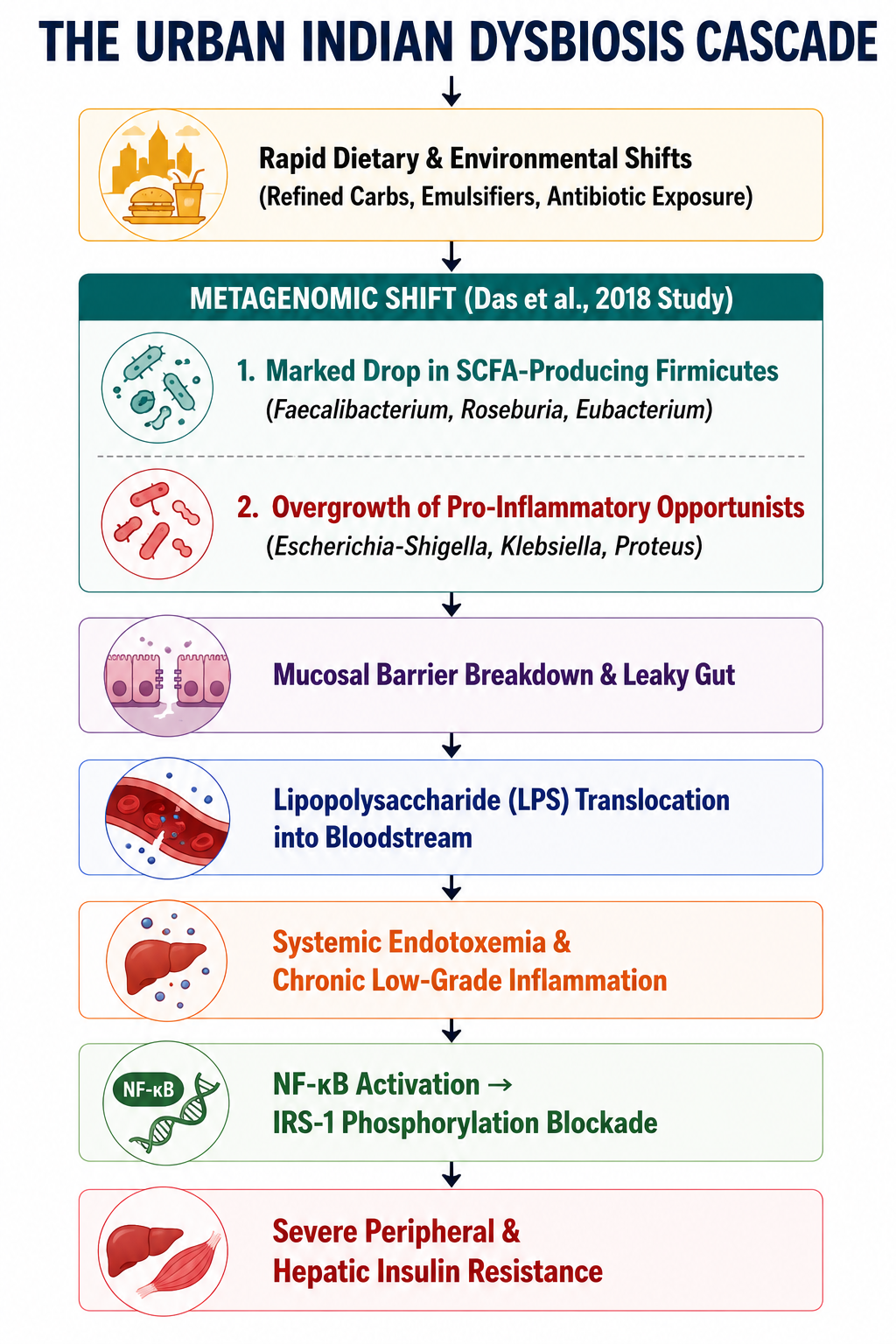
Key Finding A: The Depletion of SCFA-Producing Firmicutes
The study observed a marked, statistically significant reduction in commensal anaerobic bacteria belonging to the phylum Firmicutes, specifically key short-chain fatty acid (SCFA) producers:
-
Faecalibacterium prausnitzii: Widely recognized as one of the primary butyrate producers in the human colon and a critical anti-inflammatory agent.
-
Roseburia intestinalis & Eubacterium rectale: Specialized fermenters of dietary fibers and resistant starches that produce acetate and butyrate.
Metabolic Consequences of SCFA Depletion
The loss of SCFA producers disrupts multiple homeostatic pathways:
-
Loss of G-Protein-Coupled Receptor (GPCR) Signaling: Short Chain Fatty Acids bind to Free Fatty Acid Receptors 2 and 3 (FFAR2/3) on intestinal L-cells. In healthy individuals, this triggers the secretion of GLP-1 (Glucagon-Like Peptide-1) and PYY (Peptide YY), which stimulate insulin secretion, slow gastric emptying, and signal satiety to the brain. In urban Indian T2DM patients, depleted SCFAs result in blunted endogenous GLP-1 responses. Hence the advent of Semeglutides / Ozempic etc – these SYNTHETIC, Costly and Exogenous products only mimic body’s original, own GLP-1 and help stimulate insulin secretion etc. So if you have had good gut health, you may not require any of these synthetic, exogenous peptides such as Semaglutides
-
Impaired Intestinal Barrier Integrity: Butyrate serves as the primary energy source for colonocytes – cells of colon. Without adequate butyrate, colon cells suffer energetic stress, impairing their ability to assemble tight junction proteins like Claudin-1, Occludin, and ZO-1 (Zonula Occludens-1) thus leading to a condition called Leaky Gut
-
Reduced AMPK Activation: SCFAs such as Butyrate activate AMP-activated protein kinase (AMPK) in skeletal muscle and liver cells, driving glucose uptake and fatty acid oxidation. Depletion of short chain fatty acids leads to diminished peripheral glucose clearance leading to increased serum blood glucose and you being diagnosed as Pre-Diabetic or Diabetic
Key Finding B: The Explosion of Opportunistic Escherichia-Shigella
Concurrently, Das et al. identified a dramatic proliferation / substantial increase in numbers of Gram-negative opportunistic pathogens belonging to the family Enterobacteriaceae, most notably the genus Escherichia-Shigella, alongside Klebsiella species.
Biochemical Cascade of Inflammatory Endotoxemia
-
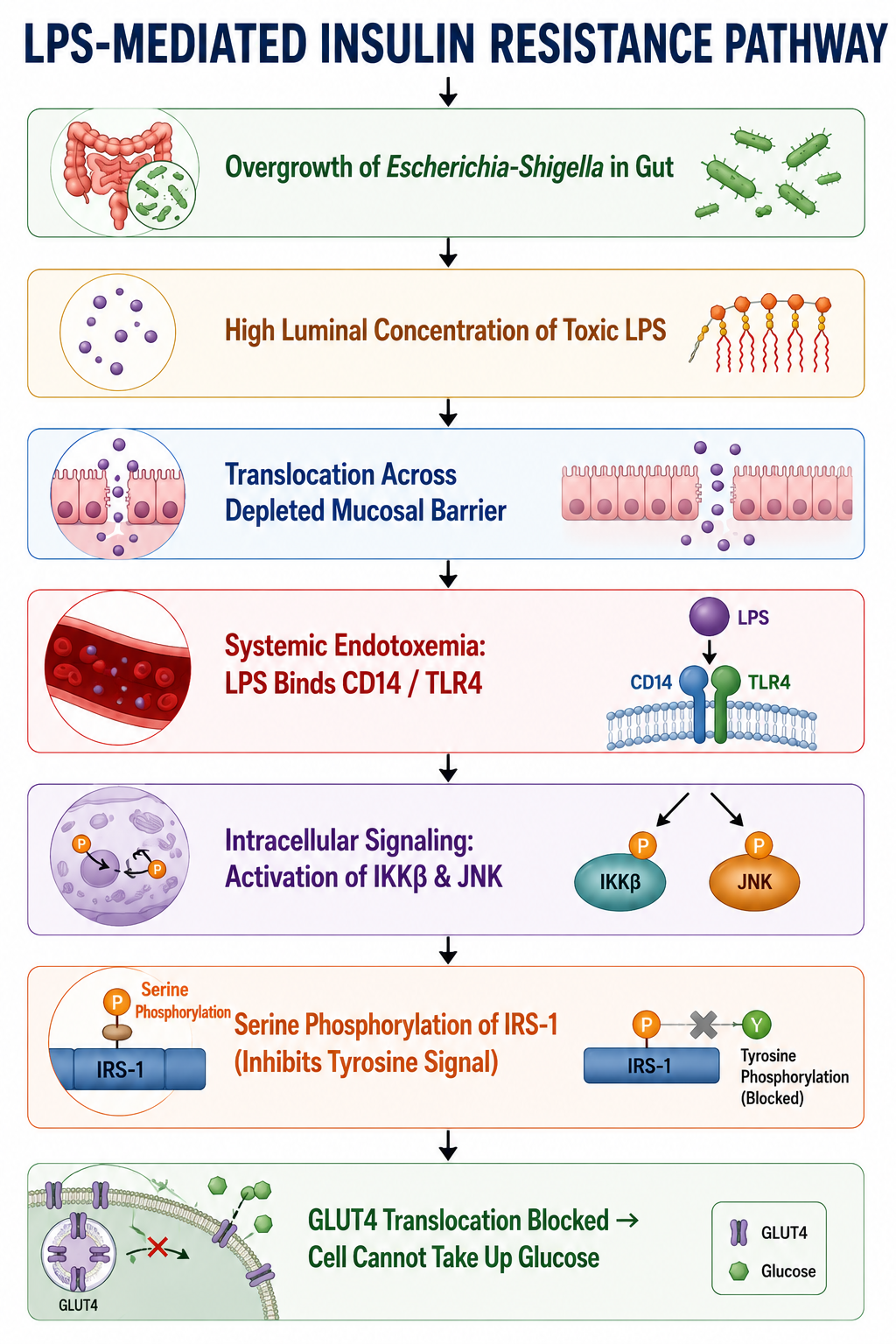
Lipopolysaccharide (LPS) Shedding: Escherichia-Shigella possess outer membrane coats rich in highly immunogenic Lipopolysaccharide (LPS) molecules (endotoxins)
-
Leaky Gut Translocation: Because the mucosal barrier is degraded due to low butyrate, LPS freely escapes the intestinal lumen into portal circulation—a clinical condition known as Metabolic Endotoxemia – which is the presence of bacterial toxins called lipopolysaccharides (outer cell wall components of Gram-negative bacteria such as E. coli, Klebsiella etc.) in the bloodstream. It triggers a strong immune response
-
TLR4 Receptor Binding: Circulating LPS binds to CD14 and Toll-Like Receptor 4 (TLR4) on the surface of macrophages, adipocytes, and hepatocytes
-
Inflammatory Kinase Activation: TLR4 signaling triggers intracellular cascades via MyD88, activating two major inflammatory enzymes:
-
IKK-beta (Inhibitor of nuclear factor kappa-B kinase subunit beta)
-
JNK (c-Jun N-terminal kinase)
-
-
Direct Disruption of Insulin Signaling: Activated IKK-beta and JNK phosphorylate Insulin Receptor Substrate-1 (IRS-1) at specific serine residues (e.g., Ser-307) rather than tyrosine residues. This serine phosphorylation inhibits downstream signaling through PI3K and Akt, preventing the glucose transporter GLUT4 from translocating to the cell surface. Consequently, glucose remains trapped in the bloodstream, driving hyperglycemia and you being diagnosed as Pre-Diabetic or Diabetic
3. Comparative Overview: Healthy vs. Diabetic Indian Gut State
Functional Parameter |
Healthy Indian Gut (Traditional Baseline) |
Urban Indian T2DM Gut (Das et al., 2018) |
Dominant Phyla |
Balanced Firmicutes & Bacteroidetes (Prevotella) |
High Proteobacteria, Altered Bacteroidetes |
Key SCFA Producers |
High F. prausnitzii, Roseburia, Eubacterium |
Severely Depleted |
Opportunistic Pathogens |
Suppressed by competitive exclusion |
Significant Overgrowth (Escherichia-Shigella) |
Endogenous GLP-1 Release |
Optimal (stimulated via FFAR2/3 by SCFAs) |
Blunted / Impaired |
Intestinal Permeability |
Intact tight junctions (High ZO-1 & Occludin) |
“Leaky Gut” / High Mucosal Permeability |
Systemic Inflammation |
Low baseline inflammatory markers |
Chronic Low-Grade Inflammatory State (TNF-alpha, IL-6) – your slightly higher Hs-CRP is explianed by this |
Insulin Sensitivity |
Preserved IRS-1 Tyrosine Phosphorylation |
IRS-1 Serine Phosphorylation (Insulin Resistant) |
4. Why This Study is Critical for the Indian Demography
The “Thin-Fat” Indian Phenotype
South Asians frequently exhibit the “Thin-Fat” phenotype—characterized by normal or low Body Mass Index (BMI) alongside high visceral adiposity, higher percent body fat, and marked metabolic dysregulation.
Das et al.’s findings explain why even non-obese urban Indians can develop severe insulin resistance. Metagenomic dysbiosis and LPS-driven endotoxemia cause systemic inflammation and insulin resistance independent of overt obesity.
Role of Modern Urban Indian Diets
Traditional Indian home diets centered around whole grains (millets, brown rice), pulses, diary products such as curd and butter and indigenous vegetables provide abundant substrate for SCFA synthesis. The rapid transition / shift in urban Indian hubs toward:
-
Refined Grains: Maida, white rice, and stripped flour (lacking fermentable fiber)
-
Industrial Emulsifiers & Fats: Palm oil, hydrogenated fats, soya oil, sunflower oil, rice bran oil and food additives that degrade the intestinal mucin layer
-
Low Microbial Diversity: Diets dominated by repetitive, ultra-processed meals that starve beneficial Firmicutes
This shift selectively deprives Faecalibacterium prausnitzii and Roseburia of necessary prebiotic substrates while creating an ideal environment for facultative anaerobes like Escherichia-Shigella.
Bottom Line
Simplify your life – follow your home food habits. Follow what your grand parents were eating including timings of food intakes as well as portion sizes. Include Dairy, fermented foods, animal foods (if you can) and bring diversity. Start reading pack labels – if any pack has preservatives, artificial flavours, sweetners and maltodextrin etc, do’t even touch these foods. Remember once you put anything in your mouth – you can undo it. Ypu body has to bear the consequences of your food choices. Make intelligent choices in the first place. Wishing you All Diabetes -Free Life.
Key Academic Reference
-
Das, B., Ghosh, T. S., Kuntal, B. K., & Mande, S. S. (2018). Metagenomic Analysis of Gut Microbiome in Non-Treated Distinct Sub-Populations of Type 2 Diabetes Patients from India. Frontiers in Microbiology, 9, 1619. [DOI: 10.3389/fmicb.2018.01619]