



This is a Part-3 and Concluding Post on Benign Prostate Hyperplasia in Indians. This takes you through standard Do’s and Dont’s / FAQs as well as Dietary Guidelines for Benign Prostate Hyperplasia Patients. For Part 1 and Part 2 – pls click respective hyperlinks. Enjoy the details..
Section 1: Co-Prescribing & Pharmacodynamic Synergies
Q1: Can botanical extracts like Serenoa repens (Saw Palmetto) or Pumpkin Seed Oil be prescribed alongside alpha-1-adrenergic blockers (e.g., Tamsulosin, Silodosin)?
Yes, co-prescribing is clinically viable and often synergistic.
-
Mechanistic Rationale: alpha-1-adrenoceptor antagonists operate by relaxing prostatic smooth muscle and the bladder neck to provide rapid symptomatic relief from bladder outlet obstruction (BOO). In contrast, liposterolic extracts of Serenoa repens (LSESR) and Cucurbita pepo (Pumpkin Seed Oil) target underlying chronic intraprostatic inflammation (via 5-LOX/COX-2 pathways) and exert mild anti-androgenic effects.
-
Clinical Evidence: Studies evaluating combination therapy with Tamsulosin (0.4 mg) plus standardized Serenoa repens (320 mg) demonstrate a statistically significant reduction in storage symptoms (nocturia, urgency) and lower inflammatory markers compared to alpha-1-blocker monotherapy alone.
-
Prescribing Precaution: Ensure the patient is taking a standardized extract (85 -95% fatty acids and sterols). Non-standardized raw powders lack therapeutic potency.
Q2: Does concurrent use of Saw Palmetto or Phytosterols interfere with 5-alpha-Reductase Inhibitors (5-ARIs) like Finasteride or Dutasteride?
Routine co-prescription of Saw Palmetto with pharmaceutical 5-ARIs is generally redundant.
-
Pharmacodynamic Overlap: Both pharmaceutical 5-ARIs (Dutasteride/Finasteride) and high-dose liposterolic botanicals competitively inhibit 5-alpha-reductase isoenzymes. Synthetic 5-ARIs achieve far superior enzymatic suppression (>90% for Dutasteride) compared to plant sterols.
-
Clinical Recommendation:
-
If a patient is already on Dutasteride or Finasteride, adding Saw Palmetto provides minimal additional 5-alpha-reductase inhibition.
-
However, replacing Saw Palmetto with pumpkin seed oil or high-dose Zinc can still be beneficial, as these supply distinct antioxidant, anti-inflammatory, and apoptotic mechanisms without competing for the same enzymatic site.
-
Q3: How does Vitamin D supplementation complement standard LUTS medications?
Vitamin D supplementation acts on both the prostate gland and detrusor muscle pathways.
-
Synergy with alpha1-Blockers: Calcitriol (1,25(OH) 2D3) downregulates the RhoA/Rho-kinase pathway in prostatic smooth muscle cells. When combined with an alpha1-blocker, this dual-pathway inhibition enhances smooth muscle relaxation in the prostatic capsule.
-
Synergy with Antimuscarinics beta-3-Agonists: In elderly patients with co-existing diabetic cystopathy or detrusor overactivity, correcting Vitamin D deficiency (<20 ng/mL) improves bladder muscle contractility control, leading to greater reductions in nocturia frequency when paired with drugs like Mirabegron or Solifenacin.
Section 2: Laboratory Values & Diagnostic Accuracy
Q4: Do botanical supplements or micronutrients alter serum Prostate-Specific Antigen (PSA) levels and interfere with prostate cancer screening?
No. Unlike pharmaceutical 5-ARIs, standard nutritional therapeutics do not artificially lower serum PSA.
-
Pharmaceutical 5-ARIs: Dutasteride and Finasteride predictably reduce baseline serum PSA by approximately 50% after 6 months of continuous use. Clinicians must double the measured PSA value to assess true prostate cancer risk.
-
Nutritional Therapeutics: Standardized Saw Palmetto, Pumpkin Seed Oil, Zinc, Lycopene, and Vitamin D do not suppress circulating PSA levels to a clinically significant degree.
-
Clinical Takeaway: You can safely monitor baseline and annual PSA levels in patients taking nutritional supplements without adjusting the laboratory reference ranges.
Section 3: Drug-Nutrient Interactions & Safety Warnings
Q5: What safety precautions should be taken when combining high-dose Zinc with pharmaceutical regimens in elderly patients?
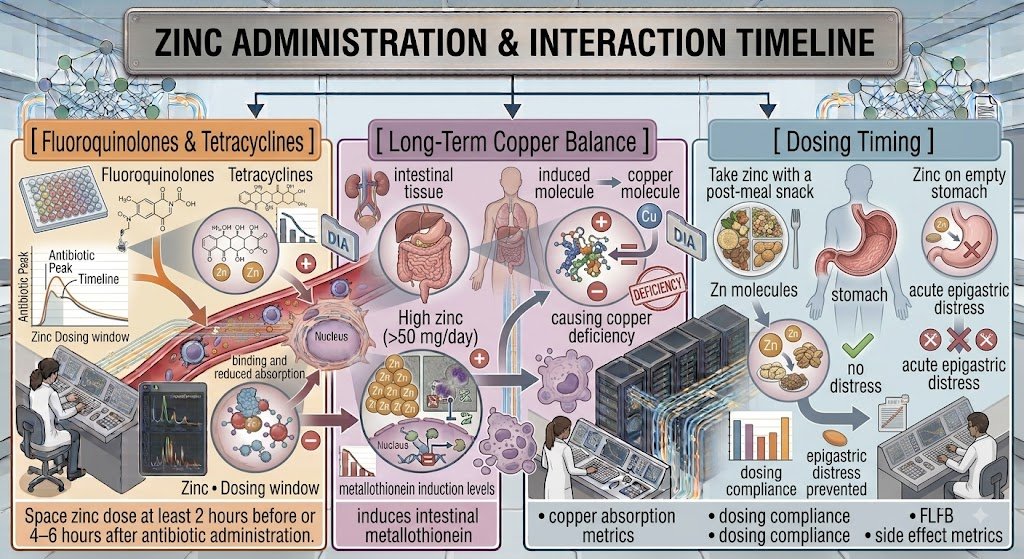
ZINC-Administration-Timing
-
Antibiotic Chelation: Supplemental zinc chelates fluoroquinolones (e.g., Ciprofloxacin, Levofloxacin) and tetracyclines (e.g., Doxycycline) in the gastrointestinal tract, drastically reducing antibiotic bioavailability. Space administration by at least 2 to 4 hours.
-
Induction of Copper Deficiency: Prolonged high-dose elemental zinc intake (> 50 mg/day) upregulates intestinal metallothionein, which binds copper and prevents its absorption. This can cause microcytic anemia and irreversible myeloneuropathy. Always prescribe a 10:1 or 15:1 Zinc-to-Copper ratio (e.g., 30 mg Zinc with 2 mg Copper).
-
GI Distress: High-dose zinc on an empty stomach frequently induces nausea and epigastric pain in older adults. Recommend taking zinc immediately following a major meal.
Q6: Can combining nutritional supplements with alpha-1-blockers cause orthostatic hypotension in older patients?
The risk is minimal with selective agents, but caution is warranted with non-selective regimens.
-
Highly uroselective alpha-1-blockers (Silodosin or Tamsulosin) target alpha-1A-adrenoceptors in the prostate with minimal effect on vascular alpha-1B-receptors.
-
However, if a patient is taking high doses of Omega-3 fatty acids (>3 g/day), Vitamin D3, or botanical vasorelaxants alongside older non-selective alpha -1-blockers (e.g., Doxazosin, Terazosin) or multi-drug anti-hypertensive regimens, additive mild vasodilation may occur.
-
Management: Advise geriatric patients to take their alpha-1-blocker and supplements at bedtime and counsel them on rising slowly from a seated or supine position.
Section 4: Dietary Realities & Patient Counseling
Q7: How should clinicians address the high-phytate issue in traditional Indian diets when prescribing mineral supplements?
Use chelated zinc formulations and counsel on traditional kitchen preparation methods.
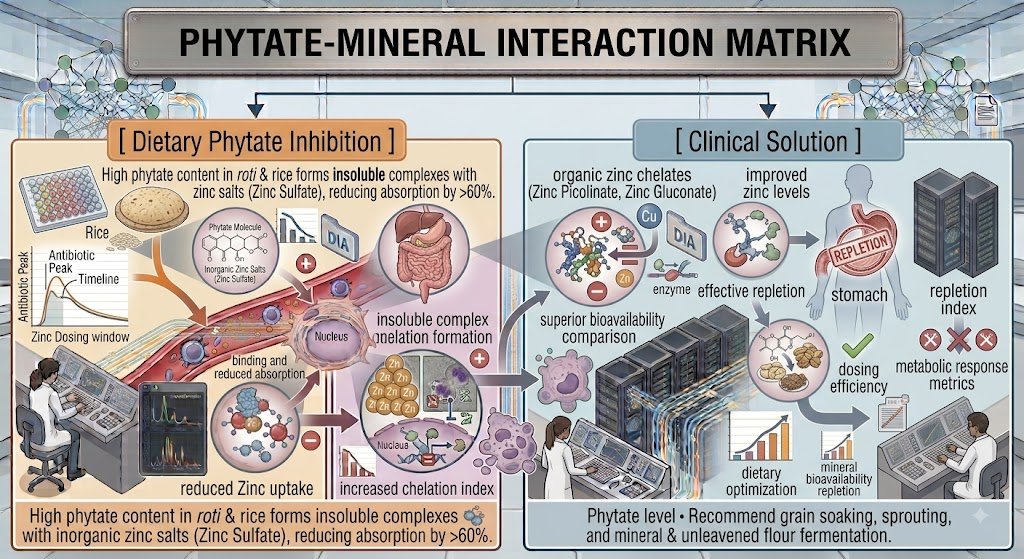
Phytates-Affect-Minerals-Absorption
-
Formulation Selection: Avoid prescribing inexpensive inorganic zinc salts (like Zinc Sulfate), which are easily chelated by dietary phytic acid. Instead, select organic zinc chelates (Zinc Picolinate, Zinc Bisglycinate, or Zinc Gluconate), which exhibit superior intestinal bioaccessibility even in phytate-rich environments.
-
Patient Counseling: Instruct elderly patients and their caregivers to soak whole grains, legumes, and millets for 6–12 hours prior to cooking. Soaking activates endogenous phytase enzymes, breaking down phytic acid and releasing bound minerals for intestinal absorption.
Q8: What is the optimal clinical summary protocol for integrating supplements into standard BPH care?
Patient Profile |
Pharmacotherapy |
Adjunctive Nutritional Protocol |
Monitoring Parameters |
Mild-to-Moderate LUTS (IPSS 8–19); Small Prostate (<30 mL) |
Tamsulosin 0.4 mg OD |
• Zinc Picolinate 30 mg + Copper 2 mg• Vitamin D3 – 2,000 -4,000 IU (if <30 ng/mL)• Dietary cooked tomato / lycopene intake |
• IPSS & QoL at 12 weeks• Serum 25(OH)D & Zinc at 6 months• Annual PSA & DRE |
Moderate-to-Severe LUTS (IPSS ge20); Large Prostate (>40 mL) |
Tamsulosin 0.4 mg + Dutasteride 0.5 mg OD |
• Standardized Saw Palmetto 320 mg or Pumpkin Seed Oil 1,000 mg}• Omega-3 Fatty Acids (1,000 mg EPA/DHA)• Low-GI, millet-based dietary shift |
• IPSS, Uroflowmetry (Qmax), PVR at 12 & 24 weeks• Adjust PSA expectations (times 2 for 5-ARI)• Fasting glucose & HbA1c |
Summary Key Takeaways for Physicians
-
Multitargeted Benefit: Combining standard drugs with evidence-based supplements addresses both mechanical obstruction and chronic systemic inflammation.
-
Preserve Screening: Botanical therapeutics do not distort serum PSA values, ensuring uncompromised prostate cancer monitoring.
-
Choose Bioavailable Forms: Opt for organic zinc chelates and recommend cooking lycopene-rich foods with healthy fats to overcome dietary absorption barriers in traditional diets.
-
Monitor High-Risk Profiles: Always balance high-dose zinc with copper, space mineral doses away from antibiotics, and screen for Vitamin D deficiency in elderly patients with LUTS.
PROSTATE HEALTH & DIET GUIDE
Managing BPH & Lower Urinary Tract Symptoms Through Nutrition
This guide provides practical dietary steps to support prostate health, reduce urinary discomfort (such as frequent or nighttime urination), and improve overall well-being alongside your prescribed medical treatment.
Daily Dietary Guidelines
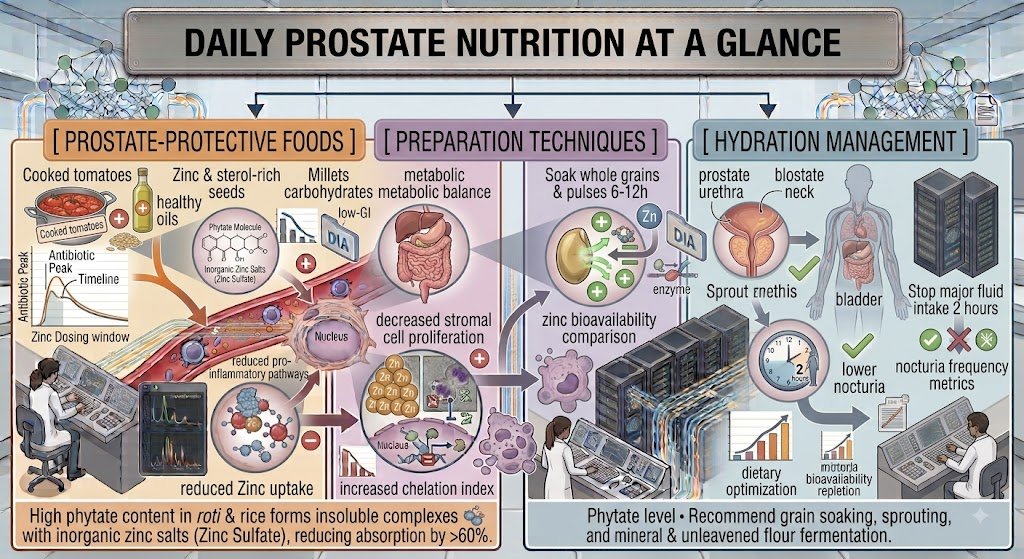
Nutrition-and-Dietary-Guidelines-for-BPH-Patients-in-India
Detailed Dietary Recommendations
Food Group |
Foods to Choose (DOs) |
Foods to Limit or Avoid (DON’Ts) |
Grains & Staples |
• Whole millets (Jowar, Bajra, Ragi)• Unpolished brown or red rice• Whole wheat flatbreads (chapatis) |
• Refined wheat flour (maida) products (naan, white bread, bakery biscuits)• Highly polished white rice (triggers blood sugar & insulin spikes) |
Vegetables & Fruits |
• Cooked tomatoes (in rasam, curry bases, or soups)• Cruciferous veggies (cauliflower, broccoli, cabbage)• Amla, guava, pomegranates, and citrus fruits |
• Raw tomato salads without fat (lycopene is poorly absorbed raw)• Sugary canned fruits or fruit juices with added sugar |
Proteins & Legumes |
• Soaked & sprouted pulses (chana, moong, rajma)• Soy products (tofu, soy milk, edamame)• Fatty fish (salmon, mackerel), Goat Meat and Whole eggs |
• Processed, fried, or charred red chicken• Unsoaked whole grains (high phytate content blocks zinc absorption) |
Nuts & Seeds |
• Raw pumpkin seeds, flaxseeds (alasi), chia seeds• Walnuts, almonds, and sesame seeds (til) |
• Heavily salted, deep-fried, or commercially flavored nuts |
Cooking Oils & Fats |
• Cold-pressed sesame oil or flaxseed oil• Traditional cow ghee• Extra Virgin Olive Oil |
• Industrial refined seed oils high in Omega-6 (sunflower, soybean, Rice bran, Mustard Oil, corn oil)• Re-heated frying oils and hydrogenated trans-fats (dalda) |
Beverages & Fluids |
• Warm water, green tea, herbal infusions• Spiced buttermilk (chaas) during daytime |
• Coffee, strong black tea, and energy drinks (caffeine irritates the bladder)• Alcohol, carbonated soft drinks, and evening fluids |
4 Essential Kitchen Habits for Prostate Health
-
Soak Grains & Pulses Before Cooking:Soak whole wheat, pulses, and millets for 6 to 12 hours before cooking. This simple step breaks down phytic acid, allowing your body to absorb up to 60% more essential Zinc and Magnesium from your food. MUST Discard the water used for soaking and use fresh water for cooking these soaked pulses and beans
-
Always Cook Tomatoes with Healthy Fats: The powerful antioxidant Lycopene is locked inside raw tomato cell walls. Cooking tomatoes with a small amount of mustard oil, sesame oil, or ghee transforms lycopene into an easily absorbable form that directly protects prostate tissue.
-
Manage Evening Fluid Timing: Drink the majority of your daily fluids (2 to 2.5 liters) between morning and early evening. Stop drinking large amounts of water or beverages 2 hours before bedtime to significantly reduce nighttime trips to the bathroom (nocturia).
-
Combine Seeds into Daily Meals: Add 1 to 2 tablespoons of raw pumpkin seeds and ground flaxseeds to your daily bowl of curd, oats, or salad. Pumpkin seeds supply natural phytosterols and zinc that help maintain healthy prostate size and urinary flow.