


This is Part 2 of our 3-Part Series on Benign Prostate Hyperplasia in Indian Males. For Part 1, Pls click here.
While pharmacological management (alpha 1-blockers and 5 alpha-reductase inhibitors) remains the cornerstone of conventional BPH treatment, long-term therapeutic compliance in elderly Indian patients is often challenged by side effects, drug interactions, polypharmacy, and financial constraints and hence need for Nutraceutics Approach.
Accumulating biochemical and clinical research demonstrates that targeted nutritional therapeutics and micronutrient modulation play a critical role in slowing prostatic hypertrophy, attenuating intraprostatic oxidative stress, and reducing lower urinary tract symptoms (LUTS).
Because traditional Indian diets present unique nutritional profiles—characterized by high phytate content, low bioavailable Zinc, low Omega-3 fatty acids, and high glycemic loads—tailoring dietary and micronutrient interventions to the geriatric Indian population provides a powerful adjunctive pathway for BPH prevention and symptom management
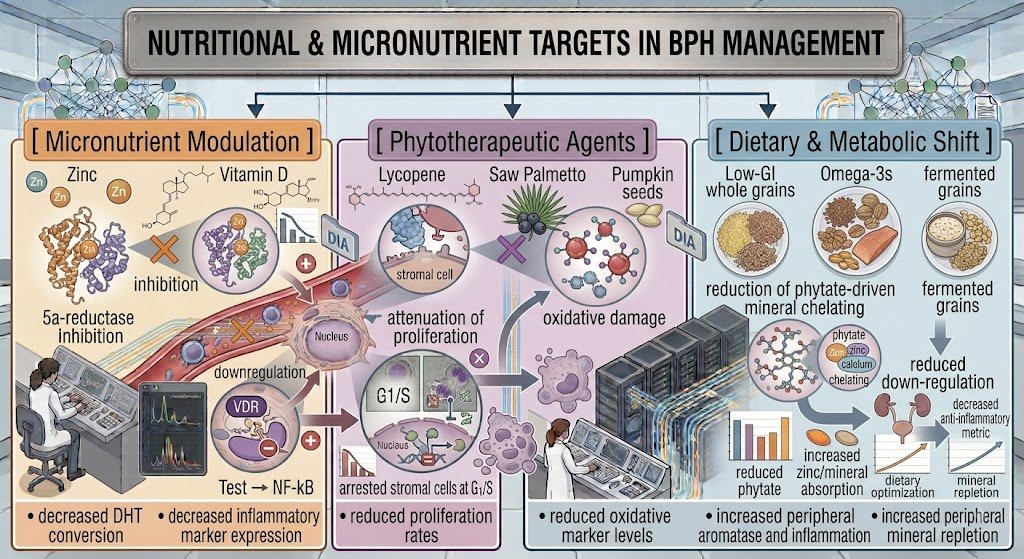
1. Essential Micronutrients in Prostate Physiology
1. Zinc (Zn): The Primary Intraprostatic Sentinel
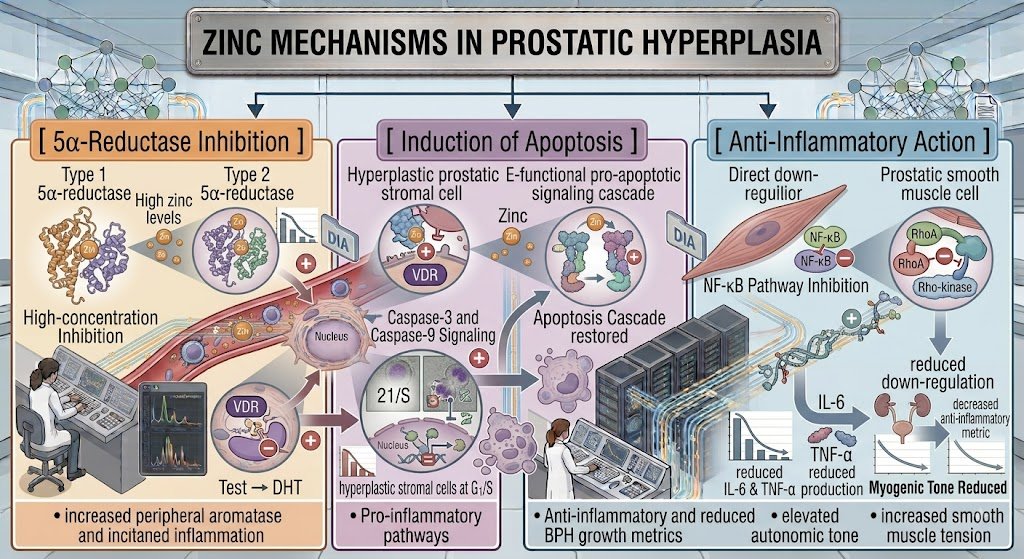
The human prostate accumulates higher concentrations of zinc than any other soft tissue in the body. In normal prostatic epithelial cells, zinc acts as a critical metabolic regulator by inhibiting m-aconitase, which halts the Krebs cycle and forces the cell to secrete citrate—a fundamental function of healthy prostatic tissue.
-
Mechanism of Action: Zinc competitively inhibits both Type 1 and Type 2, 5 alpha-reductase isoenzymes, directly reducing the conversion of testosterone into dihydrotestosterone (DHT). Furthermore, zinc downregulates Nuclear Factor Kappa B (NF-kappaB), suppressing inflammatory cytokine production (IL-6, IL-8)
-
The Indian Geriatric Context: Subclinical zinc deficiency is widespread among elderly Indian males. Traditional cereal-based Indian diets—rich in unleavened whole wheat flatbreads (roti/chapati) and polished rice—contain high levels of phytates (phytic acid). Phytates chelate dietary zinc in the intestinal lumen, forming insoluble complexes that significantly impair zinc absorption
2. Vitamin D (30(OH)D): Proliferation and Smooth Muscle Tone
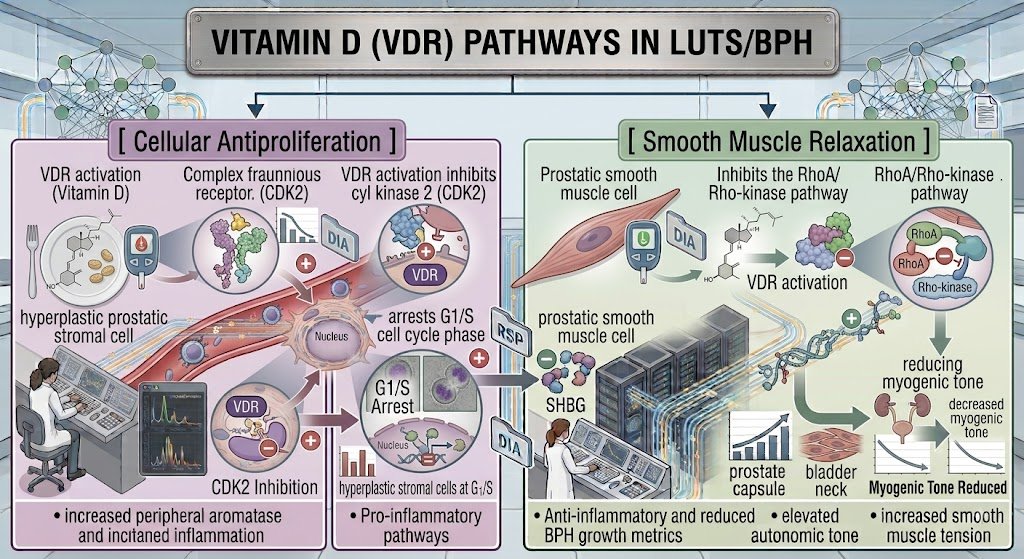
Beyond bone mineral homeostasis, Vitamin D receptors (VDR) are densely expressed throughout prostatic stromal and epithelial cells, as well as the detrusor muscle of the bladder.
-
Mechanism of Action: Calcitriol (1,25(OH)_2D) binding to nuclear VDR downregulates stromal cell proliferation, induces cell differentiation, and blocks inflammatory cytokine signaling. Additionally, VDR agonists inhibit the RhoA/Rho-kinase signaling pathway, reducing autonomic smooth muscle tension in the prostate capsule and bladder neck.
-
The Indian Geriatric Context: Despite abundant sunshine, over 70–80% of elderly urban and rural Indians exhibit clinical Vitamin D deficiency (<20 ng/mL) due to age-related decline in cutaneous synthesis capacity, melanin-mediated UV attenuation, limited sun exposure, and dietary insufficiency. Clinical studies consistently link serum 25(OH)D levels <20 ng/mL with larger prostate volumes and higher International Prostate Symptom Scores (IPSS).
3. Selenium (Se) & Vitamin E (alpha-Tocopherol): Antioxidant Synergy
The prostate tissue of aging men experiences progressive lipid peroxidation and DNA damage caused by reactive oxygen species (ROS).
-
Mechanism of Action: Selenium acts as an essential cofactor for Glutathione Peroxidase (GPx), protecting prostatic cell membranes from oxidative destruction. When combined with Vitamin E (a lipophilic antioxidant), selenium helps prevent tissue remodeling and fibrotic enlargement of the periurethral transition zone.
-
Clinical Caution: While dietary sources of selenium are beneficial, high-dose synthetic supplementation should be carefully monitored to prevent metabolic toxicity.
2. Phytotherapy and Botanical Interventions
Phytotherapeutic agents are widely utilized globally and across Indian integrative healthcare settings. Understanding their biochemical actions allows clinicians to prescribe or counsel patients effectively.
1. Lycopene (Carotenoid Therapeutics)
Lycopene is a potent lipophilic antioxidant carotenoid concentrated heavily in prostate tissue.
-
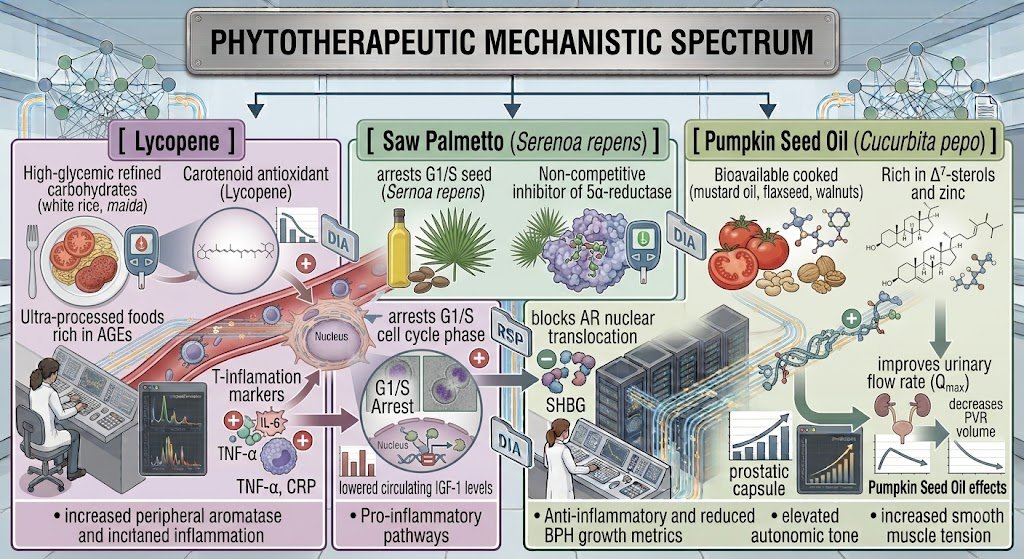
Biochemical Impact: Lycopene suppresses prostatic stromal cell proliferation by inhibiting IGF-1-stimulated cell growth, arresting the cell cycle at the G-1 transition phase, and scavenging singlet oxygen radicals
-
Bioavailability in Indian Culinary Practice: Raw tomatoes yield low lycopene bioavailability due to rigid cell walls. However, traditional Indian cooking methods—where tomatoes are cooked, crushed, and heated in healthy fats (mustard oil, sesame oil, or ghee)—break down cell walls and transform lycopene from trans-isomers to easily absorbed cis-isomers, increasing systemic bioavailability up to 3-fold
2. Serenoa repens (Saw Palmetto Berry Extract)
Liposterolic extract of Serenoa repens (LSESR) is among the most widely researched botanical agents for LUTS/BPH.
-
Biochemical Impact: LSESR exhibits dual 5-alpha-reductase inhibition without altering baseline serum PSA levels. It exerts anti-inflammatory effects by inhibiting 5-lipoxygenase and cyclooxygenase (COX-2) pathways within prostatic tissue, reducing tissue edema and smooth muscle spasm
-
Clinical Utility: Standardized extracts (320 mg daily, standardized to 85–95% fatty acids and sterols) yield statistically significant reductions in IPSS and nocturia frequency in patients with mild-to-moderate LUTS
3. Cucurbita pepo (Pumpkin Seed Oil)
-
Biochemical Impact: Rich in essential fatty acids (linoleic and oleic acid), zinc, and specialized Delta7-phytosterols. These phytosterols competitively displace DHT from androgen receptors on prostatic stromal cells.
-
Clinical Utility: Administered alone or combined with Serenoa repens, pumpkin seed oil improves maximum urinary flow rate (Qmax) and reduces post-void residual (PVR) urine volume without adverse sexual side effects (such as erectile dysfunction or retro-ejaculation commonly associated with synthetic 5-alpha-reductase inhibitors).
3. Dietary Patterns: Modern vs. Traditional Indian Diets
Dietary structure plays an important role in modifying systemic insulin resistance, visceral adiposity, and inflammatory cascades that drive prostate growth.
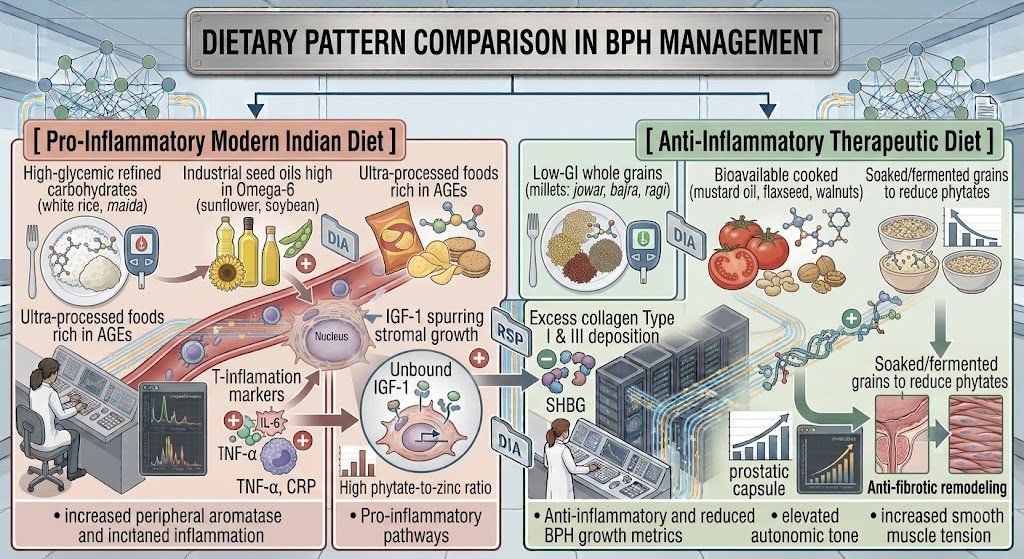

1. The High-Glycemic Trap & Hyperinsulinemia
Modern urban Indian diets rely heavily on refined carbohydrates (polished white rice, refined wheat flour/maida, and sugar-sweetened beverages).
-
Metabolic Cascade: High glycemic index (GI) meals trigger sharp postprandial insulin spikes. As discussed in Part 1, chronic hyperinsulinemia suppresses hepatic IGFBP-1/3 synthesis, elevating free circulating IGF-1, which directly stimulates cell division in the prostatic transition zone.
-
Therapeutic Shift: Transitioning geriatric patients to complex carbohydrates with a low GI—such as traditional Indian millets (Jowar, Bajra, Ragi), unpolished brown/red rice, and legumes—flattens postprandial glucose and insulin curves.
2. Dietary Phytoestrogens (Isoflavones & Lignans)
Phytoestrogens are plant-derived non-steroidal compounds structurally similar to 17beta-estradiol.
-
Biochemical Impact: Isoflavones (genistein, daidzein) bind preferentially to Estrogen Receptor Beta (ER-beta) in the prostate. Unlike ER-alpha (which triggers tissue proliferation and inflammation), ER-beta activation exerts an anti-proliferative, pro-apoptotic, and anti-inflammatory effect on prostatic epithelium.
-
Indian Sources: Traditional pulses, chickpeas (chana), lentils (dal), flaxseeds (alasi), and soy products are rich sources of dietary phytoestrogens.
3. Fatty Acid Ratios: Omega-6 vs. Omega-3 balance
-
The Problem: Modern Indian culinary practices have shifted toward refined seed oils (sunflower, corn, soybean oils, rice bran, blended oils) excessively high in Omega-6 fatty acids (Arachidonic Acid precursors). Excess Omega-6 fuels pro-inflammatory eicosanoid synthesis (prostaglandin E2, leukotriene B4), worsening intraprostatic inflammation significantly. That these seed oils have very high half life, these seed oils consumed even once keep causing harm to human body for almost a decade
-
The Solution: Increasing Omega-3 fatty acid intake (via fatty fish, flaxseeds and pure desi ghee which has some small amounts of Omega-3 etc) shifts eicosanoid synthesis toward anti-inflammatory series-3 prostaglandins, attenuating stromal cell swelling
4. Evidence-Based Nutritional Supplementation Protocols
Supplement / Nutrient |
Target Dose (Geriatric) |
Primary Mechanism of Action |
Clinical Objective |
Zinc Picolinate / Gluconate |
25–50 mg/day elemental Zinc (with 2 mg Copper) |
5-alpha-reductase inhibition; NF-kappa B suppression |
Restores prostatic zinc levels; decreases intraprostatic DHT |
Vitamin D3 (Cholecalciferol) |
2,000–5,000 IU/day (target serum level: 40–60 ng/mL) |
VDR activation; CDK2 inhibition; RhoA/Rho-kinase suppression |
Decreases prostate cell growth; relaxes bladder neck tone |
Lycopene |
15–30 mg/day (taken with fat-containing meal) |
Scavenges ROS; downregulates IGF-1 receptor expression |
Reduces oxidative DNA damage; halts stromal proliferation |
Saw Palmetto (Serenoa repens) |
320 mg/day (standardized to 85–95% fatty acids) |
Dual 5-alpha-reductase inhibition; COX-2 & 5-LOX inhibition |
Reduces IPSS; improves urinary stream without sexual side effects |
Pumpkin Seed Oil (Cucurbita pepo) |
500–1,000 mg/day |
Delta^7-sterol displacement of DHT from AR |
Lowers PVR volume; increases maximum flow rate (Qmax) |
Omega-3 Fatty Acids (EPA/DHA) |
1,000–2,000 mg/day combined EPA/DHA |
Competes with arachidonic acid; reduces PGE2 production |
Suppresses chronic prostatic stromal inflammation |
5. Practical Clinical Guidelines for Geriatric Indian Practice
To successfully integrate nutritional therapeutics into primary care and urological practice in India, clinicians can implement the following structured workflow:
1. Diagnostic Micronutrient Screening
-
Include serum 25(OH)D, serum Zinc, fasting lipid profile, and HbA1c alongside routine baseline assessments (PSA, DRE, KUB USG) for male patients presenting with LUTS
2. Dietary De-Phytinization Advice
-
Counsel patients and caregivers to soak, sprout, or ferment legumes and whole grains prior to cooking. Soaking whole wheat, pulses, and millets activates endogenous phytase enzymes, breaking down phytic acid and increasing the intestinal absorption of dietary zinc, magnesium, and calcium
3. Prescribing Bioavailable Lycopene
-
Advise patients to consume cooked tomato preparations (e.g., traditional tomato rasam, cooked curry bases) prepared with small amounts of healthy oils (mustard oil or ghee) to maximize lycopene absorption
4. Polypharmacy & Drug-Nutrient Safety
-
Zinc-Antibiotic Chelation: Ensure zinc supplements are taken at least 2 hours apart from fluoroquinolones (e.g., Ciprofloxacin) or tetracyclines
-
Antihypertensive Synergy: Monitor blood pressure when combining 5-alpha-reductase botanical inhibitors or high-dose Vitamin D with alpha-1-blockers, as smooth muscle relaxation may occasionally compound mild orthostasis
-
5-alpha-Reductase Monitoring: Unlike synthetic finasteride/dutasteride, botanical extracts (Serenoa repens, pumpkin seed oil) generally do not artificially halve serum PSA values, preserving PSA accuracy for prostate cancer screening
References & Academic Bibliography
-
Costello, L. C., & Franklin, R. B. (2016). Zinc is a key factor in the etiology and pathogenesis of benign prostatic hyperplasia and prostate cancer. Critical Reviews in Clinical Laboratory Sciences, 53(5), 329–337
-
Espinosa, G. (2013). Nutrition and benign prostatic hyperplasia. Current Opinion in Urology, 23(1), 38–41
-
Canguven, O., et al. (2017). Vitamin D and male urological health: A comprehensive review. International Journal of Endocrinology, 2017, 1–11
-
Schwarz, S., et al. (2008). Lycopene inhibits disease progression in patients with benign prostatic hyperplasia. The Journal of Nutrition, 138(1), 49–53
-
Vahlensieck, W., et al. (2015). Effects of pumpkin seed in men with lower urinary tract symptoms due to benign prostatic hyperplasia: A clinical trial. Urologia Internationalis, 94(3), 286–295
-
Rovner, E. S., et al. (2020). Phytotherapy in the management of benign prostatic hyperplasia and lower urinary tract symptoms. World Journal of Urology, 38(4), 875–884
-
National Institute of Nutrition (NIN) – Indian Council of Medical Research (ICMR) (2024). Nutrient Requirements and Dietary Guidelines for Indians. Hyderabad, India National Institute of Nutrition Dietary Guidelines for Indians_2024