



Every human being deserves a healthy, happy life with good mental health. Its our endeavour at www.vitaminerals.in that human beings are able to make right, healthy life style choices for such good health and happiness. This write up covers very interesting details about “Low on Mood and Depression” and how simple nutritive choices and supplementation with Vit B6 may greatly help in such conditions. Yet another classic Evidence-Explained™ piece on a very important and relevant topic. Get benefitted…
Low mood is a temporary feeling of sadness or frustration caused by daily stress, while depression is a serious medical condition where persistent sadness and loss of interest last for two weeks or longer.
What Is Low Mood?
- Definition: A short-term state of feeling down, fed up, or sad
- Causes: Triggered by specific events like a bad day at work, money worries, arguments, tiredness, or grief
- Duration: Lasts a few hours, days, or a short time
- Coping: Improves on its own with rest, exercise, talking to a friend, or fixing the problem
What Is Depression?
- Definition: A clinical mood disorder (also called major depressive disorder) that changes how you think, feel, and handle daily activities
- Duration: Symptoms happen most of the day, nearly every day, for at least two weeks or much longer
- Nature: You cannot simply “snap out” of it by choice. It often requires professional treatment like therapy or medicine
Key Differences
- Control: Low mood lifts when circumstances change. Depression persists regardless of outside events
- Impact: Low mood lets you continue daily routines. Depression makes simple tasks like getting out of bed or eating very hard
- Pleasure: Low mood might dull your happiness briefly. Depression causes an absolute loss of pleasure in things you used to love
Understanding Depression vs. Low Mood
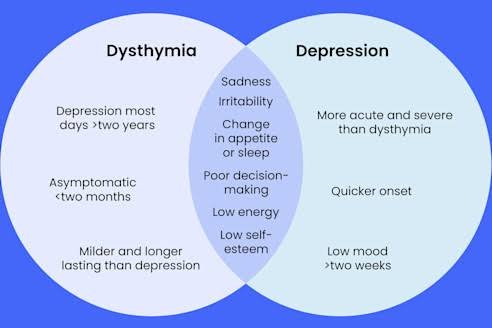
While people often use “feeling depressed” to describe temporary sadness, clinical depression differs significantly in duration, severity, and physiological impact from everyday low mood.
-
Low Mood Levels: A temporary emotional state characterized by sadness, frustration, worry, or tired feelings. It is usually tied to a specific trigger (such as stress, poor sleep, or conflict) and naturally dissipates within a few hours or days without impairing overall functioning
-
Depression (Major Depressive Disorder): A persistent, systemic mental health condition characterized by continuous low mood, loss of interest in activities (anhedonia), and physical or cognitive changes lasting at least two consecutive weeks. It directly disrupts work, relationships, and basic daily living
Core Symptoms of Depression
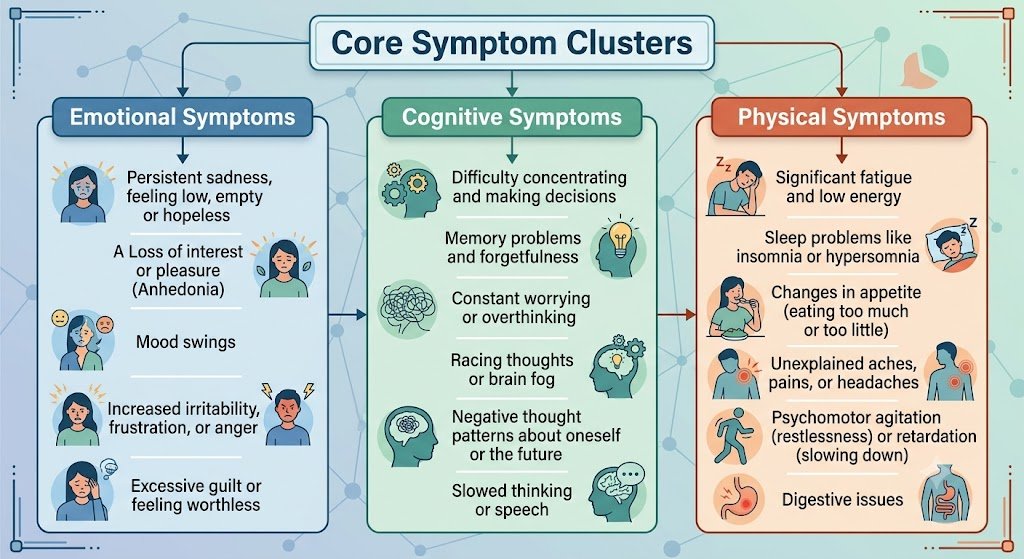
Depression impacts physical health, thought patterns, and everyday behavior.
-
Emotional: Persistent sadness, emotional numbness, unexplainable crying spells, feelings of worthlessness, intense guilt, and anhedonia (inability to feel pleasure)
-
Cognitive: Difficulty concentrating, brain fog, memory issues, indecisiveness, and recurring thoughts of self-harm or suicide
-
Physical & Behavioral: Chronic fatigue, changes in appetite (unintended weight loss or gain), insomnia or hypersomnia (oversleeping), and physical restlessness or slowed body movements (psychomotor retardation)
Epidemiology of Depression in India
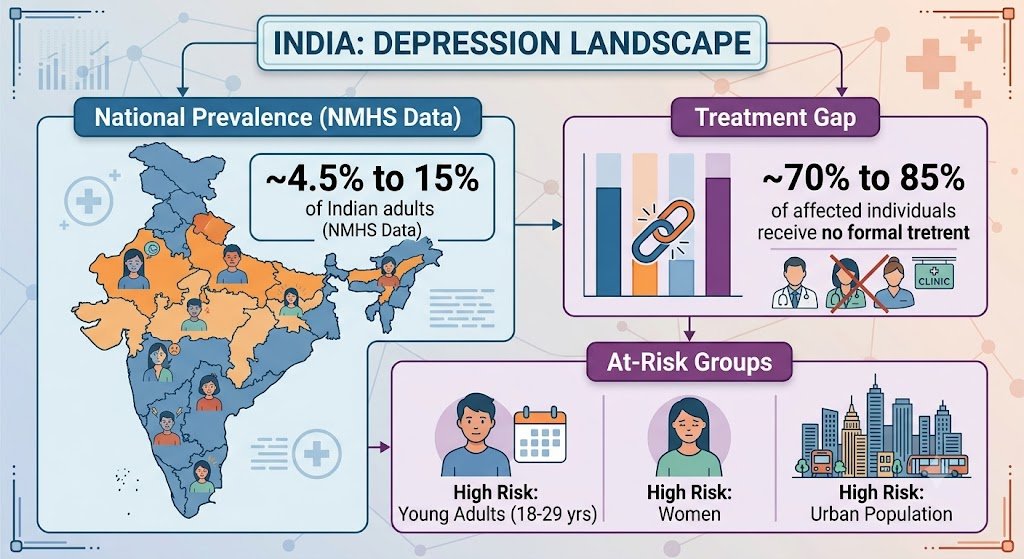
Depression represents a major public health priority across India, driven by rapid urbanization, socioeconomic stressors, and a historically under-resourced mental health infrastructure.
Epidemiological Profile: India
-
Prevalence Rates: According to the National Mental Health Survey (NMHS) conducted by NIMHANS, over 1 in 20 Indians (~5%) suffer from depression. When accounting for mild depressive states and general anxiety disorders, lifetime estimates rise significantly
-
The “Treatment Gap”: Upwards of 70% to 85% of individuals with mental health conditions in India do not receive professional care due to social stigma, lack of local psychiatric care, and low awareness of non-pharmacological interventions
-
Gender & Demographics: Women in India report depression at roughly 1.5 to 2 times higher rates than men, often linked to social inequality, hormonal fluctuations, and domestic stressors. Rates are also noticeably rising among urban youth facing high academic and employment pressure.
How Vitamin B6 Manages Depression & Anxiety
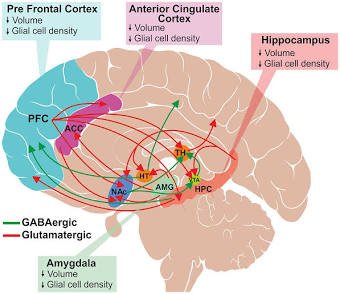
Several lines of evidence suggest that Vitamin B6 has potential as an antidepressant. Vit B6 plays a crucial coenzyme role in the synthesis of the neurotransmitters serotonin, gamma-aminobutyric acid (GABA) and dopamine, which are central to mood regulation, and it has been shown that increasing availably of Vitamin B6 above normal levels increases concentrations of serotonin and GABA.
Furthermore, epidemiological evidence points to Vitamin B6 deficiency as a risk factor for depression, and to high Vitamin B6 levels as protective.
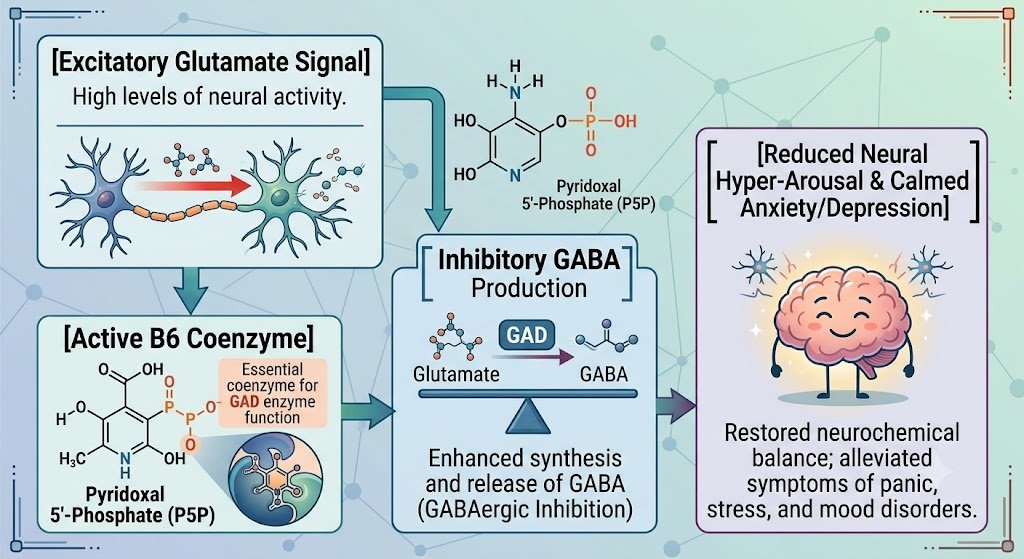
Recent clinical trials, including a notable double-blind study by the University of Reading, show that high-dose Vitamin B6 modulates the brain’s excitation-inhibition balance.
-
GABA Synthesis: Vitamin B6 acts as an essential coenzyme for the enzyme glutamate decarboxylase, which converts excitatory glutamate into GABA (the brain’s primary calming neurotransmitter)
-
Serotonin & Dopamine Link: Vit B6 is also a necessary cofactor in synthesizing serotonin and dopamine—neurotransmitters essential for mood, motivation, and reward processing
-
Calming the Hyperactive Brain: Increased GABA levels act as an internal “circuit breaker,” lowering the neural hyper-excitability frequently seen in combined anxiety and depressive states
Vitamin B6 Dosing for Indians: RDA vs. Clinical Supplementation
It is crucial to separate the daily dietary requirement needed to avoid deficiency from the high-dose therapeutic protocols studied for mood disorders.
Category |
Standard Indian RDA (ICMR-NIN) |
Clinical Trial Dose (Mood Study) |
Daily Intake |
1.9 mg / day (Adult Males)1.6 mg / day (Adult Females) |
100 mg / day |
Primary Goal |
Prevents physical B6 deficiency & supports general metabolism |
Modulates GABAergic neural pathways to reduce anxiety & depression |
Common Sources |
Chickpeas, lentils, whole grains, bananas, nuts, dairy, meat |
High-potency therapeutic supplements (under medical supervision) |
Dosing Guidelines & Safety Considerations for Indian Patients
Medical Caution: Never self-prescribe high-dose Vitamin B6 (100 mg/day) long-term without professional supervision.
-
Dietary Reality: A standard Indian vegetarian diet (rich in lentils and grains) typically meets the basic Indian Council of Medical Research (ICMR) RDA of ~1.6–2.0 mg/day. However, it cannot deliver the 100 mg daily dose used in clinical depression trials
-
Therapeutic Range: For managing depressive or anxious states, clinicians may recommend 50 mg to 100 mg daily for a short, targeted duration (e.g., 30 to 90 days)
-
Toxicity & Upper Safety Limit: The European Food Safety Authority (EFSA) and Indian regulatory guidelines set the safe upper limit at 25 mg to 100 mg/day. Taking doses above 100–200 mg/day over extended periods carries a risk of peripheral neuropathy (numbness, tingling, or nerve damage in hands and feet)
Comprehensive Overview
Aspect |
Summary Detail |
Condition Focus |
Major Depressive Disorder (MDD) vs. situational low mood |
Primary Mechanism |
Boosts GABA synthesis & serotonin production via enzyme pathways |
Target Population in India |
~5% direct MDD prevalence; up to 85% treatment gap nationwide |
Therapeutic Dose |
50–100 mg/day short-term (compared to ~1.6–2.0 mg/day dietary RDA) |
Complementary Role |
Works best as an adjunct alongside CBT, lifestyle shifts, or standard antidepressants |
Negative emotional states and mental health challenges such as depression, anxiety and stress have high prevalence, resulting in great societal and economic cost, and a high proportion of cases go untreated.
Existing drug treatments are not very effective for many patients, with a recent analysis of data from over 70,000 clinical trial participants finding that only 15% of patients experience a substantial benefit beyond placebo.
This suggests a need to develop alternative or adjunctive interventions that avoid the drawbacks of existing treatments, which include side effects and social stigma in the case of psychotropic medications, and the difficulty of rolling treatment out at a sufficient scale in the case of talking therapies such as cognitive behavioural therapy and counselling.
Results and Conclusion from Clinical Trial
Compared to either placebo or high-dose vitamin B12 tablets, investigators found that Vitamin B6 produced a large improvement in depression symptoms but had no significant effect on anxiety or stress.
The largest improvement was evident in participants whose baseline depression scores were classified as indicating mild or more severe depression, but individuals whose baseline depression scores fell just below that cutoff also improved substantially.
This is the first randomised double-blind study to demonstrate the potential of Vitamin B6 as a standalone or adjunctive treatment for depression; it builds on a large body of epidemiological evidence indicating a relationship between Vitamin B6 status and depression risk, as well as the previous trials showing benefits of Vitamin B6 for the mood/depression symptoms experienced in premenstrual syndrome, and the animal work revealing the potential antidepressant mechanism via increasing serotonin and GABA, and reducing glutamate, in the brain.
Vitamin B6 in pharmacological doses also has therapeutic potential for a number of other conditions apart from depression, which is not surprising given the large number of enzymatic reactions it is involved in, and the implication of differences in neurotransmitter levels and inflammation in a wide range of conditions.
For example, low Vitamin B6 intake is predictive of migraine and a small-scale trial found that 80 mg of pyridoxine reduced migraine severity compared to placebo.
Therapeutic effects of taking high-dose Vitamin B6 have also been demonstrated for the irritability and mood disorder that occurs in some epilepsy patients as a side effect of taking levetiracetam to control seizures and for premenstrual syndrome.
There now is enough evidence of role of Vit B6 in Depression as well as some potential role in Migraine – do, however, consider dietary sources of Vit B6 first before supplementation with high dose Vit B6. Supplementation with High Dose Vit B6 in case should be under discussion, supervision and with the consent of your healthcare professional.