



Our parents, grand-parents, particularly in North India ensured a glass-ful of milk at bedtime every night. Benefits of this routine, regular and pervasive practice are being ratified by global research – in form of maintaining oral health and minimizing dental caries. Time to re-start the practice, benefits of which are, for more than oral health.
Milk and Healthy Teeth: More Than Just Calcium
Dental caries, commonly known as tooth decay or cavities, remains one of the world’s most common chronic diseases. According to the World Health Organization (WHO), billions of people are affected by untreated dental caries, making it a major public health concern across both developed and developing countries.
In India, tooth decay affects children, adolescents and adults alike. Frequent consumption of sugary snacks, sweetened beverages, inadequate oral hygiene and limited access to preventive dental care all contribute to the growing burden.
While brushing with fluoride toothpaste and reducing sugar intake remain the cornerstones of cavity prevention, growing scientific evidence suggests that milk and certain dairy products may also help protect teeth.
A comprehensive 2023 review published in the Journal of Functional Foods examined decades of laboratory, animal, epidemiological and clinical research on milk and dairy products and concluded that dairy foods possess several biological properties that may help reduce the risk of dental caries.
The evidence does not suggest that milk alone can prevent cavities. Rather, it indicates that milk and selected dairy products may serve as valuable components of an overall caries-prevention strategy.
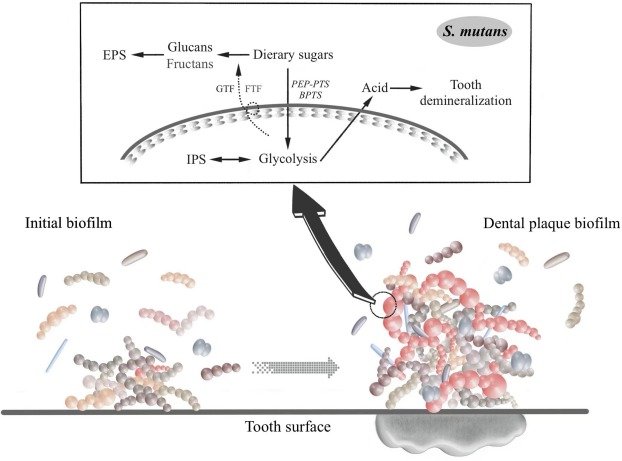
Understanding How Cavities Develop
Dental caries is a diet-driven, bacteria-mediated disease.
The mouth naturally contains many bacteria. Some, particularly Streptococcus mutans and Lactobacillus species, ferment dietary sugars and produce acids.
When acid levels remain high for prolonged periods:
-
Tooth enamel begins to lose minerals.
-
Repeated acid attacks lead to demineralisation.
-
The protective enamel layer gradually weakens.
-
Cavities eventually develop if mineral loss exceeds repair.
Normally, saliva helps neutralise acids and restore minerals such as calcium and phosphate back into enamel.
Problems arise when frequent sugar intake overwhelms these natural repair mechanisms.
Why Milk Is Considered a Low-Cariogenic Food
Unlike many sweet beverages, plain cow’s milk is considered a low-cariogenic food, meaning it has a relatively low ability to promote tooth decay. Several characteristics explain this protective effect.
1. Rich Source of Calcium and Phosphorus – Milk naturally contains calcium and phosphorus, the two major minerals that make up tooth enamel.
These minerals help maintain supersaturation of saliva with calcium and phosphate, encouraging remineralisation, the natural repair process through which early enamel damage can be reversed before a cavity forms.
2. Casein Proteins Protect Tooth Enamel – One of milk’s unique features is its high concentration of casein proteins. During digestion and in the oral cavity, casein can release casein phosphopeptides (CPPs).
CPPs help stabilise calcium and phosphate ions around the tooth surface, making these minerals more available for enamel repair. CPP-based technologies are now incorporated into some professional dental products because of their remineralising properties.
3. Milk Buffers Acid – Milk has a relatively high buffering capacity. Instead of causing a sharp fall in plaque pH like sugary soft drinks, milk helps reduce acidity after eating. Maintaining a higher oral pH decreases the risk of enamel dissolution.
4. Lactose Is Less Cariogenic Than Table Sugar – Milk contains lactose, a naturally occurring sugar. Importantly, lactose is significantly less cariogenic than sucrose, the common table sugar found in sweets, chocolates and sugar-sweetened beverages.
Although oral bacteria can metabolise lactose, acid production is generally lower than that produced from sucrose. This is one reason plain milk does not behave like sugary drinks in the mouth.
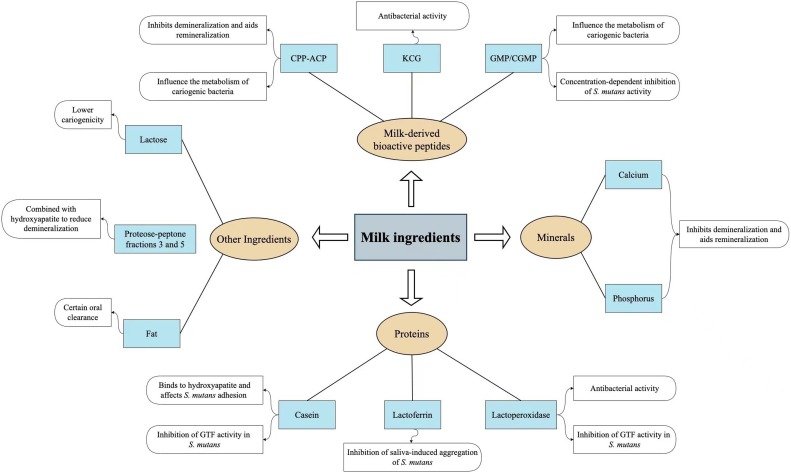
Functional Components of Milk That May Protect Teeth
The review highlights several naturally occurring milk components that contribute to oral health.
Calcium – Supports enamel mineralisation and helps reverse early enamel lesions
Phosphorus – Works alongside calcium to maintain tooth structure and strengthen enamel
Casein Phosphopeptides (CPP) – Improve delivery of calcium and phosphate to enamel and enhance remineralisation
Milk Fat – Some experimental studies suggest milk fat may reduce bacterial adhesion to tooth surfaces, although clinical evidence remains limited.
Bioactive Peptides – Milk proteins generate several bioactive peptides during digestion and fermentation that may possess antimicrobial or anti-inflammatory activity. Research is promising but still evolving.
Which Dairy Products Show the Greatest Promise?
Cheese – Among dairy products, cheese has perhaps the strongest evidence for reducing caries risk. Chewing cheese stimulates saliva production, increasing oral pH while supplying calcium and phosphate.
Several studies have shown that eating cheese after meals may help neutralise plaque acids more rapidly than many other foods.
Yogurt – Plain yogurt provides calcium, phosphorus and beneficial bacteria. When yogurt contains live probiotic cultures, it may also help reduce harmful oral bacteria, although results vary between studies. Unsweetened yogurt is generally preferred because added sugars can offset potential benefits.
Probiotic Dairy Products – One of the fastest-growing areas of research involves probiotics. Certain probiotic strains, including selected Lactobacillus and Bifidobacterium species, may:
-
Compete with cavity-causing bacteria
-
Reduce bacterial adhesion
-
Modify dental plaque
-
Produce antimicrobial compounds
-
Improve the balance of the oral microbiome
However, the review concludes that evidence remains heterogeneous. Not every probiotic strain has anti-caries activity, and larger long-term clinical trials are still needed before routine recommendations can be made.
Fluoridated Milk
Several countries have introduced fluoridated milk programmes for children. Clinical studies suggest fluoridated milk can reduce caries incidence in school-aged children, particularly where fluoride exposure is otherwise limited.
The protective effect results primarily from fluoride rather than milk itself.
Fortified Dairy Products – Researchers are also investigating milk enriched with:
-
Calcium
-
Vitamin D
-
CPP-amorphous calcium phosphate (CPP-ACP)
-
Probiotics
These products represent promising future strategies, although evidence differs depending on the specific formulation.
What Does the Overall Scientific Evidence Say?
The review analysed findings from laboratory studies, animal research, epidemiological investigations and clinical trials. Overall, the evidence suggests that:
-
Plain milk is a low-cariogenic beverage.
-
Cheese has consistent evidence supporting its protective role.
-
Calcium, phosphorus and casein-derived peptides promote enamel remineralisation.
-
Probiotic dairy products show promise but require further high-quality clinical trials.
-
Fluoridated milk programmes can reduce childhood dental caries in appropriate settings.
At the same time, researchers emphasise that dairy products cannot replace established preventive measures such as fluoride toothpaste, limiting free sugars, regular brushing and professional dental care.
Practical Advice for Indian Families
For most healthy individuals, the following habits are supported by current evidence:
-
Choose plain milk instead of sugar-sweetened beverages whenever possible
-
Include unsweetened yogurt as part of a balanced diet
-
Cheese may be a useful snack after meals rather than sugary desserts
-
Limit flavoured milk products with high amounts of added sugar
-
Brush twice daily with fluoride toothpaste
-
Reduce frequent consumption of sweets, sugary drinks and sticky snacks
-
Visit a dentist regularly for preventive care