



Disclaimer – Can one bowl of dal really replace a serving of mutton? This is an evidence-based nutritional comparison for Indians. Your dietary choices are truly your soverign, solemn decision – this write up is only an attempt at what science, hopefully conclusively, says about Protein from Plant v/s Protein from Animal Source. To our knowledge this is the most comprehensive, fact based scientific comparison for fellow Indians so far, but pls do your own verification as well.
This is Part 3 of Our 3 Part Series on – Toor Dal vs Mutton: Which Is the Better Protein – Protein Quality, Macronutrients and Why This Comparison Matters. For Part 2, Click here. For Part 1 – Pls Click the Link.
In the Part 2 of this Series, we extensively covered the Scientific Comparison of Protein Quality of both Toor Dal and Mutton with newer, biological tests such as PDCAAS and DIASS. This piece attempts at closing arguments and the concept of Satiety with Mutton / Animal Proteins, and some more.
Amino Acids: The Real Building Blocks of Human Health
Every protein consumed in the diet is broken down during digestion into smaller units called amino acids.
These amino acids are then absorbed into the bloodstream and used to manufacture thousands of proteins required for normal body function. They are essential for:
-
Skeletal muscle development
-
Collagen production
-
Enzymes involved in digestion and metabolism
-
Hormones such as insulin and glucagon
-
Antibodies that protect against infections
-
Transport proteins such as haemoglobin
-
Skin, hair and nail formation
-
Neurotransmitters involved in mood and cognition
In other words, every cell in the human body depends on an adequate supply of amino acids.
The Nine Essential Amino Acids
Of the twenty amino acids used to build proteins, nine are classified as essential because they cannot be synthesised by the human body in sufficient quantities. They must therefore be obtained from food every day.
Nine Essential Amino Acids and Their Biological Functions
Essential Amino Acid |
Major Biological Function |
Clinical Importance |
Histidine |
Growth, haemoglobin synthesis, tissue repair |
Particularly important during childhood and recovery from illness |
Isoleucine |
Muscle metabolism, glucose regulation, energy production |
Supports endurance and muscle recovery |
Leucine |
Activates muscle protein synthesis (mTOR pathway) |
Most important amino acid for preserving muscle mass |
Lysine |
Collagen formation, calcium absorption, immune function |
Essential for wound healing and connective tissue |
Methionine |
Methylation reactions, liver metabolism, antioxidant production |
Precursor of cysteine and glutathione |
Phenylalanine |
Production of dopamine, adrenaline and noradrenaline |
Important for normal nervous system function |
Threonine |
Gut mucosal integrity, collagen and elastin synthesis |
Supports digestive and immune health |
Tryptophan |
Serotonin, melatonin and niacin synthesis |
Influences mood, sleep and cognitive function |
Valine |
Muscle repair and energy metabolism |
Supports physical activity and recovery |
Key message: The body requires all nine essential amino acids simultaneously. A shortage of even one can limit the efficient use of the others.
The “Limiting Amino Acid” Concept
One of the most misunderstood concepts in nutrition is that plant proteins are “incomplete.” This statement is an oversimplification.
Most legumes, including Toor Dal, actually contain all nine essential amino acids. The difference is that some are present in way smaller amounts relative to human requirements. For Toor Dal, the principal limiting amino acids are:
-
Methionine
-
Cysteine (a sulphur-containing amino acid often considered alongside methionine)
Because these amino acids are present in lower proportions, they become the rate-limiting factor for protein synthesis if Toor Dal is consumed as the sole protein source.
By contrast, Mutton contains all essential amino acids in proportions that closely match human physiological needs. This difference explains why animal proteins generally score higher on measures of protein quality.
Hidden Strength of Toor Dal: Rich in Lysine
Although Toor Dal is relatively lower in methionine and cysteine, it has an important nutritional advantage: It is rich in lysine.
This is particularly significant because cereals such as rice and wheat are naturally lower in lysine but provide comparatively higher amounts of sulphur-containing amino acids. This complementary relationship forms the scientific basis of traditional Indian meals.
Amino Acid Complementation in Traditional Indian Diets
Food Group |
Rich In |
Relatively Lower In |
Best Complement |
Toor Dal and other pulses |
Lysine |
Methionine, cysteine |
Rice, wheat, millets |
Rice |
Methionine |
Lysine |
Pulses |
Wheat |
Methionine |
Lysine |
Pulses |
Soy foods |
High-quality plant protein with balanced amino acid profile |
Slightly lower methionine than animal proteins |
Cereals or dairy |
Dairy |
Leucine, lysine, methionine |
— |
Pulses or cereals |
Scientific insight: The classic Indian combination of dal and rice is nutritionally complementary. Together, these foods provide a more balanced essential amino acid profile than either food consumed alone, however be mindful of the huge glycemic load of this combination. With India already being Diabetes Capital of World, largely by following this precise, food combination – its time we diversified to ZERO Carb, animal proteins.
Leucine: The Most Important Amino Acid for Muscle Health
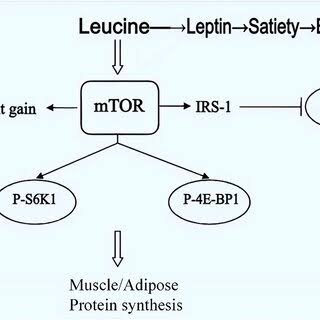
Among all essential amino acids, leucine has received the greatest attention in modern nutrition research. Leucine is not simply a building block for muscle. It also acts as a biological signal that activates muscle protein synthesis through a pathway known as mTOR (mechanistic target of rapamycin).
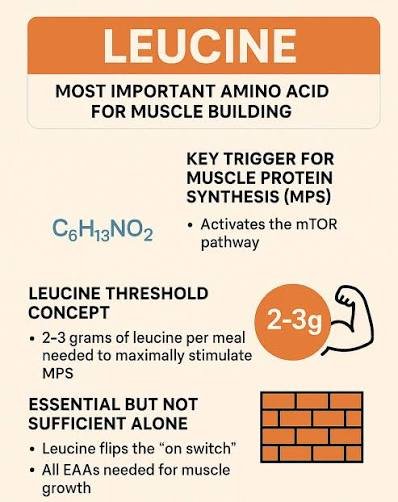
Think of leucine as the “ignition key” for muscle building. Without sufficient leucine, muscle protein synthesis is less effectively stimulated, even if total protein intake appears adequate. This discovery has transformed recommendations for:
-
Older adults
-
Athletes
-
Individuals recovering from surgery or illness
-
People with sarcopenia
-
Individuals undertaking resistance training
Animal proteins such as Mutton are naturally rich in leucine and generally provide a higher leucine concentration per serving than pulses.
Why Leucine Becomes More Important with Age
As people age, skeletal muscle becomes less responsive to dietary protein, a phenomenon known as anabolic resistance. Older adults often require:
-
Higher-quality protein
-
Greater leucine intake per meal
-
Even distribution of protein across the day
-
Resistance exercise to maximise muscle protein synthesis
This is one reason why protein recommendations for healthy ageing increasingly emphasise protein quality rather than protein quantity alone. For vegetarian older adults, achieving an adequate leucine intake may require larger portions of pulses or combining them with dairy or soy-based foods.
Leucine and Muscle Protein Synthesis: Practical Comparison
Feature |
Toor Dal |
Mutton |
Practical Interpretation |
Leucine concentration |
Good |
Higher |
Mutton provides more leucine per serving |
Ability to stimulate muscle protein synthesis |
Moderate |
High |
Higher leucine density gives mutton an advantage |
Digestibility of leucine |
Moderate after cooking |
Very high |
Animal protein is absorbed more efficiently |
Best strategy for vegetarians |
Combine pulses with dairy, soy or other complementary proteins |
Not applicable |
Mixed plant protein strategies somewhat improve overall quality, however, at risk of High Glycemic Load |
Beyond Muscle: Amino Acids Support the Entire Body
Although leucine often dominates discussions about protein quality, every essential amino acid contributes to health. For example:
-
Lysine supports collagen formation, wound healing and calcium absorption
-
Methionine provides methyl groups for DNA regulation and serves as a precursor for cysteine and glutathione, one of the body’s most important antioxidants
-
Tryptophan is required for serotonin and melatonin synthesis, influencing mood, sleep and cognitive function
-
Threonine plays a crucial role in maintaining the protective mucus layer of the intestine, supporting gut health and immunity
-
Valine and isoleucine, together with leucine, form the branched-chain amino acids (BCAAs), which contribute to muscle metabolism and recovery
This broader perspective reminds us that protein quality influences much more than athletic performance—it affects virtually every organ system.
Key Takeaways
-
Proteins are only as useful as the amino acids they provide
-
Both Toor Dal and mutton contain all essential amino acids, but they differ in their proportions and digestibility
-
Toor Dal is particularly rich in lysine but relatively lower in methionine and cysteine
-
Traditional Indian combinations such as dal with rice or dal with chapati improve overall amino acid balance through protein complementation but at a HUGE RISK of Type 2 Diabetes
-
Leucine acts as the primary nutritional trigger for muscle protein synthesis, making leucine-rich, highly digestible proteins especially valuable for older adults, athletes and individuals recovering from illness
-
Understanding amino acid quality helps explain why two foods containing the same amount of protein may not have the same physiological effects
Choosing the Right Protein for Different Life Stages
Population Group |
Toor Dal |
Mutton |
Practical Recommendation |
Children |
✔ Good plant protein |
✔ Excellent complete protein |
Include a variety of protein sources where culturally appropriate |
Adolescents |
✔ Good |
✔ Excellent |
Higher-quality protein supports rapid growth |
Athletes |
✔ Useful with complementary proteins only |
✔ Excellent |
Ensure adequate total protein and leucine intake |
Older Adults |
✔ Beneficial only with high quantity dairy or soy |
✔ Excellent |
Focus on highly digestible protein at each meal |
Pregnancy |
✔ Rich in folate |
✔ Rich in B12 and haem iron |
Balanced intake of BOTH supports maternal and fetal nutrition |
Vegetarians |
✔ Core protein source |
— |
Combine pulses with cereals, dairy or soy |
Weight Management |
✔ High fibre, promotes fullness but Risk of High Carbohydrates |
✔ High satiety due to protein |
Both can support healthy weight when included in balanced diets |
The Protein Utilisation Pyramid
Understanding protein becomes easier when viewed as a sequence:
Protein consumed
⬇
Protein digested
⬇
Amino acids absorbed
⬇
Essential amino acid balance
⬇
Leucine threshold achieved
⬇
Muscle protein synthesis activated
⬇
Healthy muscles, organs and immune function
A weakness at any step reduces the overall nutritional value of the protein consumed.
Satiety, Practical Serving Sizes and Which Protein Is Better for Different Indians
Protein is not just about building muscles. It also influences satiety (feeling full), blood sugar control, healthy ageing, immune function and recovery from illness.
Satiety: Why Protein Helps You Feel Fuller – One of the most consistent findings in nutrition research is that protein is the most satiating macronutrient, followed by carbohydrates and fats. High-protein meals increase the release of hormones such as:
-
Peptide YY (PYY) – promotes fullness.
-
Glucagon-like peptide-1 (GLP-1) – slows stomach emptying and reduces appetite.
-
Cholecystokinin (CCK) – signals the brain that enough food has been eaten.