


What is Zinc?
Zinc is an essential trace mineral that your body needs to fight infections, heal wounds, and support cell growth.
Zinc acts like a helper for over 300 enzymes in your body. It builds proteins, creates DNA, and keeps your immune system strong. Because your body cannot store zinc, you must get it every day through your food.
Zinc Deficiency in India
Zinc deficiency happens when you do not get enough of this mineral or your body cannot absorb it.
- Rising Rates: Studies show that inadequate zinc intake in India has grown over the decades, affecting up to 24% of the population.
- Dietary Causes: Many Indians follow vegetarian diets or eat meals heavily based on rice. Rice and grains contain compounds called phytates (natural substances in plants) that block the body from absorbing zinc easily.
-
Vulnerable Areas: States with rice-heavy diets, such as Kerala, Tamil Nadu, and Andhra Pradesh, often show higher rates of low zinc intake
Functions of Zinc in Human Body
Zinc (Zn²) is the second most abundant trace element in the human body after iron. Functioning as an obligate catalytic, structural, or regulatory cofactor for over 300 metalloenzymes and more than 2,000 transcription factors,
Zinc governs fundamental biological processes including cellular proliferation, nucleic acid synthesis, immune immunocompetence, and tissue repair.
Because the human body lacks a dedicated storage reservoir for zinc, continuous exogenous intake through dietary consumption or targeted supplementation is required to maintain systemic homeostasis.
1. Physiological Mechanisms & Systemic Homeostasis
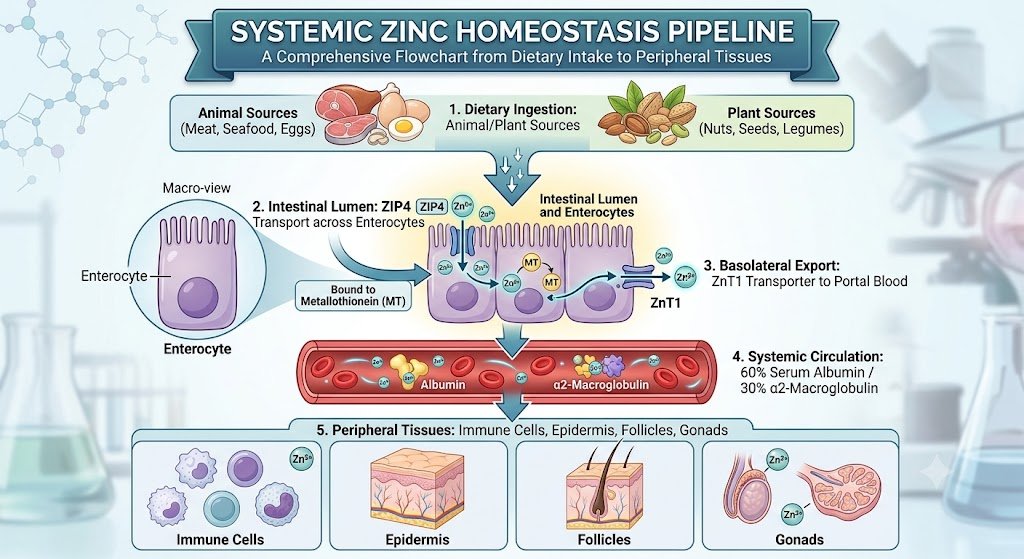
Systemic zinc levels are tightly regulated through intestinal absorption, renal conservation, and endogenous pancreatic/biliary secretions.
Intestinal Absorption and Transporter Families
In the gut, dietary zinc is absorbed primarily in the duodenum and jejunum. Cellular uptake across the enterocyte apical membrane is mediated by the ZIP family (SLC39A) transporters (specifically ZIP4), while efflux across the basolateral membrane into portal circulation relies on the ZnT family (SLC30A) transporters (primarily ZnT1). Intracellularly, excess zinc binds to metallothionein (MT), a cysteine-rich protein that buffers cytosolic free zinc concentrations and protects against heavy metal toxicity.
Dietary Antagonists and Phytate Interference
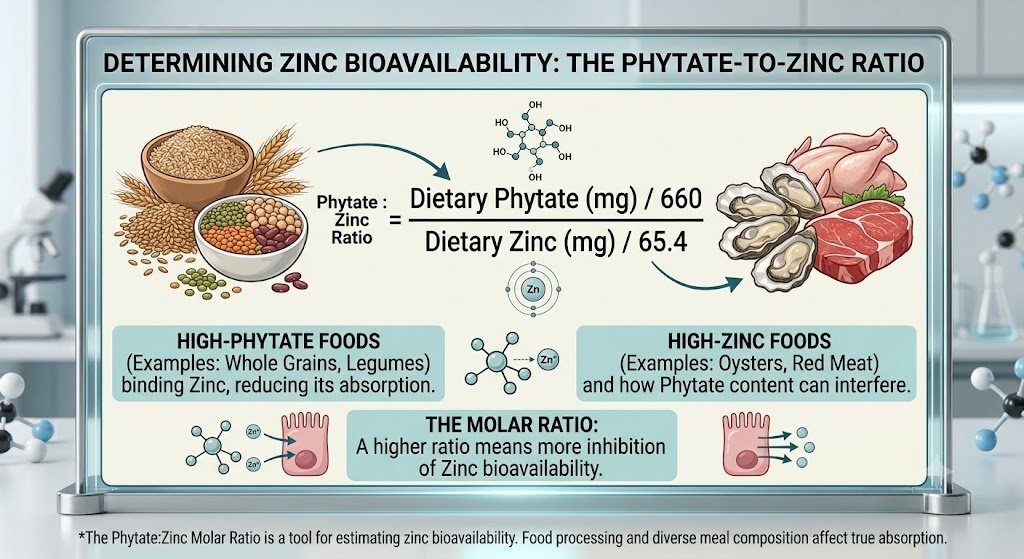
In plant-based diets, Zinc bioavailability is significantly reduced by phytic acid (myo-inositol 1,2,3,4,5,6-hexakisphosphate). Phytate binds Zn²+ ions in the intestinal lumen, forming insoluble chelates that pass through the gastrointestinal tract unabsorbed. The molar ratio of phytate-to-zinc in meals serves as a primary determinant of fractional zinc absorption:
-
Low Inhibitory Impact: Ratio < 5 (Typical animal-protein rich diets; fractional absorption 30-55%)
-
Moderate Impact: Ratio 5 – 15 (Mixed grain/legume diets; fractional absorption 15-30%)
-
Severe Inhibition: Ratio > 15 (Unrefined cereal/plant-dominant diets without fermentation/soaking; fractional absorption < 15%)
2. Top Clinically Supported Health Benefits
1. Immune Function & Antiviral Defense
Zinc is crucial for both innate and adaptive immunity:
-
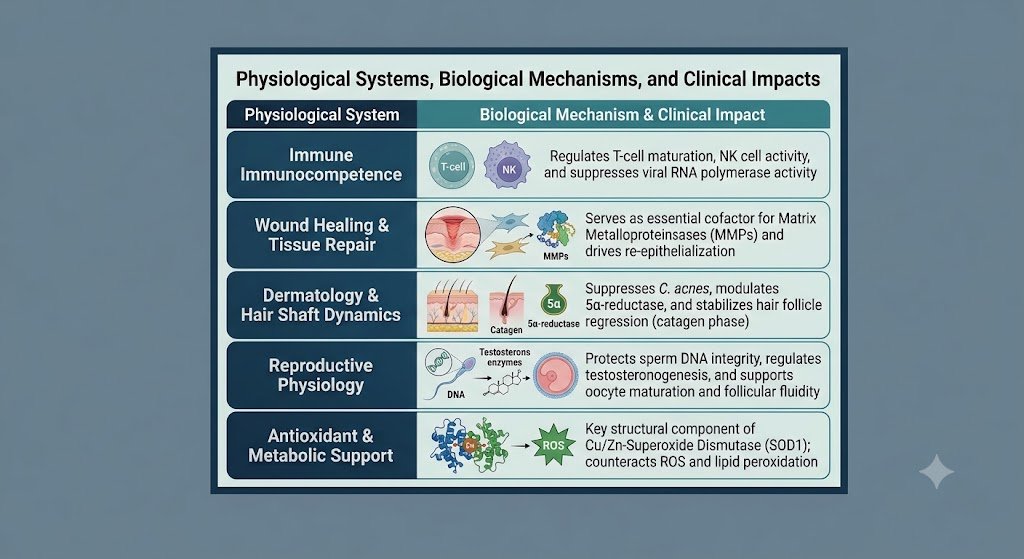
Cell-Mediated Immunity: Zinc deficiency causes rapid involution of the thymus, impairing pre-T cell maturation, reducing helper-to-cytotoxic T-cell ratios (CD4+CD8), and suppressing interleukin-2 (IL-2) production.
-
Antiviral Activity: Zn inhibits the RNA-dependent RNA polymerase (RdRp) activity of rhinovirus and coronavirus replication complexes while preserving the integrity of respiratory mucosal epithelium.
-
Clinical Evidence: A meta-analysis of randomized controlled trials (Hemilä et al., 2017) demonstrated that elemental zinc lozenges (75 mg/day) administered within 24 hours of symptom onset reduced the duration of the common cold by an average of 33% (95% CI: 21% – 45%).
2. Tissue Repair & Matrix Remodeling
Healing tissue requires high localized concentrations of zinc:
-
Enzymatic Metalloproteinases: Zinc is a required catalytic factor for Matrix Metalloproteinases (MMPs), which govern collagen degradation, cell migration, and tissue remodeling during wound repair.
-
Protein Synthesis: It supports rapid cellular division of keratinocytes and fibroblasts at the wound margin.
-
Clinical Evidence: A systematic review (Lansdown et al., 2007) showed that oral zinc supplementation (50 mg elemental zinc thrice daily) in zinc-deficient individuals significantly accelerated re-epithelialization rates and resolved chronic leg ulcers compared to placebo.
3. Dermatology & Hair Follicle Physiology
-
Acne Vulgaris: Zinc exerts potent anti-inflammatory effects by suppressing nuclear factor kappa B (NF-kappa B) pathways, inhibiting lipase activity in Cutibacterium acnes, and downregulating sebaceous gland lipid synthesis.
-
Alopecia & Hair Thinning: Zinc acts as a potent inhibitor of 5 alpha-reductase (the enzyme converting testosterone to dihydrotestosterone/DHT) and prevents premature hair follicle regression (the anagen-to-catagen transition).
-
Clinical Evidence: A clinical trial (Gupta et al., 2014) evaluating oral zinc gluconate (30 mg elemental Zinc/day) in acne patients demonstrated a 50% reduction in inflammatory lesion counts after 12 weeks of treatment.
4. Endocrinology & Reproductive Physiology
-
Male Reproductive Health: High zinc concentrations in prostatic fluid protect sperm chromatin structural integrity against reactive oxygen species (ROS). Zinc is also essential for luteinizing hormone (LH) signaling and testicular testosteronogenesis.
-
Female Reproductive Health: Zinc is required for oocyte maturation, meiotic cell division, and maintenance of follicular fluid homeostasis.
-
Clinical Evidence: A meta-analysis (Zhao et al., 2016) established that fertile men possess significantly higher seminal plasma zinc concentrations compared to infertile men, with oral zinc supplementation yielding a statistically significant increase in total sperm count and forward motility.
5. Antioxidant Protection & Cellular Homeostasis
-
Enzymatic Neutralization: Zinc is a mandatory structural cofactor for cytosolic Copper-Zinc Superoxide Dismutase (Cu/Zn-SOD or SOD1), which catalyzes the dismutation of toxic superoxide radicals into hydrogen peroxide (H2O2).
-
Metallothionein Induction: Free cellular Zn2+ induces expression of metallothionein, which acts as a hydroxyl radical scavenger, protecting lipid membranes and cell nucleic acids from oxidative stress.
3. Dietary Requirements, Bioavailability, and Deficiencies
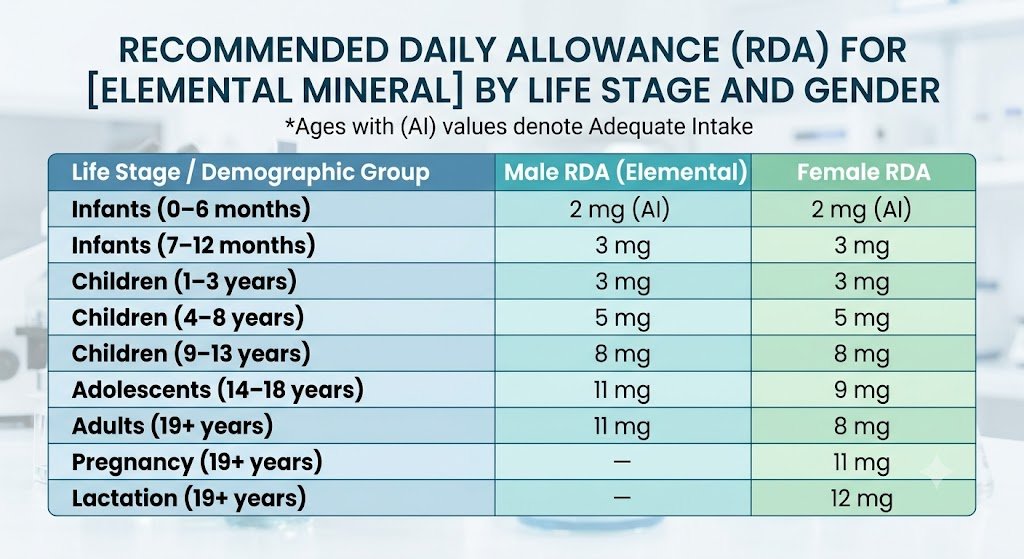
Recommended Daily Intake
The Food and Nutrition Board at the National Academies of Sciences, Engineering, and Medicine establishes the following Recommended Dietary Allowances (RDAs) for elemental zinc:
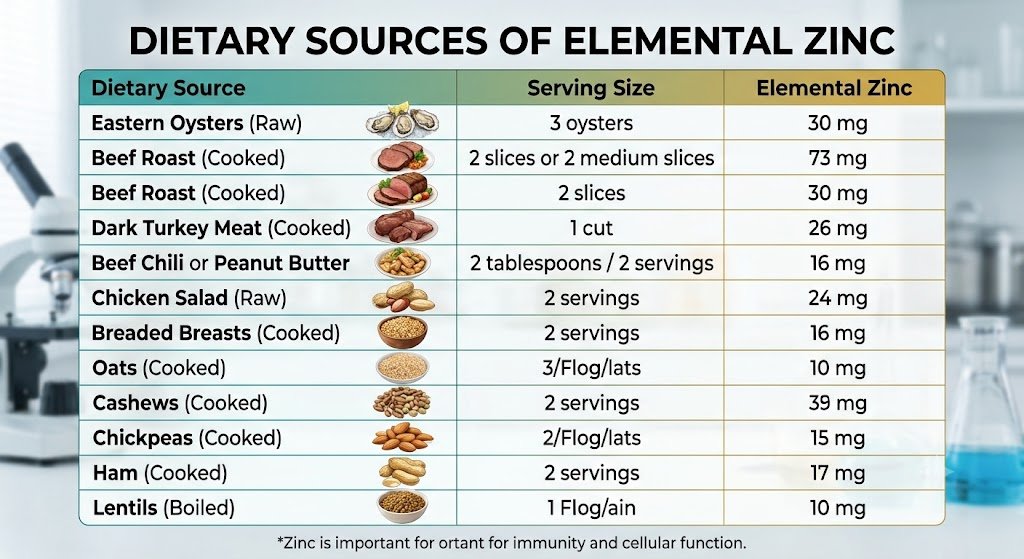
Nutritional Sources & Elemental Yield
Risk Factors for Deficiency
Over 17% of the global population is at risk for inadequate zinc intake. Key high-risk groups include:
-
Vegetarians and Vegans: High dietary phytate-to-zinc ratios markedly depress absorption
-
Gastrointestinal Pathology: Malabsorptive conditions such as Crohn’s disease, ulcerative colitis, celiac disease, and short bowel syndrome impair luminal transport
-
Chronic Alcoholism: Ethanol intake inhibits intestinal zinc transport while increasing renal excretion
-
Sickle Cell Disease: Causes chronic hyperzincuria due to persistent hemolysis
4. Supplementation Formulations & Pharmacokinetics
When dietary intake is insufficient, supplemental zinc can restore homeostasis. The choice of salt significantly influences gastrointestinal tolerance and systemic absorption.
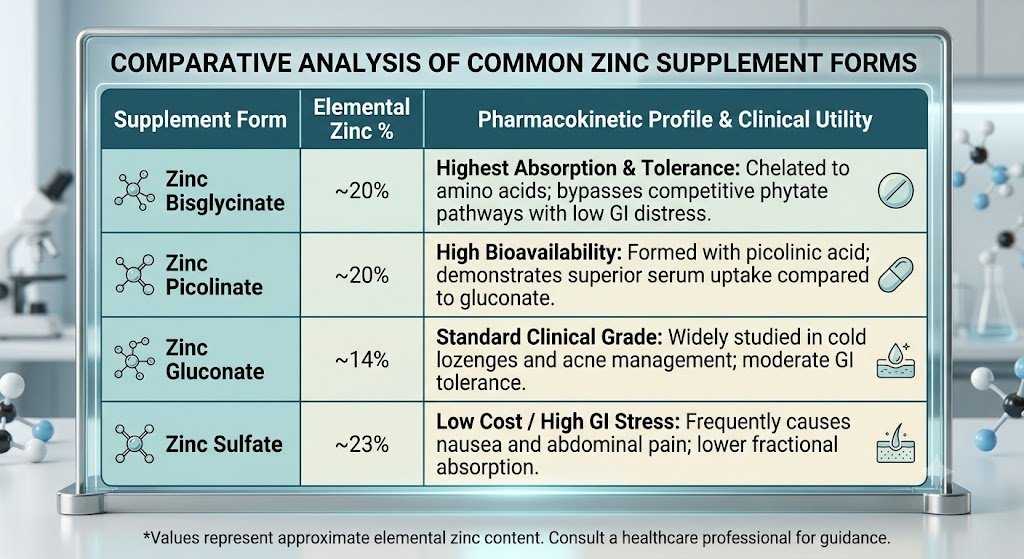
Toxicity & The Copper Interaction: The Tolerable Upper Intake Level (UL) for adults is 40 mg/day of elemental zinc. Chronic high-dose supplementation ( 50 mg/day) induces enterocyte synthesis of metallothionein. Because metallothionein has a higher binding affinity for copper (Cu2+) than Zinc, it traps copper within enterocytes, preventing its basolateral transport. This can lead to severe copper deficiency, presenting as microcytic anemia, leukopenia, and irreversible myeloneuropathy.
5. Peer-Reviewed References
-
Hemilä, H. (2017). Zinc lozenges and the common cold: a meta-analysis comparing zinc acetate and zinc gluconate, and the role of total dose. JRSM Open, 8(5), 2054270417694291.
-
Prasad, A. S. (2008). Zinc in human health: effect of zinc on immune cells. Molecular Medicine, 14(5-6), 353-357.
-
Lansdown, A. B., et al. (2007). Zinc in wound healing: theoretical, experimental, and clinical aspects. Wound Repair and Regeneration, 15(1), 2-16.
-
Gupta, M., et al. (2014). Zinc therapy in dermatology: a review. Dermatology Research and Practice, 2014, 709156.
-
Zhao, J., et al. (2016). Zinc levels in seminal plasma and male factor infertility: a systematic review and meta-analysis. Scientific Reports, 6, 22386.
-
Maret, W., & Sandstead, H. H. (2006). Zinc requirements and the risks and benefits of zinc supplementation. Journal of Trace Elements in Medicine and Biology, 20(1), 3-18.
-
Rink, L., & Gabriel, P. (2000). Zinc and the immune system. Proceedings of the Nutrition Society, 59(4), 541-552.