


Quick, fast, tasty and for a change from routine, regular food at home (variety) – guess these are the key drivers for having a quick bite or a meal at street vendor, food truck or roadside shack. No you are not alone in having street food regularly – a whopping 2.5 Billion1 people eat street food daily, across the world.
And we Indians aren’t an exception to this daily “habit” – although there are no firm number of Indians eating street daily but the extent could be gauged from the fact that country have over 20 Lakh (2 Million0 street vendors2, as per FSSAI data from 2018.
Microbial / Bacterial Contamination in Street Foods
While we know that and we do realize that street foods aren’t good for health, but we still ignore the risks and go for street foods either for taste or for company or for peer pressure. There are many concerns around street food safety.
People consuming street-vended foods are known to experience foodborne diseases like diarrhea, typhoid fever and food poisonings invariably – these are the clinical symptoms which get picked up and reported. A large number of people suffer from sub-clinical or mild symptoms which get passed off as a minor stomach upset. But the street food consumption still keeps on rising. Such are we humans.
Street foods in recent times are increasingly being recognized as a new food vehicle for emerging foodborne diseases. Emerging, re-emerging or drug-resistant food borne pathogens have recently appeared in Indian population. While these pathogens have been widespread in street foods for many years, they have only recently been identified due to advancements in knowledge and methods for detecting and analyzing the disease agents.
Bacterial / Microbial contaminations in street-vended foods are a well known phenomena among communities. Additional scientific data and more un-baised studies are a must for creating increased awareness on the dangers of regular consumption of street foods. There have not been many published studies from India highlighting and even quantifying the risks of microbial contaminations in street foods and hopefully this changes soon.
Bacterial Contamination in Street Foods – Where is the Evidence
A team of Scientists working at India’s pretigeous National Institute of Nutrition, Hyderabad carried out a detailed study to identify and quantify the food borne pathogens in commonly consumed street foods in Hyderabad.
This study was published under the title – Prevalence and characterization of selected foodborne pathogens in frequently consumed street foods of Hyderabad, India: An exploratory study.
This peer-reviewed 2024 study conducted by researchers at the ICMR–National Institute of Nutrition (NIN), Hyderabad, was published in the Indian Journal of Microbiology Research. A link to this publication – https://ijmronline.org/archive/volume/11/issue/4/article/19233/pdf?utm_source=chatgpt.com

Findings of the Study from Hyderabad
Following is a brief summary and excerpt from this study, on the extent of presence of pathogens in Street Food Samples:
-
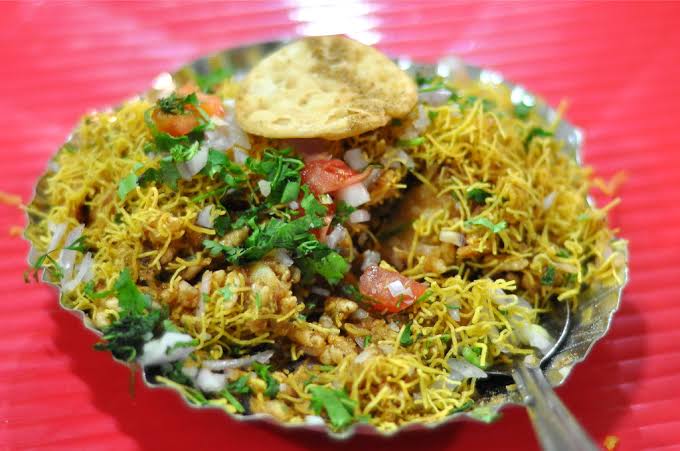
A total of 300 street food samples were collected and analysed, including 150 samples of Chinese fast foods (comprising 50 chicken noodles, 50 chicken fried rice, and 50 chicken 65, a local delicay) and 150 samples of Bhelpuri (a mix of puffed rice, vegetables and sauces)
-
Bhel puri samples showed a high prevalence of pathogens, with E. coli detected in 60.6% of the samples and fecal coliforms in 67.3% of the samples
-
Bacillus cereus which is another most common pathogen in cereals and cereal products was detected in 67.3% of the bhelpuri samples
-
Enteropathogens such as Shigella and Salmonella were identified in 45.3% and 20% of the Bhelpuri samples respectively
-
Among Chinese fast foods, Bacillus cereus was detected in 90-92% of samples
-
About 28-40% of Chinese Fast Food samples were observed positive for Staphylococcus aureus with the highest in Chinese fried rice
An uncomfortable fact is that the street foods are way more prone to contaminations by food borne pathogens and that these pathogens from Hyderabd Study survived the heating and mixing with spices, should convince the brave ones that street foods are not safe for regular, routine consumption and certainly not safe for children and older people owing to their under-developed or overwhelmed immune systems.
Can These Results be Extrapolated – My City Street Vendors are Nice People, I trust Them
That this data is only from Hyderabd and is not from all other cities of India and that this data is for Chinese Food and Bhelpuri only, why should I be bothered as my street vendors are selling different foods.
While true but be conscious of the fact that food contamination depends upon the quality of ingredients being used, personal hygiene, storage consitions at cart and water being used for cooking street food, among other things. That a similar study conducted on another very popular Indian street food snack – pani puri – found another emerging foodborne pathogen i.e. Yersinia enterocolitica. https://www.researchgate.net/publication/287692251_Prevalence_of_Yersinia_enterocolitica_in_Panipuri_-_A_Popular_Street_Food_of_India
Street foods by definition are a high risk, low or no reward proposition as the nutritive values of the street foods are difficult to quantify and also are questionable, if any.
Street Foods – Other Risks
The Hyderabad study looked ONLY into the potential contamination part of these street foods and did not follow up or did not look into the effects of these street foods on human gut health / gut microbiome. Food borne pathogens and consequent food poisonings are not the only risks from street foods.
Much bigger issue is the transient and some times long term effects of these street foods on human gut health and gut microbiota. A separate, detailed, evidence based write up on this topic follows, which will cover, the effects of street foods on human gut health and consequently systemic health. Watch out this space.
In the interim, if you still are enjoying street foods – either you are a certified immortal or you have a sickwish 🙂
Source:
-
– FAO. Improving the nutritional quality of street foods to better meet micronutrient needs of school children in urban areas. Rome: FAO; 2007. Available from: https://openknowledge.fao.org/server/api/core/ bitstreams/85b2b748-552a-4fee-8e7b-880c6ba98338/content
-
FSSAI. Project clean street food; 2018. Available from: https: //www.fssai.gov.in/upload/knowledge_hub/5ab3802273f60Clean_ Street_Food_Brochure.pdf.