



Growing older brings wisdom, experience, guidance for juniors and resilience. Unfortunately, it also brings one of the most overlooked health challenges affecting our older adults worldwide and more particularly Indians —sarcopenia, the gradual loss of skeletal muscle mass, strength and physical performance.
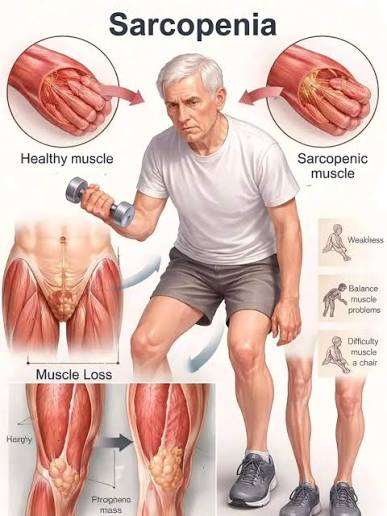
Unlike wrinkles or greying hair, muscle loss is largely invisible during its early stages. Most people notice only subtle changes. Olds climb stairs more slowly. Olds struggle to lift grocery bags. Getting up from a chair becomes harder. Walking becomes slower. Balance deteriorates.
India is getting Older – May Loose Demographic Dividend Soon
Eventually, everyday activities that once seemed effortless become physically demanding. Many people assume these changes are simply part of normal ageing. Modern science tells a different story. While some decline in muscle mass occurs naturally with age, excessive muscle loss is not inevitable. Much of it can be delayed—or even partially reversed—through appropriate nutrition, resistance exercise and early intervention.
For India, this issue has become particularly urgent and important.
The country is ageing rapidly. According to the United Nations, India’s population aged 60 years and older is projected to nearly double over the coming decades. This demographic transition will dramatically increase the number of older adults at risk of sarcopenia, frailty, falls, fractures, disability and loss of independence. Yet awareness remains surprisingly and regretfully so low that Sarcopenia isn;t much discussed in daily discourse.
Many older Indians have never heard the term “sarcopenia,” despite experiencing its effects every day.
What Exactly Is Sarcopenia?
The word sarcopenia comes from two Greek words:
-
sarx = flesh and penia = loss. It literally means loss of muscle. However, today’s definition extends beyond muscle size alone.
Leading organizations including the European Working Group on Sarcopenia in Older People (EWGSOP2) and the Asian Working Group for Sarcopenia (AWGS 2019) define sarcopenia as a progressive condition characterized by:
-
Reduced muscle strength
-
Reduced muscle quantity or quality
-
Reduced physical performance
Importantly, muscle strength predicts health outcomes even better than muscle mass. An individual may appear reasonably muscular but still have poor muscle function. Conversely, someone with relatively modest muscle size may remain physically strong. This is why modern diagnosis considers both muscle strength and physical performance.
Why Muscle Matters More Than Most People Realize
Most people think muscles exist simply to help us move. In reality, skeletal muscle is one of the body’s largest and most metabolically active organs. Healthy muscle performs dozens of essential functions. It:
-
Enables walking, climbing and lifting
-
Maintains balance
-
Protects joints
-
Supports posture
-
Stores amino acids
-
Helps regulate blood glucose
-
Improves insulin sensitivity
-
Produces beneficial signalling molecules known as myokines
-
Supports immune function
-
Maintains independence during ageing
After every meal, skeletal muscle removes approximately 70–80% of circulating glucose, making it one of the body’s most important regulators of blood sugar. Loss of muscle therefore increases not only physical disability but also the risk of:
-
Type 2 diabetes
-
Fatty liver disease
-
Obesity
-
Falls
-
Osteoporosis
-
Hospitalization
-
Mortality
Why Sarcopenia Is a Major Public Health Challenge in India
India is experiencing one of the fastest demographic transitions in the world. According to government projections, the number of Indians aged 60 years and older will increase dramatically over the coming decades.
At the same time, several characteristics unique to the Indian population increase vulnerability to muscle loss. These include:
-
Lower muscle mass from early adulthood
-
Higher prevalence of protein inadequacy
-
Lower intake of high-quality protein
-
High prevalence of vitamin D deficiency
-
Frequent vitamin B12 deficiency
-
Reduced physical activity
-
Increasing burden of diabetes
-
Chronic inflammation
-
Earlier onset of metabolic disease
Together, these factors make sarcopenia an emerging epidemic among Indian seniors.
How Common Is Sarcopenia in India?
Until recently, reliable national estimates were lacking. The most comprehensive analysis comes from the Longitudinal Ageing Study in India (LASI), involving 26,780 adults aged 60 years and above. Using the Asian Working Group for Sarcopenia (AWGS 2019) criteria, researchers found:
-
Overall sarcopenia prevalence: 43.6%
-
Severe sarcopenia: 19.4%
In simple terms,
almost 50% older Indians may have sarcopenia. Even more concerning, approximately one in five (20% of Olds) already has severe disease. This makes sarcopenia one of the most common chronic conditions affecting India’s ageing population.
Indian Men Versus Women
One interesting finding from Indian research is that prevalence differs depending on the diagnostic criteria used. Some hospital-based studies reported higher prevalence among older men. Others found similar rates in both sexes after adjusting for body size and muscle strength. Overall, both older men and women are at substantial risk.
Women may experience accelerated muscle loss after menopause because declining estrogen contributes to reductions in muscle protein synthesis. Men often begin with greater muscle mass but experience progressive reductions in testosterone during ageing, leading to gradual declines in muscle quantity and strength.
Regardless of sex, the overall message is the same: maintaining muscle health should become a priority for every Indian after the age of 50.
Sarcopenia Is Not Just About Age
Although ageing is the primary driver, multiple factors accelerate muscle loss. These include: Poor quantity as well as quality of Protein Intake. Many Indian seniors consume considerably less protein than recommended.
Meals almost always and invariably emphasize cereals while providing relatively little high-quality animal proteins. Elders / older Indians, especially old females are relatively more strict about “religious beliefs” and are wary of consuming nee even touching animal proteins, hence this massive health issues in Indian elders. Some additional factors are:
Physical Inactivity
Muscle follows the “use it or lose it” principle. Periods of inactivity—even a few weeks—can result in measurable declines in muscle strength.
Chronic Diseases
Conditions associated with sarcopenia include: Diabetes, Chronic kidney disease, Heart failure, Chronic obstructive pulmonary disease, Cancer and Arthritis. All these conditions invariably result in progressive muscle mass loss.
Chronic Inflammation
Persistent low-grade inflammation increases muscle protein breakdown while reducing muscle synthesis.
Hormonal Changes
Ageing reduces production of: Testosterone, Growth hormone, IGF-1 and Estrogen. These hormones normally help maintain muscle mass.
Poor Appetite
Many older adults eat less because of: reduced appetite, dental problems, swallowing difficulties, medications and social isolation. Reduced calorie intake almost always means lower protein intake.
Hidden Consequences of Sarcopenia
Many people think sarcopenia simply causes weakness. Its effects are far more extensive. Older adults with sarcopenia have significantly higher risks of:
-
Falls
-
Hip fractures
-
Loss of independence
-
Hospital admissions
-
Longer recovery after surgery
-
Frailty
-
Poor quality of life
-
Institutionalization
-
Premature mortality
Importantly, muscle loss often develops silently over many years. By the time obvious weakness appears, substantial muscle tissue may already have been lost.
Why Early Detection Matters
One of the encouraging aspects of sarcopenia is that it is often modifiable, especially when identified early. Unlike many age-related conditions, muscle responds remarkably well to appropriate interventions—even in adults over 80 years of age.
The combination of adequate protein intake, progressive resistance exercise, correction of nutrient deficiencies, and regular physical activity can improve muscle strength, mobility, and functional independence.
Indian Muscle Phenotype
Just as researchers have described an Asian Indian phenotype for diabetes and cardiovascular disease, evidence increasingly suggests that Indians also possess a distinctive muscle phenotype. Compared with many Western populations, Indians generally have:
-
Lower skeletal muscle mass
-
Lower lean body mass
-
Higher body fat percentage
-
Greater abdominal (visceral) fat
-
Lower muscle strength for a given BMI
-
Higher insulin resistance
This means that two people with the same body weight and BMI—one Indian and one European—can have markedly different body composition. The Indian individual is more likely to have: Less muscle, More visceral fat and Lower metabolic reserve.
This difference often begins early in adulthood, long before old age. As a result, many Indians enter their sixties with less muscle to lose, making the impact of age-related decline even more pronounced.
Muscle: The Body’s Largest Protein Reservoir
Skeletal muscle accounts for approximately 35–45% of total body weight in healthy adults. It is far more than a movement organ. Muscle serves as the body’s largest reservoir of amino acids, which become critically important during:
-
Infection
-
Surgery
-
Trauma
-
Cancer
-
Severe illness
When dietary protein intake is inadequate, the body breaks down muscle tissue to obtain amino acids needed for essential organs. In other words, muscle becomes the body’s nutritional savings account. Repeated withdrawals without adequate replacement eventually lead to sarcopenia.
Ageing Muscle Becomes “Protein Resistant”
One of the most important discoveries in geriatric nutrition is the concept of anabolic resistance. In younger adults, consuming a protein-rich meal rapidly stimulates muscle protein synthesis. Ageing muscles respond differently. Older muscles require:
-
More protein
-
Higher-quality protein
-
Greater leucine intake
-
Resistance exercise
to achieve the same anabolic response. This reduced sensitivity is known as anabolic resistance. It explains why many older adults continue losing muscle despite eating amounts of protein that were adequate during middle age.
Reduced Digestive Efficiency
Older adults may digest and absorb protein less efficiently because of:
-
Reduced stomach acid
-
Altered digestive enzyme secretion
-
Chronic medications
-
Gastrointestinal disorders
Reduced Muscle Cell Signalling
Muscle growth depends on activation of a molecular pathway known as mTOR (mechanistic Target of Rapamycin). Leucine, one of the branched-chain amino acids, is a powerful activator of this pathway. Ageing muscle becomes less responsive to leucine stimulation. Therefore, higher leucine intake is often required and specially for Olds.
Inflammaging: The Silent Enemy of Healthy Ageing
Ageing is associated with a chronic, low-grade inflammatory state known as inflammaging. Unlike acute inflammation following infection or injury, inflammaging persists for years. Levels of inflammatory molecules including:
-
Interleukin-6 (IL-6)
-
Tumour Necrosis Factor-alpha (TNF-α)
-
C-reactive protein (CRP)
gradually increase.
These inflammatory mediators: accelerate muscle protein breakdown, impair muscle regeneration, reduce appetite and increase insulin resistance. Inflammaging therefore becomes one of the principal biological drivers of sarcopenia.
Diabetes and Muscle Loss: A Dangerous Combination
India has more than 100 million adults living with diabetes, and this has major implications for muscle health. Individuals with diabetes lose muscle faster than those without diabetes. Several mechanisms contribute. Insulin Resistance – Insulin is not only a glucose-regulating hormone. It also suppresses muscle protein breakdown. When muscles become insulin resistant, their ability to maintain protein balance declines.
Reduced Physical Activity
Neuropathy, fatigue and joint pain often reduce exercise participation. Less activity leads to faster muscle decline.
Increased Oxidative Stress
Diabetes increases oxidative damage within muscle fibres, impairing muscle contraction and recovery.
Sarcopenic Obesity: Thin Muscles, High Body Fat
One of the fastest growing concerns in geriatric medicine is sarcopenic obesity. This condition combines: Low muscle mass, Poor muscle strength and Excess body fat.
It is particularly relevant for Indians because many develop obesity despite relatively modest BMI. A person may appear overweight, yet simultaneously possess dangerously low muscle mass. Sarcopenic obesity often goes undiagnosed because body weight alone masks underlying muscle loss.
The Gut-Muscle Axis
One of the newest areas of ageing research is the gut-muscle axis. The trillions of microorganisms living in the intestine influence muscle health through several pathways.
Healthy gut bacteria: Improve amino acid absorption, Produce short-chain fatty acids, Reduce inflammation, Support immune function and Enhance mitochondrial function.
Ageing often alters gut microbiota diversity. Poor diet, repeated antibiotic use and chronic disease further disrupt microbial balance. Emerging evidence suggests that restoring gut health may indirectly support muscle preservation. Although research continues, maintaining a fibre-rich diet alongside adequate protein appears beneficial for both gut and muscle health.
Muscle Loss Accelerates After Hospitalisation
Hospital admissions represent a major turning point for many older adults. Research shows that even 5–10 days of bed rest can lead to measurable losses of muscle strength and function.
Older adults recover muscle more slowly than younger individuals. Early mobilisation, physiotherapy and adequate protein intake during recovery are therefore critical components of hospital care.
Why Prevention Must Begin Before Age 60
Perhaps the most important message emerging from modern research is that sarcopenia prevention should begin long before retirement. Peak muscle mass is usually achieved between the ages of 30 and 40 years.
Thereafter, gradual decline begins. Individuals entering older age with greater muscle reserves generally remain independent for longer and recover better from illness. Building muscle in middle age is therefore one of the best investments in healthy ageing.
Why High-Quality Animal Protein Is the Most Effective Nutritional Strategy Against Sarcopenia
Protein: The Most Important Nutrient for Ageing Muscles
If resistance exercise is the engine that builds muscle, protein is the construction material. Every day, our muscles undergo a continuous cycle of:
-
Muscle protein synthesis (building)
-
Muscle protein breakdown (degradation)
In healthy young adults, these two processes remain largely balanced. However, after the age of approximately 40 years, this balance gradually shifts. Muscle breakdown begins to exceed muscle synthesis. Without adequate dietary protein and physical activity, muscle mass declines year after year.
By the age of 80, many individuals have lost 30–50% of their peak muscle mass, unless preventive measures have been taken.
Why Ageing Increases Protein Requirements
Contrary to popular belief, older adults generally require more dietary protein, not less. This is primarily because ageing muscles develop anabolic resistance, meaning they respond less efficiently to protein intake.
To stimulate muscle protein synthesis effectively, older adults usually require:
-
Higher-quality protein
-
Larger protein servings per meal
-
Greater leucine intake
-
Regular resistance exercise
For this reason, expert organizations such as ESPEN (European Society for Clinical Nutrition and Metabolism) recommend higher protein intakes for healthy older adults than the traditional Recommended Dietary Allowance (RDA).
How Much Protein Do Indian Seniors Need?
The traditional RDA of approximately 0.8 g/kg/day is primarily designed to prevent overt protein deficiency, not to preserve muscle during ageing. Modern expert recommendations suggest:
| Individual | Recommended Protein Intake |
|---|---|
| Healthy adults | 0.8 g/kg/day |
| Healthy adults over 65 years | 1.0–1.2 g/kg/day |
| Older adults with chronic illness | 1.2–1.5 g/kg/day |
| Acute illness or recovery | Up to 2.0 g/kg/day under medical supervision |
For example: A 70-kg Indian senior should generally aim for approximately: 70–84 grams of protein daily rather than the traditional 56 grams often quoted.
Why Protein Quality Matters
Not all proteins are nutritionally equivalent. Scientists evaluate protein quality using measures such as:
-
Digestibility
-
Essential amino acid profile
-
Leucine content
-
Digestible Indispensable Amino Acid Score (DIAAS)
Animal proteins consistently score higher because they:
-
contain all nine essential amino acids,
-
are highly digestible,
-
provide greater leucine concentrations,
-
stimulate muscle protein synthesis more effectively.
Complete Versus Incomplete Proteins
Complete Proteins – Contain all essential amino acids in adequate quantities. Examples include:
-
Eggs
-
Milk
-
Yogurt
-
Whey protein
-
Chicken
-
Fish
-
Meat – Red Meat
Most Plant Proteins
Although nutritious, many plant proteins contain lower amounts of one or more essential amino acids and are generally less digestible because of fibre and naturally occurring antinutritional compounds such as phytates and tannins. This does not mean plant proteins are “poor.”
Rather,
older adults usually need larger quantities or complementary combinations of plant proteins to achieve muscle-building responses comparable to high-quality animal proteins.
Leucine: The Muscle-Activating Amino Acid
Among the twenty amino acids, leucine has received the greatest scientific attention. Leucine functions as a molecular signal that activates the mTOR pathway, initiating muscle protein synthesis.
Researchers often describe leucine as the “trigger” for muscle growth. Older muscles require a higher leucine stimulus than younger muscles. Most experts suggest that each meal for older adults should provide approximately 2.5–3 grams of leucine to maximally stimulate muscle protein synthesis.
Which Foods Contain the Most Leucine?
| Food | Leucine (g) |
|---|---|
| Whey protein (30 g) | 2.8–3.2 |
| Chicken breast (100 g cooked) | 2.2–2.5 |
| Fish (100 g) | 1.8–2.2 |
| Lean goat meat (100 g) | 2.0–2.3 |
| Eggs (2 large) | 1.0–1.2 |
| Milk (250 ml) | 0.8 |
| Greek yogurt (200 g) | 1.8–2.0 |
| Paneer (100 g) | 1.5–1.8 |
| Soybeans (100 g cooked) | 1.3–1.5 |
| Lentils (100 g cooked) | 0.6–0.7 |
These values vary slightly depending on preparation and food composition databases but illustrate why whey and animal proteins are particularly effective for ageing muscle.
Why Whey Protein Has Become the Gold Standard
Among all naturally occurring proteins, whey protein is generally regarded as the most effective for stimulating muscle protein synthesis.
Its advantages include: Extremely Rich in Leucine. Whey contains one of the highest leucine concentrations of any dietary protein.
Rapid Digestion
Amino acids appear in the bloodstream quickly after ingestion. This produces a robust stimulation of muscle protein synthesis.
Excellent Digestibility
Whey has one of the highest DIAAS values among dietary proteins.
Strong Clinical Evidence
Numerous randomized controlled trials have demonstrated improvements in:
-
Muscle mass
-
Strength
-
Physical performance
particularly when whey supplementation is combined with resistance exercise.
Eggs: Nature’s Perfect Protein?
Eggs are among the most nutrient-dense foods available. They provide:
-
High-quality protein
-
Vitamin B12
-
Choline
-
Selenium
-
Vitamin D (small amounts)
-
Highly digestible amino acids
Egg protein has historically served as the biological reference standard against which many other proteins were compared. For older adults who can eat eggs, they remain an excellent component of a muscle-supporting diet.
Fish: Protein Plus Anti-Inflammatory Benefits
Fish provides:
-
Complete protein
-
Omega-3 fatty acids (especially oily fish)
-
Vitamin D
-
Vitamin B12
-
Selenium
Omega-3 fatty acids may enhance muscle protein synthesis by improving anabolic signalling and reducing chronic inflammation. Some studies suggest that combining omega-3 fatty acids with resistance exercise may further improve muscle function in older adults.
Dairy Proteins: A Unique Advantage
Milk contains two principal proteins:
-
Whey (~20%)
-
Casein (~80%)
Consuming dairy products regularly throughout the day therefore provides both immediate and prolonged amino acid availability.
Timing Matters: Distribute Protein Throughout the Day
Many older Indians consume most of their protein during dinner while breakfasts are predominantly cereal-based. Research suggests that evenly distributing protein intake across breakfast, lunch and dinner is more effective for supporting muscle protein synthesis than concentrating it in a single meal.
A practical target is approximately 25–35 grams of high-quality protein per meal, depending on body size, health status and total daily protein goals.
Protein Alone Is Not Enough
Although dietary protein is fundamental, its effects are greatly enhanced by resistance exercise. Muscle protein synthesis increases most effectively when high-quality protein is consumed within the hours following strength training.
Even simple exercises such as chair rises, resistance bands and light weight training can substantially improve the muscle-building response.
Common Myths About Protein in Older Adults
Myth 1: Older adults need less protein.
Reality: Scientific evidence indicates that healthy older adults generally require more protein than younger adults to preserve muscle mass and function.
Myth 2: Plant proteins and animal proteins are identical.
Reality: Both contribute to protein intake, but animal proteins generally have higher digestibility, a more complete essential amino acid profile and greater leucine content, making them particularly effective for overcoming anabolic resistance in ageing muscle.
Myth 3: Eating more protein automatically builds muscle.
Reality: Protein provides the building blocks, but resistance exercise is needed to maximize muscle protein synthesis and functional improvements.
The Good News: Sarcopenia Is Not an Inevitable Part of Ageing
Perhaps the most encouraging message from the last two decades of research is this:
Sarcopenia is not simply an unavoidable consequence of getting older
While some reduction in muscle mass occurs naturally with age, the rate and severity of muscle loss are strongly influenced by lifestyle. Even adults in their seventies, eighties and nineties can improve muscle strength, physical function and quality of life through evidence-based interventions.
Randomized clinical trials consistently demonstrate that the most effective strategy combines three pillars:
-
Progressive resistance exercise
-
Adequate high-quality dietary protein
-
Correction of key micronutrient deficiencies
When these interventions are started early, they can slow muscle loss, preserve independence and reduce the risk of falls, fractures and disability.
Protein Distribution Is More Important Than Most People Realize
Many Indian seniors consume:
-
Tea and biscuits for breakfast
-
Rice or chapati for lunch
-
Most of their protein only at dinner
This pattern is far from ideal. Current evidence suggests that muscle protein synthesis is maximized when protein is distributed evenly throughout the day, rather than consumed predominantly in one meal.
An effective strategy is to aim for 25–35 grams of high-quality protein per meal, depending on body size and total daily requirements.
Resistance Exercise: The Other Half of the Equation
Protein alone cannot preserve muscle. Exercise provides the stimulus that tells muscles to grow stronger. The most effective form is progressive resistance training. Examples include:
-
Chair squats
-
Wall push-ups
-
Resistance bands
-
Dumbbells
-
Weight machines
-
Stair climbing
Major organizations such as ESPEN, EWGSOP2 and the American College of Sports Medicine (ACSM) recommend resistance exercise 2–3 times per week, targeting all major muscle groups. Even adults in their eighties and nineties can achieve significant improvements when programmes are appropriately supervised.
Final Thoughts
Sarcopenia is one of the most important yet under-recognized health challenges facing India’s ageing population. With nearly 44% of adults aged 60 years and older estimated to have sarcopenia under contemporary diagnostic criteria, preserving muscle health must become a national priority.
The encouraging news is that sarcopenia is largely preventable and, in many cases, partially reversible. The scientific evidence consistently supports a comprehensive strategy that combines:
-
Regular resistance exercise
-
Adequate intake of high-quality protein
-
Correction of vitamin and mineral deficiencies
-
Early screening and intervention
Among dietary proteins, whey, dairy products, eggs, fish and lean poultry provide highly digestible, leucine-rich protein that effectively stimulates muscle protein synthesis and helps overcome the anabolic resistance associated with ageing. At the same time, a balanced dietary pattern, healthy body weight, sufficient sleep and management of chronic diseases all contribute to maintaining muscle function and independence.
As India enters an era of rapid population ageing, preserving skeletal muscle should be viewed not merely as a fitness goal but as a cornerstone of healthy longevity. Helping older adults stay strong, mobile and independent has profound implications—not only for individual quality of life but also for families, healthcare systems and the nation’s economic productivity.
Take care of your enders today, ensure they shift to Animal Proteins today itself as every day lost is increasing loss of muscle mass. Target 100 – a minimum of 100 gm high quality animal protein everyday should make our elders stronger, sharper and straighter.
Select References:
-
Cruz-Jentoft AJ, et al. Sarcopenia: Revised European Consensus on Definition and Diagnosis (EWGSOP2). Age and Ageing. 2019.
-
Chen LK, et al. Asian Working Group for Sarcopenia (AWGS) 2019 Consensus Update. Journal of the American Medical Directors Association. 2020.
-
Bauer J, et al. ESPEN Guideline on Clinical Nutrition and Hydration in Geriatrics. Clinical Nutrition.
-
Deutz NEP, et al. Protein Intake and Exercise for Optimal Muscle Function With Aging. Clinical Nutrition.
-
Wolfe RR. The Role of Dietary Protein in Optimizing Muscle Mass, Function and Health Outcomes in Older Individuals. British Journal of Nutrition.
-
Longitudinal Ageing Study in India (LASI): National analyses of sarcopenia prevalence.
-
Journal of Cachexia, Sarcopenia and Muscle (multiple systematic reviews and meta-analyses).
-
American Journal of Clinical Nutrition (protein quality, leucine and muscle protein synthesis).
-
The Lancet Healthy Longevity (healthy ageing and musculoskeletal health).
-
Indian Council of Medical Research (ICMR). Dietary Guidelines for Indians (latest edition).