

While public health discourses in India frequently focus on iron deficiency anemia, Vitamin D deficiency, and abysmally low Vitamin B12 levels in Indians, micronutrient malnutrition—specifically zinc deficiency—remains a widespread yet largely unrecognized epidemic across the country.
A singular, common thread, should a rational Indian wishe to visualize and more importantly acknowledge, is the low, actually very low levels of animal meats consumption per capita in Indians. This statement of ours may attract ridicule from Vegetarians and growing Vegan lobby but then science and Indians’ bodies bear testimony to this fact, howsoever unpalatable the fact maybe.
Vit B12 and Zinc deficiency in Indians (best sources of both these are Animal Meats and Organ Meats), irrefutably establish the fact that our excessive reliance on vegetables, pulses and grains is doing way more harm to our bodies than all other poor habits combined.
Zinc rarely receives the attention as is given to vitamin D, vitamin B12, iron or calcium. Yet this essential trace mineral participates in hundreds of enzymes and biological processes involved in immunity, cell division, wound healing, DNA synthesis, reproductive function, taste and smell, and the maintenance of healthy skin and intestinal tissue.
Why Indians are Zinc Deficient
For Indians, zinc deserves particular attention—not because every unexplained symptom signals a deficiency, but because dietary patterns, food preparation, socioeconomic circumstances and certain health conditions can influence how much zinc we consume and absorb.
A cereal- and pulse-based diet can provide zinc, but it can also contain substantial amounts of phytate, a naturally occurring compound that binds zinc in the digestive tract and reduces its absorption. The risk therefore depends on the whole diet, not simply on whether someone eats vegetarian food.
Recent epidemiological data and nutritional surveys indicate that over 40% to 60% of the Indian population may be subclinically zinc-deficient. This shortfall stems not merely from inadequate food intake, but from traditional high-phytate dietary patterns, soil degradation, and lifestyle stressors unique to the Indian subcontinent.
What Indian Epidemiology Tells us About Zinc Deficiency
One of the most useful sources of Indian evidence is the Comprehensive National Nutrition Survey (CNNS) conducted in 2016–2018. Researchers analysed serum zinc concentrations in nationally representative samples of children and adolescents.
The study, published in The American Journal of Clinical Nutrition in 2021, reported the following prevalence of low serum zinc concentrations: Source: CNNS analysis.
Indian age group |
Prevalence of low serum zinc |
|---|---|
Preschool children, 1–4 years |
17.4% |
School-age children, 5–9 years |
15.8% |
Adolescents, 10–19 years |
31.1% |
The adolescent findings are particularly noteworthy. Low serum zinc was estimated in 33.7% of adolescent boys and 28.4% of adolescent girls. The researchers also found variation by state and socioeconomic circumstances. Rural preschool children and children from poorer households were among the groups with greater risk.
Indian Context: Why Zinc Deficiency is Uniquely Prevalent in India
A. Phytate Paradox (High-Grain, Cereal-Based Diets)
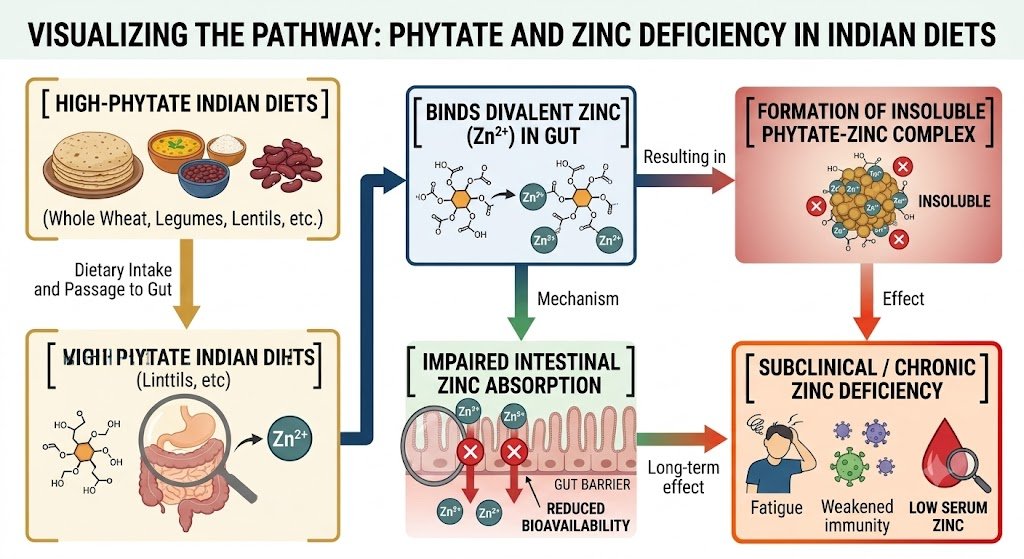
The core of the typical Indian diet—whether North Indian roti-dal or South Indian rice-sambar—relies heavily on unrefined grains, legumes, pulses, and seeds. While these foods provide complex carbohydrates and dietary fiber, they contain high levels of phytic acid (myo-inositol hexakisphosphate).
Phytic acid binds strongly to divalent minerals in the gastrointestinal tract, creating insoluble phytate-mineral complexes that cannot be absorbed in the human small intestine. In typical Indian vegetarian diets, the molar ratio of phytate to zinc frequently exceeds 15:1 or 20:1, which reduces intestinal zinc bioavailability by over 50% to 65%.
B. Predominantly Vegetarian and Low Animal-Food Intake
Elemental zinc from animal sources (oysters, red meat, poultry, seafood) exists as bioavailable heme-associated zinc complexes that absorb efficiently without phytate interference. Because a significant portion of the Indian population follows a lacto-vegetarian diet—or consumes non-vegetarian meals infrequently and in small portions—dietary intake relies almost entirely on lower-bioavailability plant sources.
C. Soil Zinc Depletion Across Indian Agriculture
According to the Indian Council of Agricultural Research (ICAR), over 36.5% of Indian agricultural soils are acutely zinc-deficient. Crops grown on zinc-depleted soils—such as staple rice and wheat varieties—yield lower baseline concentrations of zinc in their grains, amplifying the deficiency across the domestic food supply chain.
Physiological Manifestations: Clinical Impacts Relevant to Indians
Recent clinical summaries highlighted by functional health practitioners draw attention to distinct physiological systems vulnerable to zinc depletion:

Eight health signals—and what the evidence really says
Signal 1: Reproductive health and testosterone
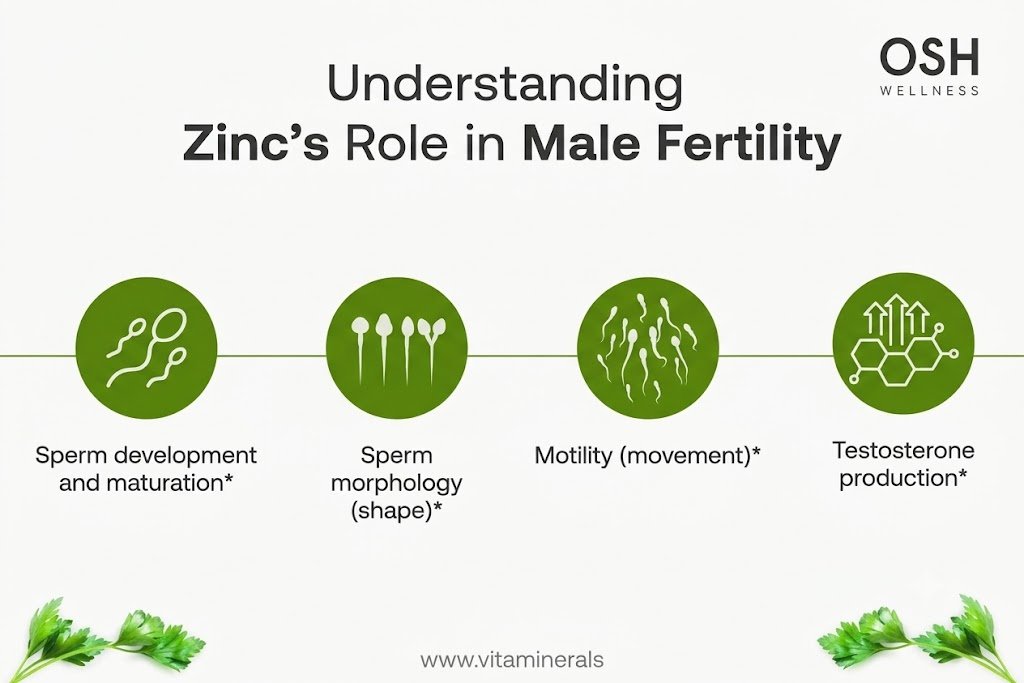
Zinc is involved in normal reproductive function and the production and regulation of hormones. Severe zinc deficiency can impair gonadal function, and studies have reported associations between zinc status and testosterone.
A systematic review of 38 studies—eight clinical studies and 30 animal studies—found evidence linking zinc status with testosterone concentrations. Source: systematic review.
The practical distinction is important:
-
Zinc deficiency may contribute to impaired reproductive function
-
Correcting a genuine deficiency may help restore normal physiology
-
Taking additional zinc when intake and status are already adequate is not an established treatment for low testosterone
Low libido, erectile dysfunction, infertility and fatigue can also reflect diabetes, obesity, sleep disorders, thyroid problems, medication effects or other hormonal conditions. Persistent symptoms need clinical assessment rather than an assumption that zinc is the cause.
Signal 2: Menstrual and menopausal symptoms
Zinc contributes to normal cellular function and reproductive physiology in women. But the claim that zinc deficiency routinely lowers oestrogen and progesterone, particularly during menopause, is too broad.
Menopause is primarily a normal biological transition associated with declining ovarian function. Hot flushes, irregular periods, sleep disturbances and vaginal dryness are not specific signs of zinc deficiency.
Takeaway: Support adequate nutrition, but do not use zinc supplements as a hormone-balancing treatment without a clear clinical reason.
Signal 3: Persistent Diarrhoea and Intestinal Health
Zinc is essential for normal cell growth, immune function and the maintenance and repair of intestinal tissue. Deficiency can compromise these processes, while diarrhoea itself can increase zinc losses and worsen nutritional status. This creates a potential cycle: inadequate zinc status may impair recovery, while ongoing diarrhoea can further compromise nutritional status.
There is strong clinical evidence for oral zinc as part of the management of acute diarrhoea in children, particularly in settings where zinc deficiency and malnutrition are common. The World Health Organization and Indian childhood-diarrhoea protocols have incorporated zinc into treatment approaches alongside oral rehydration solution. Source: infectious-diarrhoea clinical guidance.
Signal 4: Acne, skin repair and wound healing
Zinc contributes to skin integrity, immune regulation, cell division and wound healing. Severe deficiency can produce characteristic inflammatory skin changes, sometimes accompanied by diarrhoea and hair loss.
Acne, however, is a complex condition influenced by hormones, sebum production, inflammation, follicular blockage and the skin microbiome. Some clinical studies have investigated oral or topical zinc for acne, but the findings do not establish that persistent acne usually indicates zinc deficiency.
For an Indian teenager or adult with acne, the sensible approach is to follow evidence-based skin care and seek medical advice for persistent, painful or scarring acne. Zinc may have a role in selected cases, but high-dose supplementation is not a universal acne treatment.
Other signs that may strengthen suspicion of deficiency include slow wound healing, unusual skin lesions, hair loss and altered taste or smell—particularly when several occur together with a restrictive diet or an intestinal disorder.
Signal 5: Night blindness and low-light vision
Night blindness means difficulty seeing in dim light. It is a recognised symptom of Vitamin A deficiency and can also occur with retinal disorders and other eye conditions. Zinc is involved in Vitamin A metabolism, so severe zinc deficiency can affect aspects of Vitamin A physiology. However, night blindness should not be treated as proof of zinc deficiency.
In India, anyone who develops difficulty seeing at dusk, night-time driving problems or a noticeable change in vision should receive an eye examination. Vitamin A deficiency, retinal disease and other causes need to be considered. Do not self-treat with high doses of Zinc or Vitamin A.
Signal 6: Cataracts
Cataracts occur when the eye’s natural lens becomes cloudy. Ageing is a major risk factor, with diabetes, smoking, ultraviolet exposure, certain medications and other factors also contributing.
Zinc has antioxidant and enzymatic roles, but it is not established that routine zinc supplementation prevents cataracts or that cataracts are a dependable sign of zinc deficiency.
Signal 7: Immunity and the thymus gland
Zinc is necessary for the development and function of immune cells, including T lymphocytes. Deficiency can impair immune responses and is associated with greater susceptibility to infection in some settings.
The thymus is an organ involved in T-cell development and naturally shrinks with age. Research, including animal studies, has explored how zinc status affects thymic function and other immune measures. But findings that supplementation restores particular immune markers in animals do not prove that high-dose zinc will prevent infections or cancer in otherwise well-nourished humans.
For Indian adults and older people, the goal should be adequate zinc intake as part of overall nutritional care—not the promise of “supercharging” immunity. Recurrent or severe infections deserve medical evaluation rather than repeated courses of self-prescribed supplements.
Signal 8: Changes in Taste, Smell, Hair and Wound Healing
These signs receive less attention in viral posts, but they can be relevant to nutritional assessment. Zinc deficiency may contribute to impaired taste or smell, hair loss, skin changes and delayed wound healing.
The important clinical clue is the pattern of symptoms plus risk factors, rather than one symptom in isolation.

Zinc-rich Indian Foods: a Practical Daily Approach
The ICMR–National Institute of Nutrition’s 2020 Recommended Dietary Allowances list zinc requirements of approximately 17 mg/day for adult men and 13.2 mg/day for adult women in the cited reference table. These are Indian dietary reference values, not a prescription for supplemental zinc. Requirements differ by life stage and circumstances. Source: ICMR–NIN RDA summary.
A practical food-first approach is to include several zinc-containing foods across the day.
Food group |
Indian examples |
How to use them |
|---|---|---|
Pulses and legumes |
Chana, rajma, moong, masoor, lobia |
Include regularly; soak and cook properly |
Nuts and seeds |
Pumpkin seeds, sesame, peanuts, cashews |
Use as small additions to meals or snacks |
Dairy |
Milk, curd, paneer |
Include according to tolerance and dietary needs |
Eggs |
Whole eggs |
Useful option for people who eat eggs |
Animal foods |
Fish, chicken, meat and shellfish where culturally and personally appropriate |
Contribute zinc significantly; amounts vary by food |
Whole grains |
Whole-wheat atta and other grains |
Combine with varied protein sources rather than relying on cereals alone |
Food zinc content varies with variety, soil conditions, processing and portion size. Do not assume that one serving of a particular food automatically meets the day’s requirement.
Practical Action Plan: Optimizing Zinc Status in India
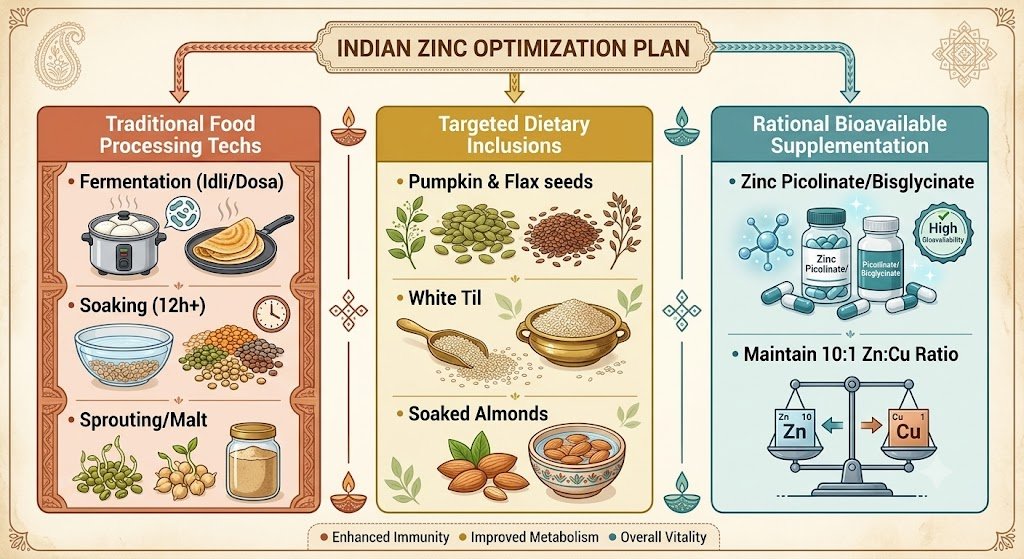
To overcome phytate inhibition and restore tissue zinc levels within typical Indian dietary frameworks, individuals can implement the following evidence-based protocol:

Step 1: De-Phytatize Traditional Indian Food Preparation
Traditional culinary practices significantly lower phytic acid content via endogenous phytase enzyme activation:
-
Extended Soaking: Soak whole pulses, beans (rajma, chana), and coarse grains in warm water for 12 to 24 hours before cooking, discarding the soaking liquid. This degrades phytates by up to 40–50%
-
Sprouting (Ankurit): Germinating legumes for 24–48 hours activates phytase enzymes, breaking down phytic acid and increasing bioavailable Zinc by over 100%
-
Lactic Acid Fermentation: Fermented batters—such as idli, dosa, and dhokla—utilize bacterial fermentation to neutralize phytates almost completely, making these optimal staple options
Step 2: Incorporate Zinc-Dense Vegetarian & Non-Vegetarian Foods
-
Plant Sources: Pumpkin seeds (kaddu ke beej), sesame seeds (til), sunflower seeds, cashew nuts, soaked almonds, and raw cacao
-
Animal Sources (where culturally acceptable): Eggs, shellfish, prawns, goat meat/mutton, and chicken liver offer highly bioavailable heme-associated zinc much appreciated by human body – so shed inhibitions and go all out for animal meats
Step 3: Maintain the Zinc-to-Copper Balance (10:1 Ratio)
High-dose zinc supplementation competes for intestinal absorption via metallothionein proteins, which can induce severe secondary copper deficiency (leading to anemia and neurodegeneration).
-
Golden Rule: Maintain a 10:1 ratio of Zinc to Copper
-
Dosing: If taking 15 mg to 30 mg of supplemental elemental zinc daily, ensure an accompanying intake of 1.5 mg to 3.0 mg of copper (or utilize natural dietary copper sources like sesame seeds and dark cocoa)
Step 4: Smart Supplement Selection
When dietary strategies fall short, supplemental zinc can bridge the gap. Select bioavailable organic chelates:
-
Preferred Forms: Zinc Picolinate, Zinc Bisglycinate, or Zinc Gluconate (which exhibit far superior bioavailability compared to cheap Zinc Sulfate)
-
Timing: Take zinc supplements away from high-phytate grain meals and calcium-rich dairy products (e.g., take mid-morning or mid-afternoon with a piece of fruit) to avoid competitive absorption inhibition
Key Summary Takeaways
-
Phytates are the main blocker: The primary cause of zinc deficiency in India is not just low intake, but also high phytate binding from untreated grains and pulses, which we so excessively consume
-
Traditional prep unlocks nutrients: Soaking, sprouting, and fermenting grains and lentils significantly improves mineral absorption
-
Supplement wisely: When using supplements, choose bioavailable chelates (picolinate/bisglycinate) and preserve the 10:1 zinc-to-copper balance