


This write up is sure to ruffle some “fibrous” feathers and shake up old, established, common conventional belief that Dietary Fibers are good for managing Constipation. This standard, conventional advice and many a times even by the Best of Gastro-enterologists to constipated patients, is handed out almost daily and virtually to every patient. Well that may actually be counter-productive and absolute anti-thesis of the established science of chronic constipation.
No, we are not joking and nor are we high :-). We present you data and evidence that flies in face of this precise, long held conventional non-sense of high fibers for constipation. The reality is – Go ZERO Fiber – if you seriously wish to recover from Chronic Constipation quickly and reliably. Read On for evidences backed details…
What is Chronic Idiopathic Constipation?
- Definition: A primary disorder diagnosed when constipation symptoms last for three to six months without secondary triggers like structural blockages, specific medications, or systemic illnesses
- Key Symptoms: Passing fewer than three bowel movements a week, hard or lumpy stools, straining, and a feeling of incomplete emptying
- Causes: It often relates to slow movement of waste through the colon (slow transit) or trouble with pelvic floor muscles, though the exact root remains unknown
Prevalence in Indians
- General Prevalence: Nationwide health surveys in India (such as the Abbott Gut Health Survey) show that roughly 22% of the Indian adult population suffers from chronic constipation
- Urban vs. Rural: Prevalence is slightly higher in metropolitan and urban areas (23%) compared to non-metro regions (19%)
- Functional Subtypes: Clinical data in India show that functional or idiopathic constipation is more commonly diagnosed than constipation-predominant Irritable Bowel Syndrome (IBS-C)
- High-Risk Groups: Prevalence increases among older adults, women, and individuals with comorbid conditions like diabetes or hypothyroidism, who face a significantly higher risk of developing chronic bowel sluggishness
Dietary Fibers as Panacea for Constipation – Fallacy?
For over half a century, gastroenterology guidelines, primary healthcare practices, and public health campaigns by every “Nutritionist under the Sun” have treated dietary fiber as an undisputed universal panacea for gastrointestinal dysfunction such as constipation.
So much so that – the prevailing medical dogma dictates that increasing plant-derived non-starch polysaccharides is the first-line, non-pharmacological treatment for idiopathic chronic constipation – without so much as looking into any benefits of this approach, such is the widely held belief.
However, a pivotal clinical study published in 2012 in the World Journal of Gastroenterology by Ho, Tan, Daud, and Seow-Choen challenged this foundational consensus.
Their trial demonstrated that complete elimination or drastic reduction of dietary fiber led to 100% resolution or significant attenuation of symptoms in patients with idiopathic chronic constipation. Read that again – complete elimination of Fibers, which your Doctor won’t like, resulted in 100% resolution of Constipation, quickly and reliably.
This paper examines the mechanisms, historical origin, clinical evidence, and physiological dynamics of dietary fiber in chronic constipation, evaluating why adding indigestible materials such as dietary fibers to a delayed, obstructed, or dysfunctional colon can paradoxically worsen gastrointestinal distress.
2012 Ho et al. Landmark Study: Trial Design & Outcomes
The landmark prospective study led by Kok-Sun Ho and colleagues at the National University of Singapore (“Stopping or reducing dietary fiber intake reduces constipation and its associated symptoms”) specifically targeted patients with idiopathic chronic constipation whose symptoms resisted standard fiber supplementation.
Study Methodology
-
Cohort Selection: 63 adult patients (16 men, 47 women; mean age 47 years) suffering from long-standing chronic idiopathic constipation
-
Intervention Protocol: All 63 participants had previously received standard dietary counseling recommending high-fiber diets. At trial onset, patients were instructed to completely abstain from dietary fiber (including fruits, vegetables, whole grains, nuts, and legumes) for an initial period of two weeks.
-
Self-Selection Phase: Following the strict two-week zero-fiber washout, participants were allowed to adjust their dietary fiber intake to a level they personally found tolerable and symptom-neutral. Patients categorized themselves into three distinct long-term dietary cohorts:
-
No-Fiber Group (n = 41): Voluntarily maintained complete dietary fiber elimination / ZERO FIBER GROUP
-
Reduced-Fiber Group (n = 16): Moderated intake to a reduced dietary fiber level
-
High-Fiber Group (n = 6): Returned to a full, high-fiber regimen due to religious, personal, or social reasons, serving as an unintended internal control
-
Quantitative Results & The Paradoxical Dose-Response
The long-term outcomes at 6 months revealed a clear dose-dependent relationship running directly counter to standard nutritional advice. Colonic distension and gas entrapment during constipation. Source: ttsz / Getty Images
Colonic Transit & Bowel Motion Frequency
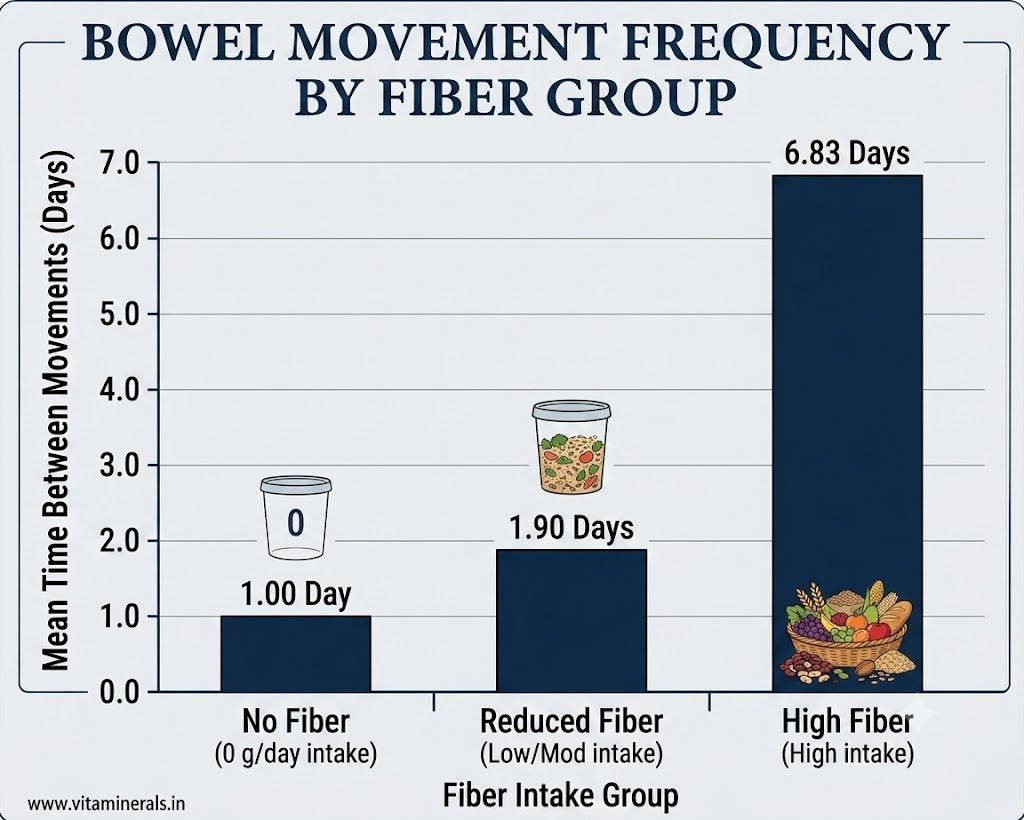
Before intervention, all 63 patients suffered from severe constipation, averaging bowel movements once every 3.75 to 6.83 days. Following dietary modification, bowel frequency scaled inversely with fiber intake:
Bowel Movement Interval (Days): No Fiber (1.00) < Reduced Fiber (1.90) < High Fiber (6.83)
-
No-Fiber Cohort (n=41): Bowel movement interval dropped from a mean of 3.75 days to 1.00 day (one motion per day). Every single patient in this group achieved full symptom resolution (p < 0.001)
-
Reduced-Fiber Cohort (n=16): Bowel movement interval dropped from 4.19 days to 1.90 days, demonstrating substantial improvement in transit speed
-
High-Fiber Cohort (n=6): Bowel frequency remained completely unchanged at 6.83 days before and after the study, illustrating that high-fiber consumption maintained chronic retention
Associated Gastrointestinal Symptoms: Bloating, Straining & Pain
Secondary symptoms of chronic idiopathic constipation—bloating, abdominal pain, and straining—showed a dose-response pattern that directly tracked fiber load.
Symptom Variable |
No-Fiber Group (n=41) |
Reduced-Fiber Group (n=16) |
High-Fiber Group (n=6) |
p-value |
Bloating Prevalence |
0.0% (0/41) |
31.3% (5/16) |
100.0% (6/6) |
p < 0.001 |
Severe Straining |
0.0% (0/41) |
43.8% (7/16) |
100.0% (6/6) |
p < 0.001 |
Abdominal Pain/Discomfort |
0.0% (0/41) |
31.3% (5/16) |
100.0% (6/6) |
p < 0.001 |
Anal Fissures / Bleeding |
0.0% (0/41) |
Significant Reduction |
Persistently High |
p < 0.001 |
What is Meaning of p-value 0.001: A p-value of 0.001 means there is a 0.1% chance —or a 1 in 1,000 likelihood—of observing these results are purely by random chance. This low p-value provides very strong statistical evidence. Results at this level are commonly described as “statistically highly significant”.
“It is interesting to note that the group of patients who chose to remain on a no-fiber diet were completely cured of their constipation and all associated symptoms including bloating, pain, and straining… A reduction in dietary fiber intake significantly improves chronic constipation and its associated symptoms.”
— Ho et al., World Journal of Gastroenterology (2012)
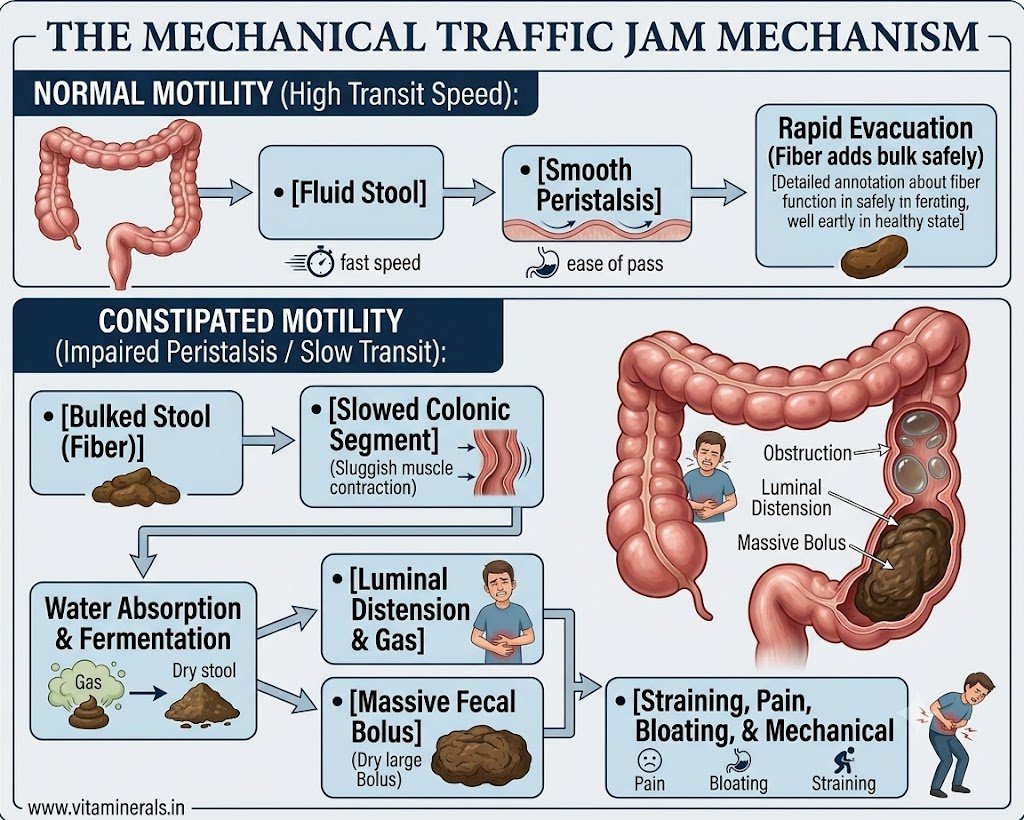
Mechanical & Biomechanical Realities: The “Traffic Jam” Analogy
To understand why fiber elimination resolves constipation in patients with sluggish colonic motility, we must examine the biophysical mechanics of the mammalian hindgut.
1. Insoluble Fiber as a Mechanical Bulking Agent
Insoluble dietary fibers (cellulose, hemicellulose, lignin) resist enzymatic digestion in the small intestine and pass largely intact into the large bowel.
The conventional premise is that insoluble fiber draws water, expands stool volume, and stretches the colonic wall. In a healthy bowel with normal peristaltic reflexes, this stretch triggers mechanoreceptors that initiate the propulsive peristaltic wave via the enteric nervous system (plexus mysentericus).
However, in slow-transit constipation (STC) or dys-synergic defecation, the underlying neuromuscular signaling or colonic smooth muscle responsiveness is impaired / not working. When colonic transit is delayed:
-
Insoluble fiber increases total luminal mass without enhancing propulsive force
-
The colon absorbs water from the expanding mass, turning bulking agents into large, dry, firm, or oversized fecal boluses
-
Pushing a larger fecal volume through a sluggish or uncoordinated anorectal outlet requires significantly higher intra-abdominal pressure, resulting in severe straining, mucosal tears, and hemorrhoidal bleeding. Hence usage of dietary fibers in Chronic Constipation is Counter-Productive
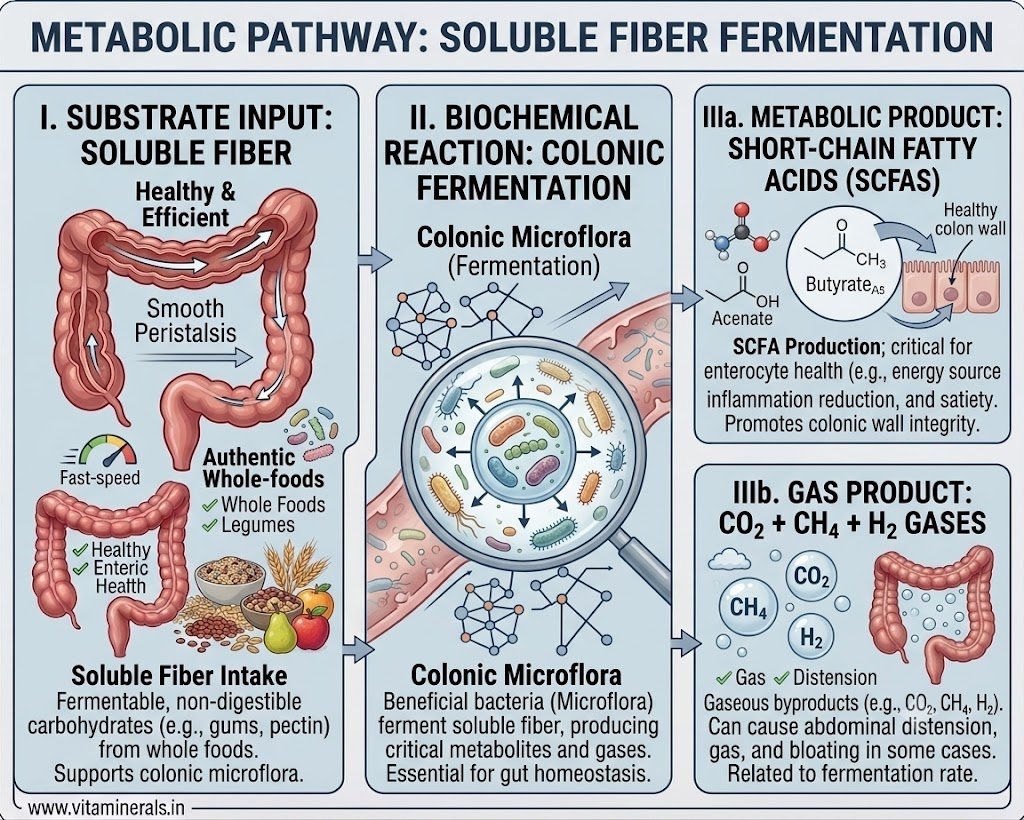
2. Soluble Fiber, Bacterial Fermentation and Gas Dynamics
Soluble fibers (psyllium, pectin, inulin, resistant starches) attract water to form a viscous gel. While this can soften stool consistency, soluble fibers undergo rapid microflora fermentation in the caecum and ascending colon.
-
Gaseous Distension: Bacterial fermentation yields high volumes of carbon dioxide, hydrogen, and methane gas. In a bowel with normal transit, gas is easily passed. In a constipated bowel with prolonged retention, gas becomes trapped behind mass bulked stool
-
Methane-Induced Slowing: Methanogenic archaea (Methanobrevibacter smithii) convert hydrogen gas into methane (CH4). Intraluminal methane directly slows intestinal transit time by blunting neuromuscular signaling, exacerbating colonic inertia
-
Bloating Etiology: Trapped gas and enlarged fecal mass cause mechanical luminal distension, directly accounting for the 100% bloating rate observed in Ho et al.’s high-fiber group versus 0% in the 0-fiber group
Historical Origins: Burkitt, Dietary Fiber Hypothesis and Industrial Alignment
If the biomechanical evidence demonstrates that fiber load can worsen mechanical retention, how did high fiber become an unquestioned dietary mandate? Why No One Challenged This Dietary Fiber for Constipation Non-Sense?

Denis Burkitt and Observational Epidemiology
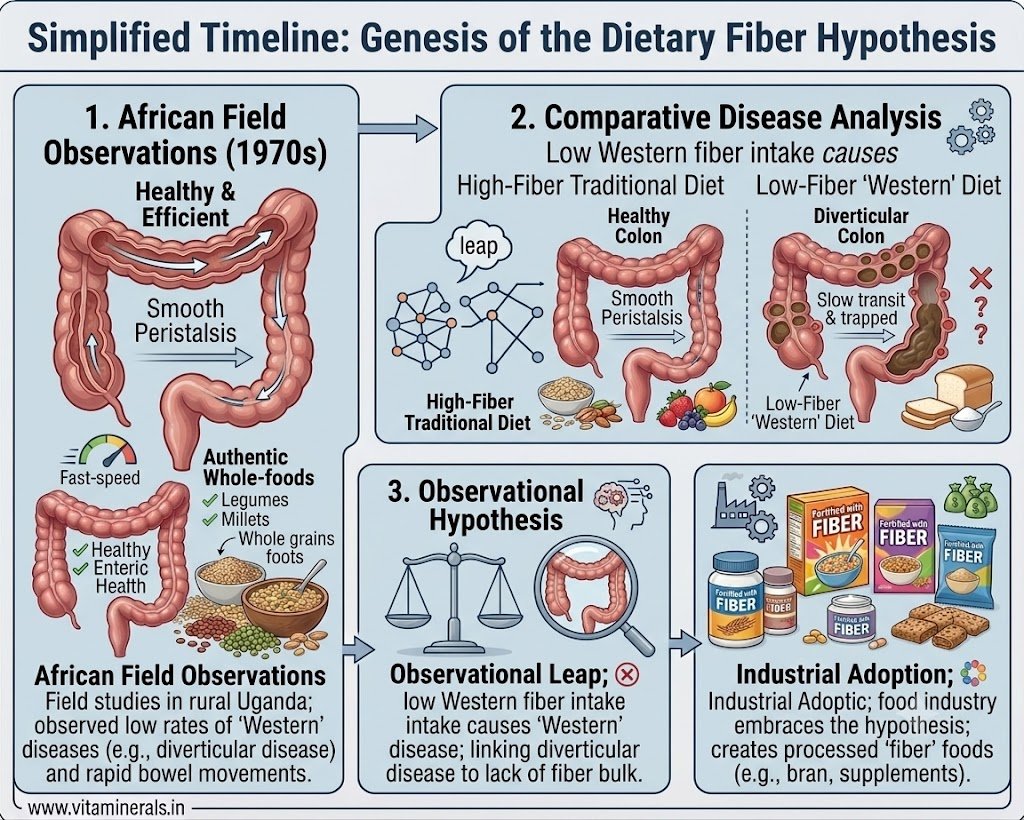
The widespread promotion of dietary fiber traces back to Dr. Denis Burkitt, a British surgeon stationed in Uganda during the mid-20th century. In his landmark 1971 paper published in The Lancet, Burkitt observed that indigenous Ugandan populations experienced short intestinal transit times (18–24 hours), produced large wet stools, and exhibited a low incidence of Western diseases (diverticulosis, colorectal cancer, appendicitis, and constipation).
Burkitt attributed these health differences to the high intake of unrefined plant foods and coarse fiber in native Ugandan diets compared to the refined, low-fiber British diet.
Critical Methodological Flaws in the Hypothesis
Modern epidemiological and mechanistic analyses highlight several confounders in Burkitt’s initial conclusions:
-
Confounding Variables: The native Ugandan population differed from urban Britons across numerous lifestyle parameters: virtually zero consumption of ultra-processed industrial food, lower caloric intake, lower rates of metabolic syndrome, distinct gut microbiome compositions and high physical activity levels
-
Extrapolation Failure: Burkitt assumed that because a high-fiber whole-food diet coincided with high bowel frequency in healthy populations, adding concentrated fiber (such as wheat bran) to a pathologically dysfunctional or constipated Western bowel would reverse the underlying motility defect
-
The Industrial Cereal & Food Industry Pivot: In the 1970s and 1980s, food manufacturers recognized the economic potential of the fiber hypothesis. Cheap agricultural byproducts—such as wheat bran, corn fiber, and oat hulls—could be repackaged as health products. Food companies actively funded cardiovascular and gastroenterology research, establishing fiber as an unquestioned dietary requirement.
Broader Literature: Replicating the Fiber Paradox
The 2012 findings by Ho et al. do not exist in isolation. Multiple clinical trials, systematic reviews, and physiological studies support the limitation of fiber in severe chronic constipation:
1. Voderholzer et al. (1997) — The Response of Patients with Severe Constipation to Fiber
In a prospective study published in Diseases of the Colon & Rectum, Voderholzer and colleagues evaluated 149 patients with chronic constipation treated with daily plantain seed (psyllium) fiber for six weeks:
-
Outcome: Patients with slow-transit constipation or dys-synergic defecation showed no improvement in transit time or bowel frequency
-
Side Effects: 80% of patients reported severe side effects, predominantly abdominal pain, gas, and worsening distension, leading to high dropout rates
-
Conclusion: Dietary fiber supplementation is ineffective in slow-transit constipation and severe anorectal dysfunction
2. Park et al. (1998) — Is Dietary Fiber Beneficial in Chronic Constipation?
Published in International Journal of Colorectal Disease, researchers measured dietary fiber intake in patients with slow-transit constipation versus healthy controls.
-
Finding: Patients with severe chronic constipation were found to consume equal or higher levels of dietary fiber prior to medical presentation compared to non-constipated controls
-
Conclusion: Fiber deficiency was not the etiology of their slow-transit constipation, and adding supplemental fiber exacerbated luminal distension
3. Systematic Reviews & Meta-Analyses
A meta-analysis published in the American Journal of Gastroenterology (Suares & Ford, 2011) evaluating fiber in irritable bowel syndrome (IBS) and chronic idiopathic constipation revealed that while soluble fiber (psyllium) demonstrated mild benefits in mild constipation, insoluble fiber (e.g., wheat bran) failed to demonstrate statistically significant benefit over placebo and frequently worsened abdominal pain and bloating.
Clinical Synthesis & Practical Management
The evidence demonstrates that idiopathic chronic constipation requires an individualized, mechanically informed approach rather than blanket high-fiber prescription.
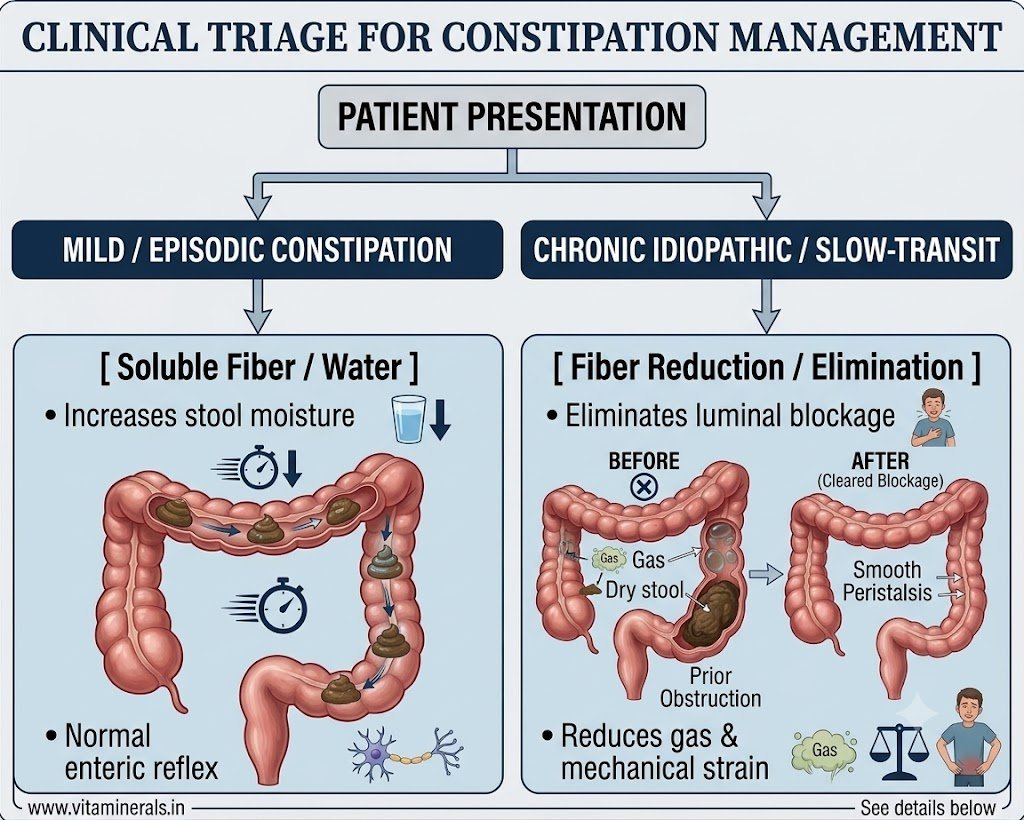
1. Differentiate Functional Phenotypes
-
Mild/Episodic Constipation: May respond favorably to soluble fibers (e.g., psyllium) and hydration by maintaining osmotic stool moisture
-
Chronic Idiopathic / Slow-Transit Constipation / Dyssynergic Defecation: Bulking agents aggravate symptoms. Fiber reduction or complete temporary elimination should be considered a valid, non-pharmacological clinical intervention
2. De-escalation Protocol for Fiber-Resistant Constipation
When a patient presents with severe constipation, bloating, and straining despite high fiber intake:
Quantify current daily intake, including wheat bran, seeds, supplements, and raw cruciferous vegetables
Instruct the patient to temporarily eliminate insoluble bulk and high-FODMAP fermentable fibers for two weeks to clear trapped intraluminal gas and reduce fecal mass volume
Document changes in bowel frequency, abdominal distension, and straining effort
Reintroduce digestible, low-residue foods gradually, allowing the patient to settle at an individualized intake level that maintains regular motility without triggering symptoms
Conclusions
The 2012 study by Ho et al. highlights an important mechanical reality in gastroenterology: in a blocked or slow-moving colon, adding indigestible fiber does not restore motility, Period.
When mechanical transit is compromised, stopping or significantly reducing dietary fiber removes the intraluminal blockage, clears trapped gas, and relieves chronic constipation, bloating, and straining. Try this and Thank Us Later.
References & Scientific Citations
-
Ho, K. S., Tan, C. Y., Daud, M. A., & Seow-Choen, F. (2012). Stopping or reducing dietary fiber intake reduces constipation and its associated symptoms. World Journal of Gastroenterology, 18(33), 4593–4596.
-
Burkitt, D. P., Walker, A. R., & Painter, N. S. (1972). Effect of dietary fibre on stools and transit-times, and its role in the causation of disease. The Lancet, 300(7792), 1408–1412.
-
Voderholzer, W. A., Schatke, W., Mühldorfer, B. E., Klauser, A. G., Birkner, B., & Müller-Lissner, S. A. (1997). Clinical response of patients with severe constipation to fiber supplementation. Diseases of the Colon & Rectum, 40(8), 911–918.
-
Park, H. J., Serrano, C. W., & Pemberton, J. H. (1998). Is dietary fiber beneficial in chronic constipation? International Journal of Colorectal Disease, 13(5-6), 241–245.
-
Müller-Lissner, S. A., Kamm, M. A., Scarpignato, C., & Wald, A. (2005). Myths and misconceptions about chronic constipation. American Journal of Gastroenterology, 100(1), 232–242.
-
Suares, N. C., & Ford, A. C. (2011). Systematic review: the efficacy of dietary fibre in the management of chronic idiopathic constipation. Alimentary Pharmacology & Therapeutics, 33(8), 895–901.