



This is 3rd and Final Part of our series on Brain Health and Preventing, Delaying Dementia in Our Respected Seniors. All details appearing in this series are based on scientific research and publications carried in high value journals. This series is solely based on how good nutrition has the potential to prevent, delay dementia while maintaing good health. For Part 1 and Part 2, pls click respective hyperlinks.
What 15 Years of Research Tell Us About B Vitamins, Omega-3 Fatty Acids, Brain Atrophy and Healthy Cognitive Ageing and what are best Food Sources
The Oxford VITACOG trial transformed nutritional neuroscience by demonstrating that high-dose B vitamins significantly slowed brain atrophy in older adults with Mild Cognitive Impairment (MCI) and that this benefit was greatest in participants with adequate omega-3 fatty acid status, with brain shrinkage reduced by up to 73% in one subgroup analysis.
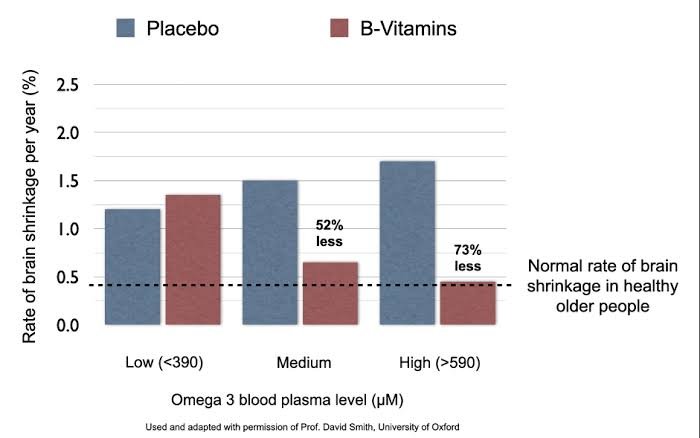
But an important question remained: Was this simply one remarkable, Got Lucky study, or would other researchers reach similar conclusions?
Over the next 15 years, investigators across Europe, North America and Asia explored this question using randomized clinical trials, cohort studies, biomarker analyses and systematic reviews. While not every study produced identical findings, a consistent pattern emerged:
-
Brain health depends on multiple interacting nutrients, not single “magic” supplements
-
Elevated homocysteine, vitamin B12 deficiency and inadequate omega-3 intake are repeatedly associated with poorer cognitive outcomes
-
Individuals with Mild Cognitive Impairment appear more likely to benefit than those with established Alzheimer’s disease
-
Nutritional intervention is likely to be most effective before extensive brain damage has occurred – this for us is the key message for you. Prevent with high quality nutrition, before permanent damage sets in
Perhaps the greatest lesson from this body of research is that timing matters. By the time dementia is diagnosed, significant neuronal loss has already occurred. Supporting brain health earlier—during the preclinical and MCI stages—may offer the greatest opportunity to preserve cognitive function.
Science After Oxford: British Journal of Nutrition Meta-analysis
One of the strongest summaries of the available evidence came from a meta-analysis published in the British Journal of Nutrition. Researchers analysed:
-
14 clinical studies
-
4,913 participants
-
Adults generally aged 60–70 years and older
-
Follow-up periods ranging from 6 months to 4 years
Major Conclusion – Compared with placebo, combined supplementation with B vitamins and omega-3 fatty acids was associated with better preservation of cognitive function.
The authors concluded that increasing intake of both nutrient groups together appears more beneficial than considering either in isolation. Like all meta-analyses, the included studies varied in dose, participant characteristics and outcome measures. Nevertheless, the overall direction of evidence supported the concept first highlighted by the Oxford investigators.
Why Timing Is Everything
One of the most important concepts emerging from dementia research is that brain pathology begins many years before symptoms become obvious. Scientists now describe Alzheimer’s disease as a continuum:
Stage 1 – Normal Cognition
-
No noticeable symptoms
-
Healthy neuronal communication
-
Minimal structural brain loss
Stage 2 – Preclinical Alzheimer’s
-
Amyloid accumulation begins
-
Tau pathology slowly spreads
-
MRI changes may become detectable
-
No obvious memory problems
Stage 3 – Mild Cognitive Impairment (MCI)
-
Mild forgetfulness
-
Difficulty learning new information
-
Independent daily functioning largely preserved
-
Accelerated brain atrophy measurable by MRI
Stage 4 – Alzheimer’s Dementia
-
Significant neuronal loss
-
Progressive cognitive impairment
-
Functional decline
-
Widespread brain atrophy
Most nutritional interventions have shown their greatest promise during Stage 2 or Stage 3, before irreversible neuronal loss becomes extensive.
Why Brain Atrophy Is Such an Important Endpoint
Traditional clinical trials often rely on questionnaires or memory tests. While useful, these assessments can be influenced by education, language, mood, sleep and test familiarity. MRI-based measurements of brain volume provide a more objective indicator. Brain atrophy reflects: Neuronal loss / Synaptic degeneration / White matter changes and Disease progression.
For this reason, slowing MRI-measured brain atrophy has become an increasingly important outcome in cognitive ageing research.
How Does This Compare With Drug Therapy?
The Oxford findings generated considerable attention because the observed reduction in brain atrophy among participants with higher omega-3 status was numerically larger than reductions reported in several early anti-amyloid drug studies available at that time. However, this comparison should be interpreted carefully. Nutritional Trials Measured:
-
Brain atrophy
-
Homocysteine reduction
-
Cognitive outcomes
Population: Mild Cognitive Impairment
Alzheimer’s Drug Trials Often measured:
-
Amyloid removal
-
Cognitive scores
-
Functional decline
-
Disease progression
Population: Established Alzheimer’s disease
Because these studies involved different populations, interventions and primary endpoints, they cannot be directly compared head-to-head. Nevertheless, the Oxford results demonstrated that nutritional interventions deserve serious scientific attention rather than being viewed simply as complementary therapies.
Why This Matters Even More for India
India is entering an unprecedented demographic transition. According to current projections:
-
The number of adults aged 60 years and above will increase dramatically over the coming decades.
-
Dementia prevalence is expected to rise substantially as life expectancy increases.
At the same time, several nutritional factors common in India deserve attention.
Vitamin B12 Deficiency – Multiple Indian studies report high prevalence of vitamin B12 deficiency or insufficiency. Contributing factors include:
-
Vegetarian diets
-
Low intake of animal-source foods
-
Age-related malabsorption
-
Long-term metformin therapy
-
Chronic proton pump inhibitor (PPI) use
Folate – India has traditionally consumed folate-rich foods such as legumes and green leafy vegetables. However:
-
Dietary diversity varies
-
Cooking losses can reduce folate content
-
Urban dietary changes may affect intake
Omega-3 Fatty Acid Intake – Many Indian dietary patterns provide relatively limited amounts of DHA and EPA because consumption of oily marine fish is modest in large sections of the population. Plant foods such as: Flaxseed, Chia Seeds and Walnuts – provide only alpha-linolenic acid (ALA), but conversion to DHA is generally inefficient.
Elevated Homocysteine – Several Indian cohort studies have reported higher average homocysteine concentrations than many Western populations. Potential contributors include: Vitamin B12 deficiency, Folate imbalance and Vitamin B6 insufficiency. These observations make India an important setting for future clinical research.
Should Every SENIOR Indian Take Supplements?
This is where responsible science is essential. The answer is based on diet. Current evidence does not support universal high-dose supplementation for all healthy adults if diets are sufficiently rich in Vit B12, Folate and Omega-3 fatty acids. Assessment for usage of Supplements may be particularly relevant for people with:
-
Mild Cognitive Impairment
-
Vitamin B12 deficiency
-
Elevated homocysteine
-
Poor dietary intake
-
Malabsorption disorders
-
Advanced age
-
Vegetarian or vegan diets
-
Certain long-term medications
Supplementation should ideally be based on all the above aspects listed above. Unfortunately, a vast majority of Senior Indians, may just require Supplements, in addition to quality nutrition, to help overcome years old deficiencies.
Building a Brain-Healthy Diet
Rather than focusing on individual supplements, many experts recommend an overall dietary pattern. Foods naturally providing B vitamins include:
Vitamin B12 – Fish, Eggs, Dairy products and regular consumption of Meat
Folate – Fenugreek leaves, Lentils, Chickpeas and Beans
Vitamin B6 – Bananas, Potatoes, Poultry and Meat
DHA and EPA – Salmon, Sardines, Mackerel and Herring
For individuals who do not consume fish, algae-derived DHA supplements may be considered after consultation with a healthcare professional.
Brain Health Is More Than Nutrition
Nutrition represents only one component of healthy cognitive ageing. Strong evidence also supports: Regular aerobic exercise, Regular Resistance training and Good Sleep Quality – these factors work together to preserve cognitive resilience.
Final Perspective
The Oxford VITACOG programme fundamentally changed how scientists think about nutrition and the ageing brain. Instead of viewing vitamins as isolated therapies, it demonstrated that brain health depends on complex metabolic interactions.
The combination of Vitamin B12, Folate, Vitamin B6 and adequate Omega-3 fatty acid status represents one of the best-studied examples of nutrient synergy in neuroscience.
New Research strongly supports the idea that identifying and correcting nutritional deficiencies—particularly during the earliest stages of cognitive decline—may help preserve brain structure and function in some older adults.
For India, where Vitamin B12 deficiency, elevated homocysteine and low marine Omega-3 intake are relatively common, these findings have particular public health relevance and deserve further investigation in well-designed Indian clinical trials.
Key Take-Home Messages
-
The Oxford VITACOG trial showed that high-dose B vitamins slowed brain atrophy in older adults with Mild Cognitive Impairment
-
Participants with higher Omega-3 status experienced the greatest benefit, with up to 73% slower brain atrophy in a predefined subgroup analysis
-
Subsequent studies, including a meta-analysis of 14 trials involving 4,913 participants, support the concept that B vitamins and omega-3 fatty acids act synergistically to support cognitive health
-
Brain-healthy nutrition should be viewed as one component of a broader prevention strategy that also includes exercise, cardiovascular risk reduction, quality sleep and lifelong cognitive engagement
-
Current evidence supports targeted assessment and individualized management, not routine high-dose supplementation for everyone
Select Scientific References
-
Smith AD, Smith SM, de Jager CA, et al. Homocysteine-lowering by B vitamins slows the rate of accelerated brain atrophy in mild cognitive impairment: a randomized controlled trial. PLoS ONE. 2010
-
Jernerén F, Cederholm T, Refsum H, Smith AD, Turner C, Palmblad J, et al. Brain atrophy in cognitively impaired elderly: the importance of long-chain omega-3 fatty acids and B vitamin status. American Journal of Clinical Nutrition. 2015
-
Oulhaj A, Jernerén F, Refsum H, Smith AD, de Jager CA. Omega-3 fatty acid status enhances the prevention of cognitive decline by B vitamins in mild cognitive impairment. Journal of Alzheimer’s Disease. 2016
-
British Journal of Nutrition. Meta-analysis of combined B vitamins and omega-3 fatty acid supplementation on cognitive outcomes in older adults
-
World Health Organization. Risk reduction of cognitive decline and dementia: WHO guidelines
-
Livingston G, et al. Dementia prevention, intervention and care. The Lancet