


This is one of our best-to-date- write up under Evidence-Explained™ Series and covers one of the most discussed and yet most mis-understood topic in Human Nutrition. Traditionally, for centuries Indians had been using Ghee and home made butter for cooking as the prime source of cooking oils / fats. Till the advent of industrial seed oils backed by fancy marketing. Saturated Fats have ever since been demonized for human heart health, even if no strong, direct, causal evidence existed, until now. This write up explains the latest published study on BENEFITS, yes you read it correct, Benefits of SAT FATS. Read on..
Saturated Fats as Villains of Heart Health
For decades, nutritional guidelines have delivered an unyielding decree: Saturated fat clogs your arteries, elevates your cholesterol, and leads directly to heart disease.
In India, where cardiovascular disease accounts for nearly 25% of all deaths, this rule has led millions to ditch traditional ghee, whole milk, and mustard oil in favor of highly processed, refined seed oils (sunflower, soybean, canola oil and rice bran oil) and low-fat, high-carb dietary substitutes.
However, a published 2-year randomized controlled clinical trial out of Norway—the CARBFUNC trial published in eBioMedicine (Lancet) on 24th of October 2026 —has delivered findings that fundamentally challenge standard dietary advice.
According to the research team, the trial stands apart from anything done before: never before has a study prescribed saturated fat at such a high level for so long, reaching nearly a third of total energy, whereas recommendations usually fall below a tenth.
To understand why this study is sending shockwaves through the cardiology and nutritional epidemiology communities—and what it means for the Indian “Thin-Fat” Phenotype—we must analyze the hard data, the underlying vascular biology, and its specific relevance to South Asian health.
The Study: What Was Tested and What Was Found
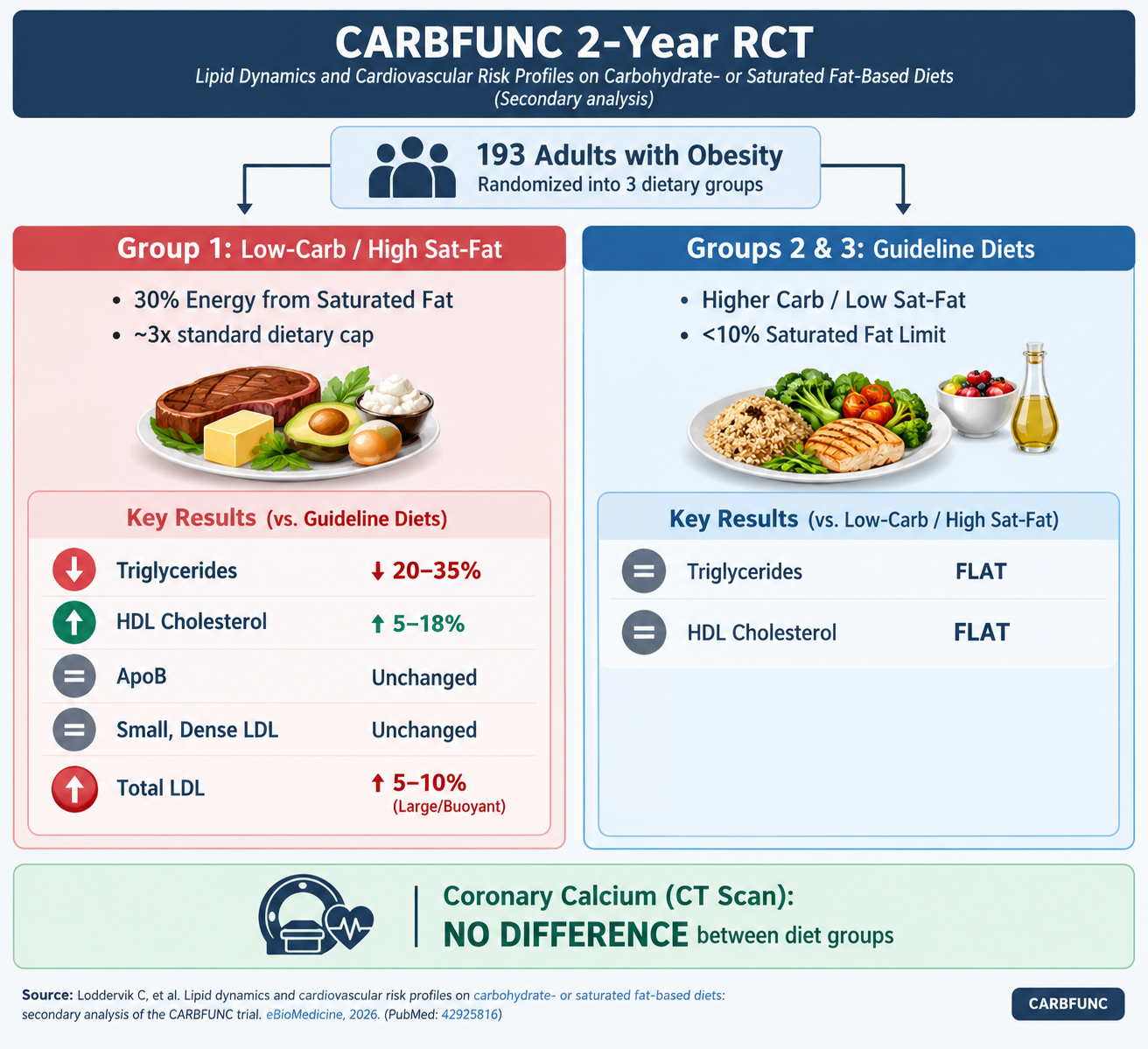
The CARBFUNC trial (NCT03401970) is a two-year, isocaloric, randomized controlled trial led by the University of Bergen (UiB) and Haukeland University Hospital in Western Norway. It investigated how different dietary carbohydrate amounts, carbohydrate quality, and saturated fat levels affect internal body fat, lipid dynamics, gut microbiota, and metabolic health in adults with obesity.
Study Design and Diets
The trial followed 193 adult participants from the Bergen area randomly allocated to one of three isocaloric, iso-proteinic diets (matched for protein at ~17% of energy and reduced added sugars to 1–2%):
- Acellular High-Carbohydrate, Low-Fat (A-HCLF): 45% energy from carbohydrates using more refined, flour-based sources.
- Cellular High-Carbohydrate, Low-Fat (C-HCLF): 45% energy from carbohydrates using minimally processed, whole-food cellular sources (such as whole grains and root vegetables).
- Low-Carbohydrate, High-Fat (LCHF): ~8% energy from carbohydrates and ~75% from fat, including roughly 30% of energy from saturated fat (more than doubling standard recommendations).
Key Findings
- Visceral Fat and Weight Loss: All three diets produced similar reductions in visceral adipose tissue (VAT) volume and total body weight over 6 to 12 months, showing that energy-matched diets reduce internal fat regardless of whether they emphasize low-carb/high-fat or higher-carb structures
- Cardiovascular Markers and ApoB (2026 Findings): Published secondary analyses in eBioMedicine revealed that despite a high saturated fat intake in the LCHF arm, apolipoprotein B (apoB—the primary particle-count marker for cardiovascular risk) did not increase or change differently compared to the higher-carbohydrate diets
- Cholesterol Subtypes and Triglycerides: On the LCHF diet, calculated LDL-C rose modestly (5–10%), primarily driven by larger, buoyant LDL particles rather than small, dense LDL particles. Concurrently, triglycerides dropped by 20–35%, HDL cholesterol increased by 5–18%, and remnant cholesterol dropped. Coronary artery calcium (CAC) scores showed no group-level worsening over 1–2 years
- Coronary Artery Calcium (CAC) via CT Scans: Direct 12-month baseline vs. follow-up CT imaging of coronary arteries revealed zero difference in calcified plaque buildup between the high-saturated-fat group and the guideline low-fat groups
- Gut Microbiota and Short-Chain Fatty Acids (SCFAs): The cellular carbohydrate diet (C-HCLF) increased faecal butyric acid at 3 months compared to the refined diet, whereas the LCHF diet reduced faecal acetic acid and overall SCFA levels over time
-
Gastrointestinal Symptoms: The LCHF diet significantly improved reflux scores (GerdQ) at 3 and 12 months compared to the refined carbohydrate diet, while irritable bowel syndrome (IBS) scores showed no major between-group differences
As lead researcher Dr. Charleen Loddervik and team noted, the data directly challenges the dogma that higher saturated fat intake inherently damages overall cardiovascular risk profiles when combined with reduced refined carbohydrates.
Why “ApoB” and “Small Dense LDL” Matter More Than Total LDL
To understand why a 30% saturated fat diet didn’t calcify coronary arteries, we have to look past 1970s-era cholesterol metrics and look at modern lipid particle biology.
-
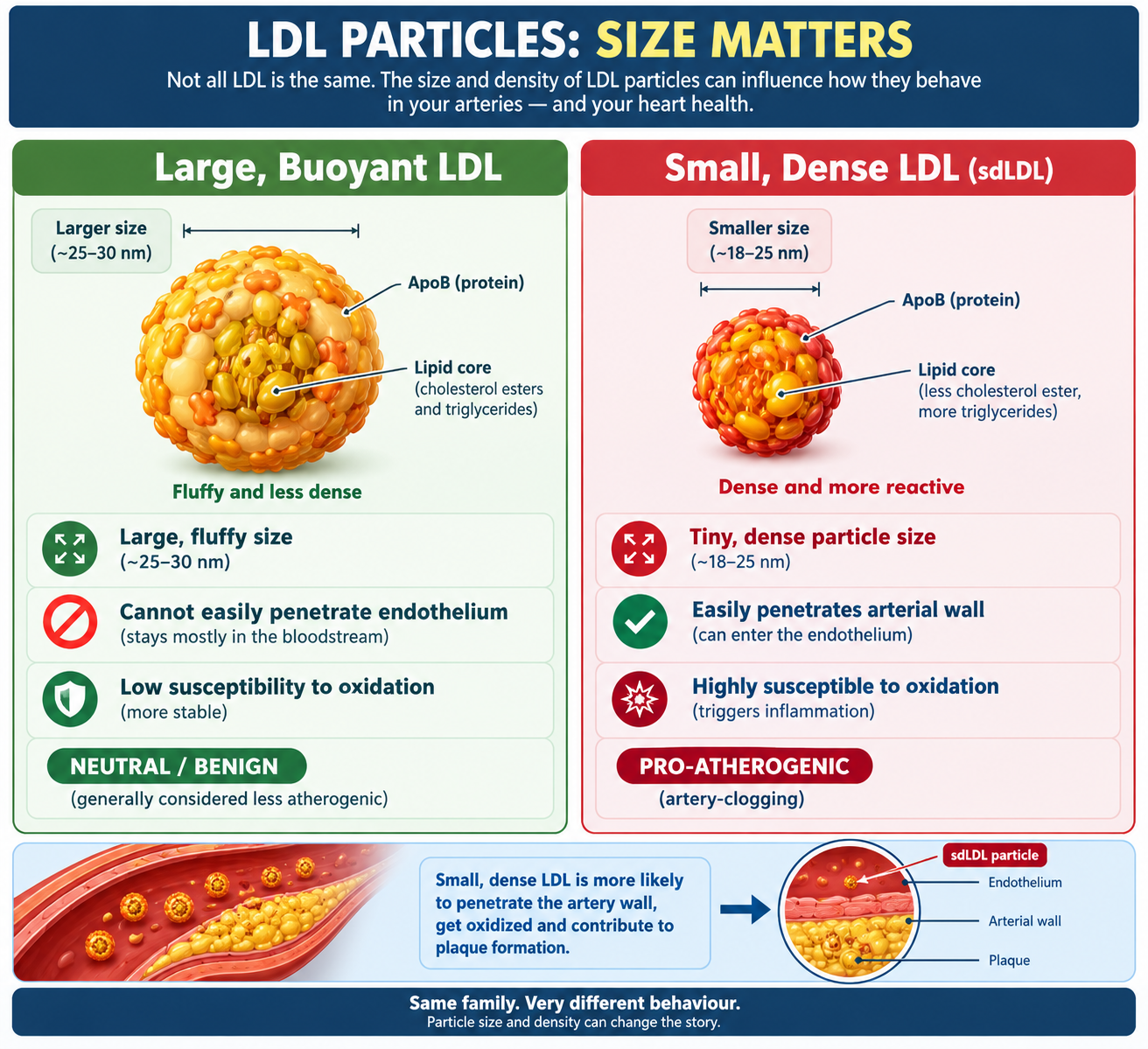
Total LDL is a Flawed Proxy: Standard lipid panels measure the total weight of cholesterol contained inside Low-Density Lipoprotein particles. But LDL comes in distinct subtypes. Large, buoyant LDL floats harmlessly through blood vessels without easily entering the arterial wall. Small, dense LDL (sdLDL), on the other hand, easily slips through the vascular endothelium, gets trapped, oxidizes, and triggers foam cell formation and plaque accumulation
-
ApoB Tells the Real Story: Every single atherogenic particle (VLDL, IDL, sdLDL) carries exactly one molecule of Apolipoprotein B (ApoB). ApoB represents the actual traffic density of dangerous particles in your bloodstream. The Norwegian trial proved that even when saturated fat increases total LDL-cholesterol, it does not increase the total particle count (ApoB) or the number of small, dense particles
-
The Carbohydrate Driver: What actually creates small, dense LDL particles? High intake of refined carbohydrates and fructose. High carb intake stimulates hepatic de novo lipogenesis (fat creation in the liver), filling VLDL particles with triglycerides and churning out small, dense sdLDL particles
The Indian Context: Reconnecting Science to Local Epidemiology
Applying these findings to India requires understanding the unique metabolic vulnerability of the South Asian population.
A. The Misguided Shift Away from Traditional Fats
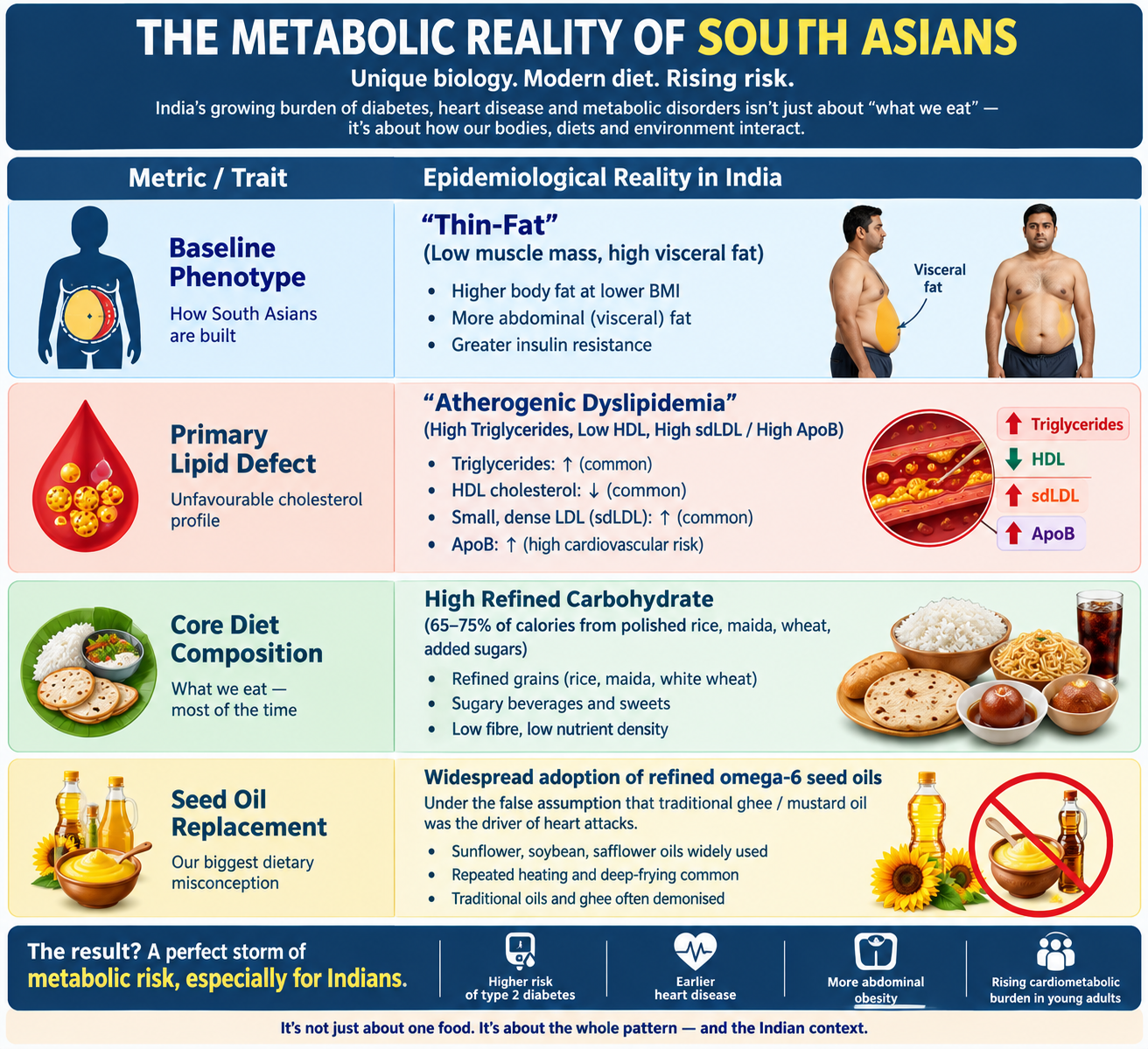
Over the past 40 years, urban and rural Indians were told to replace traditional cooking fats—pure desi ghee, cold-pressed mustard oil, and coconut oil—with refined vegetable/seed oils (sunflower, safflower, soybean) and to increase “healthy whole grains.”
Yet, during this exact 40-year period of saturated fat reduction, cardiovascular disease rates in India skyrocketed by over 300%.
B. Why High-Carb Diets Damage Indian Metabolism
The average Indian diet derives 65% to 75% of its total daily energy from refined carbohydrates (white rice, maida, refined wheat roti, sweetened teas, and packaged namkeens).
This ultra-high-carbohydrate load drives severe Atherogenic Dyslipidemia in South Asians, characterized by:
-
High fasting triglycerides (> 150 mg/dL)
-
Low protective HDL cholesterol (< 40 mg/dL for men, < 50 mg/dL for women)
-
High concentrations of small, dense LDL (sdLDL) and high ApoB counts
-
Severe peripheral and hepatic insulin resistance
When an insulin-resistant Indian individual cuts out natural saturated fats and replaces them with more rice, roti, or refined carbohydrates, their triglycerides spike, HDL drops, and small, dense LDL particles multiply—creating the exact blood profile that drives premature heart attacks.
Unmasking the Real Antagonists: Seed Oils & Refined Carbs
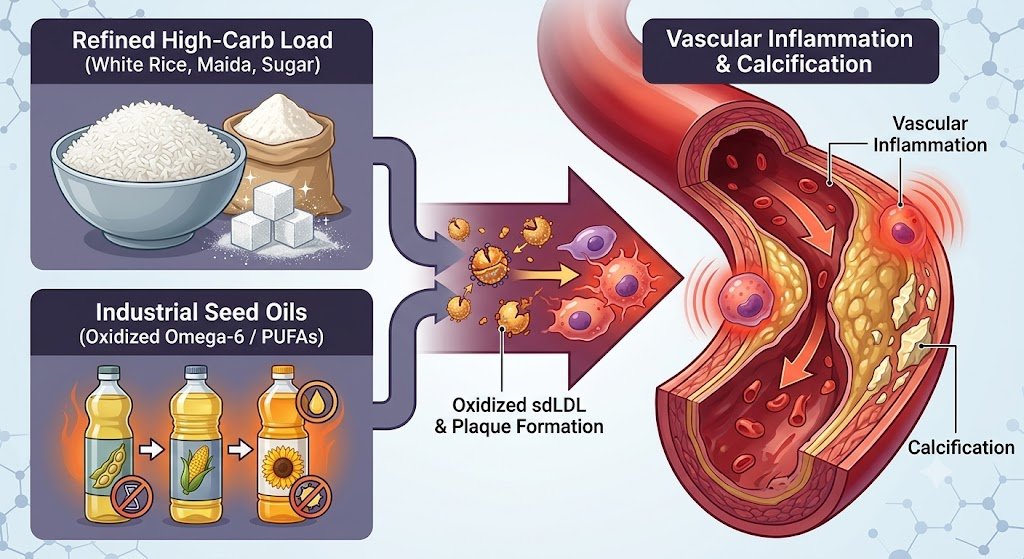
The Norwegian trial demonstrates that natural saturated fat from whole food sources is not the metabolic villain it was made out to be. The real drivers of vascular inflammation and coronary calcification in the modern Indian diet stem from a lethal combination of two factors:
-
Industrial Seed Oils and Advanced Lipid Peroxidation: Heavily refined seed oils (sunflower, soybean, corn) are rich in unstable Omega-6 polyunsaturated fatty acids (PUFAs). When exposed to high-heat Indian cooking methods (deep frying samosas, puri, pakodas), these fragile oils oxidize into toxic compounds (4-HNE, MDA). When consumed, these oxidized fats incorporate directly into LDL particle membranes, making them hyper-susceptible to oxidation.
-
Glycation and Endothelial Damage: High blood glucose levels caused by refined carbohydrate consumption lead to Advanced Glycation End-products (AGEs). Glycation damages the endothelial lining of blood vessels, making it easy for oxidized LDL particles to penetrate and form calcified plaques.
Actionable Clinical & Dietary Protocol for Indians
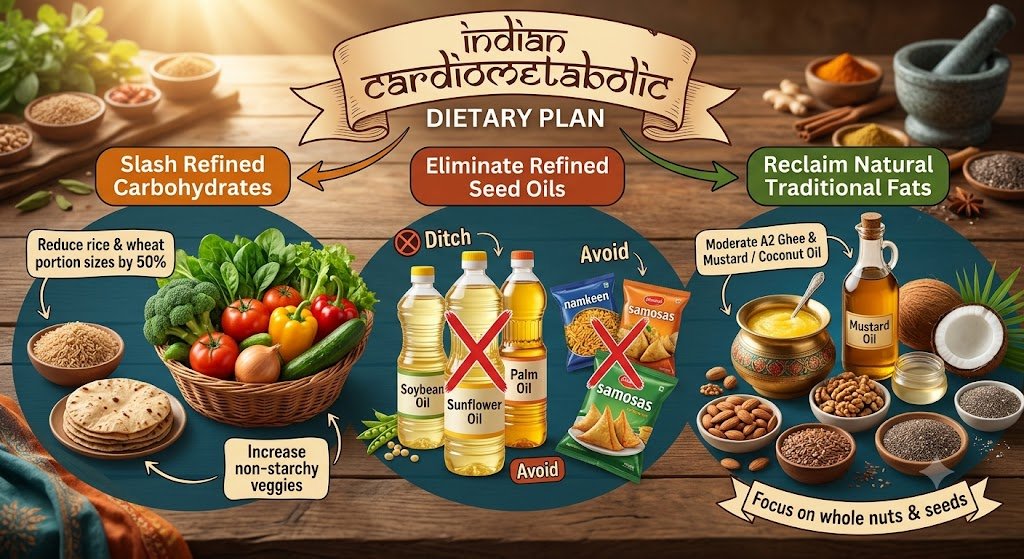
Based on modern lipid science, trial evidence, and South Asian epidemiology, Indians should consider recalibrating their daily nutrition:

-
Reduce Refined Carbohydrate Loads First: The primary metabolic lever for lowering cardiovascular risk in Indians is lowering glycemic load. Reduce white rice, maida, and refined wheat rotis. Fill half your plate with non-starchy vegetables (palak, methi, bhindi, lauki), pulses, sprouts, and quality protein (paneer, eggs, fish, chicken).
-
Reclaim Quality Traditional Cooking Fats: Eliminate industrial refined seed oils. Cook with modest, unrefined traditional fats:
-
Desi Ghee / Butter: Highly stable at high cooking temperatures; rich in butyrate and fat-soluble vitamins (A, D, E, K2).
-
Cold-Pressed (Kachi Ghani) Mustard Oil: Natural balance of monounsaturated fats (MUFA), omega-3s, and stable saturated fats.
-
Cold-Pressed Virgin Coconut Oil: Naturally rich in medium-chain triglycerides (MCTs) that support metabolic rate and energy.
-
-
Get Advanced Lipid Testing (Don’t Rely on Basic Panels): Instead of panicking over a standard “Total LDL” number, ask your laboratory or doctor for:
-
ApoB (Apolipoprotein B): The true marker of atherogenic particle count (Target: < 80 mg/dL)
-
Triglyceride-to-HDL Ratio: Divide fasting Triglycerides by HDL. A ratio below 2.0 indicates healthy, large buoyant LDL and good insulin sensitivity. A ratio above 3.0 or 4.0 signals high small, dense LDL and severe insulin resistance
-
Hs-CRP (High-Sensitivity C-Reactive Protein): Measures systemic vascular inflammation
-
-
Prioritize Satiety and Metabolic Flexibility: Whole foods rich in protein and natural fats signal brain satiety hormones (GLP-1, PYY, CCK), preventing frequent insulin spikes, sweet cravings, and late-night snacking.
References
-
Loddervik C, et al. Lipid dynamics and cardiovascular risk profiles on carbohydrate- or saturated fat-based diets: secondary analysis of the CARBFUNC trial. eBioMedicine, 2026. PubMed.
-
Anjana RM, et al. Metabolic non-communicable disease health report of India: the ICMR-INDIAB national cross-sectional study (ICMR-INDIAB-17). The Lancet Diabetes & Endocrinology, 2023. PubMed.
-
World Health Organization. Saturated fatty acid and trans-fatty acid intake for adults and children: WHO guideline. 2023. WHO.
-
ICMR–National Institute of Nutrition. Dietary Guidelines for Indians 2024. Official PDF.
-
Manchanda SC, Passi SJ. Selecting healthy edible oil in the Indian context. Indian Heart Journal, 2016. PubMed.
-
Dietary profiles and associated metabolic risk factors in India from the ICMR–INDIAB survey-21. Nature Medicine. Journal article.
-
Chopra AK. Dietary management of dyslipidemia. Indian Heart Journal, 2024. Full text.