



This is Part 2 of Our Series on Brain Ageing and how simple nutrients like B-Vitamins and Omega-3 Fatty Acids are very essential for maintaining and delaying brain atrophy. For Part 1 of the Series – Pls click here.
Science Behind the Oxford Discovery and the Nutrient Synergy That Could Help Slow Brain Ageing – Simple, Practical and Easy to Follow
One of the most fascinating discoveries in modern nutritional neuroscience is that B vitamins and omega-3 fatty acids appear to work together to protect the ageing brain.
For decades, nutrition research largely examined individual nutrients in isolation. Scientists asked whether vitamin B12 alone improved memory, whether folic acid alone prevented dementia, or whether fish oil alone enhanced cognitive function. Results were often inconsistent.
The Oxford VITACOG researchers proposed a different idea: perhaps no single nutrient could deliver its full benefit unless other essential nutrients were also available.
Copy of the Randomized Clinical Trial – Brain Atrophy and Role of B-Vitamins and Omega-3 Fatty Acids
This hypothesis was confirmed when participants with adequate blood omega-3 fatty acid levels experienced dramatically greater benefits from B-vitamin supplementation, including up to 73% slower brain atrophy compared with placebo.
This finding marked a major shift in neuroscience—from focusing on isolated nutrients to understanding nutrient networks that support healthy brain ageing.
Human Brain: A Nutritional Powerhouse
Although the brain accounts for only about 2% of body weight, it consumes nearly 20% of the body’s resting energy. Every second, billions of neurons must:
-
Generate electrical impulses
-
Manufacture neurotransmitters
-
Repair cell membranes
-
Eliminate damaged proteins
-
Produce new synaptic connections
-
Maintain myelin
-
Control inflammation
These processes require a continuous supply of vitamins, minerals, amino acids and essential fatty acids. Among the most important are:
-
Vitamin B12
-
Folate (Vitamin B9)
-
Vitamin B6
-
DHA (Docosahexaenoic Acid)
-
EPA (Eicosapentaenoic Acid)
Each performs a different function, yet they are metabolically interconnected.
Understanding Homocysteine: A Critical Biomarker
Homocysteine is produced during the metabolism of the essential amino acid methionine. Under normal conditions, homocysteine does not accumulate because it is continuously recycled.
This recycling depends primarily on:
-
Vitamin B12
-
Folate
-
Vitamin B6
When any of these nutrients becomes insufficient, homocysteine levels rise. Elevated homocysteine has consistently been associated with:
-
Cerebral small vessel disease
-
Stroke
-
White matter damage
-
Hippocampal atrophy
-
Cognitive decline
-
Alzheimer’s disease
-
Increased mortality in older adults
Although ongoing research continues to examine whether homocysteine is directly neurotoxic or serves mainly as a marker of impaired one-carbon metabolism, reducing elevated concentrations remains an important therapeutic objective in selected populations.
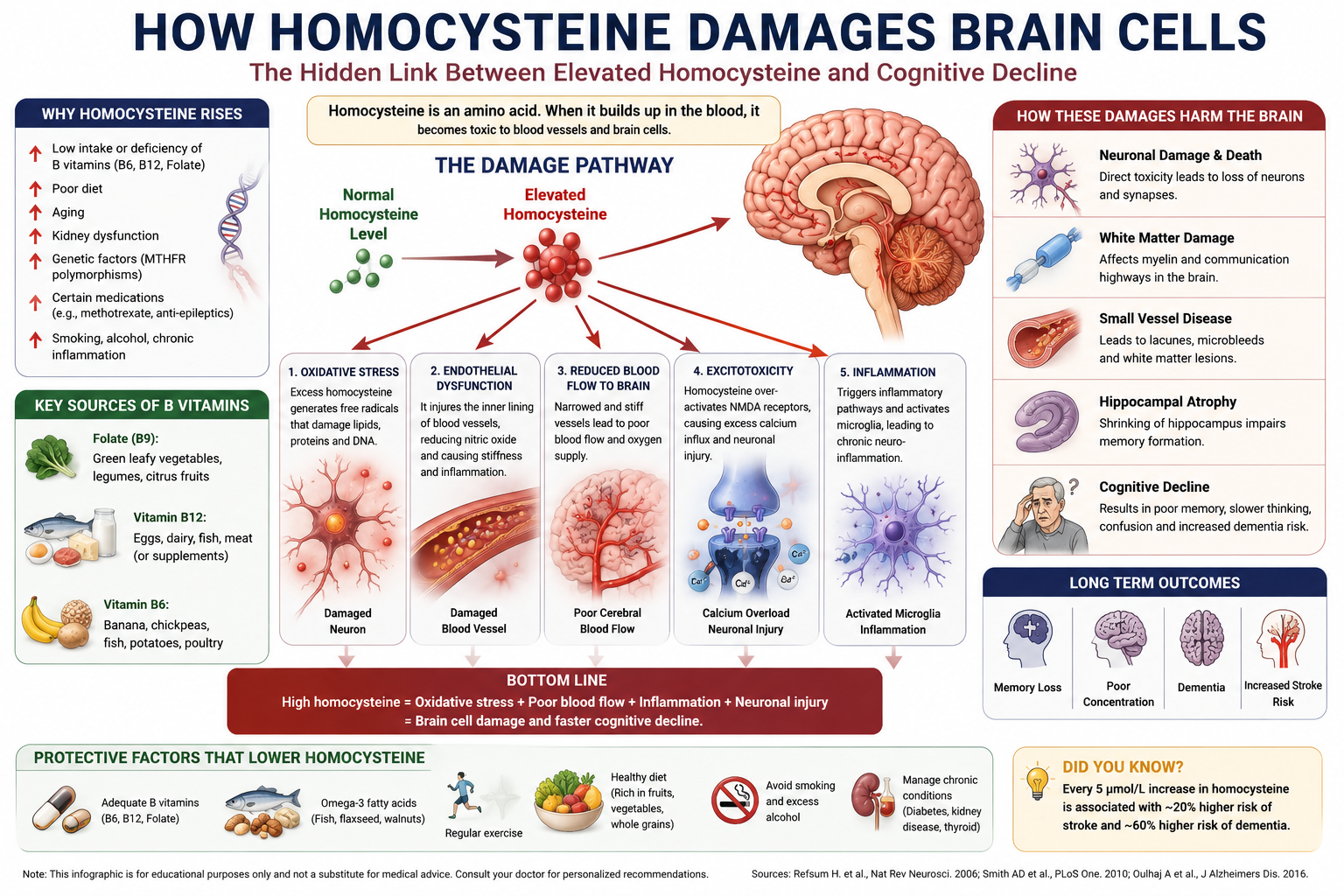
Why High Homocysteine May Harm the Brain
Several mechanisms have been proposed.
1. Oxidative Stress – Homocysteine promotes the generation of reactive oxygen species. Excessive oxidative stress damages: Cell membranes / Proteins / DNA and Mitochondria. Neurons are particularly vulnerable because of their high metabolic activity.
2. Vascular Injury – Homocysteine may impair endothelial function. Possible consequences include: Reduced cerebral blood flow / Microvascular injury / Blood-brain barrier dysfunction. These vascular changes may contribute to cognitive decline over time.
3. Neuroinflammation – Elevated homocysteine has been linked to increased inflammatory signalling within the central nervous system. Persistent neuroinflammation is increasingly recognised as an important contributor to Alzheimer’s pathology.
4. Excitotoxicity – Experimental studies suggest that homocysteine may overstimulate NMDA receptors. Excessive activation can increase intracellular calcium, potentially damaging neurons.
DHA: The Brain’s Structural Fat
While B vitamins regulate metabolism, omega-3 fatty acids provide structural support. Among them, Docosahexaenoic Acid (DHA) is particularly important. Approximately 25–40% of the polyunsaturated fatty acids within the cerebral cortex are DHA, making it one of the most abundant structural lipids in neuronal membranes.
DHA contributes to: Membrane flexibility, Synaptic transmission, Neurotransmitter release, Axonal growth, Neuroplasticity and Retinal function
Unlike many other tissues, the brain has only limited ability to synthesise DHA, making dietary intake increasingly important with age.
EPA: The Brain’s Anti-Inflammatory Partner
EPA is present in lower concentrations within brain tissue but plays important systemic roles. EPA contributes to: Resolution of inflammation, Production of specialised pro-resolving mediators, Endothelial health, Cerebral blood flow and Cardiovascular protection.
Together, DHA and EPA create an environment more favourable for neuronal survival.
Why Omega-3 Alone Is Not Always Enough
Numerous fish oil trials have produced mixed results. Some demonstrated modest cognitive benefits. Others found little effect. The Oxford investigators proposed an intriguing explanation. Omega-3 fatty acids require normal phospholipid metabolism to become efficiently incorporated into neuronal membranes.
That process depends partly on methylation reactions supported by: Vitamin B12, Folate and Vitamin B6 together.
In other words – Omega-3 provides the structural material and B vitamins provide part of the metabolic machinery needed to use it effectively.
Nutrient Synergy Hypothesis
The Oxford group analysed stored blood samples from the VITACOG participants. They measured omega-3 concentrations before treatment. The findings were striking. Among individuals with higher baseline omega-3 status:
-
Brain atrophy slowed dramatically.
-
Cognitive decline slowed significantly.
-
MRI changes were substantially smaller.
Among participants with lower omega-3 status, B vitamins produced much smaller benefits. The implication was profound. Rather than acting independently, the nutrients appeared to work together.
Evidence Beyond the Original Oxford Trial
The Oxford findings were not the end of the story. Over the following decade, independent investigators explored whether this nutrient interaction could be replicated. Several studies reported similar observations.
More recently, a meta-analysis published in the British Journal of Nutrition analysed 14 clinical studies involving nearly 5,000 older adults followed for periods ranging from six months to four years.
The authors concluded that combined supplementation with B vitamins and omega-3 fatty acids produced greater improvements in cognitive outcomes than placebo, supporting the concept of complementary biological actions.
While individual studies varied in design, dose and participant characteristics, the overall direction of evidence strengthened the original Oxford observations.
Why This Is Especially Relevant for India
India presents a unique nutritional landscape. Several population-level characteristics deserve attention.
Vitamin B12 Deficiency – Large surveys indicate that vitamin B12 deficiency or insufficiency is common, particularly among individuals consuming predominantly vegetarian diets.
Elevated Homocysteine – Indian studies have repeatedly reported higher homocysteine concentrations than many Western populations. Potential contributing factors include: Low vitamin B12, Folate imbalance, Genetic polymorphisms affecting one-carbon metabolism and Dietary patterns.
Low Marine Omega-3 Intake – Most of Indians consume limited amounts of oily fish. Although plant foods provide alpha-linolenic acid (ALA), conversion into DHA is relatively inefficient.
Rapid Population Ageing – India is expected to experience one of the world’s largest increases in older adults over the coming decades. Consequently, strategies that support healthy brain ageing are becoming increasingly important.
An Important Scientific Caveat
The Oxford findings should be interpreted carefully. The study did not demonstrate that everyone should take high-dose B vitamins and fish oil to prevent Alzheimer’s disease. Rather, it showed that:
-
Older adults with Mild Cognitive Impairment
-
Receiving high-dose B vitamins
-
And having adequate omega-3 status
experienced substantially slower brain atrophy than placebo during the study period. Further research continues to examine which individuals benefit most, the optimal nutrient doses and whether long-term supplementation reduces the incidence of dementia.
Message for Indians – However, it does highlight that GOOD FOOD – with decent quantities of oily fish and animal meats, specifically red meats could effectively and surely help Seniors maintain good serum levels of B-Vitamins and Omega-3 Fatty acids, apart from high quality proteins and a whole host of other vitamins, minerals and trace minerals. This approach certainly avoids need for any supplements.
Key Take-Home Messages
-
The ageing brain depends on coordinated interactions between multiple nutrients rather than isolated vitamins – hence whole, nutritious foods such as fatty fish and red meats are critically important
-
Vitamin B12, folate and vitamin B6 regulate homocysteine metabolism and one-carbon pathways essential for neuronal health
-
DHA and EPA provide structural and anti-inflammatory support for brain cells
-
The Oxford VITACOG study demonstrated that adequate omega-3 status markedly enhanced the effects of B-vitamin supplementation on brain atrophy
-
Subsequent clinical studies and meta-analyses have also supported the concept of nutrient synergy in cognitive ageing
-
These findings ARE particularly relevant for India, where vitamin B12 deficiency, elevated homocysteine and relatively low DHA intake remain very common and hence a new appraoch to nutrition is warranted