



Biotin, or Vitamin B7, is a water-soluble B-complex vitamin that helps the body convert food into energy and supports the health of skin, hair, and nails. While naturally present in various whole foods and widely marketed in dietary supplements, its primary physiological role is serving as an indispensable coenzyme for metabolic carboxylation reactions.
Symptoms of Biotin Deficiency
- Hair changes: Thinning hair or patchy hair loss on the scalp, eyebrows, or eyelashes
- Skin issues: A scaly, red rash, particularly around the eyes, nose, and mouth
- Nail weakness: Brittle nails that crack, split, or break easily
- Neurological signs: Unexplained fatigue, lethargy, depression, or a pins-and-needles tingling sensation in the hands and feet
Why Biotin Concerns are Prominent in India
While a true medical deficiency of biotin is rare globally, concerns and perceived deficiencies linked to hair fall are widely discussed in India due to specific regional and dietary factors:
- Frequent antibiotic usage: High or recurring use of broad-spectrum antibiotics disrupts the gut microbiome, reducing the beneficial gut bacteria that naturally synthesize small amounts of Biotin
- Dietary patterns: A large portion of the Indian population follows a vegetarian diet. While biotin is present in plant foods like nuts, seeds, and whole grains, strict or restrictive diets combined with low overall protein intake can lower optimal micronutrient status
- High prevalence of other deficiencies: Hair thinning in India is frequently driven by co-existing issues like iron deficiency anemia or Vitamin D deficiency rather than a pure lack of Biotin
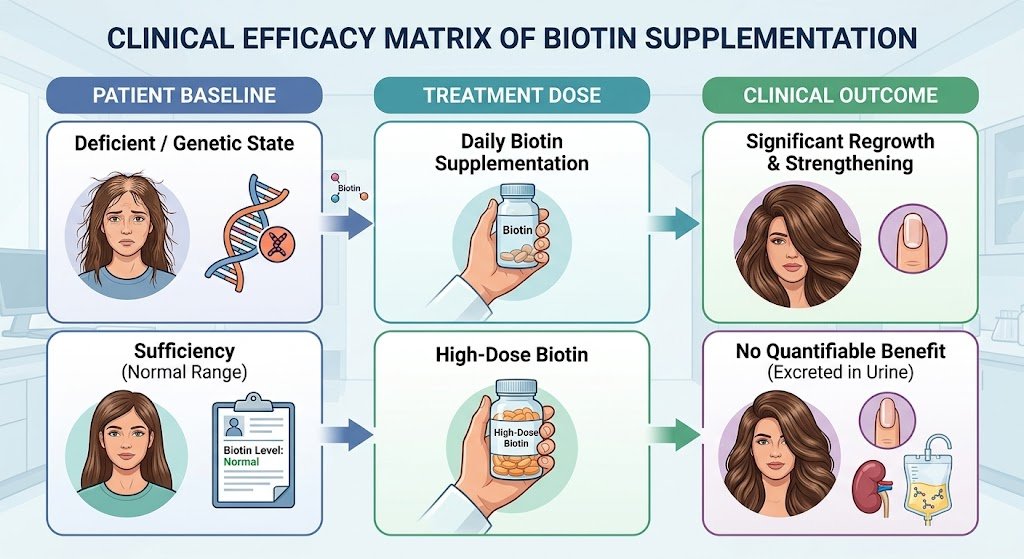
Despite widespread consumer interest in high-dose Biotin for cosmetic hair and nail enhancement, clinical trials demonstrate that therapeutic benefits are predominantly observed in individuals with true baseline deficiencies or rare clinical syndromes.
1. Physiological Role & Biological Mechanisms
Biotin acts as a covalently bound prosthetic group for five essential carboxylase enzymes:
-
Propionyl-CoA carboxylase (Metabolism of odd-chain fatty acids and specific amino acids)
-
Pyruvate carboxylase (Gluconeogenesis and citric acid cycle replenishment)
-
Methylcrotonyl-CoA carboxylase [MCC] (Essential for leucine catabolism)
-
Acetyl-CoA carboxylase 1 [ACC1] (Cytosolic fatty acid synthesis)
-
Acetyl-CoA carboxylase 2 [ACC2] (Mitochondrial fatty acid oxidation regulation)
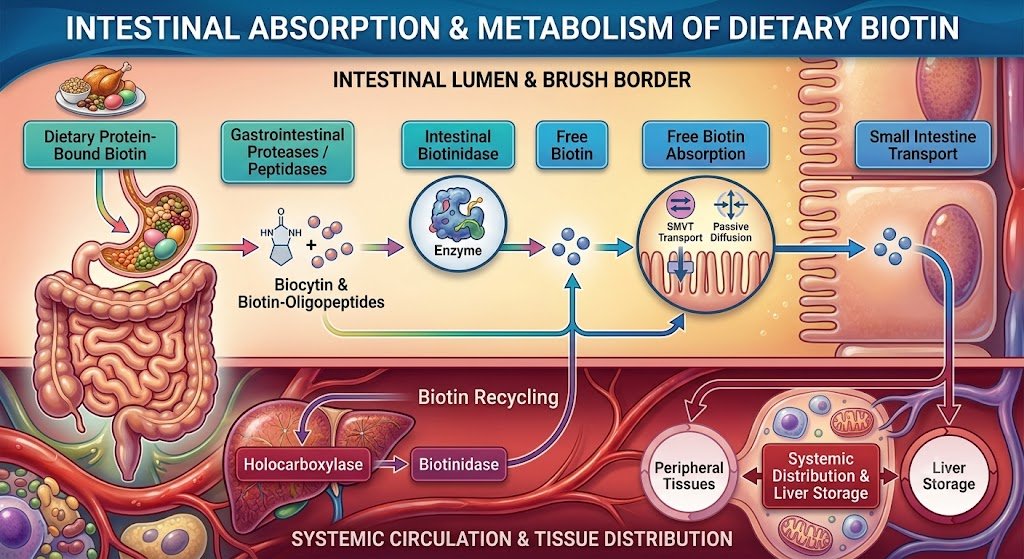
In food sources, biotin exists in both free and protein-bound forms. Protein-bound biotin undergoes enzymatic breakdown by intestinal proteases and peptidases into biocytin and biotin-oligopeptides.
The pancreatic and brush-border enzyme biotinidase subsequently cleaves these peptides to release free biotin, which is absorbed across the enterocytes of the small intestine via sodium-dependent multivitamin transporters (SMVT) and transported to the liver for storage and systemic utilization.
Beyond metabolic carboxylation, biotin participates in nuclear signaling mechanisms. It attaches to histone proteins (histone biotinylation), modulating chromatin structure, transcription factor activity, gene expression, and cellular repair cascades.
2. Assessment of Biotin Status & Clinical Biomarkers
Assessing marginal Biotin deficiency remains clinically challenging because standard serum concentrations do not drop significantly until deficiency becomes severe.
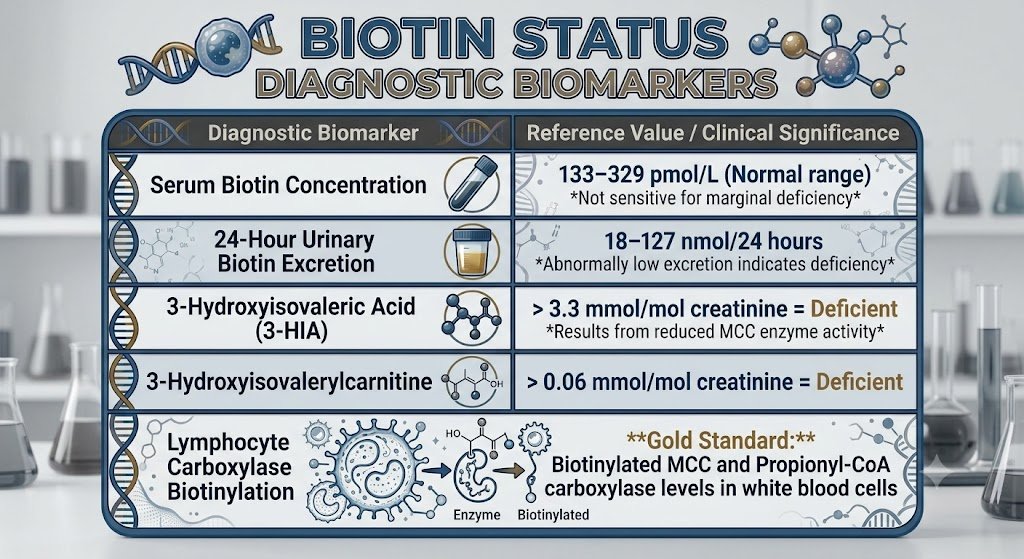
Important Diagnostic Warning: High-dose biotin supplements (exceeding 1,000 mcg/day) can severely interfere with streptavidin-biotin immunoassays. This interaction can cause falsely elevated results (e.g., total triiodothyronine and thyroxine) or falsely depressed results (e.g., thyroid-stimulating hormone [TSH] and troponin), potentially leading to misdiagnoses of Graves’ disease or missed cardiac events.
3. Dietary Requirements & Food Sources
The Food and Nutrition Board (FNB) at the National Academies of Sciences, Engineering, and Medicine established Adequate Intake (AI) recommendations for biotin due to insufficient data to determine an Estimated Average Requirement (EAR) or Recommended Dietary Allowance (RDA).
Daily Recommended Intake (Adequate Intake – AI)
Life Stage |
Male |
Female |
Pregnancy |
Lactation |
Birth to 6 months |
5 mcg |
5 mcg |
— |
— |
7–12 months |
6 mcg |
6 mcg |
— |
— |
1–3 years |
8 mcg |
8 mcg |
— |
— |
4–8 years |
12 mcg |
12 mcg |
— |
— |
9–13 years |
20 mcg |
20 mcg |
— |
— |
14–18 years |
25 mcg |
25 mcg |
30 mcg |
35 mcg |
19+ years |
30 mcg |
30 mcg |
30 mcg |
35 mcg |
Source: Food and Nutrition Board, National Academies of Sciences, Engineering, and Medicine.
Primary Food Sources & Bioavailability
Biotin is widely available across nutrient-dense whole foods. However, processing techniques (such as commercial canning) and agricultural variables can alter final concentrations.
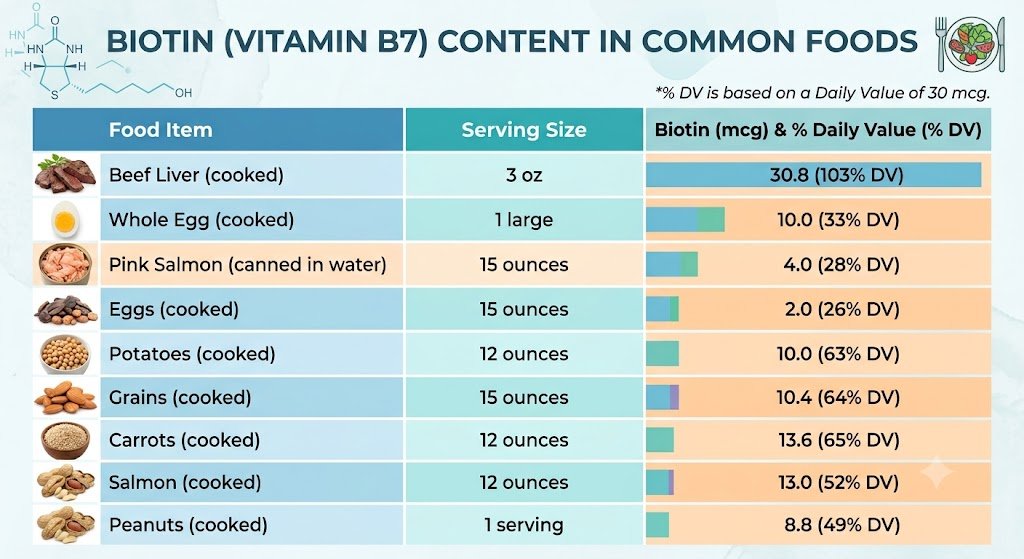
The Avidin Interaction: Raw egg whites contain avidin, a glycoprotein that binds Biotin with high affinity, preventing its intestinal absorption. Thermal processing (cooking) denatures avidin, rendering it incapable of binding biotin. So boiled eggs and omelettes are a better option than raw eggs.
4. Population At Risk for Deficiency
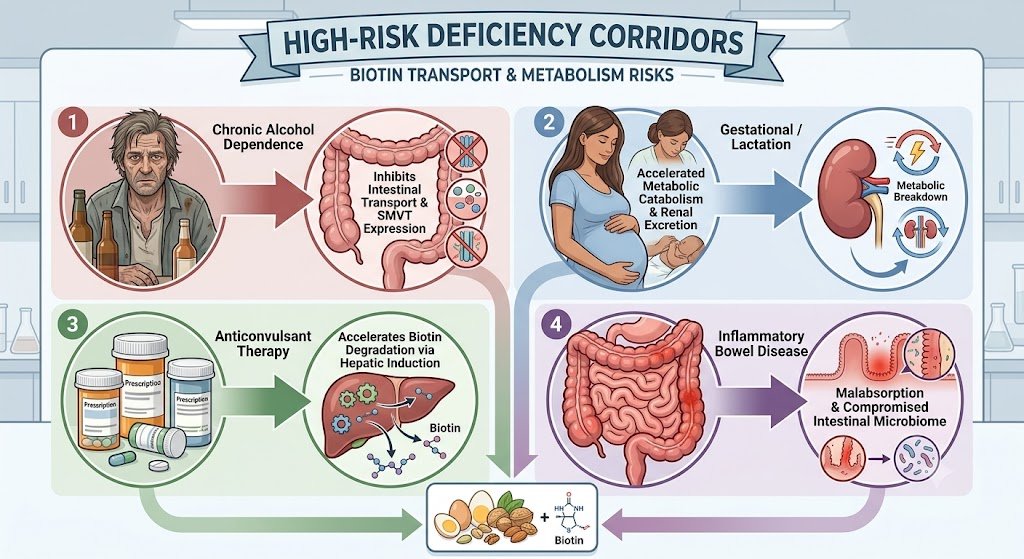
Overt biotin deficiency is rare in general populations consuming a balanced diet. However, specific clinical and physiological states significantly increase susceptibility:
-
Biotinidase Deficiency: A rare autosomal recessive genetic disorder that prevents the body from recycling biocytin, resulting in severe clinical deficiency unless treated with lifelong oral supplementation
-
Chronic Alcohol Exposure: Alcohol directly inhibits the active intestinal absorption of biotin
-
Pregnancy & Lactation: As many as 33% to 50% of pregnant women develop subclinical Biotin deficiency due to heightened fetal metabolic demand and accelerated biotin catabolism
-
Long-Term Anticonvulsant Therapy: Medications such as carbamazepine, phenobarbital, and phenytoin induce hepatic breakdown pathways and inhibit intestinal transport
-
Gastrointestinal Disorders: Inflammatory Bowel Disease (IBD) and short-bowel syndrome impair mucosal absorption and disrupt gut microbiome-derived biotin synthesis. Recent findings (Nutrients, 2023) suggest that severe biotin depletion further exacerbates intestinal mucosal inflammation, creating a bidirectional systemic feedback loop
5. Biotin for Hair, Nail, and Skin Health: Clinical Evidence Synthesis
Biotin serves as an indispensable co-factor for the infrastructure of keratin—the primary structural protein comprising hair shaft architecture, nail plates, and epidermal barrier tissue.
However, systematic literature reviews consistently emphasize that routine high-dose biotin supplementation does not promote hair growth or nail thickening in individuals with normal baseline biotin levels:
Key Clinical Studies on Nails, Hair, and Dermatological Pathology
-
Brittle Nail Syndrome (Onychoschizia):
-
Study 1 (Hochman et al.): 2.5 mg/day for 6–15 months in women with soft, splitting nails resulted in a 25% increase in nail plate thickness among patients measured immediately post-treatment.
-
Study 2 (Colombo et al.): 2.5 mg/day for an average of 5.5 months in 45 patients with brittle nails demonstrated firmness and hardness improvements in 91% (41/45) of participants.
-
Study 3 (Floersheim et al.): Retrospective assessment of 35 patients receiving 2.5 mg/day showed clinical objective improvement in 63% (22/35) of cases.
-
-
Uncombable Hair Syndrome: Clinical case series demonstrate that oral biotin supplementation (3 to 5 mg/day) over 3 to 4 months produces structural alignment, increased tensile strength, and improved manageability of the hair shaft in pediatric patients with this rare genetic structural anomaly.
-
Infantile Dermatitis & Alopecia: Small-scale clinical reports indicate that high-dose therapeutic biotin (100 mcg to 10 mg/day) leads to rapid resolution of severe periorificial dermatitis, seborrheic skin lesions, and concurrent alopecia secondary to inborn metabolic deficiencies.
6. Clinical Takeaways for Consumers & Practitioners
-
Dietary First Approach: Most healthy individuals maintain adequate systemic biotin status solely through a varied diet consisting of eggs, fish, nuts, seeds, and vegetables
-
Targeted Supplementation: Biotin supplementation is clinically indicated for pregnant or lactating individuals, patients on chronic anticonvulsant therapy, individuals with chronic GI disorders, or those with confirmed clinical deficiency
-
Lab Disruption Caution: Discontinue high-dose biotin supplements at least 48 to 72 hours prior to elective blood draws (especially thyroid panels, troponin, and cardiac biomarker assays) to avoid diagnostic errors caused by immunoassay interference