


This is the concluding Part 4 of our 4-Part Series on Knee Health and Osteoarthritis in Indians and how nutritionals approaches may help Indians affected by or at risk of developing Osteoarthritis. For Part 1, Part 2 and Part 3, pls click respective highlighted text.
Can everyday Indian meals support healthier ageing joints?
Knee osteoarthritis (OA) is one of the leading causes of chronic pain, mobility restriction, and physical disability among adults in India.
Historically viewed as a passive “wear-and-tear” degeneration of articular cartilage, modern rheumatology and nutritional science recognize knee OA as a complex, whole-joint disease driven by low-grade systemic inflammation, biomechanical stress, metabolic dysfunction, and progressive cartilage degradation.

When knee pain begins, many people search for one missing nutrient or a food that might restore cartilage. The reality is less dramatic but more useful: joint health depends on several interacting factors, including muscle strength, body weight, physical activity, injury history, ageing and overall metabolic health.
Nutrition can and does extensively support joints health. Adequate protein helps maintain muscle, while a balanced dietary pattern can support weight management and general health.
A persistent challenge in Indian clinical nutrition is the “protein gap”. Traditional Indian diets, particularly vegetarian diets, often lean heavily on excessive consumption of carbohydrates while delivering sub-optimal levels of bioavailable essential amino acids. Because amino acids are required to synthesize collagen, maintain quadriceps muscle mass, and stabilize joint biomechanics, addressing protein intake is essential for managing knee OA.
Pathophysiology of Knee Osteoarthritis & The Role of Nutrition
To understand how dietary choices alter joint outcomes, one must evaluate the structural components of the knee joint.

In knee OA, the homeostasis between cartilage synthesis (anabolism) and breakdown (catabolism) is disrupted. Concurrently, Advanced Glycation End-products (AGEs)—formed when circulating sugars non-enzymatically bind to proteins—cross-link structural collagen fibers, making cartilage brittle and vulnerable to mechanical breakdown.
How Diet Modulates Joint Health:
-
Systemic Inflammation Reduction: Dietary polyphenols, omega-3 fatty acids, and specific spices suppress NF-kappa B and IKK-beta signaling pathways, downregulating matrix-degrading enzymes in chondrocytes
-
Sarcopenia & Load Management: Adequate protein intake prevents sarcopenia (muscle loss). Strong quadriceps muscles reduce impact forces transmitted through the tibiofemoral and patellofemoral cartilage
-
Cartilage Repair Support: Amino acids (proline, glycine, lysine) serve as essential building blocks for chondrocytes to synthesize collagen and proteoglycans
Protein matters, Significantly and Specifically for Indians
Muscles help stabilise and move the knee. Maintaining muscle mass and strength is particularly important as people age, become less active or recover from illness.
Protein is one component of maintaining muscle, alongside progressive exercise and sufficient overall energy intake. The right amount of proteinndepends on age, body size, activity, health conditions and clinical needs.

Protein, however, is often overlooked in joint disease management, yet muscle weakness—particularly in the quadriceps—is an independent risk factor for both the onset and progression of knee OA.
The clinical target for adults with knee OA is 1.2 to 1.5 grams of protein per kilogram of body weight daily, provided renal function is normal. For a 65 kg adult, this equates to 78–98 grams of high-quality protein distributed across main meals, daily, everyday, every single day – this emphasis is only for Indians.
Bioavailability: Plant vs. Animal Sources in the Indian Context
A central challenge in Indian nutrition is digestibility and amino acid profiling. Plant proteins often lack certain essential amino acids (e.g., lysine in cereals, methionine in pulses) and carry anti-nutritional factors (phytates, tannins) that lower absorption.
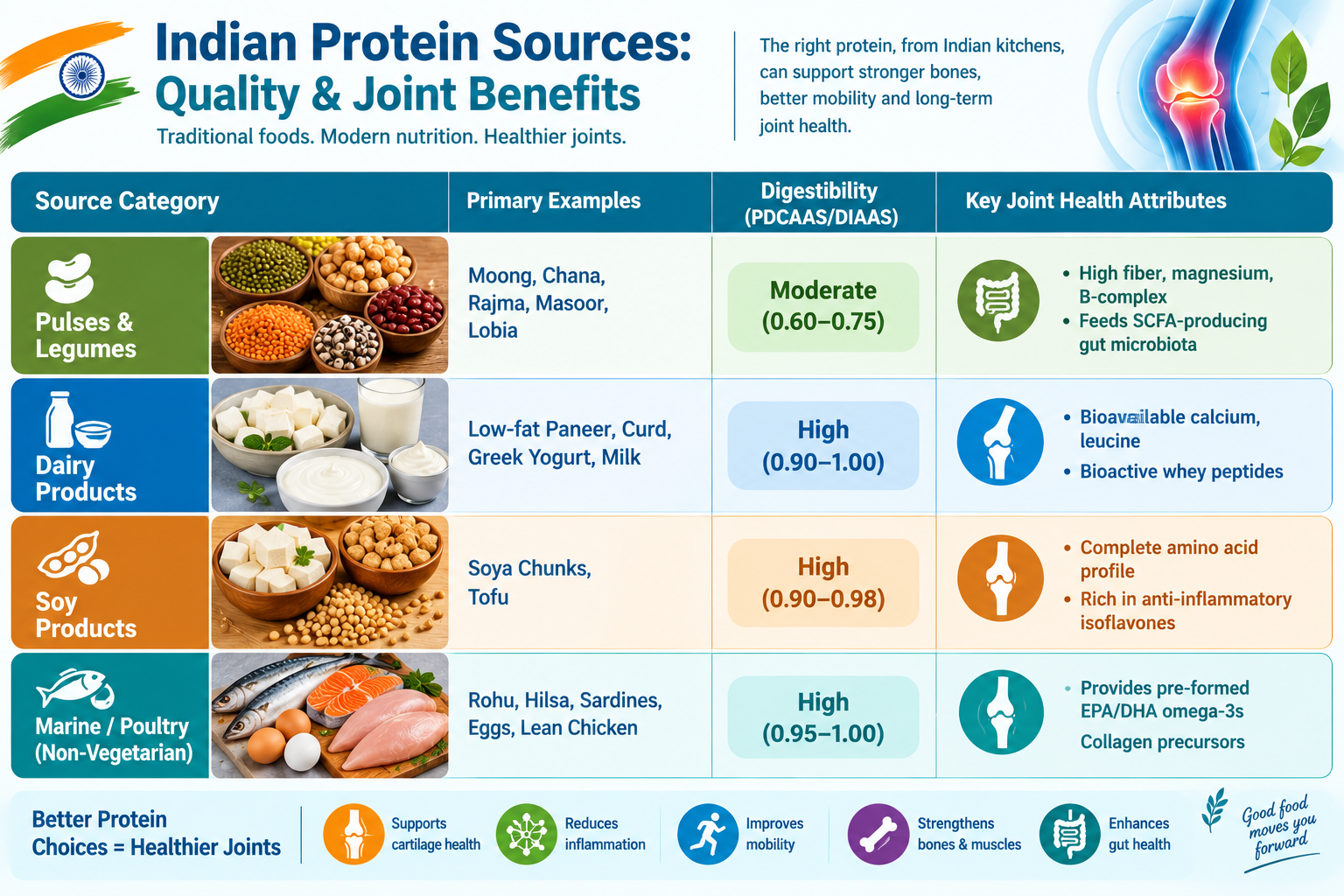
Indian protein sources include:
-
Dairy: milk, curd, paneer and other products, according to preference and tolerance.
-
Eggs: a convenient source of high-quality protein for people who eat them.
-
Fish and poultry: options for non-vegetarian diets
-
Mutton: a source of protein and naturally occurring carnosine, with nutritional characteristics that vary by cut and preparation
-
Soy foods: tofu and other soy products can contribute protein in vegetarian diets
No single source is essential for every person. A good diet is one that provides adequate nutrients, is affordable, fits cultural preferences and can be sustained.
Anti-Inflammatory Indian Foods & Bioactive Phytochemicals
Traditional Indian culinary practices naturally incorporate several anti-inflammatory botanicals and functional foods. When integrated systematically, these ingredients can help attenuate joint inflammation.
1. Curcumin (Haldi) – Curcumin, the primary polyphenol in turmeric, downregulates the NF-kappaB transcription factor, reducing expression of COX-2, IL-1beta, and TNF-alpha.
-
Bioavailability Enhancers: Native curcumin has low oral absorption. Pairing it with piperine (black pepper) increases systemic absorption up to 2,000% (20-fold). Consuming turmeric alongside healthy fats (e.g., mustard oil or groundnut oil) further improves lipid-solubility and lymphatic uptake.
2. Ginger (Adrak) – Gingerols and shogaols inhibit both the cyclooxygenase (COX) and lipoxygenase (LOX) pathways, lowering pro-inflammatory prostaglandin E2 (PGE2) levels. Daily dietary inclusion of fresh ginger or ginger tea supports systemic inflammation control.
3. Boswellia Serrata (Shallaki) – Boswellic acids—specifically acetyl-11-keto-beta-boswellic acid (AKBA)—directly inhibit 5-lipoxygenase (5-LOX), an enzyme implicated in leukotriene-mediated joint destruction. While concentrated extracts are used therapeutically, traditional usage of Shallaki resins provides supplementary anti-inflammatory support.

4. Fatty Fish vs. Plant-Based Omega-3s
-
Marine Sources (EPA & DHA): Fatty fish such as Rohu, Hilsa, Sardines, and Mackerel provide long-chain omega-3 fatty acids (EPA and DHA). These compete with arachidonic acid in cell membranes, reducing the production of pro-inflammatory eicosanoids
-
Vegetarian Sources (ALA): Flaxseeds (Alsi), walnuts, and chia seeds supply alpha-linolenic acid (ALA). Because human conversion of ALA to active EPA/DHA is limited (typically 5–10%), vegetarian individuals may consider algae-based EPA/DHA supplements (250–500 mg daily) to achieve adequate anti-inflammatory coverage
Can Reducing Abdominal Fat Help Our Knees?
For people living with overweight or obesity, weight reduction can improve osteoarthritis-related pain and physical function. It may also reduce the mechanical load placed on the knee during daily activities.
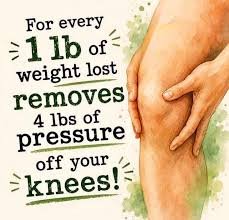

This does not mean that every person with knee osteoarthritis should lose weight. People at a healthy weight, those who are undernourished and those with frailty need different approaches. Unplanned weight loss and loss of muscle can be harmful, especially in older adults.
A practical plan should focus on gradual, sustainable changes, such as portion awareness, appropriate activity and a dietary pattern that provides enough protein and micronutrients.
NICE guidance states that weight loss is beneficial for people with osteoarthritis who are living with overweight or obesity, and that losing 10% of body weight is likely to offer more benefit than losing 5%. This is guidance for an appropriate patient group, not a universal target for all Indians.
What About SUGAR, Refined Carbohydrates and Glycation?
Reducing excessive added sugar can be part of a healthy dietary pattern, particularly for people managing diabetes or excess energy intake. And it may also be prudent to minimize daily intake of white rice, roti or all other carbohydrates so as to minimize cartilage glycation on a regular basis.
Pulses, vegetables, whole grains and other minimally processed foods can fit into a balanced diet. People with diabetes may benefit from an individualised approach to carbohydrate intake and glucose monitoring.
Glycation remains a promising area of research in tissue ageing, but no specific carbohydrate restriction has been proven to reverse established cartilage damage.
Supplements: Correct a Need, Do Not Chase a Cure with Supplements
Vitamin D, calcium, Vit K2 and other nutrients are important for general health and bone physiology. But taking more of a nutrient than needed is not a proven treatment for osteoarthritis.
Supplementation should be based on dietary adequacy, risk factors, relevant clinical assessment and professional advice. High-dose vitamin D or other supplements should not be used indefinitely without an appropriate indication.
Similarly, evidence for a compound’s biological activity does not establish that a supplement improves pain or prevents surgery. The outcome that matters is whether an intervention improves how people feel and function, with acceptable risks.
Foods to Limit or Avoid in Knee Osteoarthritis
Managing joint health requires minimizing dietary components that trigger metabolic inflammation or accelerate cartilage cross-linking.
-
Refined Carbohydrates & Sugar: White flour (Maida), polished white rice, and sugary beverages cause rapid blood glucose spikes. These spikes promote Advanced Glycation End-product (AGE) formation, which cross-links collagen and increases matrix brittleness
-
Re-heated & Partially Hydrogenated Oils: Cooking with Vanaspati or repeatedly re-heating vegetable oils generates trans-fatty acids and lipid peroxides that trigger systemic inflammatory responses
-
Imbalanced Omega-6 to Omega-3 Ratios: High consumption of refined seed oils (e.g., corn oil, sunflower oil, soya oil, rice bran oil and even mustard oil) skews the dietary ratio toward omega-6 fatty acids, promoting pro-inflammatory eicosanoid synthesis. Replacing these with cold-pressed mustard oil, groundnut oil, or extra-virgin olive oil helps maintain a balanced inflammatory profile
Strategic Synthesis for Clinical Implementation
Optimizing joint health in knee osteoarthritis through an Indian dietary framework requires a balanced, multi-target approach:
-
Close the Protein Gap: Ensure daily protein intake reaches 1.2–1.5 g/kg of body weight using a combination of nutton, chicken, fish, eggs, dairy, pulses, soy and millets. Strong peri-articular muscles reduce mechanical impact forces across joint surfaces
-
Harness Bioactive Botanicals: Incorporate culinary spices like turmeric (paired with black pepper and fat) and ginger daily to modulate systemic inflammatory pathways
-
Balance Fatty Acid Ratios: Prioritize omega-3-rich sources (fatty fish, algae oil, flaxseeds, walnuts) while reducing re-heated oils and refined sugar intake
-
Address Micronutrient Deficiencies: Monitor Vitamin D levels and consider targeted nutraceuticals (hydrolyzed collagen, vegan glucosamine) to support cartilage matrix integrity
Medical disclaimer: This is only general educational information only for educational purposes and not an individual prescription whatsoever. People with diabetes, kidney disease, frailty or other medical conditions may need tailored dietary advice.