



This is our 2nd Write Up on CKD in Indians. This covers an important topic of Preventing Muscle Loss while following a mandatory Low Protein Diet in CKD patients. Share freely with your loved ones. For 1st Write Up on CKD – pls click here.
Protein Restrictions for CKD Patients
Knowing what to eat when you have kidney disease is very important. Kidneys filter wastes created by the foods you eat to help to keep the right balance of nutrients and minerals in your blood and in your body.
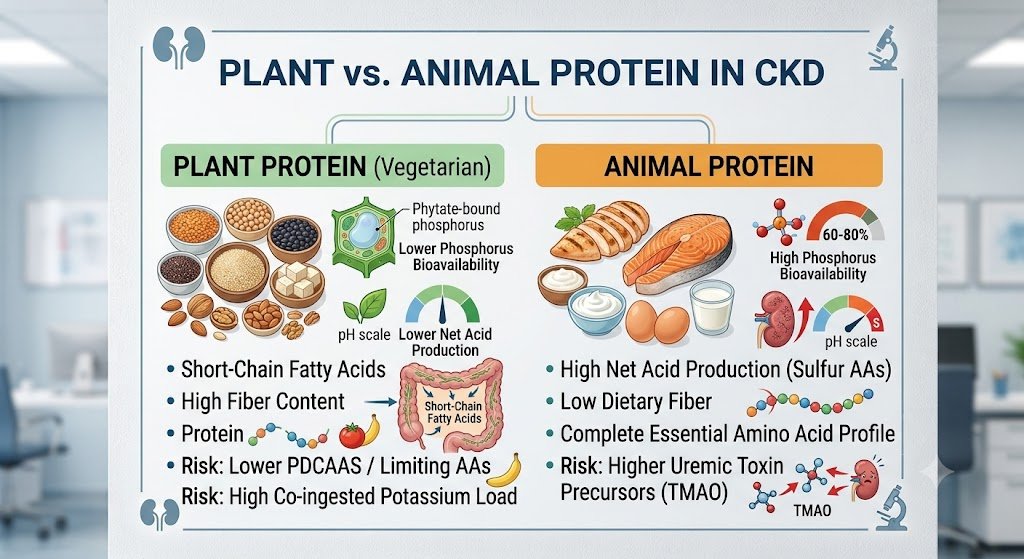
We all need protein in our diet every day. Protein is used to build muscle, heal, fight infection, and stay healthy. Animal sources of protein have all the essential amino acids (the building blocks of protein) as well as vitamins and minerals. Animal sources of protein include red meat, whole–milk dairy products, fish, chicken and egg yolks.
Plant sources of protein are low in one or more of the essential amino acids. Plant sources of protein include dals, beans, lentils, nuts such as almonds, cashews, peanuts etc, seeds and whole grains. A plant-based diet can meet protein needs with careful planning by eating a variety of plant-based foods.
You need protein every day to meet your body’s needs, but if you have kidney disease, your body may not be able to remove all the waste from the protein in your diet. Excess protein waste can build up in your blood causing nausea, loss of appetite, weakness, and taste changes.
CKD – Why Limit Protein
When your body breaks down protein, it creates waste products like urea and nitrogen. Healthy kidneys filter these toxins out, but failing kidneys struggle, causing wastes to accumulate in the bloodstream.
-
High protein intake forces the remaining functioning kidney filters (glomeruli) to work overtime. This extra pressure damages them further over time
-
Manages Secondary Complications: Lowering protein intake can help control metabolic acidosis, improve phosphate metabolism, and reduce protein leaking into the urine (proteinuria)
-
Delays Dialysis: Reducing the daily burden on the kidneys may help preserve remaining kidney function and delay the need for dialysi
1. Metabolic Paradox of Renal Nutrition
Managing Chronic Kidney Disease (CKD) during Stages 3b to 5 (non-dialysis) presents a profound clinical paradox: how to reduce nitrogenous waste production without inducing Protein-Energy Wasting (PEW) and sarcopenia.
The kidneys serve as the primary excretory organ for nitrogenous end-products derived from amino acid catabolism. As the Estimated Glomerular Filtration Rate (eGFR) declines below <45 mL/min/1.73m², the body’s ability to excrete urea, creatinine, indoxyl sulfate, and other uremic toxins becomes compromised. Accumulation of these toxins triggers a systemic inflammatory response, exacerbates metabolic acidosis, accelerates kidney function decline, and causes uremic symptoms such as nausea, anorexia, and fatigue.
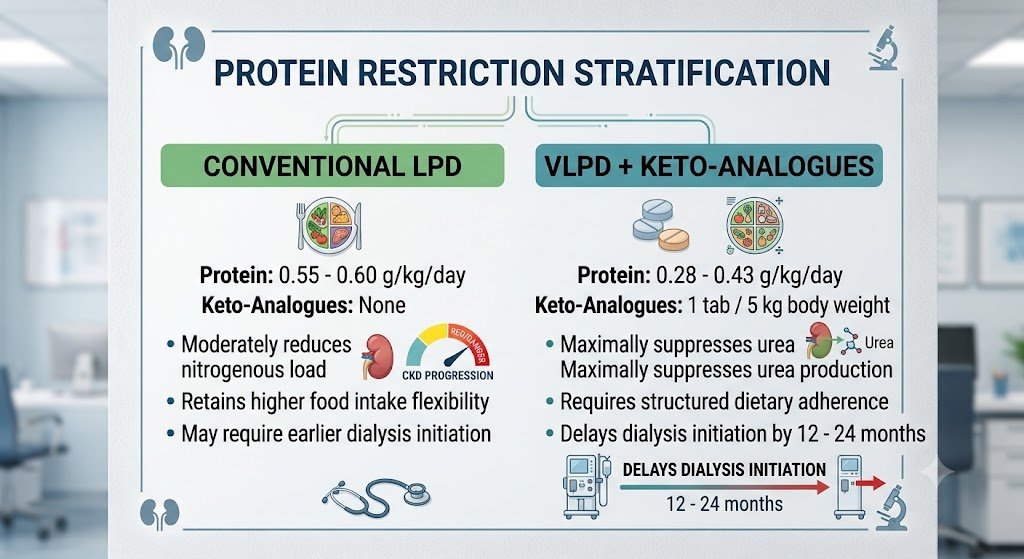
To mitigate uremic toxicity and delay the transition to maintenance dialysis, clinical practice guidelines—including the Kidney Disease Outcomes Quality Initiative (KDOQI) 2020 Clinical Practice Guideline Update for Nutrition in CKD—recommend prescribing Low-Protein Diets (LPDs, 0.55 –0.60 g/kg BW/day) or Very Low-Protein Diets (VLPDs, 0.28 – 0.43 g/kg BW/day).
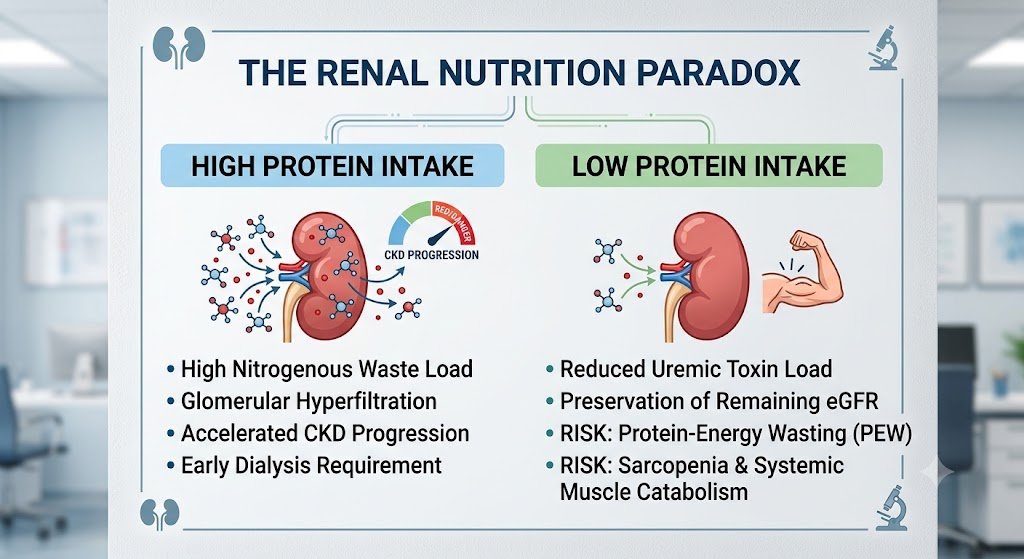
However, restriction of dietary protein introduces a severe secondary threat: negative nitrogen balance. When essential amino acid (EAA) intake drops below basic physiological requirements, the human body initiates muscle protein breakdown to supply necessary amino acids for basal cellular repair, enzyme synthesis, and hepatic acute-phase protein production.
In vegetarian populations, particularly in India where dietary protein is predominantly derived from plant-based sources with varying amino acid profiles and lower digestibilities, strict protein restriction without precision supplementation can lead to Protein Energy Weakness (PEW), skeletal muscle loss, impaired immunity, and elevated mortality.
Keto-analogue supplementation offers a biochemical solution to this paradox. By providing the carbon skeletons of essential amino acids free of nitrogen, keto-analogues enable the prescription of Very Low-Protein Diets (VLPDs) that suppress uremic toxin generation while preserving lean muscle mass and structural nitrogen balance.
2. Epidemiology & Protein Consumption in Indian Subcontinent
In India, an estimated 30% to 40% of the population adheres to a strict lacto-vegetarian or lacto-ovo-vegetarian diet, while a significant portion of the remaining population consumes animal protein infrequently. Traditional Indian vegetarian diets rely primarily on legumes (dals), cereals (wheat, rice, millets), dairy, and vegetables.
Evaluating the protein quality of an Indian vegetarian diet requires analyzing the Protein Digestibility-Corrected Amino Acid Score (PDCAAS) and the Digestible Indispensable Amino Acid Score (DIAAS):
Food Source |
Primary Limiting Amino Acid |
Average PDCAAS |
True Digestibility (%) |
Whole Wheat (Atta) |
Lysine |
0.40 – 0.48 |
86 – 90% |
Polished Rice |
Lysine / Threonine |
0.55 – 0.60 |
88 – 92% |
Pulses (Toor, Moong, Chana) |
Methionine & Cysteine |
0.55 – 0.68 |
78 – 84% |
Cow’s Milk / Paneer |
None (Complete) |
1.00 |
95 – 98% |
Soy Protein |
Methionine (slight) |
0.91 – 1.00 |
90 – 94% |
Cereals are deficient in lysine, whereas legumes are deficient in sulfur-containing amino acids (methionine and cysteine). While combining cereals and legumes (e.g., khichdi or dal-rice) creates a complementary amino acid profile, achieving this balance on a strict renal LPD (30 –35 g total protein/day for a 60kg individual) presents several practical challenges:
-
Caloric-to-Protein Ratio: To secure 30 g of plant protein from legumes and grains, a patient must consume a substantial carbohydrate volume, which can complicate glycemic control in diabetic nephropathy.
-
Phosphorus Load: Plant proteins contain phosphorus bound within phytate (phytic acid). Although human intestinal phytases digest only 30%–50% of plant phytate compared to 80%–90% bioavailable organic phosphorus in animal proteins, high pulse intake can still exacerbate hyperphosphatemia in advanced CKD.
-
Potassium & Nitrogen Burden: Unprocessed pulses carry a high nitrogen-to-protein ratio alongside elevated potassium levels, necessitating leaching procedures that may alter food palatability and lower nutrient density.
3. Protein-Energy Wasting & Sarcopenia in CKD
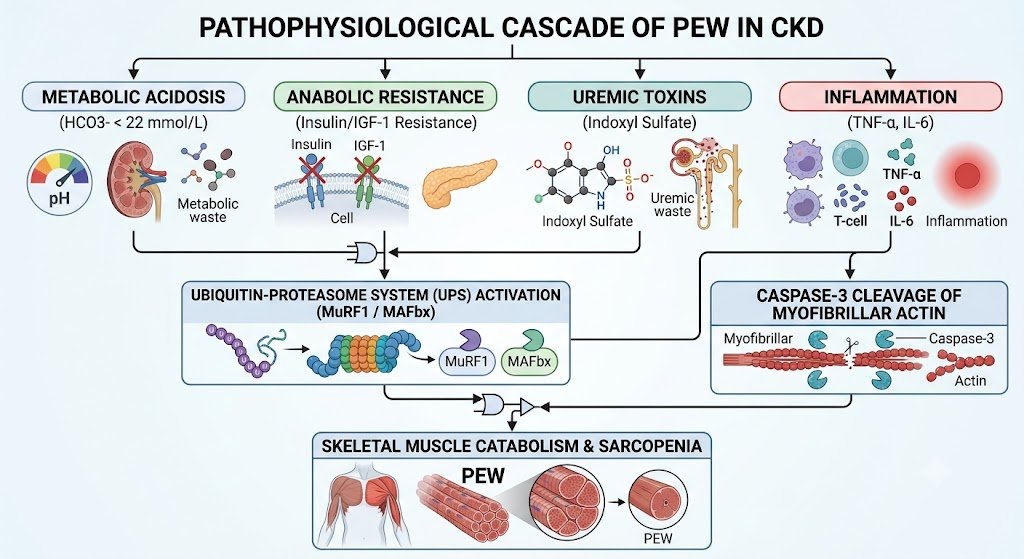
Protein-Energy Wasting (PEW) is a clinical state characterized by progressive depletion of systemic protein and energy reserves. It affects 28% to 54% of non-dialysis CKD patients globally and correlates with cardiovascular events and disease progression.
4. Biochemistry & Mechanism of Action of Keto-Analogues
Keto-analogues (KAs) are nitrogen-free alpha-keto acid or alpha-hydroxy acid precursors of essential amino acids. In these molecules, the amino group attached to the alpha-carbon of an essential amino acid is replaced by a ketone (O) or hydroxyl (OH) group.
Chemical Composition of Commercial Keto-Analogue Formulations
Standard pharmaceutical keto-analogue preparations (typically formulated as calcium salts) contain structural precursors for essential amino acids, alongside supplemental amino acids to maintain overall nitrogen balance:
Component |
Chemical Structure |
Corresponding Essential Amino Acid |
Equivalent Dose per Tablet |
Calcium-4-methyl-2-oxovalerate |
alpha-keto-leucine calcium |
L-Leucine |
101 mg |
Calcium-3-methyl-2-oxobutyrate |
alpha-keto-valine calcium |
L-Valine |
86 mg |
Calcium-2-oxo-3-methylvalerate |
alpha-keto-isoleucine calcium |
L-Isoleucine |
67 mg |
Calcium-2-oxo-4-phenylbutyrate |
alpha-keto-phenylalanine calcium |
L-Phenylalanine |
68 mg |
Calcium-D,L-2-hydroxy-4-methylthiobutyrate |
alpha-hydroxy-methionine calcium |
L-Methionine |
59 mg |
L-Lysine Acetate |
Amino Acid |
L-Lysine |
105 mg |
L-Threonine |
Amino Acid |
L-Threonine |
53 mg |
L-Tryptophan |
Amino Acid |
L-Tryptophan |
23 mg |
L-Histidine |
Amino Acid |
L-Histidine |
38 mg |
L-Tyrosine |
Amino Acid |
L-Tyrosine |
30 mg |
Total Calcium Content |
Mineral Salt |
N/A |
approx 50 mg (1.25 mmol) Ca² |
5. Clinical Evidence & Preserving Muscle Mass on VLPDs
Protein Intake Stratification in Renal Nutrition
Diet Strategy |
Protein Target |
Keto-Analogue Dosage |
Indication & Clinical Goals |
Standard Low-Protein Diet (LPD) |
0.55 –0.60 g/kgBW /day |
Unsupplemented or optional |
Stages 3a–5 non-dialysis; stable eGFR; preserves baseline nitrogen balance |
Very Low-Protein Diet (VLPD) |
0.28 –0.43 g/ kgBW /day |
1 tablet per 5kg body weight/day |
Stages 4–5 non-dialysis; severe uremia or high risk of disease progression; requires structured monitoring |
Vegetarian LPD (VLPD-Veg) |
0.60 g/kg bw/day (Plant-based) |
Supplemented as needed |
Prefers plant proteins; utilizes low net acid production; requires monitoring for limiting amino acids. |
Landmark Clinical Evidence & Trials – Garneata et al. Trial (JASN, 2016)
In a landmark prospective, randomized controlled trial, Garneata and colleagues evaluated 207 non-diabetic patients with advanced CKD (eGFR} < 30 mL /min / 1.73m²).
-
Intervention: A vegetarian Very Low-Protein Diet (0.3 g/kg BW/day) supplemented with keto-analogues (1 tablet/5 kg BW /day) versus a standard Low-Protein Diet (0.6 g/kg BW/day).
-
Primary Outcomes:
-
Dialysis Initiation: The VLPD + Keto-Analogue group demonstrated a significant reduction in the composite endpoint of dialysis initiation or ≥ 50% drop in eGFR.
-
eGFR Decline: The eGFR decline rate was slowed in the VLPD + KA arm compared to the standard LPD arm.
-
Nutritional Stability: Body mass index (BMI), mid-arm muscle circumference (MAMC), serum albumin, and subjective global assessment (SGA) scores remained stable in the VLPD + KA cohort over the 18-month follow-up, confirming that protein intake could be lowered to 0.3 g/kg BW/day without inducing PEW when supplemented with keto-analogues.
-
6. Practical Implementation: The Vegetarian Renal Diet Protocol
Calculating Requirements for a 60 kg Indian Patient (Stage 4 CKD) – Patient Baseline Parameters
-
Age / Gender: 58-year-old Male
-
Height: 165 cm | Ideal Body Weight (IBW): 60 kg
-
Diagnosis: Stage 4 Diabetic Nephropathy (eGFR = 22 mL/min/1.73m²)
-
Dietary Preference: Strict Lacto-Vegetarian
Step-by-Step Prescriptive Calculation
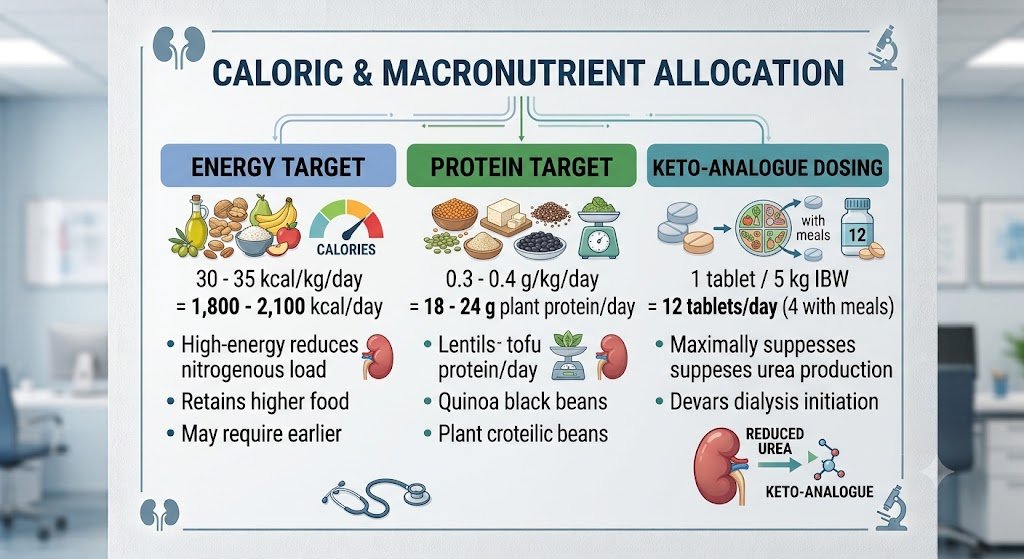
1. Total Caloric Requirement – To prevent endogenous protein catabolism, adequate non-protein energy is essential:
Energy Target = 30–35 kcal/kg IBW/day} = 60 kg X 32.5 kcal = 1,950 kcal/day
2. Dietary Protein Prescription (VLPD Model)
Dietary Protein Target = 0.35 g/kg IBW/day = 60 kg X 0.35 g = 21.0 g protein/day
3. Keto-Analogue Dosing Protocol
Keto-Analogue Dosage = 1 tablet / 5 kg IBW/day = 60 kg / 5 = 12 tablets/day
-
Administration: Divided across main meals to maximize co-ingestion with food:
-
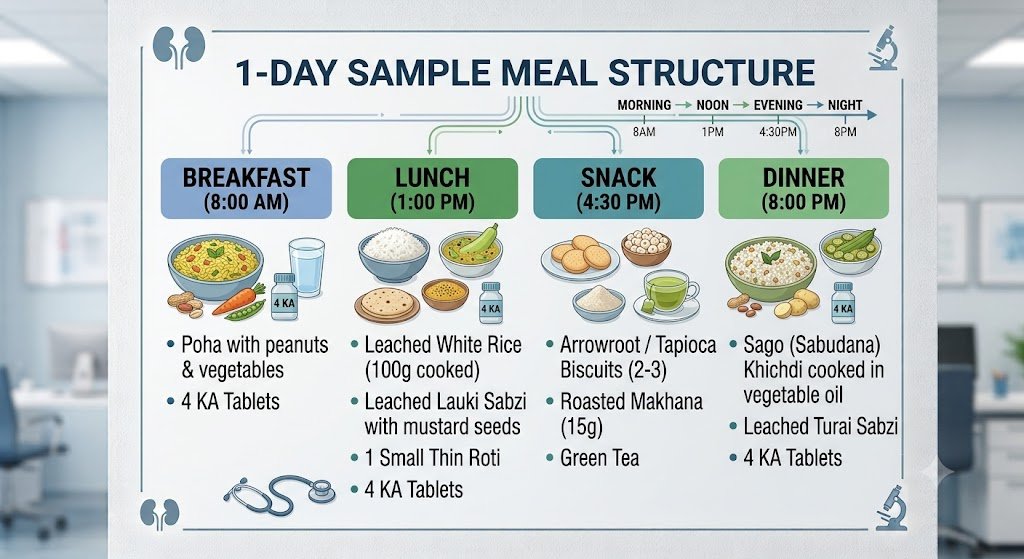
Breakfast: 4 tablets taken midway through the meal.
-
Lunch: 4 tablets taken midway through the meal.
-
Dinner: 4 tablets taken midway through the meal.
-
Sample 1-Day Indian Vegetarian VLPD Meal Plan (21 g Protein / 1,950 kcal)
To maintain high calorie density while adhering to a 21 g protein limit, non-protein energy sources (healthy fats, refined starches, low-protein specialty grains) are incorporated alongside leached vegetables.
7. Comparative Renal Diets & Supplemental Interactions
Nutritional & Metabolic Comparison across CKD Diet Paradigms
Nutritional Parameter |
Standard Indian Diet (Unrestricted) |
Conventional LPD (0.6 g/kg) |
Vegetarian VLPD (0.35 g/kg) + KA |
Total Daily Protein (60 kg) |
60 – 75 g/day |
33 – 36 g/day |
18 – 21 g/day |
Nitrogen Generation Rate |
High (> 10 g N/day) |
Moderate (5 –7 g N/day) |
Minimal (< 3 g N/day) |
Average BUN Level |
> 60 mg/dL |
40 – 55 mg/dL |
20 – 35 mg/dL |
Metabolic Acid Load (NEAP) |
High (> 50 mEq/day) |
Moderate (30 –40 mEq/day) |
Negative/Neutral (< 10 mEq/day) |
Phosphorus Control |
Poor (> 1,200 mg/day |
Moderate (800 –1,000 mg/day) |
Superior (< 500 mg/day) |
Risk of Hyperkalemia |
High (if un-leached) |
Moderate |
Controlled via protocol |
Risk of PEW / Sarcopenia |
Low |
Moderate (if adherence fails) |
Minimal (supported by KAs) |
Dialysis Delay Potential |
Baseline |
6– 12 months |
12 –36 months |
8. Clinical Monitoring & Red Flag Checklist
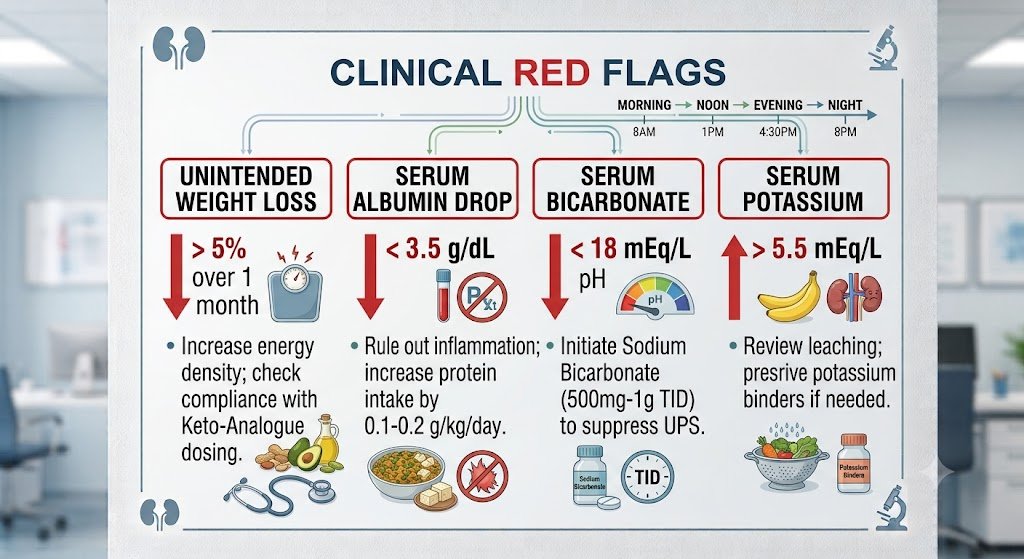
Implementing a Very Low-Protein Diet supplemented with keto-analogues requires ongoing biochemical and anthropometric oversight.
Red Flag Symptoms & Corrective Action Protocol
-
Unintended Weight Loss (> 5% over 1 month): Indicates inadequate energy intake. Increase non-protein calories using healthy oils, tapioca, sago, or specialized low-protein renal supplements
-
Falling Serum Albumin (< 3.5 g/dL): Suggests inadequate nitrogen intake or systemic inflammation. If hs-CRP is normal, increase dietary protein intake by 0.1 – 0.2 g/kg BW/day and reassess keto-analogue adherence
-
Severe Acidosis (HCO³ < 18 mEq/L): Acidosis triggers ubiquitin-proteasome activation, undermining the anabolic effects of keto-analogues. Prescribe oral sodium bicarbonate (500 mg to 1,000 mg two to three times daily) to raise serum bicarbonate to > 22 mEq/L.
-
Hyperkalemia (K²+ > 5.5 mEq/L): Re-evaluate vegetable leaching techniques, confirm avoidance of high-potassium fruit juices/dry fruits, and consider non-absorbed potassium binders (e.g., Calcium Polystyrene Sulfonate or Patiromer) rather than lowering protein intake further.
For caregivers and Nutritionists – managing CKD Patients’ Nutritional requirements are not an easy job, specially for vegetarian diets. The above details and a sample plan may help effectively plan these requirements.
Please consider these only as an educational piece and not a midecal advice. Your Doctor is your best guide for all such decisions and recommendations.
References & Clinical Literature
-
Kuplewska-Gaździńska, A., et al. (2020). Low-Protein Diet Supplemented with Ketoacids in Chronic Kidney Disease: Protein-Energy Wasting and Renal Outcomes. Nutrients, 12(7), 2095.
-
Garneata, L., et al. (2016). Vegetarian Very Low-Protein Diet Supplemented with Ketoanalogues versus Low-Protein Diet in Advanced Chronic Kidney Disease: A Randomized Controlled Trial. Journal of the American Society of Nephrology (JASN), 27(7), 2164-2176.
-
Ikizler, T. A., et al. (2020). KDOQI Clinical Practice Guideline for Nutrition in CKD: 2020 Update. American Journal of Kidney Diseases (AJKD), 76(3 Suppl 1), S1-S107.
-
Chauveau, P., et al. (2013). Vegetarian diets for kidney disease patients: From tradition to modern dietary recommendations. Journal of Renal Nutrition, 23(3), 212-219.
-
Piccoli, G. B., et al. (2015). Vegetarian diets in chronic kidney disease: A systematic review and meta-analysis. BMC Nephrology, 16, 31.
-
Bellizzi, V., et al. (2019). Protective effects of very low-protein diet supplemented with ketoacids in non-dialysis advanced chronic kidney disease. Kidney International Reports, 4(3), 433-443.
-
Shah, B. V., et al. (2017). Indian guidelines for nutrition in chronic kidney disease. Indian Journal of Nephrology, 27(Suppl 1), S1-S30.
-
Fouque, D., & Aparicio, M. (2007). Eleven reasons to control protein intake in chronic kidney disease patients. Nature Clinical Practice Nephrology, 3(7), 383-392.
-
Aparicio, M., et al. (2009). Ketoacid diets in chronic kidney disease: Alternative to or supplement to dialytic therapy? Blood Purification, 27(1), 125-133.
-
Mitch, W. E., & Goldberg, A. L. (1996). Mechanisms of muscle wasting — The role of the ubiquitin-proteasome system. New England Journal of Medicine, 335(25), 1897-1905.