


Increasing numbers of pre-diabetics and diabetics in India have led to a flood of “Sugar Free” claims on a wide variety of daily use food products. An eponymous brand built very smartly with deceptively using exact same words – Sugar Free, has come to dominate and command very strong market leadership.
New age brands and smart start ups play on the term – free from added sugars but then include one or few of sugar replacements to maintain sweet / addictive taste of their products.
This public health movement to reduce free sugar intake has driven a multi-billion-dollar market for ultra-processed “sugar-free” foods. While marketed as healthier alternatives for weight management and glycemic control, re-formulating processed foods to strip out sucrose introduces significant biochemical and metabolic issues with the use of these “supposedly healthier Sugar Free replacements”. And You are left wondering – plain table suagr was way better option than these fancy “Sugar Free Replacement Products”.
Introduction
Sucrose performs crucial structural and chemical functions in food processing beyond providing sweetness: bulk, texture, moisture retention (hygroscopicity), Maillard browning, and preservation.
Replacing this sugar thus requires a complex matrix of alternative compounds—bulking agents, non-nutritive sweeteners (NNS), polyols, and added fats just to have safe mouthfeel as with sucrose.
This review analyzes the physiological effects on human body, metabolic mechanics and cardiovascular profiles of common sugar replacements used in ultra-processed “sugar-free” products.
1. The Bulking Paradox: Maltodextrin and the Regulatory Loophole
When sugar is removed from ultra-processed baked goods or snacks, volume and texture disappear. Manufacturers frequently use maltodextrin to reconstruct the missing food matrix. Lets compare the Glycemic Index of this replacement, Maltodextrin with Sucrose and get our 1st Shock of these replacement products:
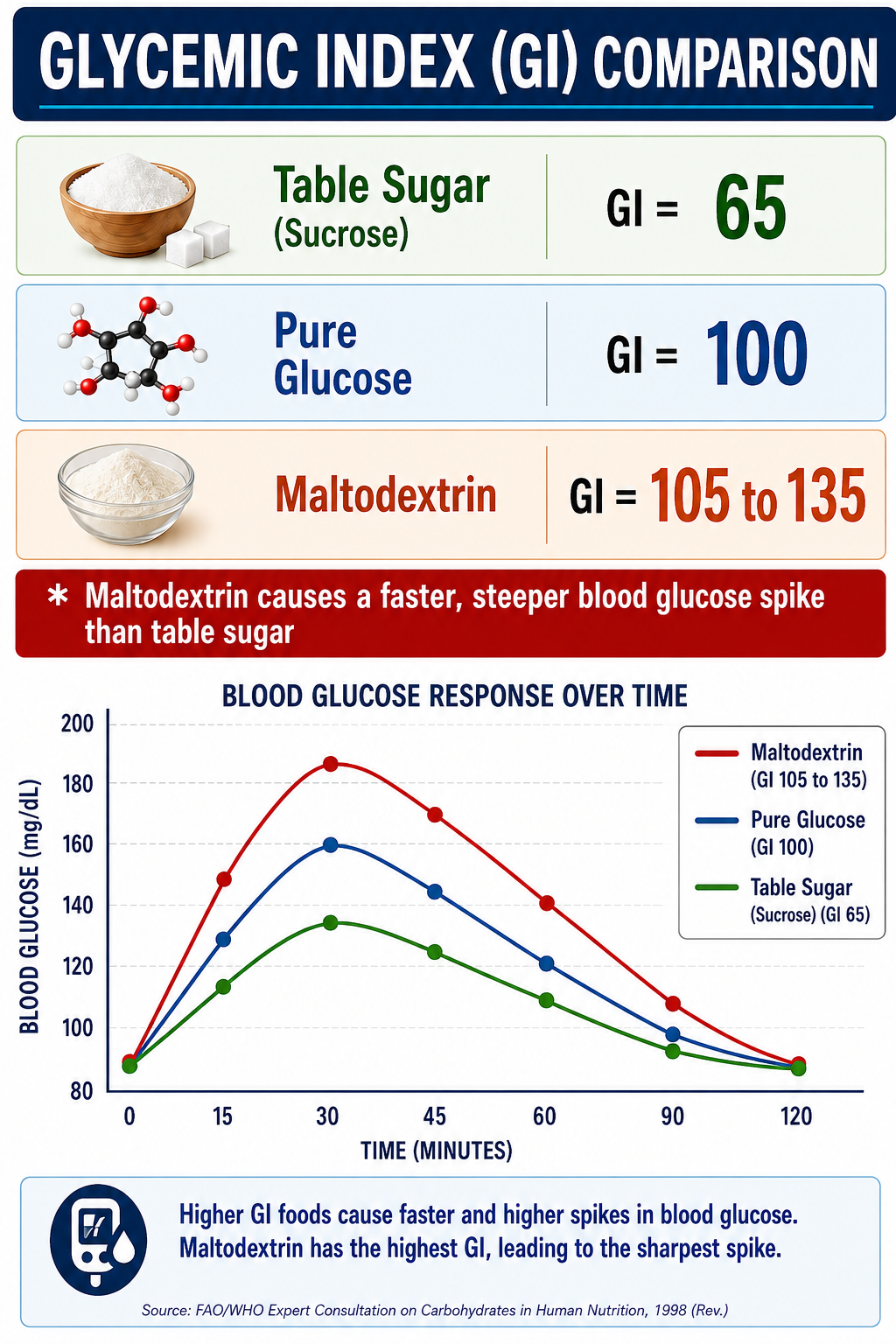
Glycomeic Index comparison and our body’s Blood Glucose Response time demonstrate that the table sugar replacement product, Maltodextrin, may do more harm than table sugar, so why even replace.
A. Biochemical Structure of Maltodextrin and Regulatory Definitions
Maltodextrin is a polysaccharide produced from starch (usually corn, wheat, or tapioca) via partial hydrolysis. It consists of D-glucose units linked by chains of variable length, joined by alpha-1-4 glycosidic bonds.
-
The Regulatory Loophole: Regulatory bodies like the US FDA define “sugars” as mono- and disaccharides (such as glucose, fructose, and sucrose). And Because maltodextrin consists of medium-length glucose polymers (Dextrose Equivalent between 3 and 20), it is legally classified as a complex carbohydrate. Food Products using Maltodextrin can legally maintain a “0g Sugar” claim on nutrition labels for a higher glycemic index product than the much veneered table sugar that it replaces. Maltodextrin industry is now so well entrenched that changing this definition may be an uphill task.
B. Glycemic Impact and Metabolic Consequences
-
Rapid Enzymatic Hydrolysis: Unlike structural complex carbohydrates (like starch bound in fiber), the alpha – 1 – 4 bonds in maltodextrin are instantly cleaved by salivary and pancreatic alpha-amylase, followed by brush-border glucosidases in the small intestine
-
Higher Glycemic Index than Sucrose: Pure sucrose has a Glycemic Index (GI) of ~65 because it is a disaccharide of 50% glucose and 50% fructose (fructose must undergo hepatic conversion before impacting blood glucose). Maltodextrin yields 100% free glucose instantly, resulting in a GI ranging between 105 and 135—significantly higher than pure table sugar that it is supposed to replace
-
Insulin Spikes & Postprandial Dysregulation: The steep glucose influx triggers rapid pancreatic beta-cell secretion of insulin. This acute hyperinsulinemia promotes rapid cellular glucose uptake, leading to reactive hypoglycemia, accelerated lipogenesis (fat storage), and eventual insulin resistance. Good Luck with your Sugar Free Products
2. Sugar Alcohols (Polyols): Gastrointestinal Distress and Cardiovascular Warnings
Corporate do realize internally the challenges with Maltodextrin and hence the search of “supposedly better alternatives” led to yet another class of Sugar Free Products, collectively known as Polyols (e.g., erythritol, maltitol, sorbitol, xylitol).
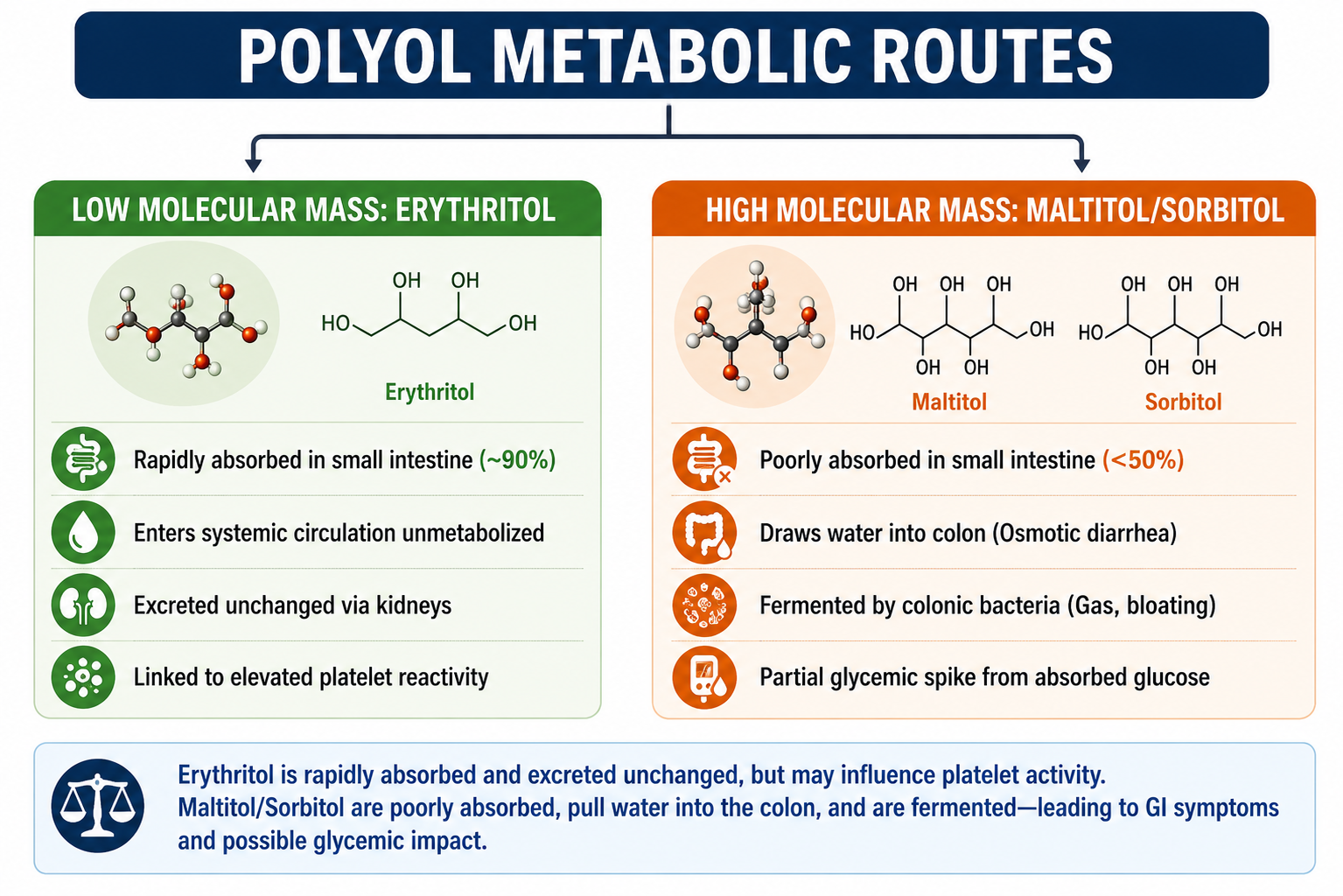
These are hydrogenated carbohydrates used to match the bulk and mouthfeel of sugar. However, their metabolic routes present equally significant physiological challenges.
A. Maltitol, Sorbitol, and Gastrointestinal Intolerance
Although these Polyol “Sugar Free” products have relatively lower Glycemic Indexes but these products have their own whole host of issues.
High-molecular-mass sugar alcohols like maltitol (GI ~35) and sorbitol (GI ~9) are incompletely absorbed in the human small intestine due to slow passive diffusion along mucosal walls leading to following issues:
-
Osmotic Diarrhea: Unabsorbed polyols remain in the intestinal lumen, drawing water into the bowel via osmotic pressure.
-
Microbiome Fermentation: Upon reaching the colon, resident microbiota rapidly ferment these sugar alcohols, generating short-chain fatty acids alongside large volumes of gases. This causes severe abdominal cramping, excessive flatulence, and laxative effects, forcing regulatory warnings on products containing significant polyol dosages.
B. Erythritol and Thrombotic Risk
Erythritol is a four-carbon sugar alcohol absorbed efficiently in the small intestine (~90%) that passes unmetabolized into blood circulation before renal / kidney clearance.
-
Cardiovascular Event Associations: Epidemiological and clinical studies (Nature Medicine, 2023) identified strong links between high circulating plasma erythritol levels and increased risk of Major Adverse Cardiovascular Events (MACE), including myocardial infarction and stroke. Read this again to realize the dangers associated with Erythritol, supposedly a table sugar alternative
-
Mechanism of Action: Mechanistic studies demonstrate that elevated plasma erythritol lowers the threshold for agonist-induced platelet activation. Erythritol stimulates intracellular calcium mobilization in platelets, leading to enhanced platelet aggregation, rapid clot formation, and increased arterial thrombosis risk
3. Synthetic Non-Nutritive Sweeteners (NNS): Sucralose & Acesulfame Potassium
Corporate greed does’t give up – the known and reluctantly recognized dangers associated with Maltodextrin and Polyol Sugars led researchers to yet another class of table sugar replacement products in form of Synthetic Non-Nutritive Sweetners. Full marks to the person who coined this “marketing savvy term”.
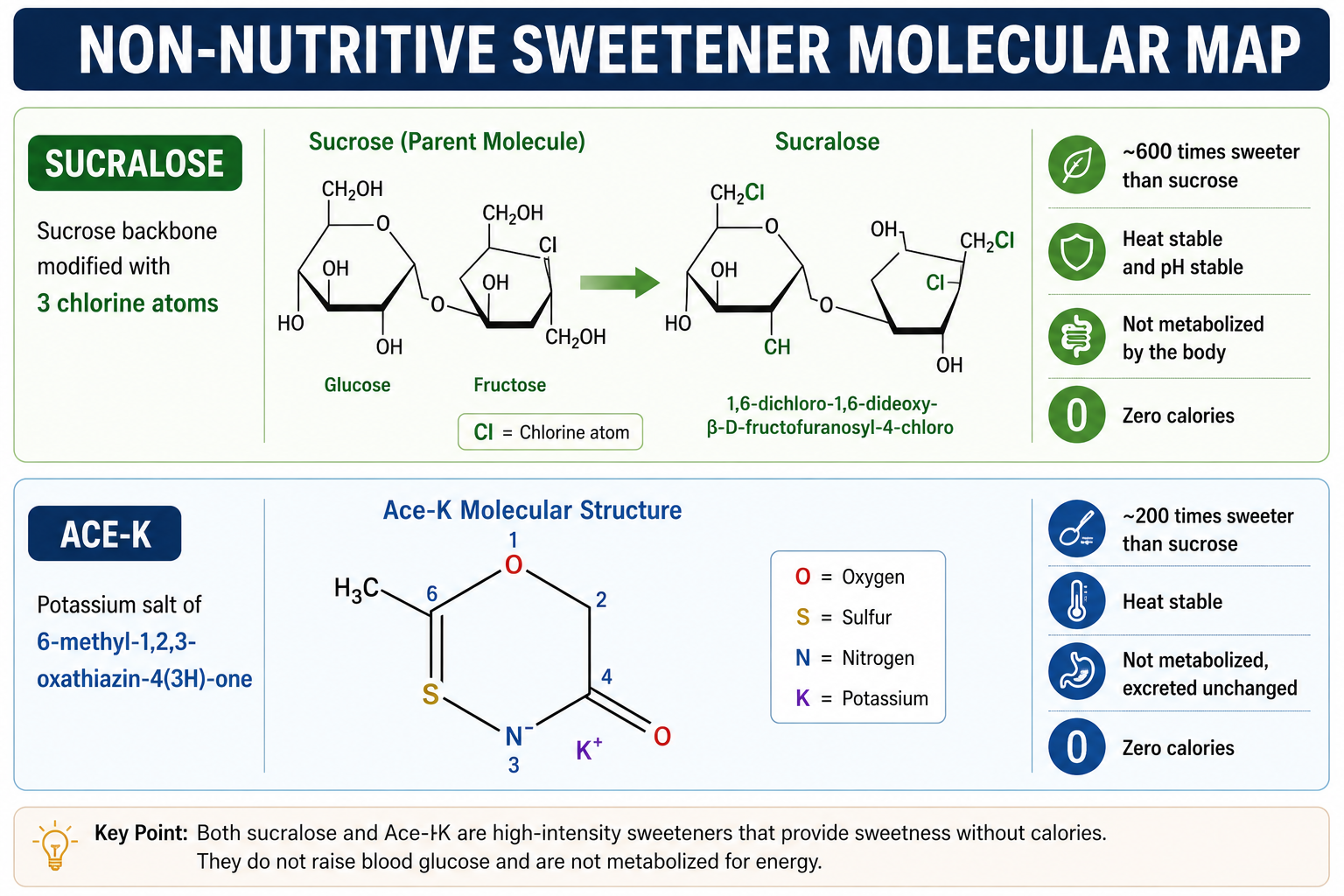
High-intensity artificial sweeteners provide hyper-intense sweetness (200x to 600x that of sucrose) without calories, but alter metabolic and gut biology through distinct mechanisms.

A. Sucralose
-
Chemical Structure: Sucralose is synthesized by chlorinating sucrose, selectively substituting three hydroxyl groups with chlorine atoms.
-
Gut Microbiome Alterations: While largely unabsorbed, sucralose alters the intestinal microenvironment. Animal and human trials indicate that chronic consumption of sucralose significantly reduces beneficial anaerobic gut microbiota (specifically Bifidobacteria and Lactobacilli species) while increasing pro-inflammatory microbial metabolites.
-
Thermal Degradation Hazards: When subjected to high temperatures during commercial baking, chlorinated compounds like sucralose break down into harmful organochlorine byproducts, including chloropropanols and chlorinated dioxins, both of which possess documented genotoxic and carcinogenic activity. Why should companies even be using these products.
B. Acesulfame Potassium (Ace-K)
-
Organoleptic Role: Often blended with sucralose to mask bitter aftertastes, Ace-K is a synthetic potassium salt that passes through the gut intact
-
Metabolic Interactions: Ace-K triggers sweet taste receptors located not only on the tongue, but throughout intestinal enteroendocrine cells. This activation promotes upregulation of the glucose transporter SGLT-1, increasing the absorption rate of any co-ingested carbohydrates. Wow and just wow – this may further increase diabetes risk
4. Neurological Dysregulation: The Cephalic Phase Insulin Response and Taste Habituation
The physiological risk of “sugar-free” alternatives extends beyond individual ingredients to fundamental neuro-metabolic feed-forward systems.
-
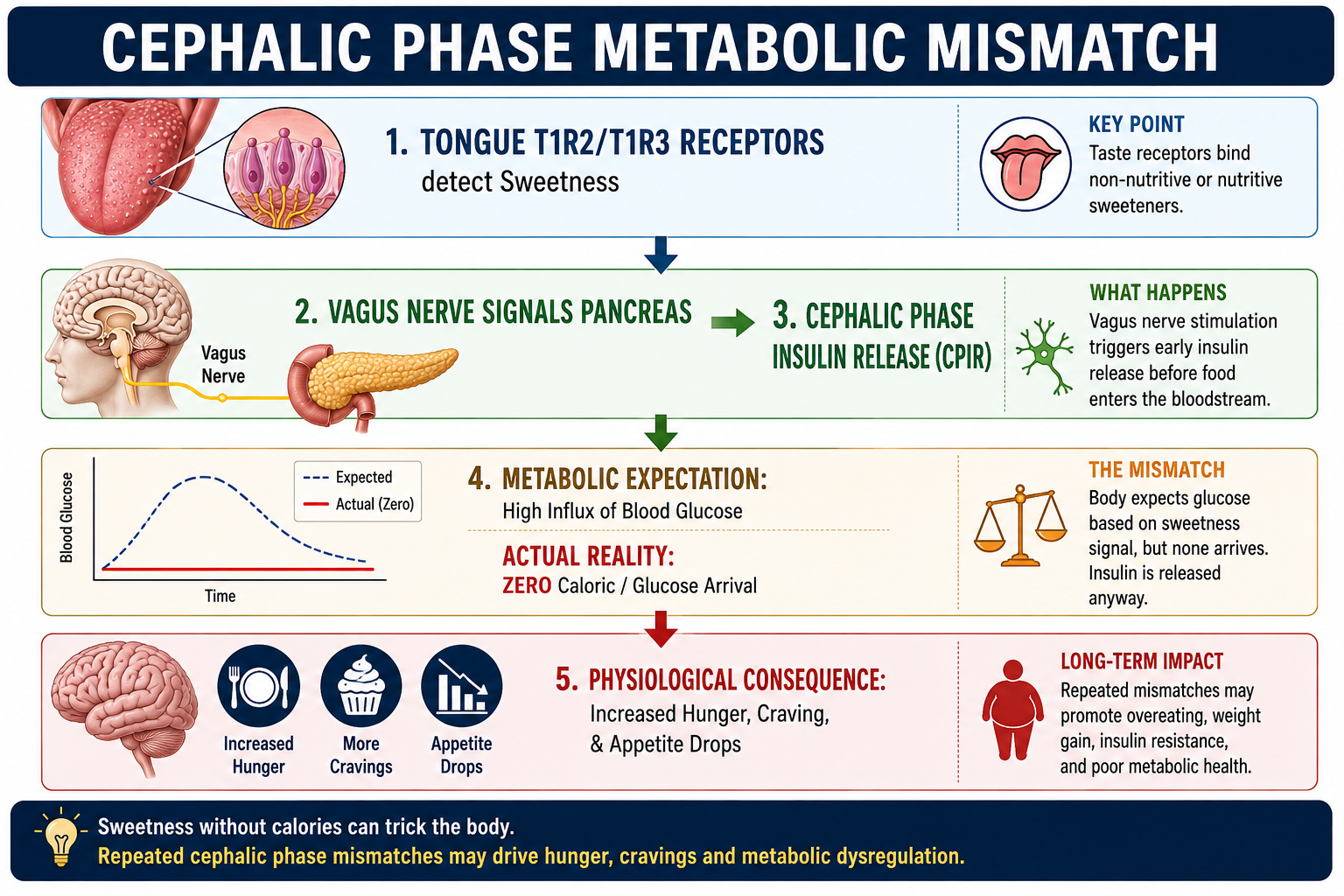
Cephalic Phase Insulin Release (CPIR): When taste buds encounter intense sweetness, sensory signals travel via the vagal nerve to prepare the digestive system for caloric influx. The pancreas releases a baseline amount of insulin (cephalic phase response). When zero actual glucose arrives, this uncoupled circulating insulin drops blood glucose, triggering compensatory appetite signals and intense cravings for real energy-dense carbohydrates.
-
Reward Circuit Desensitization: Artificial sweeteners interact with sweet receptors at thousands of times the intensity of natural whole foods (e.g., fruit). Chronic exposure desensitizes central dopamine reward pathways (nucleus accumbens). This alters sensory expectations, making naturally sweet whole foods unpalatable while perpetuating cravings for hyper-palatable, highly processed foods.
5. Structural Substitutions: Added Fats and Sodium
To compensate for lost flavor, mouthfeel, and shelf stability when sugar is removed, manufacturers adjust other structural ingredients in the formulation.
-
Lipid Substitution for Mouthfeel: Without sugar’s binding properties, products dry out quickly. Formulations frequently increase fat content—often utilizing cheap, highly processed palm oil or hydrogenated vegetable oils high in saturated fats. This inflates total energy density while introducing oxidized lipid species.
-
Sodium Elevation for Flavor Balance: Removing sugar shifts the flavor balance toward bitter or metallic tones (from sweeteners like Ace-K). To mask this imbalance, manufacturers increase sodium levels, aggravating daily sodium intake risks for hypertensive populations.
Comparative Evidence Matrix
Ingredient |
Primary Function |
Glycemic Index (GI) |
Key Physiological / Clinical Risks |
Sucrose (Table Sugar) |
Sweetness, Bulk, Texture, Maillard Browning |
65 |
Dental caries, hepatic steatosis, FATTY LIVER, metabolic syndrome (when consumed in excess) |
Maltodextrin |
Bulking Agent, Texturizer |
105 – 135 |
Rapid glucose/insulin spikes; disrupts gut mucosal layer; worsens metabolic health |
Erythritol |
Bulking Sweetener |
0 |
Clinical links to elevated platelet aggregation, thrombosis, and heightened risk of MACE |
Maltitol |
Sweetener & Bulk |
35 |
Osmotic diarrhea, severe abdominal bloating, colonic gas production |
Sucralose |
High-Intensity Sweetener |
0 |
Disruption of gut microbiome; risk of thermal degradation into chloropropanols |
Acesulfame K |
High-Intensity Sweetener |
0 |
Upregulates SGLT-1 intestinal glucose transport; desensitizes sweet-taste receptors |
Conclusion
The claim that “sugar-free” reformulations offer a healthier profile is frequently undermined by the metabolic costs of their replacement ingredients:
-
Maltodextrin exploits regulatory loopholes to display “0g Sugar” while driving glucose and insulin spikes that exceed those of table sugar.
-
Sugar alcohols carry documented risks of osmotic gastrointestinal distress (maltitol) and clinical links to hyper-coagulation and cardiovascular events (erythritol)
-
Synthetic high-intensity sweeteners disrupt gut microbiome homeostasis and uncouple taste signaling from nutrient delivery, driving appetite dysregulation
-
Structural adjustments offset lost sugar by increasing saturated fats and sodium
Removing sucrose from ultra-processed formulations rarely creates a biologically neutral or healthier food. Instead, it exchanges a well-understood simple carbohydrate for a complex mixture of bulking agents, intense sweeteners, and additive fats that introduce distinct metabolic, gastrointestinal, and cardiovascular risks.
Should you take such additional risks with these sugar free replacements is left to your good judgement. Pls check the following references for more details on this topic. Stay Healthy!
Select References
1. Maltodextrin, Glycemic Index, & Gut Mucosal Barrier
-
Maltodextrin Glycemic Impact:
-
Maltodextrin & Gut Bacteria/Mucosa:
-
Maltodextrin Consumption Impairs the Intestinal Mucus Barrier and Accelerates Colitis Through Direct Actions on the Epithelium
-
Laudisi, F., et al. “The food additive maltodextrin promotes endoplasmic reticulum stress–driven intestinal inflammation.” Cellular and Molecular Gastroenterology and Hepatology, 2021
-
2. Polyols: Erythritol, Thrombotic Risk, & Gastrointestinal Distress
-
Erythritol & Cardiovascular / Thrombotic Risk:
-
Witkowski, M., Nemet, I., Alamri, H., et al. “The artificial sweetener erythritol and cardiovascular event risk.” Nature Medicine, 29, 710–718, 2023. (Landmark clinical cohort and mechanistic study proving erythritol increases platelet reactivity and arterial thrombosis risk)
-
-
Polyol Malabsorption & Gastrointestinal Osmotic Distress:
-
Mäkinen, K. K. “Gastrointestinal Disturbances Associated with Consumption of Sugar Alcohols with Special Reference to Lactitol and Xylitol: A Review.” International Journal of Dentistry, 2016
-
Lzy, R., et al. “FODMAPs, Polyols, and Irritable Bowel Syndrome: Mechanisms of Osmotic Fluid Shifts and Bacterial Fermentation.” Gastroenterology, 2015
-
3. Non-Nutritive Sweeteners: Microbiome, Thermal Breakdown, & SGLT-1
-
Sucralose & Gut Microbiome Alterations:
-
Suez, J., Korem, T., Zeevi, D., et al. “Artificial sweeteners induce glucose intolerance by altering the gut microbiota.” Nature, 514, 181–186, 2014
-
Suez, J., et al. “Personalized microbiome-driven effects of non-nutritive sweeteners on human glucose tolerance.” Cell, 185(18), 3307–3328, 2022
-
-
Thermal Degradation of Chlorinated Sweeteners (Sucralose):
-
De Oliveira, D. N., et al. “Thermal degradation of sucralose: a combination of NMR, MS and computational chemistry approach.” Scientific Reports, 5, 8098, 2015. (Demonstrates formation of toxic chloropropanols like 3-MCPD when sucralose is heated)
-
BfR (German Federal Institute for Risk Assessment). “Toxicological assessment of thermal degradation products of sucralose in baked foods.” BfR Opinion No 009/2019
-
-
Acesulfame K & SGLT-1 Glucose Transporter Upregulation:
-
Zheng, Y., et al. “Sweet taste receptor activation by artificial sweeteners enhances intestinal glucose absorption via SGLT-1 and GLUT2 translocation.” American Journal of Physiology-Gastrointestinal and Liver Physiology, 2012
-
4. Neurobiology: Cephalic Phase Insulin Release & Reward Desensitization
-
Cephalic Phase Insulin Response (CPIR):
-
Just, T., et al. “Cephalic phase insulin release in healthy humans: absolute quantification and relation to postprandial glucose dynamics.” Physiology & Behavior, 95(4), 622–630, 2008
-
Smeets, P. A., et al. “Functional MRI study of the effects of sweet taste and caloric content on human brain reward circuitry.” American Journal of Clinical Nutrition, 93(6), 1321–1328, 2011
-
-
Sweet Taste Receptor Desensitization & Appetite:
-
Yang, Q. “Gain weight by ‘going diet?’ Artificial sweeteners and the neurobiology of sugar cravings.” Yale Journal of Biology and Medicine, 83(2), 101–108, 2010
-
5. World Health Organization (WHO) Global Guidelines
-
World Health Organization (WHO). “Use of non-sugar sweeteners: WHO guideline.” Geneva: World Health Organization, 2023. (Concluded that non-sugar sweeteners do not confer long-term benefit in reducing body fat and carry potential undesirable effects such as increased risk of type 2 diabetes and cardiovascular diseases)