



This topic is very close to our heart -where almost everyone you encounter anytime, is glued to screens, largely small mobile screens. Apart from drooping postures and strains on neck, excessive digital screen exposures have many multiple detrimental effects on human health. This write up, inspired by McGraw Hill’s Students’ Survey 2026, covers most aspects along with nutritional support solutions to help you minimize effects of digital screens. Pls share widely to help your friends and loved ones.
Excessive digital screen exposure has emerged as a central challenge in modern education and public health. Data from McGraw Hill’s 2026 Global Education Insights Report reveals that educators worldwide rank screen time as the primary barrier to student academic success, citing significant drops in cognitive focus and rising mental health concerns.
While educational systems navigate the integration of artificial intelligence and digital tools, the biological cost of chronic screen exposure—manifesting as digital eye strain, circadian disruption, dopaminergic fatigue, and elevated stress—requires critical attention.
This article synthesizes the pedagogical findings of the 2026 report with pathophysiological literature on screen-induced health detriments and evaluates the therapeutic potential of targeted micronutrients (carotenoids, magnesium, zinc, Vitamin D, B-complex vitamins, and antioxidants) in mitigating these physiological stressors.
1. Introduction & Epidemiological Context
The rapid digitization of learning environments has transformed pedagogical delivery while simultaneously introducing unintended neurodevelopmental and physiological burdens. According to McGraw Hill’s 2026 Global Education Insights Report—which surveyed over 1,300 K-12 and higher education professionals across 19 countries—screen time is now identified as the single greatest obstacle to student success worldwide.
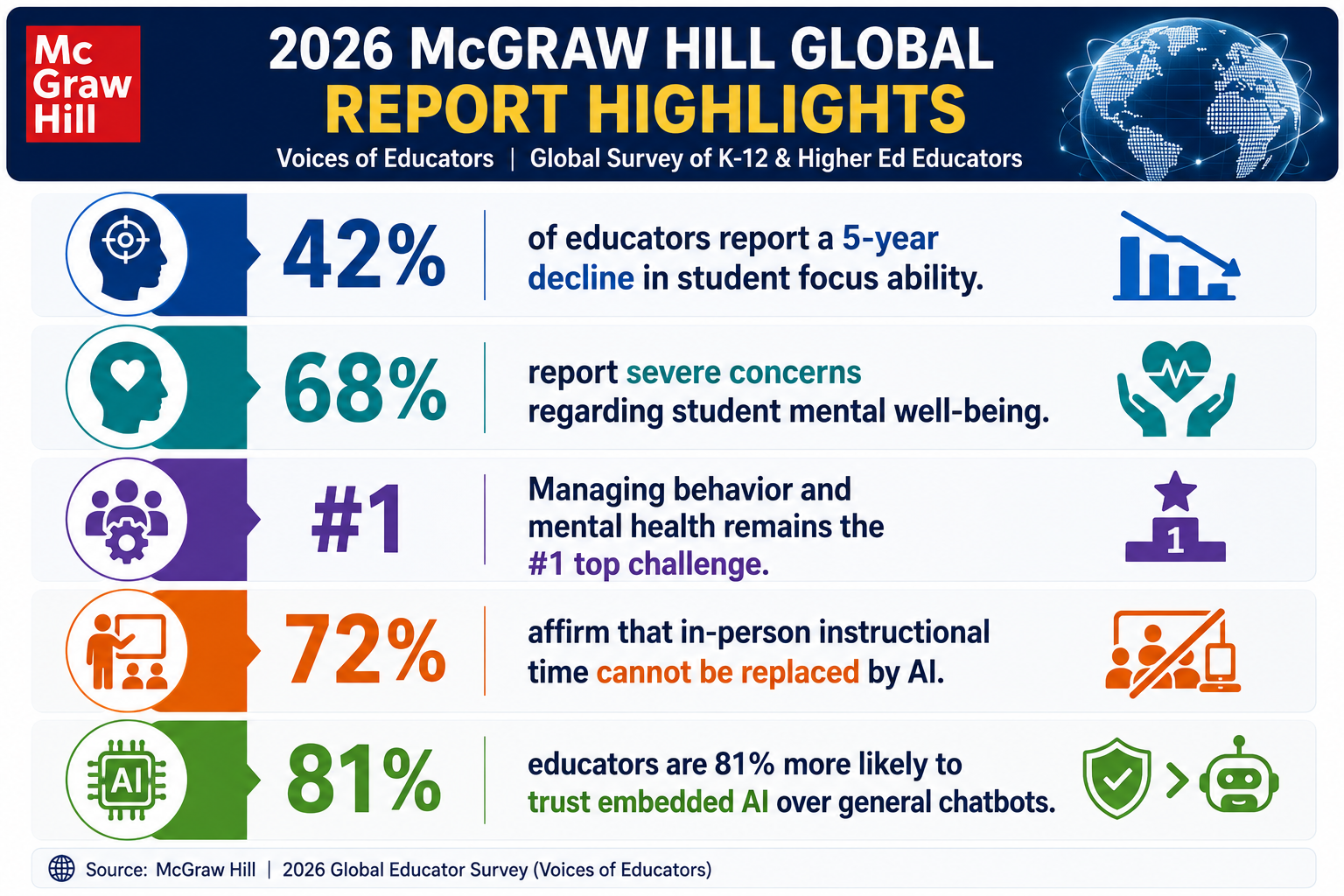
The report underscores a critical paradox: while artificial intelligence and digital platforms offer operational efficiencies, the physical and psychological toll of screen reliance impairs the very cognitive infrastructure—focus, emotional regulation, and sustained attention—necessary for deep learning. As educators advocate for preserving human-centric, in-person instruction, biomedical research must address the systemic physiological consequences of chronic digital exposure.

2. Health Detriments of Excessive Screen Time
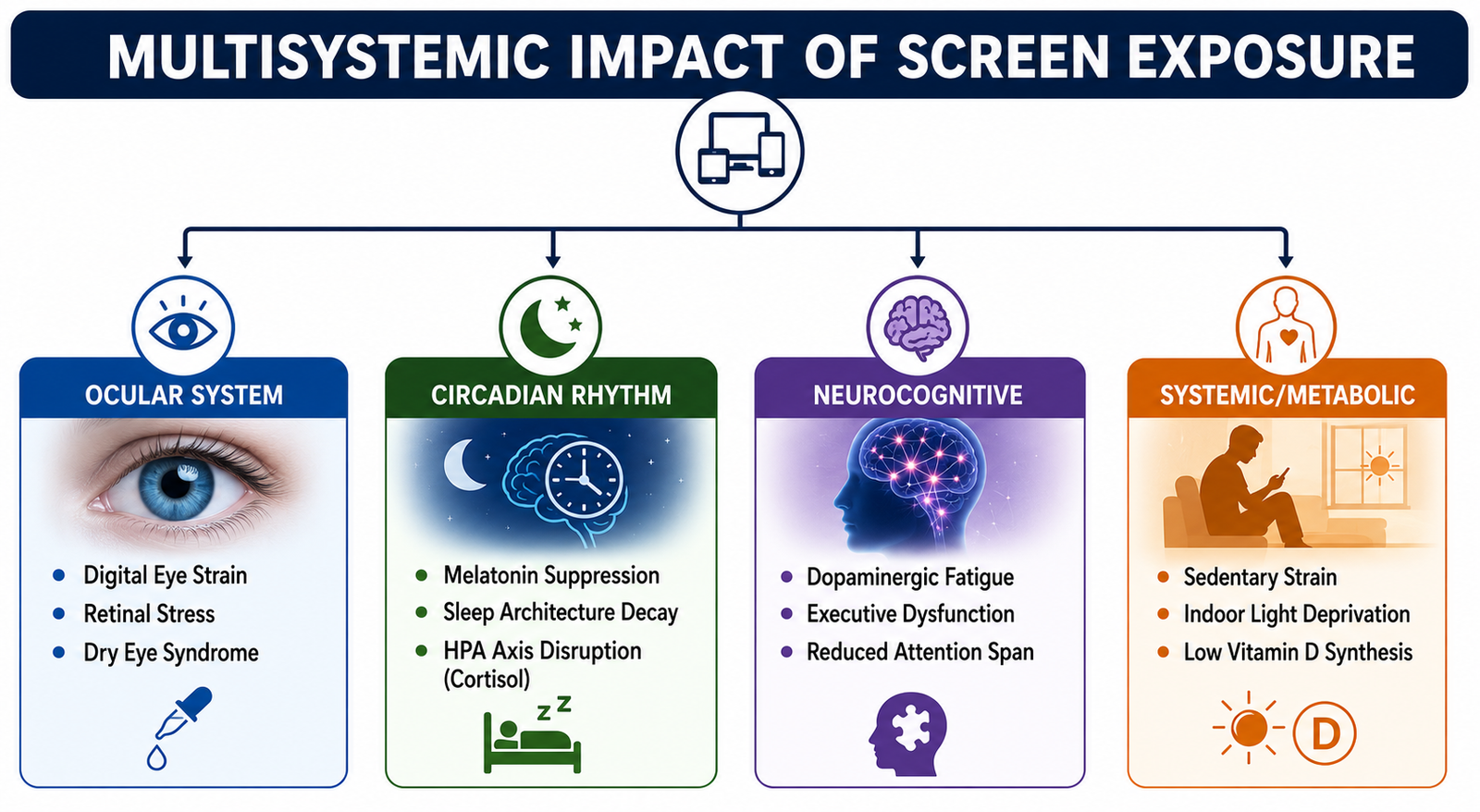
The physiological and neurobiological consequences of prolonged screen time extend across multiple organ systems:
A. Visual & Retinal Stress (Computer Vision Syndrome)
High-Energy Visible (HEV) blue light emitted by digital displays penetrates the cornea and lens, reaching the retina directly. Extended exposure generates reactive oxygen species (ROS) in retinal pigment epithelial cells, leading to ocular fatigue, blurred vision, dry eye syndrome from reduced blink rates, and micro-inflammatory stress.
B. Neurocognitive & Attentional Degradation
Continuous exposure to rapidly shifting digital media and high-frequency stimulus cycles alters neural reward pathways. The constant firing of dopaminergic neurons without sustained effort leads to receptor downregulation, contributing to the 42% decline in extended focus noted by educators.
C. Circadian Disruption & Mental Health Deterioration
Blue light at wavelengths between 460 nm and 480 nm inhibits the pineal gland’s secretion of melatonin by stimulating intrinsically photosensitive retinal ganglion cells (ipRGCs). This delays sleep onset and degrades slow-wave sleep. Chronic sleep fragmentation disrupts hypothalamic-pituitary-adrenal (HPA) axis regulation, raising basal cortisol levels and contributing directly to the 68% rate of mental well-being concerns (e.g., anxiety, emotional dysregulation) reported in the 2026 data.
D. Sedentary Pathophysiology & Outdoor Deprivation
Prolonged screen-bound behavior reduces physical movement and outdoor daylight exposure, decreasing natural cutaneous synthesis of Vitamin D and impairing musculoskeletal and immune homeostasis.
3. Nutritional Interventions: Micronutrient Countermeasures
While behavioral limits and ergonomic interventions are necessary, targeted nutritional biochemistry offers a protective buffer against light-induced oxidative stress, neuroinflammation, and neurotransmitter exhaustion.
Nutrient Class |
Specific Micronutrient |
Key Mechanism of Action |
Clinical Relevance to Screen Strain |
Macular Carotenoids |
Lutein & Zeaxanthin |
Absorbs HEV blue light; increases Macular Pigment Optical Density (MPOD). |
Reduces digital eye strain, visual fatigue, and improves visual processing speed. |
Neuro-Minerals |
Magnesium |
NMDA receptor antagonist; regulates GABAergic pathways and stress response. |
Calms central nervous hyperexcitability, lowers anxiety, and improves sleep latency. |
Essential Trace Elements |
Zinc |
Modulates synaptic plasticity; acts as a cofactor for copper-zinc superoxide dismutase (Cu/Zn SOD). |
Protects retinal structures from oxidative damage and aids attentional focus. |
Steroid Hormones/Vitamins |
Vitamin D3 (25(OH)D) |
Modulates neurotrophic factors (NGF, BDNF) and serotonin synthesis; balances calcium homeostasis. |
Offsets indoor sunlight deprivation; supports mood stability and circadian alignment. |
Metabolic Coenzymes |
B-Complex (Vit B6, B9, B12) |
Cofactors in catecholamine and indolamine neurotransmitter synthesis (dopamine, serotonin, GABA). |
Supports cognitive endurance, mitigates brain fog, and counters mental fatigue. |
Antioxidants |
Vitamins C & E |
Scavenges free radicals in lipid membranes and aqueous ocular humors. |
Protects lipid-rich neural tissues and retinal cells from screen-induced oxidative stress. |
Detailed Biochemical Mechanisms
1. Lutein and Zeaxanthin
These xanthophyll carotenoids cross the blood-retinal and blood-brain barriers, selectively accumulating in the macula lutea and cerebral cortex. By acting as an internal blue-light filter, lutein and zeaxanthin (typically at a 5:1 ratio, e.g., 10 mg / 2 mg) reduce chromatic aberration and oxidative damage, directly alleviating eye fatigue and improving neural visual processing speed in young learners exposed to digital media.
2. Magnesium and Zinc Modulation
Overstimulation of visual and cognitive networks can deplete intracellular magnesium, leading to neuronal hyperexcitability via unchecked NMDA receptor activation. Supplementation with bioavailable magnesium (e.g., glycinate or L-threonate) enhances GABAergic activity, promoting emotional regulation and offsetting screen-induced restlessness. Zinc serves as an essential structural component in retinal health and acts as an enzyme cofactor neutralizing singlet oxygen molecules generated by display radiation.
3. Vitamin D3 and Circadian Homeostasis
Indoor confinement due to excessive screen use reduces solar ultraviolet B (UVB) exposure, leading to sub-optimal Vitamin D levels. Adequate Vitamin D receptor (VDR) activation in the brain is required for tryptophan hydroxylase-2 (TPH2) expression, which converts tryptophan to serotonin. Maintaining optimal serum 25(OH)D levels (>30ng/mL) helps offset screen-related mood volatility and seasonal/indoor affective distress.
4. Public Health Framework & Educational Application
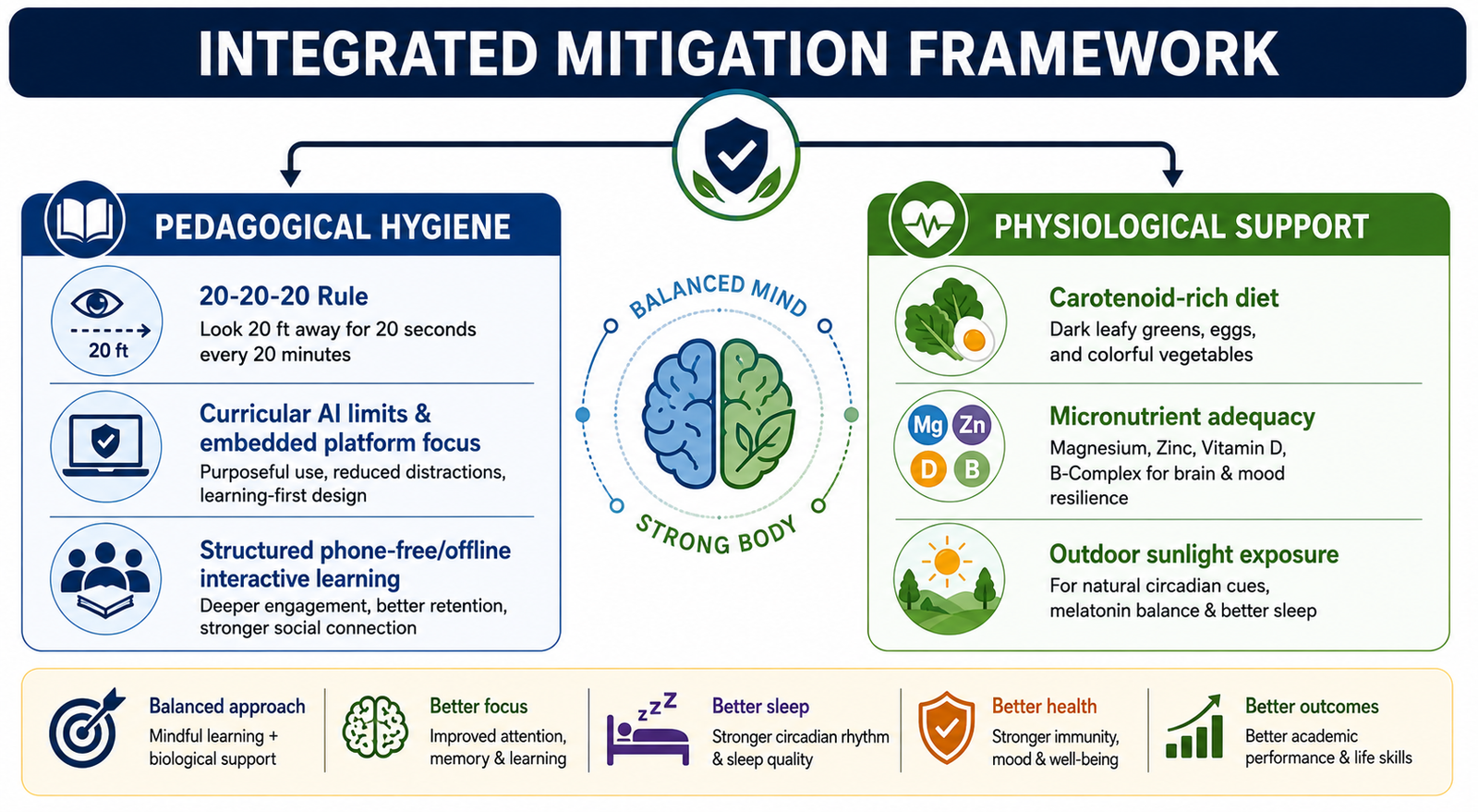
Integrating the insights from McGraw Hill’s 2026 report with nutritional science requires a dual-track approach:
-
Pedagogical Structural Guardrails: Educational institutions should favor embedded, purposeful edtech platforms over unregulated general chatbots, while maintaining daily, face-to-face interactive learning to preserve social-emotional intelligence.
-
Nutritional Ergonomics: School nutrition programs and adolescent health guidelines should incorporate targeted micronutrients—either through diet (spinach, kale, eggs, nuts, oily fish) or evidence-based supplementation—to build physiological resilience against high screen exposure.