


This is our Special Series dedicated to our Indian Daughters and Sisters who are either At Risk or have unfortunately been diagnosed with PCOS / PMOS. Understanding this disease / syndrome, we are deliberately calling it as disease, so as to drive home, the seriousness and critical importance of this syndrome for females of child bearing age. On one hand India is witnessing an unprecedented slowdown in TFR (Total Fertility Rate) while on the other hand, our youngs are struggling with the scourge of PCOS / PMOS.
Introduction
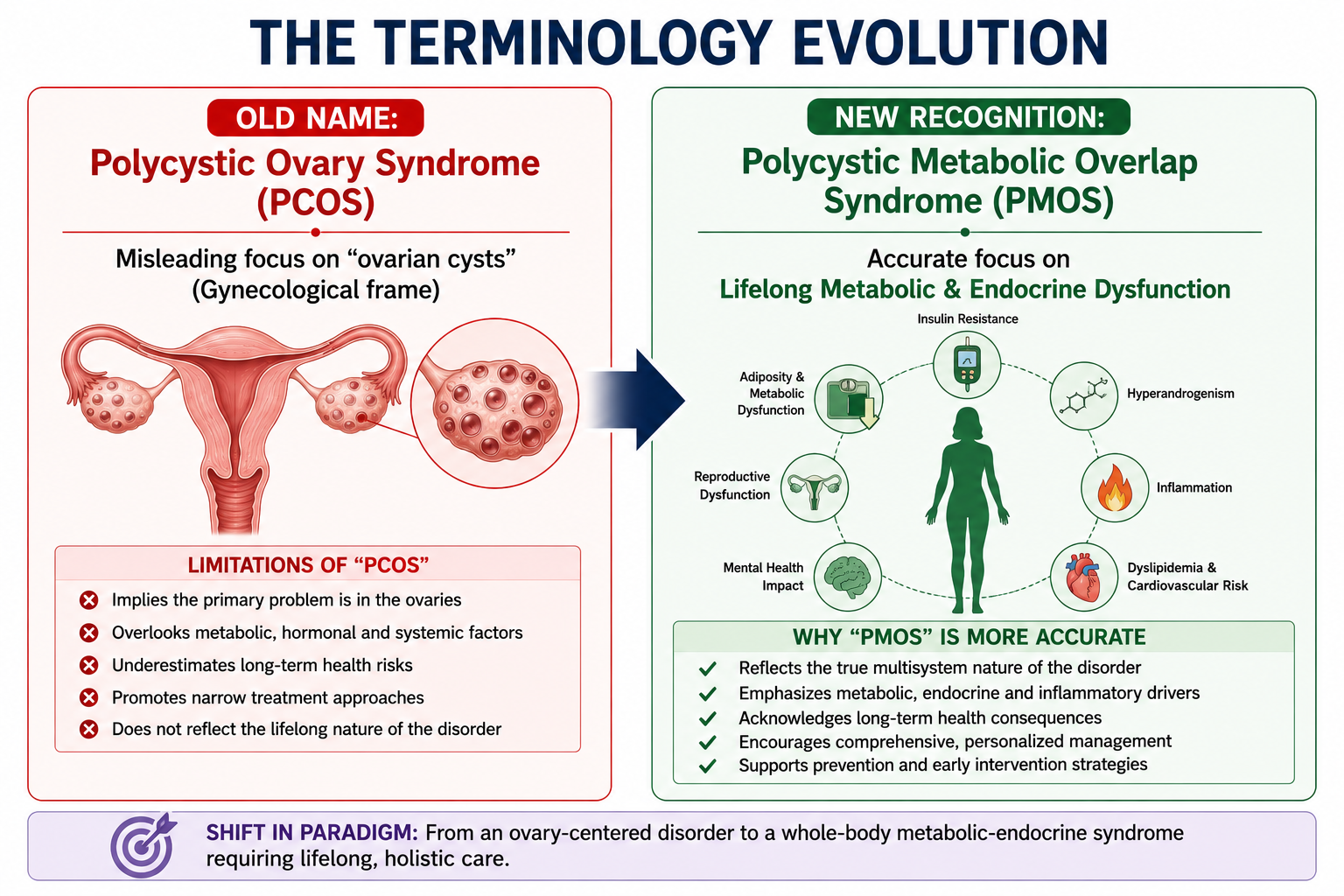
Few disorders illustrate the changing health landscape of India as dramatically as Polycystic Ovary Syndrome (PCOS) / (PMOS) Polyendocrine Metabolic Ovarian Syndrome, new and scientifically correct name for PCOS.
For decades, Polycystic Ovary Syndrome (PCOS) has been plagued by a fundamental diagnostic misnomer. The term “polycystic ovaries” suggests that the condition is primarily a gynecological disease centered on ovarian cysts. In reality, the visible fluid-filled structures on an ultrasound are not true cysts; they are simply arrested, underdeveloped antral follicles halted in growth due to hormonal dysregulation.
New Terminology: PMOS / MetS-PCOS
Leading global endocrinology societies and Indian medical bodies (including the Endocrine Society of India) increasingly advocate for reclassifying the condition as Polyendocrine Metabolic Ovarian Syndrome (PMOS) or Metabolic Reproductive Syndrome (MRS).
-
Why PMOS? Reclassifying as PMOS shifts clinical focus from purely reproductive management (e.g., prescribing birth control pills to induce a withdrawal bleed) to root-cause metabolic management (treating hyperinsulinemia, chronic low-grade inflammation, and pancreatic $\beta$-cell strain).
-
Cardiometabolic Trajectory: A woman with PMOS may never wish to become pregnant, but without metabolic intervention, she faces a 4- to 7-fold higher risk of Type 2 Diabetes Mellitus (T2DM), non-alcoholic fatty liver disease (NAFLD/MASLD), and cardiovascular events later in life.
PCOS / PMOS Prevalence in India
Once considered an uncommon reproductive disorder, PCOS / PMOS has now become one of the most prevalent endocrine and metabolic conditions affecting women of reproductive age. It is estimated that one in every five Indian women (20% of Indian Women of Reproductive Age) may meet diagnostic criteria for PCOS / PMOS, although prevalence varies depending on the diagnostic criteria used and the population studied.
PCOS / PMOS is far more than a condition causing irregular menstrual periods. It is a complex metabolic, hormonal and inflammatory disorder that can affect almost every organ system. Women with PCOS have a higher lifetime risk of infertility, type 2 diabetes, gestational diabetes, metabolic syndrome, non-alcoholic fatty liver disease (NAFLD), hypertension, dyslipidaemia, obstructive sleep apnoea, anxiety, depression and endometrial cancer.
No we are not joking by listing these so many potential conditions (well backed by evidences) which may, unfortunately develop, in women with PCOS/PMOS. Hence please read this again to get an additional sense of seriousness and urgency to tackle your or your loved one’s PCOS / PMOS.
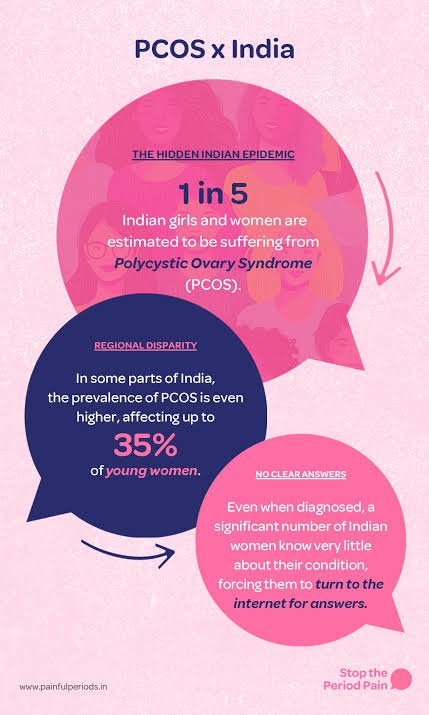
India is facing an unprecedented epidemic of PMOS/PCOS. Driven by rapid urbanization, sedentary shifts, high-glycemic modern Indian diets, and a strong genetic predisposition, the disease burden in India vastly exceeds Western averages. A quick look at the following image may help us all realize the gigantic proportions of the prevalence of PCOS/PMOS in India.
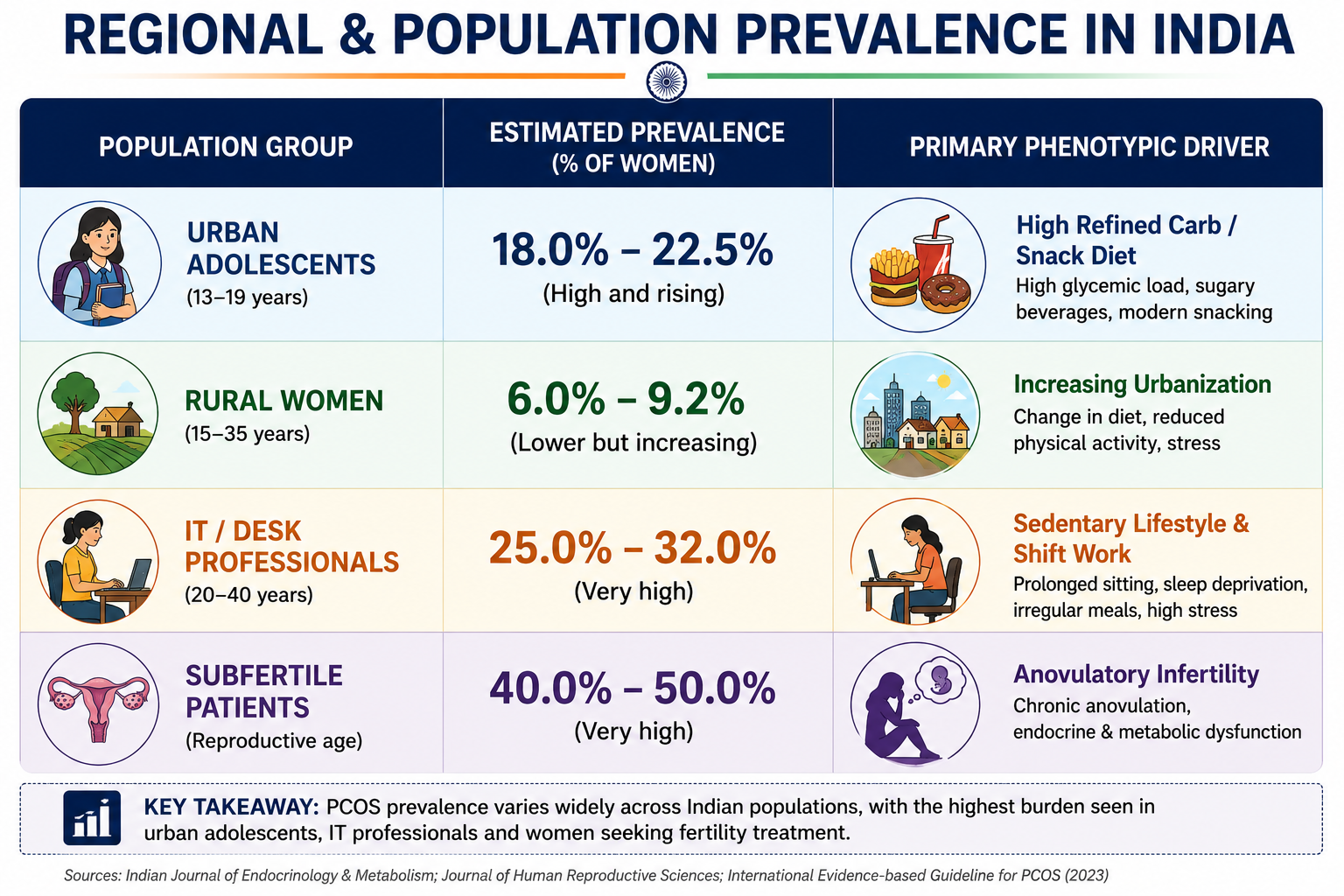
Key Epidemiological Factors in India
-
Under-diagnosis: Studies indicate that up to 65% of Indian women with PMOS remain undiagnosed until they seek treatment for subfertility or metabolic complications in their late 20s or 30s
-
Early Onset: Indian girls exhibit signs of insulin resistance and hyperandrogenism much earlier than their Western counterparts—frequently presenting during perimenarche (ages 12–15) with severe acanthosis nigricans and refractory acne
-
South Asian Transgenerational Epigenetics: Exposure to maternal malnutrition or gestational diabetes in utero induces epigenetic changes in South Asian fetuses, programming the pancreas for reduced insulin secretion and the liver for heightened gluconeogenesis (“Thrifty Phenotype Hypothesis”)
“Asian-Indian Phenotype”: Why Indian Women are Uniquely Vulnerable
PCOS / PMOS in Indian women is distinct from its presentation in Western populations. Indian women suffer from what clinical researchers term the “Asian-Indian Phenotype”:
-
High Abdominal Adiposity & Visceral Fat: Higher body fat percentage and waist-to-hip ratio at a lower Body Mass Index (BMI)
-
Severe Hyperinsulinemia: Up to 70–80% of Indian women with PCOS exhibit insulin resistance (IR) regardless of body weight (“Lean PCOS”)
-
Low Muscle Mass (Sarcopenic Obesity): Reduced skeletal muscle mass decreases the primary site for insulin-stimulated glucose uptake.
High Visceral Fat + Low Skeletal Muscle Mass = Severe Insulin Resistance at Normal BMI
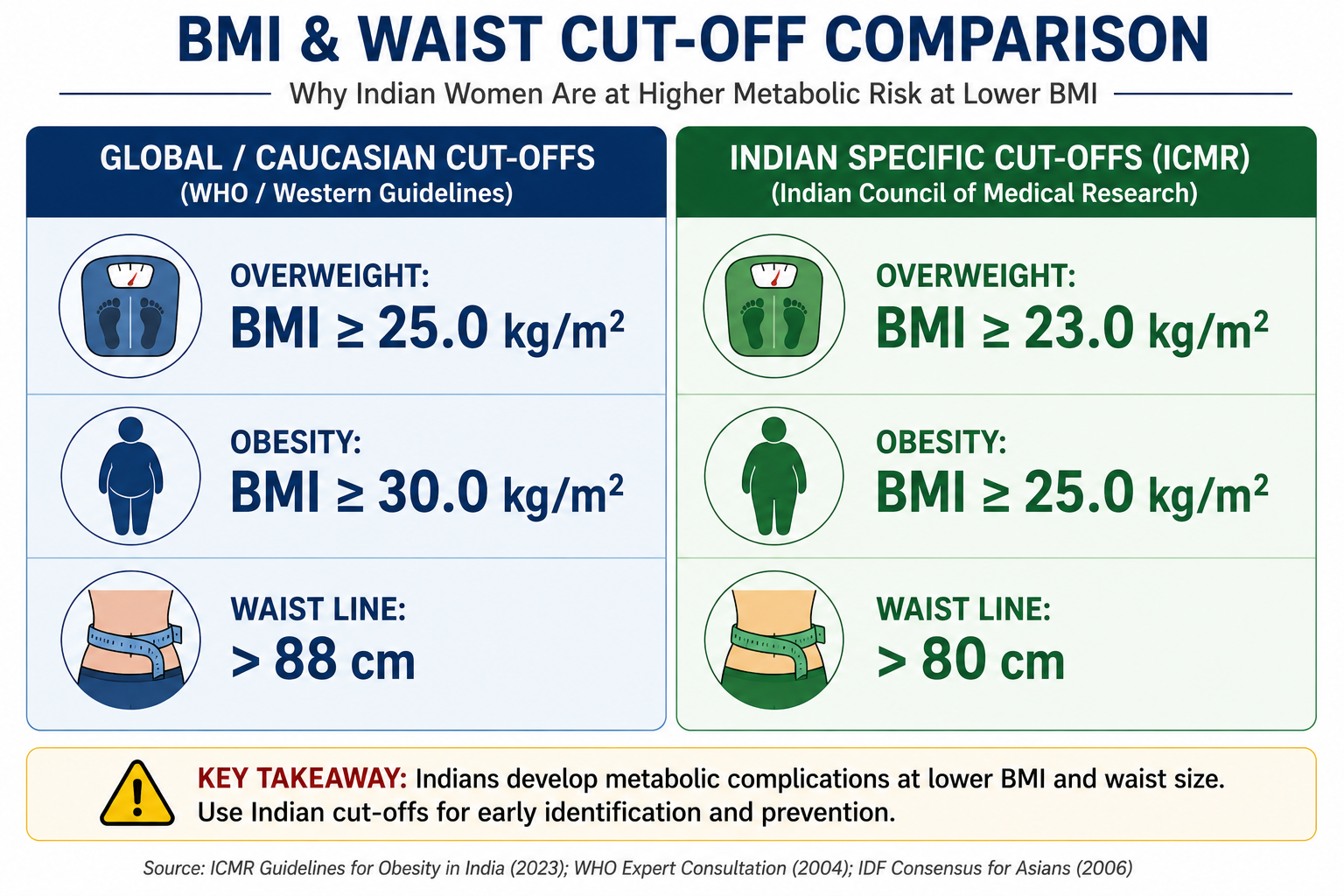
We must use Indian Cut-Offs for Diagnosis of PCOS / PMOS, as indicated below:
Indian Clinical Guidelines: Diagnostic Criteria & Phenotypes
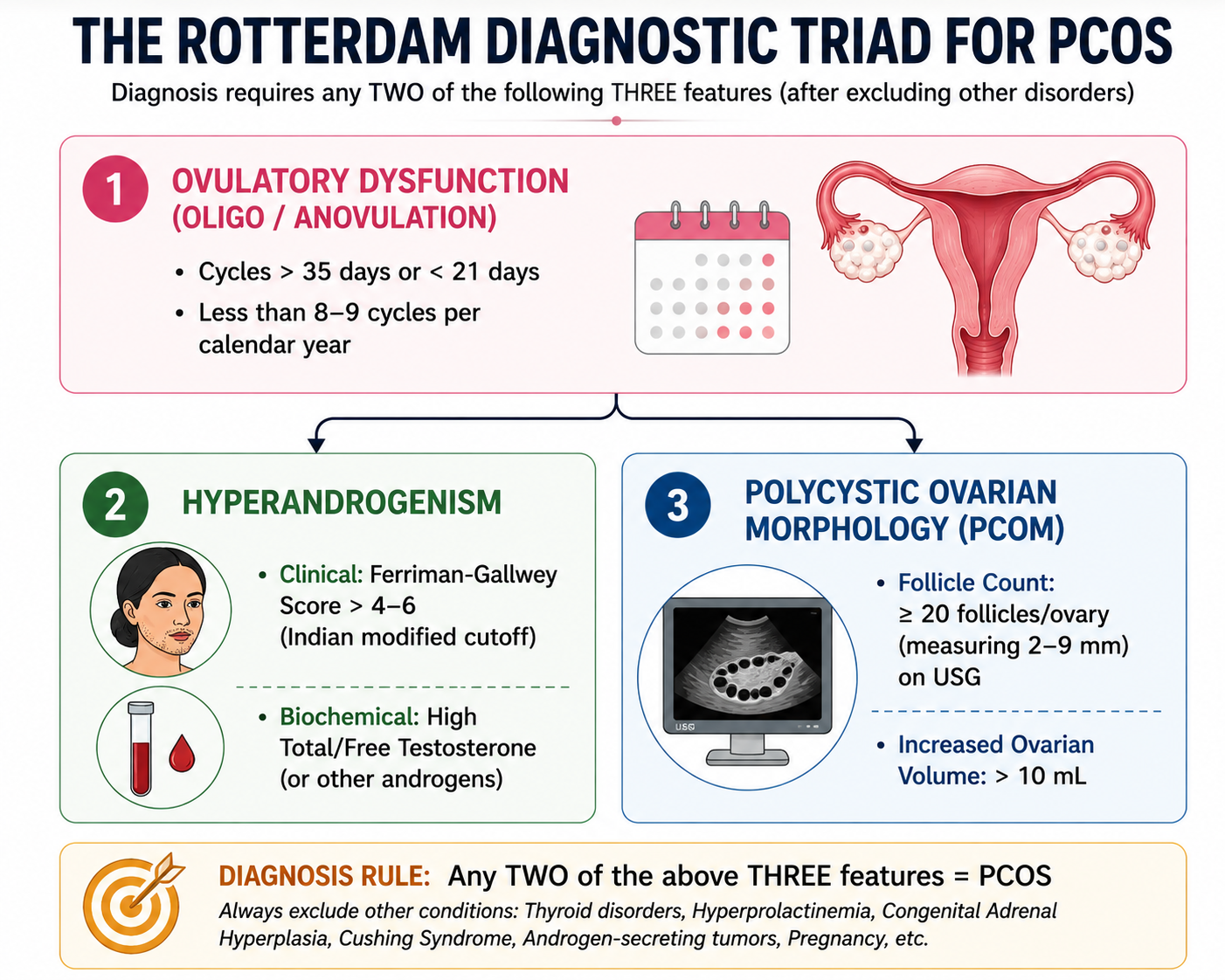
Diagnostic standards in India follow the 2023 International Evidence-based Guidelines for Assessment and Management of PCOS (endorsed by ICMR and ISAR), adapting the Rotterdam Criteria with South Asian nuances. The 3 Core Diagnostic Pillars (Must meet at least 2 of 3)
4 Main PCOS / PMOS Phenotypes in Indian Practice
Understanding which phenotype a patient has is vital for determining the proper treatment strategy:
-
Phenotype A (Classic / Severe): Hyperandrogenism + Anovulation + PCOM
Highest metabolic risk, severe insulin resistance, high incidence of metabolic syndrome.
-
Phenotype B (Hyperandrogenic Anovulatory): Hyperandrogenism + Anovulation (Normal Ultrasound)
Strong metabolic drive, high LH levels, pronounced hirsuitism and central adiposity.
-
Phenotype C (Ovulatory PMOS): Hyperandrogenism + PCOM (Regular Menstruation)
Often missed; presents with acne, hair loss, and mild insulin resistance despite regular monthly bleeding.
-
Phenotype D (Non-Hyperandrogenic / Normo-Androgenic): Anovulation + PCOM
Common in “Lean PCOS”; driven primarily by neuroendocrine HPA axis stress and postprandial insulin spikes rather than elevated testosterone.
What Causes PCOS / PMOS in Indian Women?
Despite decades of research, there is no single cause. Instead, PCOS / PMOS develops through interaction between:
-
Genetics
-
Insulin resistance
-
Hormonal dysregulation
-
Chronic inflammation
-
Environmental influences
-
Lifestyle factors
Insulin Resistance: The Central Driver
Most researchers now consider insulin resistance to be one of the most important mechanisms underlying PCOS / PMOS. Even when blood glucose levels remain normal, many women with PCOS / PMOS produce excessive amounts of insulin. High insulin levels:
-
Stimulate ovarian androgen production
-
Reduce hepatic production of sex hormone-binding globulin (SHBG)
-
Increase circulating free testosterone
-
Impair normal follicle development
-
Prevent ovulation
This creates a vicious cycle. Insulin resistance leads to androgen excess, which further worsens metabolic dysfunction.
Hyperandrogenism: Why Symptoms Develop
Excess androgen / testosterone production explains many characteristic PCOS symptoms:
-
Facial hair growth
-
Acne
-
Oily skin
-
Hair thinning
-
Irregular ovulation
The primary source is usually the ovary, although adrenal glands may contribute in some women.
Genetics: PCOS Often / Sometimes Runs in Families
Family history substantially increases your risk but is not a definite factor. Genome-wide association studies have identified multiple susceptibility genes related to:
-
Insulin signalling
-
Gonadotropin secretion
-
Steroid hormone synthesis
-
Ovarian follicle development