

Disclaimer: This is not a self-treatment advice for GERD. We do not suggest, recommend or propagate self medication for any disease condition. Only objective of this knowledge sharing is for a better understanding of certain health conditions such as GERD. This is one of the conditions which is most certainly preventable just by a few minor lifestyle changes. Read on…
Almost every Indian has experienced a burning sensation in the chest after a heavy meal, spicy dinner or late-night celebration. Most people simply call it “acidity.” A visit to the local pharmacy often results in an antacid, and the symptoms temporarily disappear. However, for millions of Indians, these recurring episodes are not merely “acidity” but a chronic digestive disorder known as Gastroesophageal Reflux Disease (GERD).
GERD is now recognised as one of the most common gastrointestinal disorders worldwide, affecting quality of life, sleep, work productivity and healthcare costs. If left untreated, persistent acid reflux can lead to complications including erosive oesophagitis, Barrett’s oesophagus, oesophageal strictures and, in a small proportion of patients, oesophageal adenocarcinoma.
Although GERD has traditionally been considered more common in Western countries, evidence accumulated over the past two decades shows that its prevalence is increasing across Asia, including India. Rapid urbanisation, rising obesity, changing dietary habits, sedentary lifestyles, diabetes and an ageing population are contributing to this growing burden.
Yet GERD remains one of the most misunderstood and frequently misdiagnosed digestive disorders in India. Many patients continue to self-treat with over-the-counter antacids without understanding the underlying condition, while others live with chronic cough, hoarseness or disturbed sleep for years without realising that acid reflux may be the underlying cause.
This article reviews the epidemiology of GERD in India, explains how the disease develops, clarifies common misconceptions and highlights why early recognition is important for long-term digestive health.
What Exactly Is GERD?
GERD stands for Gastroesophageal Reflux Disease. It develops when stomach contents repeatedly flow backwards (reflux) into the oesophagus, producing troublesome symptoms and/or complications.
Under normal circumstances, swallowed food travels:
Mouth → Oesophagus → Lower Oesophageal Sphincter (LES) → Stomach
The lower oesophageal sphincter (LES) is a specialised muscular valve located between the oesophagus and the stomach. It opens briefly to allow food to enter the stomach and then closes tightly, preventing stomach contents from moving upward. GERD develops when this protective barrier becomes ineffective because of:
-
Frequent transient relaxation of the LES
-
Weak LES pressure
-
Hiatal hernia
-
Increased pressure within the abdomen
-
Delayed stomach emptying
-
Other factors that increase reflux episodes
Importantly, GERD is not simply “too much acid.” Many people produce normal amounts of gastric acid. The problem is that acidic stomach contents repeatedly reach the oesophagus, whose lining is far less resistant to acid than the stomach.
GERD Is Not the Same as “Acidity”
One of the biggest misconceptions in India is that every episode of burning in the chest represents “high acidity.” In reality, several different conditions can produce similar symptoms:
| Condition | Primary Problem |
|---|---|
| Occasional acid reflux | Temporary reflux after meals |
| GERD | Chronic, recurrent reflux causing symptoms or complications |
| Gastritis | Inflammation of the stomach lining |
| Peptic ulcer disease | Ulcer in the stomach or duodenum |
| Functional dyspepsia | Chronic upper abdominal discomfort without structural disease |
| Cardiac chest pain | Heart disease that may mimic heartburn |
This distinction is clinically important because the treatments differ.
Epidemiology of GERD in India
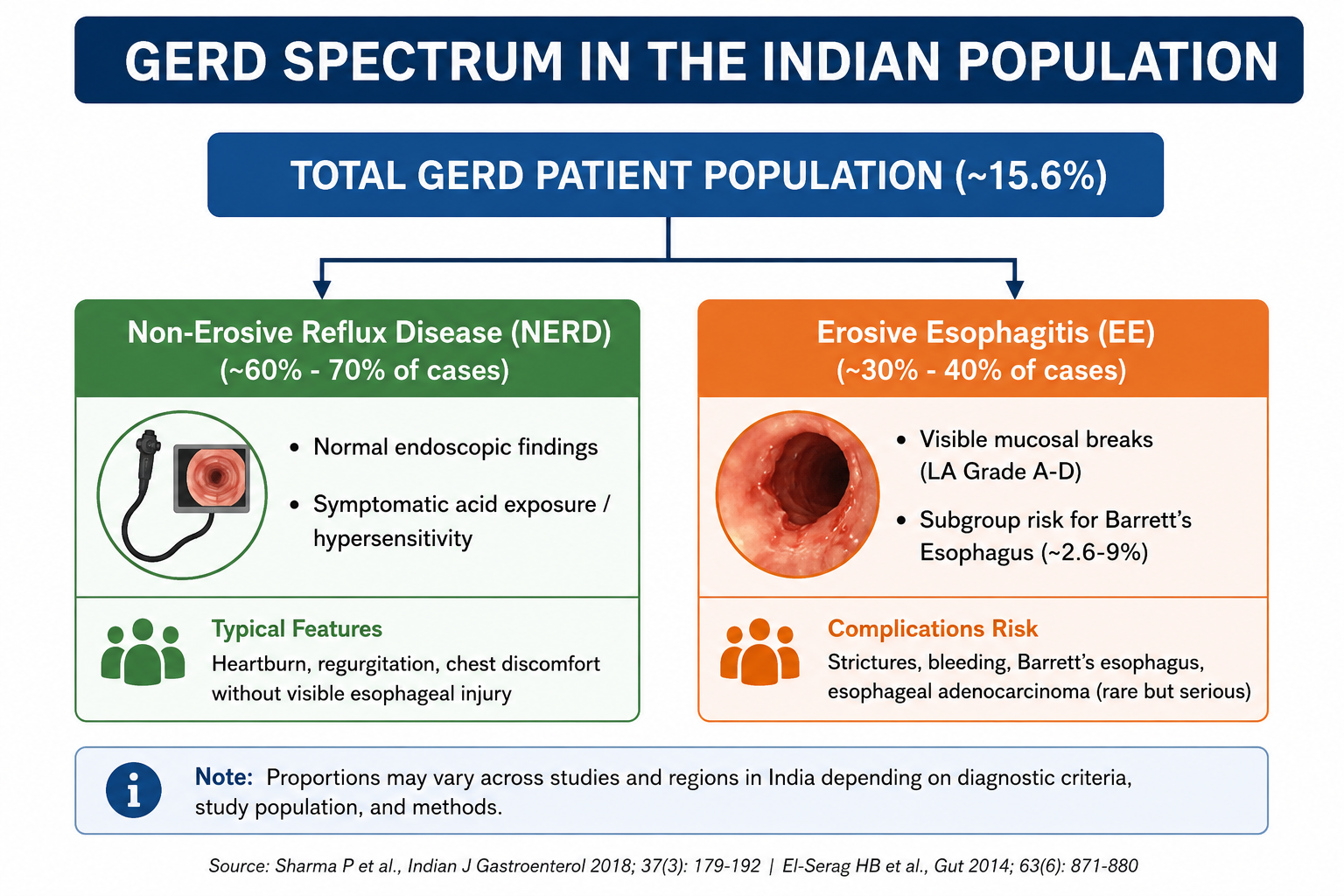
Epidemiological investigations and position statements—including the Indian Society of Gastroenterology (ISG) consensus and national multicenter surveys—reveal a growing burden of GERD across the Indian population:
-
Prevalence Range: Population-based studies estimate GERD prevalence in India between 7.6% and 19%, with metropolitan cohorts demonstrating rates as high as 16.2% to 30% (e.g., Delhi, Mumbai, Bengaluru). A pooled meta-analysis indicates a nationwide prevalence of approximately 15.6% – Source for these details is ISG Consensus Guidelines (Hyperlinked)
-
Predominance of Non-Erosive Reflux Disease (NERD): Up to 60%–70% of Indian GERD patients present with NERD—meaning they experience classic, bothersome reflux symptoms without visible esophageal mucosal damage during upper gastrointestinal (UGI) endoscopy
-
Low Prevalence of Barrett’s Esophagus: While erosive esophagitis (EE) is common, Barrett’s esophagus (a premalignant complication) remains relatively low in India (ranging between 2.6% and 9% among endoscopy-confirmed GERD cases) compared to Western nations
Risk Factors – Specific To Indian Population
-
Dietary Triggers: High consumption of deep-fried foods (samosas, bhajias, vadas), heavy spices, refined oils, and frequent intake of tea/coffee, lower Lower Esophageal Sphincter (LES) resting tone and delayed gastric emptying
-
Meal-to-Bed Time Interval: The traditional Indian habit of eating late-night dinners (often between 9:00 PM and 11:00 PM) followed immediately by sleep reduces gravity-assisted gastric clearance and dramatically increases nocturnal transient LES relaxations (TLESRs)
-
The “Thin-Fat” Phenotype: South Asians often exhibit high visceral adiposity despite having a normal Body Mass Index (BMI). Central obesity increases intra-abdominal pressure, disrupting the gastroesophageal junction and predisposing individuals to hiatal hernia and reflux
-
The Helicobacter pylori Interplay: India has a high background H. pylori infection rate (~55%–60%). H. pylori-induced corpus gastritis suppresses gastric acid output. As sanitation improves and H. pylori eradication becomes more widespread, unmasked acid hypersecretion has contributed to rising GERD rates
Why Is GERD Increasing in India?
Several factors are driving the rising burden.
1. Urbanisation – Urban lifestyles often involve: Long working hours / Irregular meal timing / Eating and Drinking late at night / Reduced physical activity and Increased stress. These behaviours may increase reflux symptoms in susceptible individuals.
2. Rising Obesity – Central obesity increases pressure inside the abdomen. This elevated pressure promotes reflux by increasing the likelihood that stomach contents move upward through the lower oesophageal sphincter.
India has witnessed a marked increase in overweight and obesity over the past two decades, particularly in metropolitan areas.
3. Diabetes – India has one of the largest populations of people living with diabetes. Long-standing diabetes can impair nerve function controlling stomach emptying (gastroparesis), which may contribute to reflux symptoms in some patients.
4. Population Ageing – Ageing is associated with: Increased hiatal hernia prevalence / Reduced oesophageal motility / Greater medication use and More chronic illnesses. These factors collectively increase GERD risk.
What Are the Symptoms of GERD?
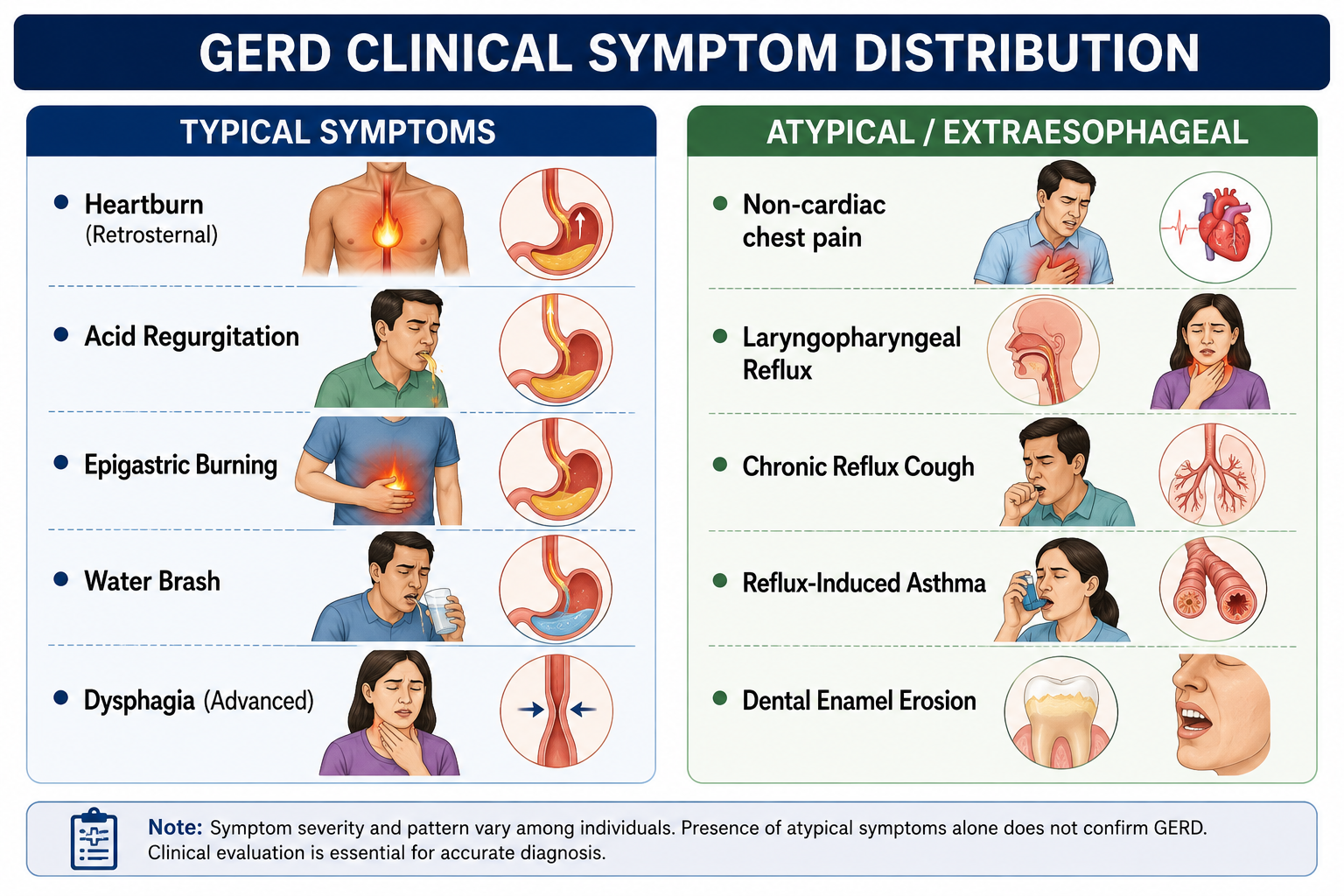
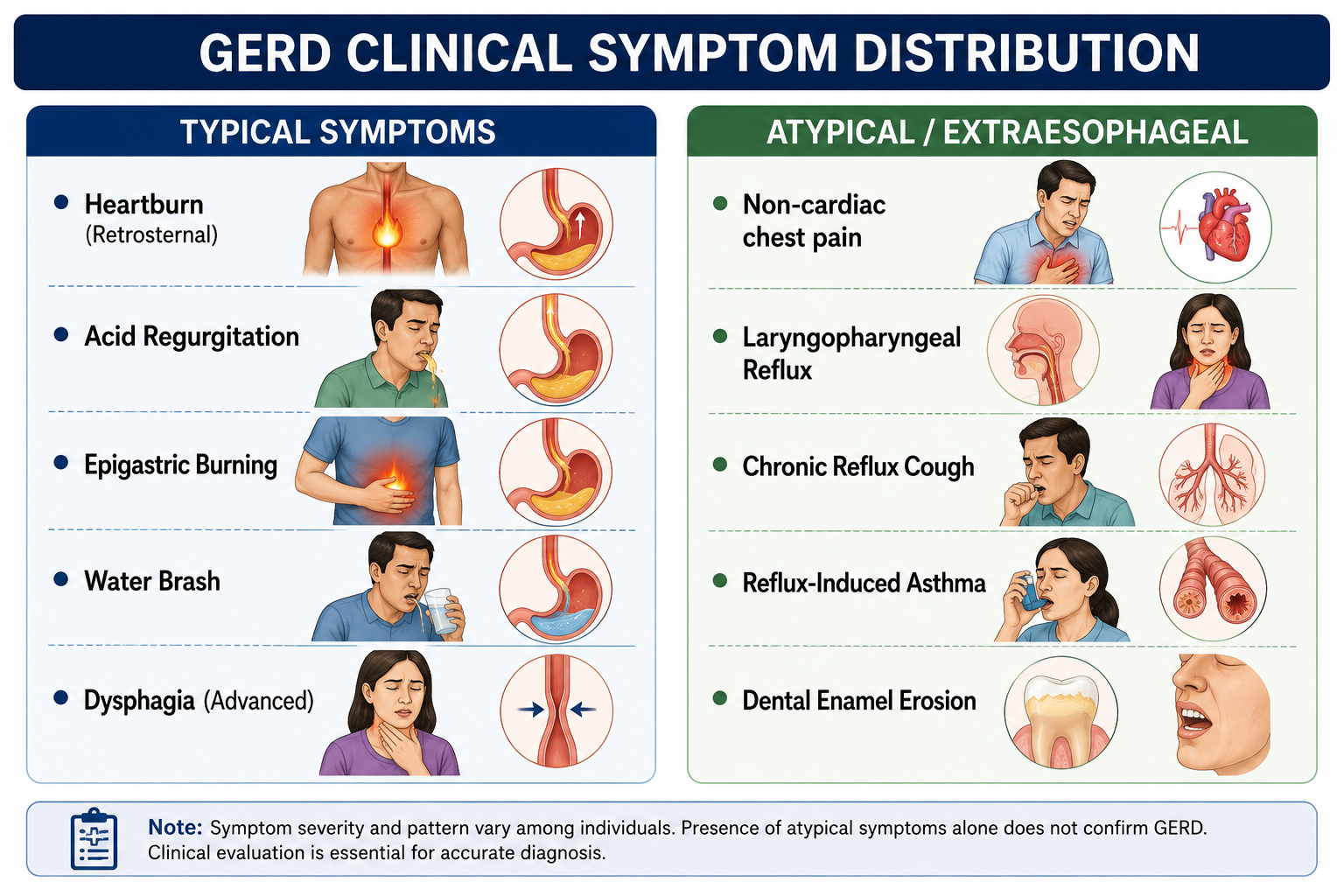
The two classic symptoms are:
Heartburn – A burning sensation behind the breastbone that often:
-
Occurs after meals
-
Worsens when lying down
-
Improves after antacids in many individuals
Acid Regurgitation – A sensation of stomach contents or sour fluid moving into the throat or mouth. Patients often describe:
-
Sour taste
-
Bitter taste
-
Fluid coming up while bending
-
Night-time regurgitation
Less Well-Known Symptoms
GERD does not always present with heartburn.
Many patients experience: Chronic cough / Hoarseness / Recurrent sore throat / Frequent throat clearing / Difficulty swallowing / Chest discomfort / Globus sensation (“lump in the throat”) / Bad breath and Sleep disturbances.
These “extra-oesophageal” symptoms may delay diagnosis because patients initially consult respiratory or ENT specialists.
What Is Silent Reflux?
Some patients develop laryngopharyngeal reflux (LPR), often called “silent reflux.” Instead of severe heartburn, they may experience:
-
Persistent cough
-
Hoarseness
-
Voice fatigue
-
Recurrent throat irritation
-
Chronic throat clearing
Because classic heartburn may be absent, diagnosis can be challenging and requires careful clinical assessment.
Cultural Myths vs. Evidence-Based Realities in India
Cultural beliefs and self-medication practices significantly delay proper medical consultation for GERD in India.
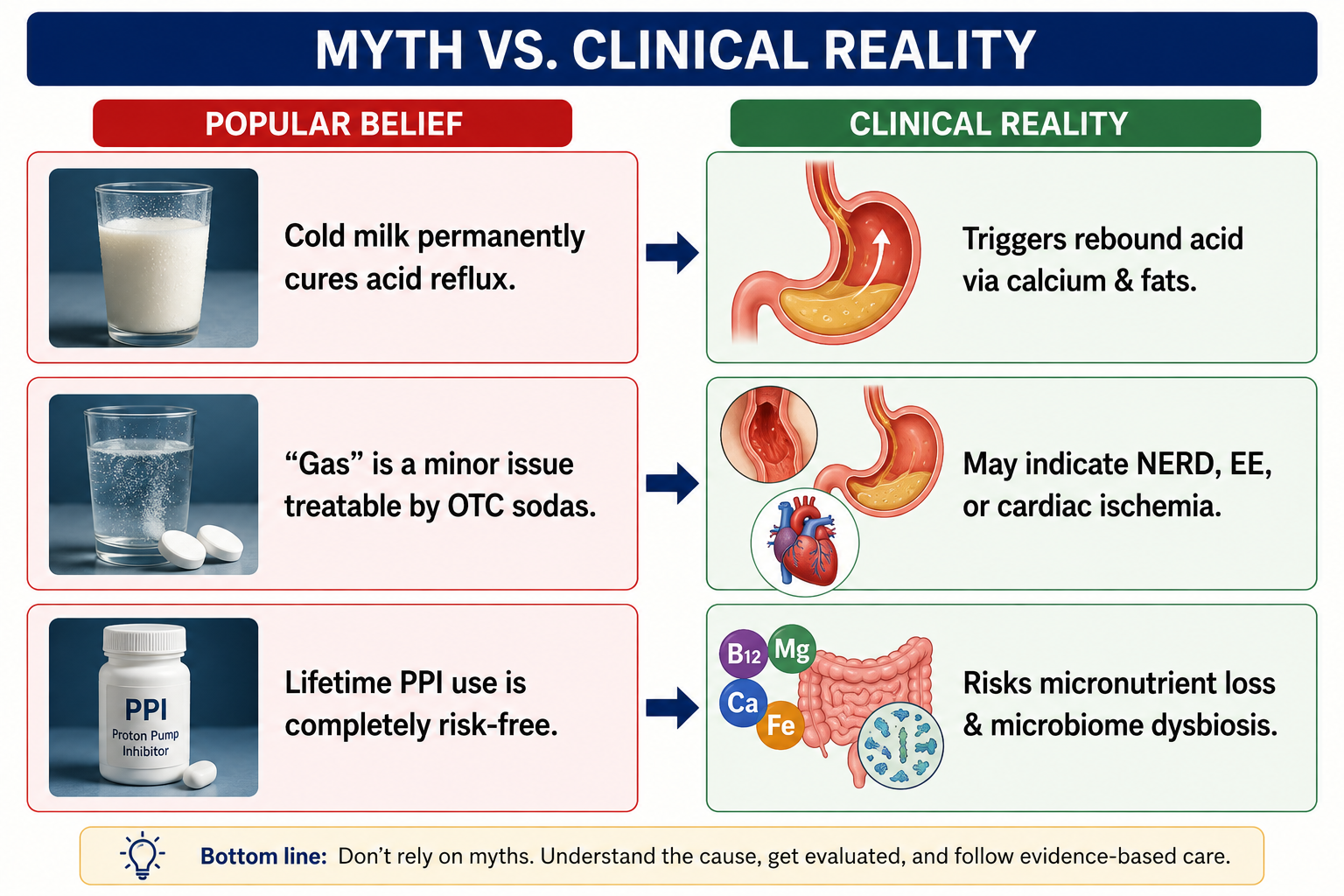
Myth 1: “It’s just ‘Gas’ or Amlapitta—I just need an antacid.”
-
Reality: The popular blanket term “gas” conflates flatulence, abdominal distension, functional dyspepsia, and true acid reflux. While antacids provide temporary symptom buffering, they do not heal esophageal mucosal inflammation, repair LES dysfunction, or prevent long-term nocturnal reflux complications.
Myth 2: “Drinking cold milk cures acid reflux permanently.”
-
Reality: Cold milk provides an immediate buffering effect due to its fluid temperature and protein content. However, the fat and high calcium content in milk stimulate gastrin release, triggering rebound acid secretion 30–60 minutes later, often worsening reflux during sleep.
Myth 3: “Daily Proton Pump Inhibitors (PPIs) are harmless supplements.”
-
Reality: Long-term, unmonitored use of OTC PPIs (e.g., Pantoprazole, Rabeprazole, Omeprazole) without a formal diagnosis can cause side effects, including hypomagnesemia, reduced Vitamin B12 and calcium absorption, altered gut microbiome, increased risk of Clostridioides difficile infections, and rebound acid hypersecretion upon withdrawal.
Myth 4: “Eliminating spicy food completely will cure GERD.”
-
Reality: While capsicum and spices irritate an already inflamed esophageal mucosa, spices alone rarely cause structural LES incompetence. Mechanical factors (central obesity, lying down after meals, hiatal hernia) play a more decisive role than dietary spice alone.