



An Evidence-Based Guide for Patients, Families and Healthcare Professionals, largely for prevention of gallbladder stones and eventual gallbladder cancers. May you all never ever deveop Gallstones!
Gallstones affect millions of Indians, yet many people are unaware they have them until they develop severe abdominal pain or complications. Modern imaging has shown that most gallstones remain silent throughout life, while a smaller proportion progress to symptomatic disease requiring medical treatment or surgery.
This distinction is critical because not every gallstone requires removal, and unnecessary surgery can often be avoided. Conversely, delaying treatment in symptomatic patients may increase the risk of acute cholecystitis, pancreatitis, bile duct obstruction and, in selected high-risk individuals, gallbladder cancer.
This is our 4th and final article in Series – The Indian Gallbladder Project for Indians – and this reviews the latest scientific evidence on diagnosis, treatment and prevention, with a focus on Indian clinical practice. For Part 1, Part 2 and Part 3 for this Series, pls click the respective hyperlinks.
Silent Gallstones vs Symptomatic Gallstones
One of the most important concepts in gallbladder medicine is that most gallstones never cause symptoms. Population studies suggest that approximately 70–80% of gallstones remain asymptomatic, often discovered incidentally during ultrasound examinations performed for unrelated reasons.
Silent (Asymptomatic) Gallstones – These individuals have: No abdominal pain, No digestive symptoms attributable to gallstones, Normal daily activities and Stones are detected only incidentally. Medically known as Incidental Finding.
Most international guidelines recommend observation rather than routine surgery for asymptomatic gallstones, except in selected high-risk situations.
Symptomatic Gallstones – Symptoms develop when stones temporarily or permanently obstruct bile flow. Typical features include: Sudden pain in the upper right abdomen, Pain after fatty meals, Pain lasting 30 minutes to several hours and Pain radiating to the back or right shoulder and Nausea and vomiting.
Once symptoms begin, recurrent attacks become increasingly likely.
Warning Signs That Need Immediate Medical Attention
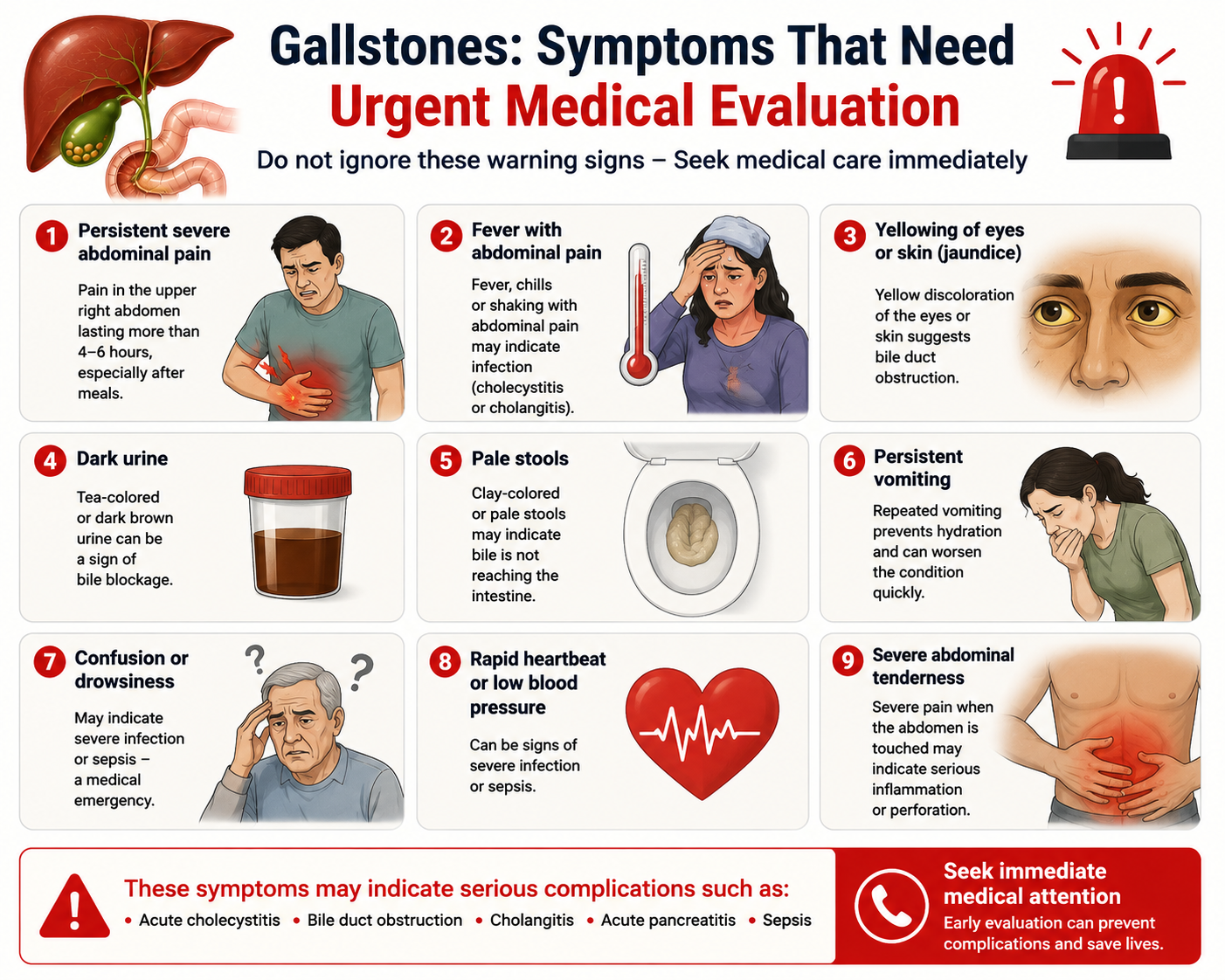
Although many gallstones are harmless, certain symptoms require urgent evaluation. Seek immediate medical care if there is:
-
Persistent severe abdominal pain lasting more than 4–6 hour / Fever with abdominal pain / Yellowing of the eyes or skin (jaundice) / Dark urine / Pale stools / Persistent vomitin and Confusion or signs of sepsis
These symptoms may indicate:
-
Acute cholecystitis
-
Common bile duct obstruction
-
Ascending cholangitis
-
Acute pancreatitis
All these conditions require prompt treatment.
Major Complications of Gallstones
1. Acute Cholecystitis – A gallstone blocks the cystic duct, causing inflammation of the gallbladder. Typical features: Constant right upper abdominal pain / Fever / Tenderness beneath the right rib cage / Elevated inflammatory markers
Early laparoscopic surgery is now considered the preferred treatment for most suitable patients.
2. Choledocholithiasis – Gallstones migrate into the common bile duct. Complications include: Jaundice, Cholangitis, Pancreatitis and Liver dysfunction Treatment often involves ERCP (Endoscopic Retrograde Cholangiopancreatography) followed by laparoscopic cholecystectomy.
3. Acute Pancreatitis – Small gallstones may temporarily block the pancreatic duct. This potentially life-threatening complication can cause: Severe upper abdominal pain, Vomiting, Elevated pancreatic enzymes and Multi-organ failure in severe cases. Gallstones remain one of the leading causes of acute pancreatitis worldwide.
4. Gallbladder Cancer – Gallbladder cancer is uncommon but particularly important in India because of the country’s relatively high incidence. Risk increases with:
-
Long-standing gallstones
-
Large stones (>3 cm)
-
Porcelain gallbladder (selected cases)
-
Chronic inflammation
-
Certain congenital biliary abnormalities
Fortunately, most people with gallstones never develop cancer.
Ultrasound: The First-Line Investigation
Ultrasound remains the gold standard initial imaging test for suspected gallstones. Advantages include:
-
No radiation
-
Widely available
-
Low cost
-
High sensitivity for gallstones
-
Excellent assessment of gallbladder wall thickness
-
Detection of bile duct dilation
In India, ultrasound is usually the first investigation performed.
MRCP
Magnetic Resonance Cholangiopancreatography (MRCP) provides detailed images of the biliary tree without invasive instrumentation. Useful when:
-
Common bile duct stones are suspected
-
Ultrasound findings are inconclusive
-
Surgical planning is required
Endoscopic Ultrasound (EUS)
EUS is highly sensitive for detecting:
-
Tiny bile duct stones
-
Small tumors
-
Pancreatic disease
Many tertiary centers in India now use EUS before ERCP when diagnostic uncertainty exists.
ERCP
Unlike MRCP, ERCP is primarily a therapeutic procedure. Doctors use ERCP to:
-
Remove bile duct stones
-
Place stents
-
Relieve obstruction
-
Treat cholangitis
Because ERCP carries risks such as pancreatitis, it is generally reserved for patients who are likely to benefit therapeutically.
When Is Surgery Needed?
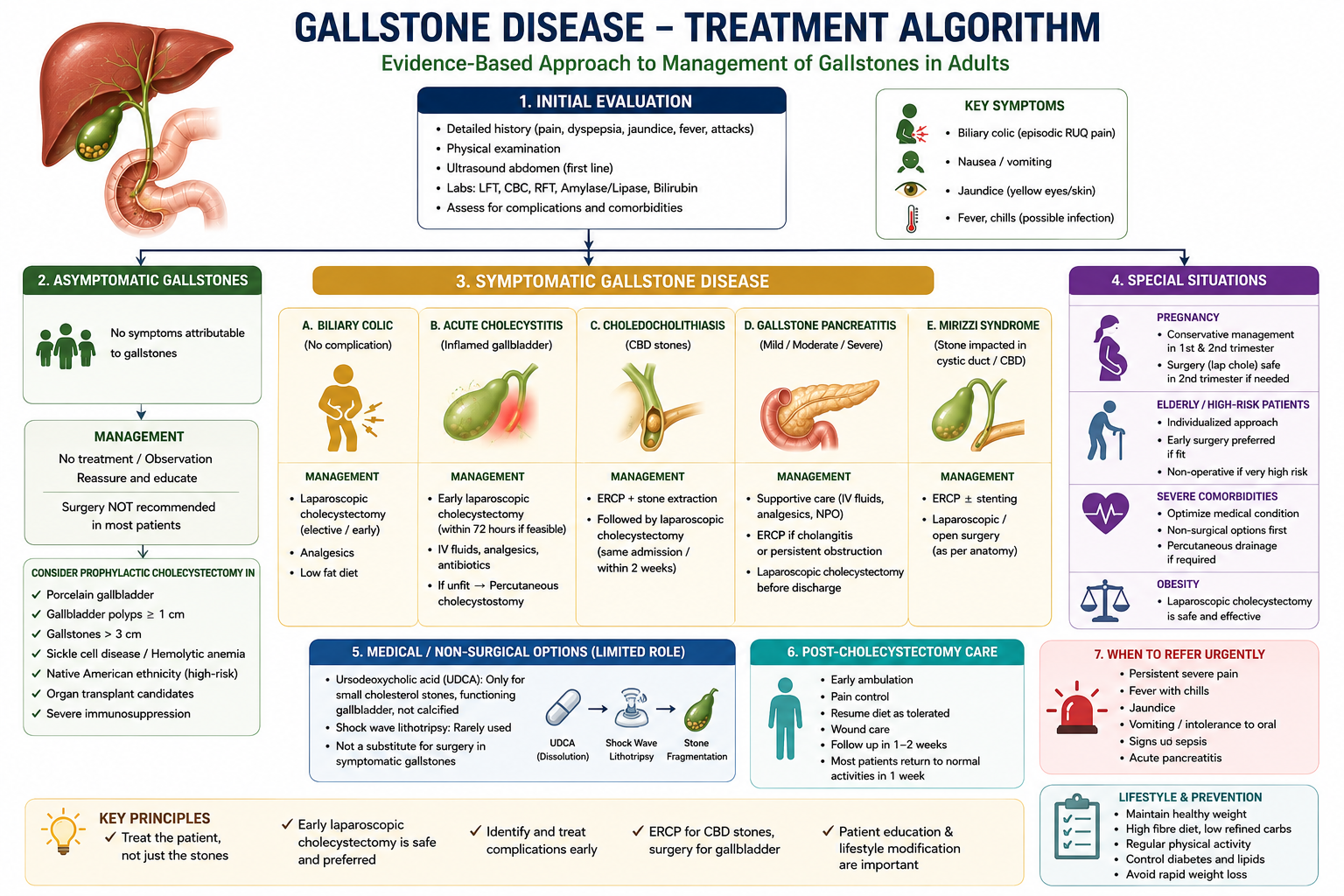
The standard treatment for symptomatic gallstones is laparoscopic cholecystectomy. Common indications include:
-
Recurrent biliary colic
-
Acute cholecystitis
-
Gallstone pancreatitis (after recovery)
-
Common bile duct stones (after ERCP)
-
Gallbladder polyps meeting surgical criteria
-
Suspected gallbladder cancer
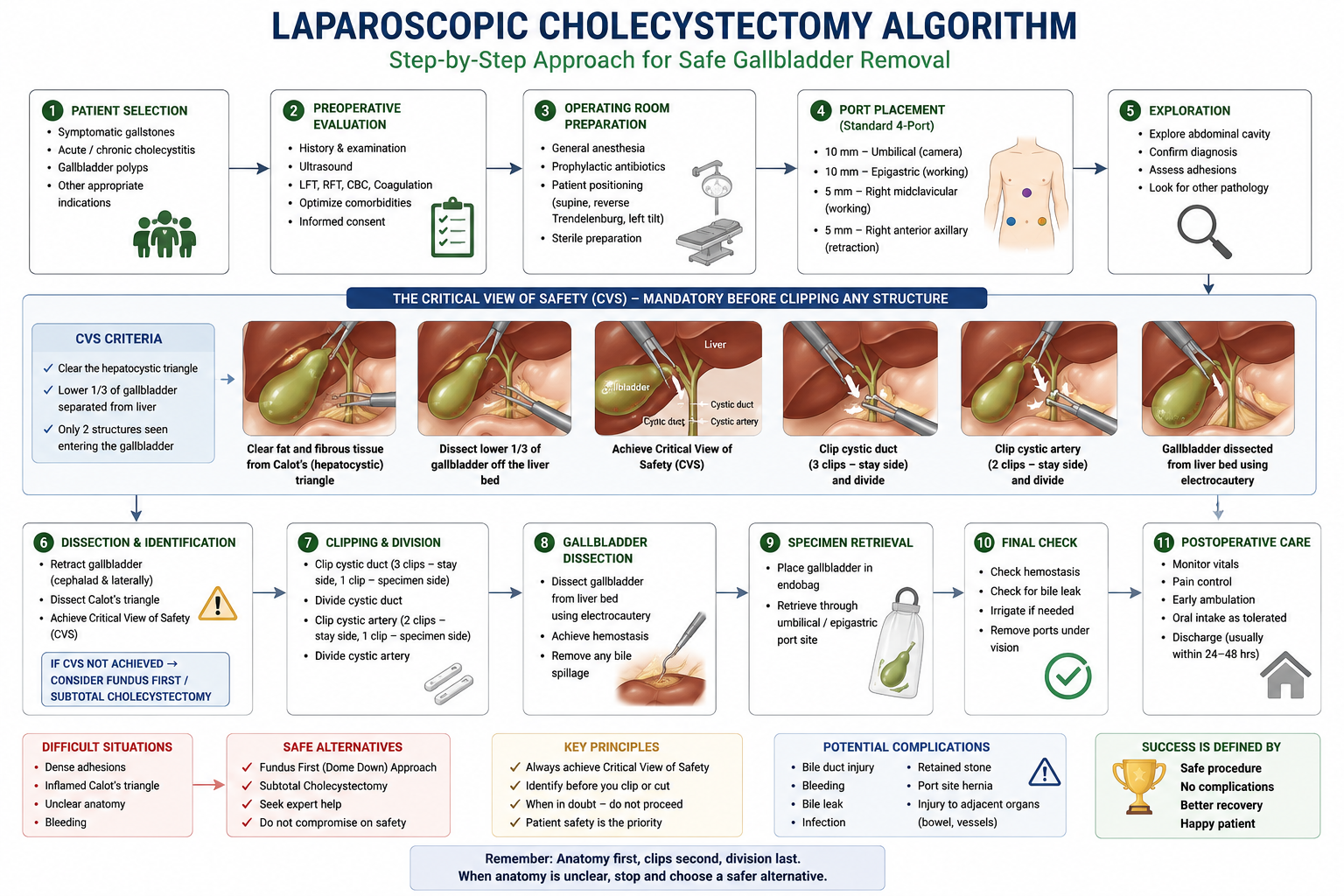
Laparoscopic Cholecystectomy
Today, more than 90% of gallbladder removals are performed laparoscopically. Benefits include: Smaller incisions, Less pain, Shorter hospital stay, Faster recovery, Lower wound infection rates and Earlier return to work.
For uncomplicated cases, many patients return home within 24–48 hours.
Life Without a Gallbladder
Many patients worry that digestion will suffer permanently after surgery. Fortunately, the liver continues producing bile even after the gallbladder is removed. Instead of being stored, bile flows directly into the intestine. Most patients:
-
Digest food normally
-
Return to regular diets
-
Experience excellent long-term quality of life
A minority may experience temporary loose stools or difficulty digesting very fatty meals during the initial postoperative period.
Can Gallstones Be Dissolved Without Surgery?
Medical dissolution therapy is limited.
Ursodeoxycholic Acid (UDCA) – UDCA may dissolve selected small cholesterol stones. However: Treatment usually takes months, Stones frequently recur and Many stones do not respond. Consequently, UDCA is reserved for carefully selected patients.
Can Gallstones Be Prevented?
Although genetics cannot be changed, many important risk factors are modifiable.
Evidence-based prevention includes: Maintain a Healthy Weight and Avoid obesity while also avoiding rapid weight loss.
Stay Physically Active – Regular exercise improves: Insulin sensitivity, Lipid metabolism, Weight control and Gallbladder motility
Eat a Fibre-Rich Diet – Include: Dairy Foods, Animal Proteins – Meat, Eggs and Fish, Whole grains, Millets, Pulses, Fruits, Vegetables, Legumes
Control Diabetes – Good glycaemic control reduces multiple metabolic abnormalities associated with gallstones.
Avoid Crash Diets – Weight loss should be gradual, sustainable and scientific and not motivated by Insta-Influencers
Manage Fatty Liver Disease – NAFLD shares many risk factors with gallstones. Lifestyle measures that improve liver health often benefit the gallbladder as well.
Gallbladder Cancer: Early Detection Matters
Early gallbladder cancer often causes few or no symptoms, making timely diagnosis difficult. Persistent symptoms warrant medical evaluation, particularly in high-incidence regions of North India. Warning signs include:
-
Persistent upper abdominal pain
-
Unexplained weight loss
-
Loss of appetite
-
Jaundice
-
A palpable abdominal mass
-
Persistent nausea
Early-stage disease has significantly better outcomes than advanced disease.
Future of Gallbladder Research in India
Research is rapidly expanding into areas such as:
-
Gut and biliary microbiome
-
Artificial intelligence for imaging
-
Genomic susceptibility
-
Bile acid metabolomics
-
Environmental toxicology
-
Biomarkers for early gallbladder cancer
-
Precision risk prediction