



This is Part 3 of our Series on understanding Gallbladder Issues and what are preventive measures. for Part 1 and Part 2 of the series, pls clikc the respective hyperlinks.
Scientific Evidence Behind Food, Vitamins, Minerals and Everyday Habits
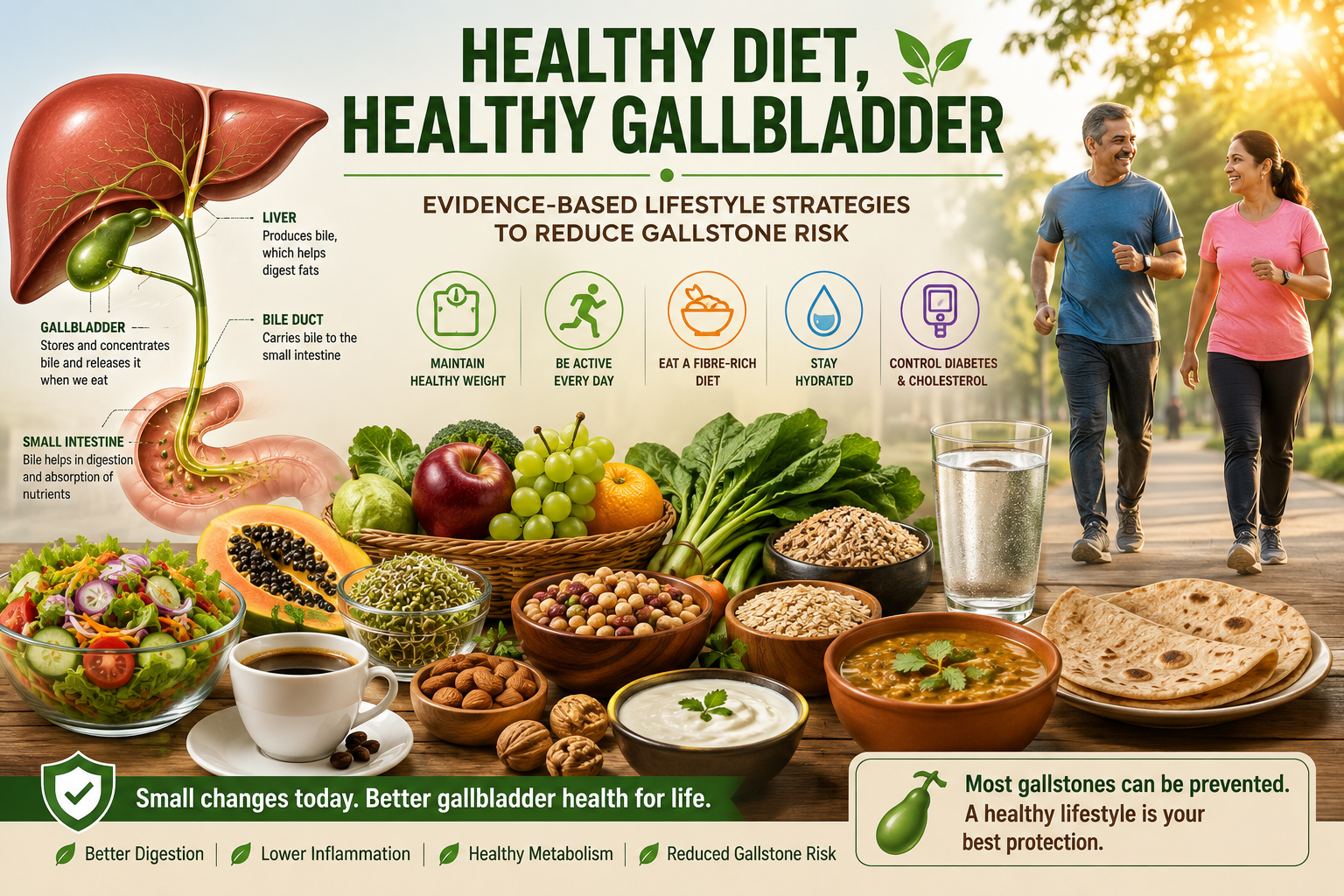
For decades, gallstones were considered largely a consequence of age, genetics and chance. Today, research tells a more nuanced story. Although genetics and female hormones cannot be modified, many of the strongest risk factors for gallstones are closely linked to nutrition, body weight, metabolic health and lifestyle.
This is particularly relevant for India, where obesity, type 2 diabetes, fatty liver disease and metabolic syndrome are rising rapidly. At the same time, dietary patterns have shifted toward refined carbohydrates, sugar-sweetened beverages and ultra-processed foods, while physical activity has declined in many urban populations.
The encouraging news is that many gallstones may be preventable, especially cholesterol stones, through evidence-based dietary and lifestyle interventions.
Foundation of Prevention: Maintain a Healthy Body Weight
One of the strongest modifiable risk factors for gallstones is excess body weight. Obesity increases the amount of cholesterol secreted into bile, making bile “supersaturated” with cholesterol. When the gallbladder empties poorly, cholesterol crystals accumulate and eventually form stones.
Studies consistently show that individuals with obesity have a substantially higher risk of developing symptomatic gallstones than those with a healthy body weight.
However, the goal is gradual weight reduction, not rapid weight loss.
Why Crash Diets Can Increase Gallstone Risk
Ironically, losing weight too quickly can increase the risk of gallstones. Very-low-calorie diets and rapid fat loss cause:
-
Increased cholesterol release from fat stores
-
Higher cholesterol concentration in bile
-
Reduced gallbladder contractions
-
Prolonged bile stagnation
For this reason, bariatric surgery patients with rapid weight loss may receive ursodeoxycholic acid (UDCA) for several months to reduce gallstone formation. Clinical takeaway: Aim for gradual, sustainable weight loss rather than extreme dieting.
Dietary Fibre: One of the Most Consistent Protective Factors
Among dietary components, fibre has one of the strongest biological rationales for gallbladder health. A high-fibre diet helps by:
-
Improving insulin sensitivity
-
Supporting healthy gut microbiota
-
Enhancing bowel motility
-
Reducing post-meal glucose spikes
-
Promoting healthy body weight
Indian diets rich in:
-
Whole wheat
-
Millets
-
Oats
-
Brown rice
-
Pulses
-
Beans
-
Fruits
-
Vegetables
provide substantially more fibre than highly refined diets.
Refined Carbohydrates and Sugar
Modern diets high in refined carbohydrates may contribute to gallstone formation indirectly through metabolic disease. Frequent intake of:
-
White bread
-
Refined flour products
-
Sugary beverages
-
Sweets
-
Ultra-processed snacks
All of these increase gallstone risk. Reducing highly processed foods is therefore beneficial for both metabolic and gallbladder health.
Does Fat Cause Gallstones?
This is one of the most common misconceptions. Dietary fat itself does not automatically cause gallstones. In fact, moderate fat intake stimulates gallbladder contraction, helping empty bile regularly. Very low-fat diets may reduce gallbladder emptying and encourage bile stagnation.
The emphasis should be on healthy fats rather than eliminating fat altogether. Examples include: Nuts / Seeds / Fish / Groundnuts and Moderate amounts of traditional oils used within an overall healthy dietary pattern
Coffee: An Unexpected Protective Association
Several large international cohort studies have found that regular coffee consumption is associated with a lower risk of symptomatic gallstones, particularly among women. Proposed mechanisms include:
-
Improved gallbladder contraction
-
Reduced cholesterol crystallisation
-
Enhanced bile flow
However, evidence is stronger for coffee than for tea, and the benefit should not be viewed as a substitute for maintaining a healthy lifestyle.
Physical Activity
Exercise benefits the gallbladder in several ways. Regular physical activity improves: Insulin sensitivity, Body weight, Lipid metabolism and Gallbladder motility. Even moderate activities such as brisk walking can contribute to lower metabolic risk.
For Indian adults, combining aerobic exercise with resistance training provides broader metabolic benefits.
Diabetes, Fatty Liver and Gallstones: The Metabolic Connection
Gallstones are increasingly recognised as part of a broader metabolic disorder. People with:
-
Type 2 diabetes
-
Non-alcoholic fatty liver disease (NAFLD)
-
Metabolic syndrome
often share common biological abnormalities: Insulin resistance, Elevated triglycerides, Obesity and Chronic low-grade inflammation
Rather than viewing gallstones as an isolated condition, clinicians increasingly consider them another manifestation of metabolic dysfunction.
Vitamin C: The Most Studied Micronutrient
Vitamin C has attracted considerable scientific interest because it participates in the conversion of cholesterol into bile acids. Experimental and observational studies suggest that inadequate vitamin C status may impair bile acid synthesis, potentially increasing cholesterol saturation in bile. CONCLUSION from a few studies – Regular vitamin C supplementation might exert a protective effect on the development of gallstones.
While results across studies are not entirely consistent, maintaining adequate vitamin C intake through fruits and vegetables is advisable for overall health and may support healthy bile composition.
Magnesium
Magnesium influences hundreds of enzymatic reactions, including glucose metabolism and insulin sensitivity. Some epidemiological studies suggest that higher magnesium intake may be associated with a lower risk of gallstones, although evidence remains less robust than for obesity or diabetes.
CONCLUSION from 1 study – According to this study, dietary magnesium intake had a significant linear negative association with the prevalence of gallstones, in which AIP (atherogenic index of plasma) played a mediating role. This discovery offers novel perspectives on the prevention and management of gallstones.
Because many Indian diets provide suboptimal magnesium intake, improving dietary sources such as whole grains, legumes, nuts and green leafy vegetables is a sensible strategy.
Other Nutrients Under Investigation
Researchers are also exploring potential roles for:
-
Vitamin D
-
Vitamin E
-
Folate
-
Choline
-
Selenium
-
Omega-3 fatty acids
Current evidence is promising in some areas but insufficient to recommend supplementation specifically for gallstone prevention in the general population.
Gut Microbiome: An Emerging Frontier
The gut microbiome plays a central role in bile acid metabolism. Intestinal bacteria convert primary bile acids into secondary bile acids, influencing:
-
Cholesterol metabolism
-
Gallbladder motility
-
Inflammation
-
Bile composition
Although the science is still evolving, diets rich in dietary fibre naturally support a healthier gut microbiome, providing another potential mechanism linking nutrition and gallbladder health.
Practical Dietary Pattern for Indians
A gallbladder-friendly eating pattern is remarkably similar to recommendations for preventing diabetes and heart disease. Include more: Animal foods which are LOW in carbohydrates but are nutrient powerhouses with high quality proteins, vitamins and minerals, all in one. Include more dairy products, cut down all your hydrogenated fats whatsoever, no cakes, no sweets and certainly NO FRIED Food stuffs and Cookies etc. Have adequate water, fairly active and mobile lifestyle with clean foods consumption. Follow what your grand-parents used to do.
The emphasis should be on overall dietary quality, not on eliminating a single food.
Key Take-Home Messages
-
Gallstones CERTAINLY are not inevitable; many risk factors are modifiable and actually preventable, all without spending much money
-
Maintaining a healthy weight through gradual, sustainable weight loss is one of the most effective preventive strategies
-
Food is your medicine and you are what you eat – Diets rich in dairy foods, animal foods, fibre, fruits, vegetables and whole grains support both metabolic and gallbladder health
-
Obesity, diabetes and fatty liver disease substantially increase gallstone risk, highlighting the importance of overall metabolic health
-
Vitamin C and magnesium show promising associations with gallbladder health, but current evidence does not support high-dose stand alone, supplementation solely to prevent gallstones
-
A healthy lifestyle benefits the gallbladder in the same way it benefits the heart, liver, pancreas and your longevity. So why take chances with Health