


Introduction: Why Do Some Indians Develop Gallstones While Others Never Do?
In Part 1 of this series, we explored one of India’s greatest epidemiological mysteries: why gallbladder disease is significantly more common in North and North-Eastern India than in much of South India. The obvious next question is:
What actually causes gallstones—and why do only some people progress to gallbladder cancer?
After more than 50 years of research, scientists now agree that there is no single cause. Instead, gallbladder disease develops through a complex interaction of:
-
Cholesterol metabolism and Gallbladder motility
-
Genetics and Hormones
-
Obesity and Potentially Type2 Diabetes
-
Chronic inflammation and Environmental exposures
-
Bacterial infections and Dietary habits
Some of these risk factors are supported by decades of strong scientific evidence, while others remain intriguing hypotheses that continue to be investigated. This article separates established facts from emerging research, allowing readers to understand where the science is strongest.
The First Step: How Gallstones Actually Form
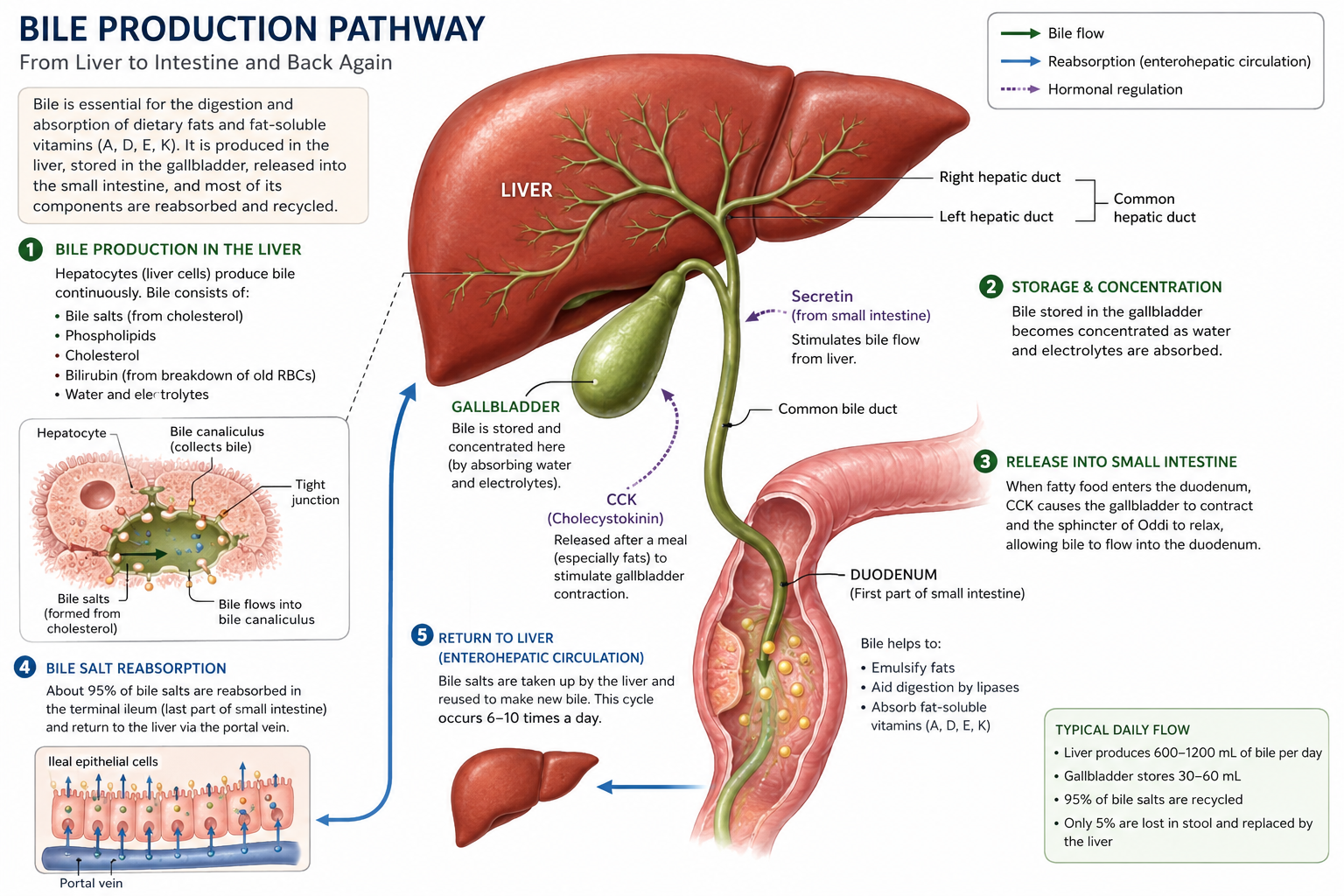
Healthy bile contains a carefully balanced mixture of: Water, Bile salts, Cholesterol, Phospholipids, Bilirubin and Electrolytes. Normally, cholesterol remains dissolved. Gallstones begin to develop when this balance is disrupted. Scientists describe three major steps:
Step 1: Cholesterol Supersaturation – The liver secretes more cholesterol into bile than bile salts and phospholipids can keep dissolved. Microscopic cholesterol crystals begin to appear.
Step 2: Crystal Growth – These crystals gradually enlarge. Normally the gallbladder empties efficiently after meals, flushing tiny crystals away. When gallbladder emptying becomes sluggish, crystals remain inside long enough to grow.
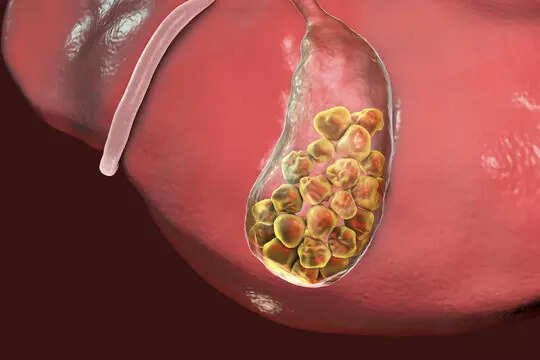
Step 3: Stone Formation – Over months or years, microscopic crystals combine into visible gallstones. The entire process often occurs silently. Many individuals remain symptom-free for years.
Three Types of Gallstones
1. Cholesterol Stones – Approximately 70–80% of gallstones in developed countries consist predominantly of cholesterol. These form when:
-
Cholesterol secretion increases
-
Bile salts decrease
-
Gallbladder emptying slows
2. Pigment Stones – These contain calcium bilirubinate. More common among individuals with:
-
Chronic hemolytic disorders and Liver disease
-
Chronic biliary infection and Certain parasitic infections
3. Mixed Stones – Common in India. Contain varying proportions of:
-
Cholesterol and Bilirubin
-
Calcium salts and Proteins with Mucin
Indian studies suggest mixed stones may be particularly frequent because multiple risk factors coexist.
Type |
Cholesterol Stones |
Pigment Stones |
|---|---|---|
Composition |
Mainly undissolved cholesterol with some bilirubin and calcium |
Mainly bilirubin (calcium bilirubinate), often with cholesterol |
Appearance |
Yellow or yellow-green; smooth, round |
Dark brown or black; small, irregular |
Frequency globally |
About 75-80% of all gallstones |
About 20-25% |
Frequency in India |
Predominant in north India |
Predominant in south India (~83% in a south Indian series) |
Forms when |
The liver excretes more cholesterol than bile salts and lecithin can dissolve |
There is too much bilirubin in bile (from haemolysis, liver disease, or biliary infection) |
A third, mixed-type stone – combining cholesterol and pigment – is also common and behaves like cholesterol stones in most respects.
North vs South India – A 7X Difference
Indians do not have a single national gallstone profile – the picture varies dramatically across regions. A landmark study in 1966 first showed that symptomatic gallstones were about 7 times more common in north Indian railway workers than in south Indian workers.
Sixty years on, the pattern persists: community-based studies in 2025 reported gallstone disease prevalence of around 10% in Mullanpur (Punjab) and Kamprup (Assam), against 0.3% in Barshi (Maharashtra) and around 5% in south Indian cohorts (Indian community-based GSD study, 2025). The stones themselves also differ – north Indian gallstones are predominantly cholesterol or mixed; south Indian gallstones are predominantly pigment (around 83% pigment in a south Indian cadaveric series).
Why the Gangetic Belt Matters
The highest prevalence of gallstones in India is along the Gangetic basin – Uttar Pradesh, Bihar, West Bengal, Assam – and in Kashmir. The exact reasons are debated and likely combine diet (heavier in refined oils, fried food, refined grains), water and soil contaminants, chronic biliary infections and genetic predisposition. Whatever the precise mix, if you grew up in one of these regions, your individual risk is meaningfully higher than the global as well as national averages.
The Gallbladder Cancer Connection
India contributes about 10% of the worldwide gallbladder cancer burden, and Delhi has the highest age-adjusted female gallbladder cancer incidence ever reported anywhere – 21.5 per 100,000.
Gallstones are present in roughly 80% of Indian patients with gallbladder cancer, and the same risk factors drive both diseases. This is the most important context-specific reason for north Indian patients to take gallstones seriously: while individual cancer risk from gallstones is small in absolute terms, the regional baseline rates are very high, and large stones (over 3 cm) and porcelain gallbladder both substantially raise the cancer risk.
Causes of Gall Stones in Indians / North Indians
Risk Factor 1: Female Hormones (★★★★★ Strong Evidence)
Worldwide, women develop gallstones approximately 2–3 times more frequently than men. Two hormones largely explain this.
Estrogen – Estrogen increases hepatic cholesterol secretion. This produces cholesterol-rich bile.
Progesterone – Progesterone reduces gallbladder contraction. Slower emptying means cholesterol crystals remain inside longer.
Pregnancy – Pregnancy combines both hormonal effects. Each pregnancy slightly increases lifetime gallstone risk. Women with multiple pregnancies therefore have higher incidence. This association has been reproduced in numerous Indian and international studies.
Risk Factor 2: Age (★★★★★ Strong Evidence)
Gallstone prevalence rises steadily with age. Several biological changes contribute:
-
Reduced gallbladder contractility
-
Increased cholesterol secretion
-
Changes in bile acid composition
-
Reduced physical activity
-
Increasing metabolic disease
By the age of 60–70 years, gallstones become considerably more common than during early adulthood.
Risk Factor 3: Obesity and Metabolic Syndrome (★★★★★ Strong Evidence)
Perhaps the greatest change occurring in India today is the rapid increase in metabolic disease. Obesity increases gallstone risk through multiple mechanisms. Obesity causes:
↑ Cholesterol synthesis
↓
↑ Cholesterol secretion into bile
↓
Supersaturated bile
↓
Gallstone formation
Insulin resistance also reduces normal gallbladder emptying. Consequently, obesity increases both cholesterol crystallization and crystal retention.
Risk Factor 4: Type 2 Diabetes (★★★★★ Strong Evidence)
Numerous studies demonstrate increased gallstone prevalence among individuals with diabetes. Mechanisms include:
-
Insulin resistance / Hypertriglyceridemia / Gallbladder dysmotility / Autonomic neuropathy / Altered bile acid metabolism
As India’s diabetes epidemic continues, gallstone disease is expected to rise accordingly.
Risk Factor 5: Rapid Weight Loss / Bariatric Surgery (★★★★★ Strong Evidence)
This finding surprises many people. Losing weight is generally beneficial. However, very rapid weight loss temporarily increases gallstone risk. Examples include:
-
Crash dieting / Very-low-calorie diets / Bariatric surgery / Severe illness
During rapid fat loss: Cholesterol enters bile rapidly / Gallbladder emptying decreases / Cholesterol crystals accumulate. This explains why some bariatric surgery patients receive ursodeoxycholic acid (UDCA) prophylactically.
Risk Factor 6: Family History and Genetics (★★★★☆ Strong–Moderate Evidence)
Gallstones frequently cluster within families. Genome-wide association studies have identified several important genes. Among the best studied are:
ABCG5 and ABCG8. These genes regulate cholesterol transport into bile. Certain variants increase cholesterol secretion.
Risk Factor 7: Diet (★★★★☆ Moderate Evidence)
Diet affects gallstone risk primarily by influencing: Body weight / Cholesterol metabolism / Insulin sensitivity / Gallbladder motility. Current evidence suggests increased risk with: Refined carbohydrates / Sugary beverages / Ultra-processed foods / Excess calories
Excessive consumption of Chaats, Deeply Fried Samosas, Kachoris, Jalebis and other excessive Sweets consumed in Northern Indian region needs to be studied in detail for any causative relations.
Risk Factor 8: Physical Inactivity (★★★★☆ Moderate Evidence)
Large prospective cohort studies demonstrate lower gallstone incidence among physically active individuals.
Risk Factor 9: Chronic Salmonella Typhi Carriage (★★★☆☆ Emerging but Significant)
One of India’s most fascinating hypotheses involves chronic typhoid carriage. Scientists have discovered that Salmonella enterica serovar Typhi can survive inside the gallbladder. Even more remarkably, bacteria may attach to gallstones and produce biofilms. These biofilms:
-
Protect bacteria from immune attack
-
Maintain chronic inflammation
-
May promote carcinogenesis over many years
Although not every chronic carrier develops cancer, persistent Salmonella infection is considered one of the strongest infectious hypotheses in gallbladder cancer research.
Risk Factor 10: The Gallbladder Microbiome (★★★☆☆ Emerging Evidence)
Until recently, the gallbladder was considered sterile. Modern sequencing technologies have challenged this belief. Researchers now identify bacteria within: Bile / Gallstones / Gallbladder tissue.
Possible organisms include: Escherichia coli, Klebsiella, Enterococcus and Salmonella. These bacteria may influence:
-
Bile composition
-
Stone formation
-
Chronic inflammation
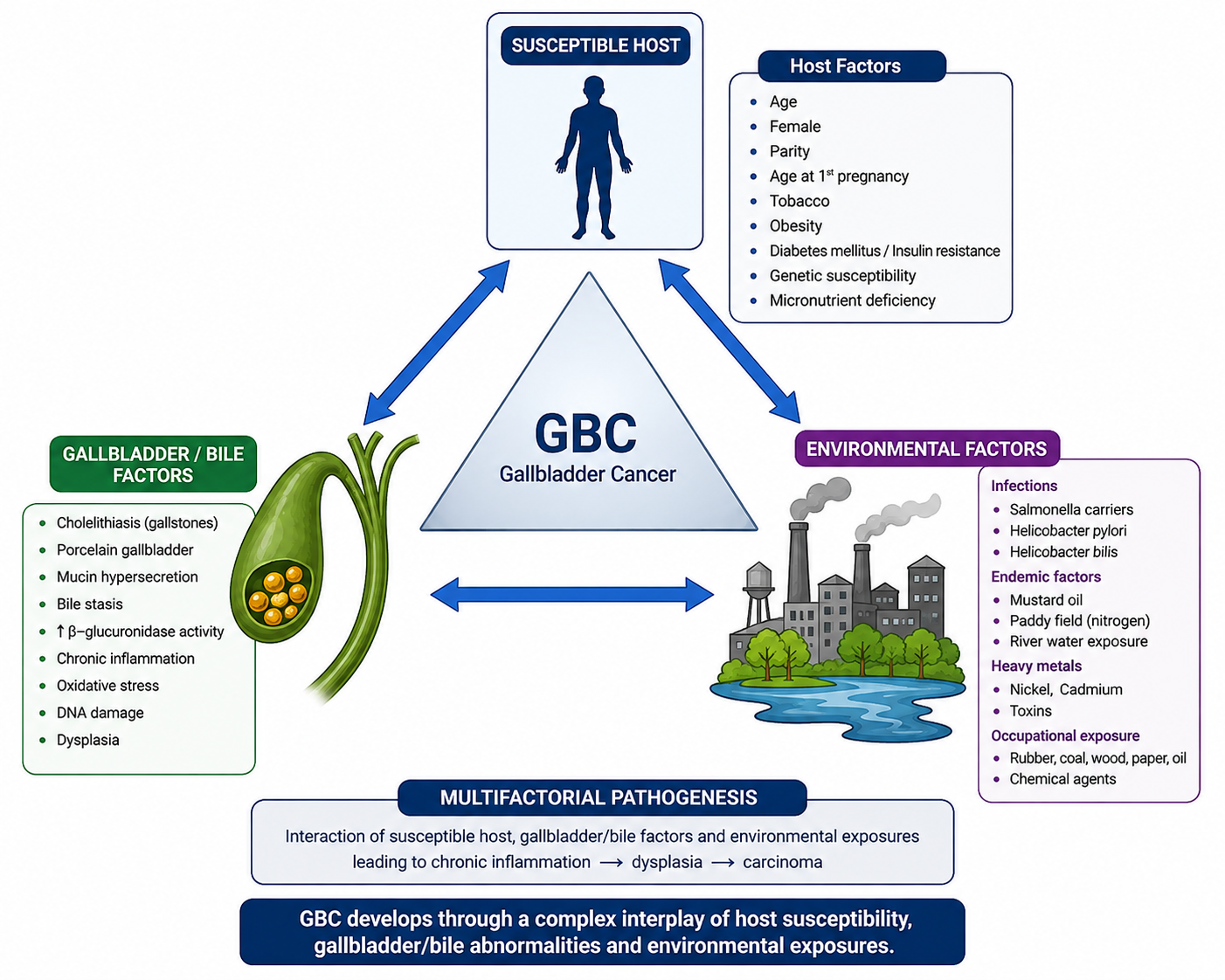
Risk Factor 11: Heavy Metals and Environmental Pollution (★★★☆☆ Emerging Evidence)
Why does gallbladder disease cluster along the Indo-Gangetic plain? One explanation under investigation involves long-term environmental exposure. Researchers have examined: Arsenic, Cadmium, Chromium, Lead, Nickel, Mercury. Potential sources include:
-
Industrial discharge
-
Agricultural runoff
-
Groundwater contamination
Several studies have demonstrated higher concentrations of certain heavy metals in gallbladder tissue from affected patients. However, causality has not yet been proven.
Risk Factor 12: River Water Hypothesis (★★☆☆☆ Hypothesis)
Researchers have noted that many high-incidence districts lie along the Ganga basin. This observation led to the “river water hypothesis.” Possible mechanisms include: Environmental toxins, Heavy metals, Chronic microbial exposure and Organic pollutants.
Current evidence remains observational. The hypothesis is biologically plausible but unproven.
Risk Factor 13: Chronic Inflammation (★★★★★ Central Mechanism)
Regardless of the initiating cause, chronic inflammation appears to be the common pathway. Repeated irritation causes:
Normal epithelium
↓
Metaplasia
↓
Dysplasia
↓
Early carcinoma
↓
Invasive gallbladder cancer
This inflammation may result from: Gallstones, Infection, Chemical injury and Environmental toxins.