After learning what homocysteine is (Part 1) and how elevated levels are linked with chronic diseases (Part 2), the next logical question is:
Should I get my homocysteine level checked?
For some people, the answer is yes. For others, routine testing offers little additional benefit.
The key is to identify those who are most likely to benefit from testing and, if homocysteine is elevated, to investigate and correct the underlying cause.
Should Every Indian Be Tested?
No – At present, major international organizations such as the American Heart Association (AHA), European Society of Cardiology (ESC), U.S. Preventive Services Task Force (USPSTF) and American Diabetes Association (ADA) do not recommend routine homocysteine screening for the general healthy population.
However, selective testing may be appropriate in individuals with specific medical conditions or nutritional risk factors.
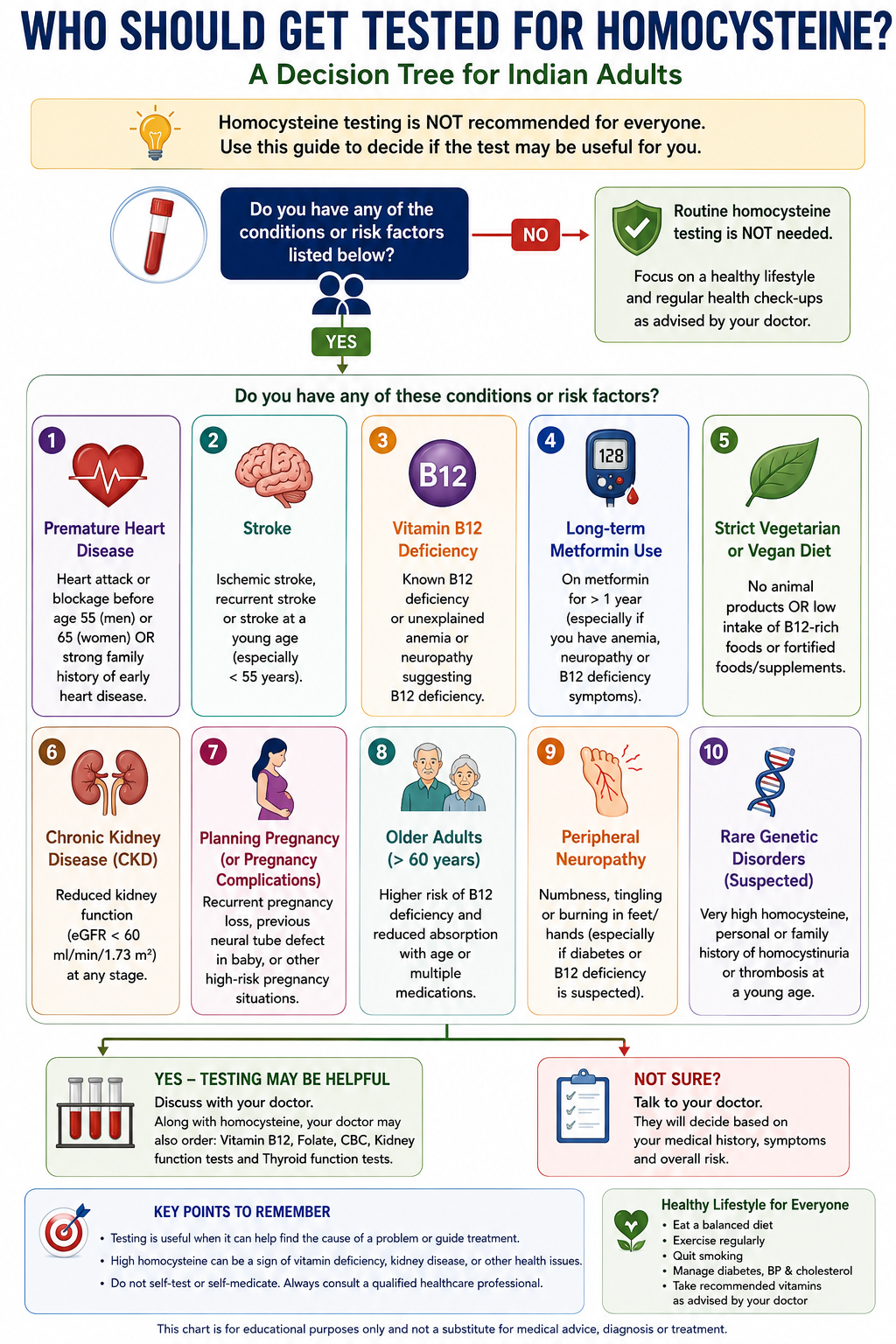
Decision Tree for getting Homocysteine Test
Indians Who May Benefit From Homocysteine Testing
1. People With Premature Heart Disease – Especially if:
Heart attack before age 55 (men)
Heart attack before age 65 (women)
Strong family history
Unexplained vascular disease
2. Stroke Survivors – Particularly: Ischemic stroke, Stroke at a young age and Recurrent stroke
3. People With Vitamin B12 Deficiency – Especially when deficiency is Persistent, Severe and Symptomatic
Elevated homocysteine may support the diagnosis of functional B12 deficiency.
4. Long-Term Metformin Users – Metformin is an excellent medication for Type 2 diabetes. However, long-term use can reduce vitamin B12 absorption in some individuals. ADA guidelines recommend periodic assessment of vitamin B12 in long-term metformin users, especially if they develop anemia or neuropathy. Homocysteine testing may be considered in selected cases when vitamin deficiency is suspected.
5. Strict Vegetarians and Vegans – Since vitamin B12 is naturally found mainly in animal-derived foods, people following long-term vegetarian or vegan diets may develop deficiency if they do not consume fortified foods or supplements.
6. Chronic Kidney Disease (CKD) – Homocysteine often rises as kidney function declines because renal clearance decreases. Testing may provide additional information but should always be interpreted alongside kidney function.
7. Women Planning Pregnancy – Routine homocysteine testing is not recommended for all women planning pregnancy. However, it may be considered in selected situations such as: Recurrent pregnancy loss, History of neural tube defect–affected pregnancy, Suspected severe vitamin deficiency, Certain inherited metabolic disorders
All women planning pregnancy should follow national recommendations for folic acid supplementation.
8. Older Adults – Ageing increases the likelihood of Vitamin B12 deficiency, Reduced stomach acid, Medication-related malabsorption. Testing may be appropriate when deficiency is suspected clinically.
9. Peripheral Neuropathy – Patients with Numbness, Tingling and Burning feet should first undergo evaluation for diabetes, vitamin B12 deficiency and other common causes. Homocysteine may be useful in selected patients as part of a broader assessment.
10. Individuals With Suspected Rare Genetic Disorders – Very high homocysteine concentrations (often >100 µmol/L) may suggest rare inherited disorders such as classical homocystinuria, which require specialist evaluation.
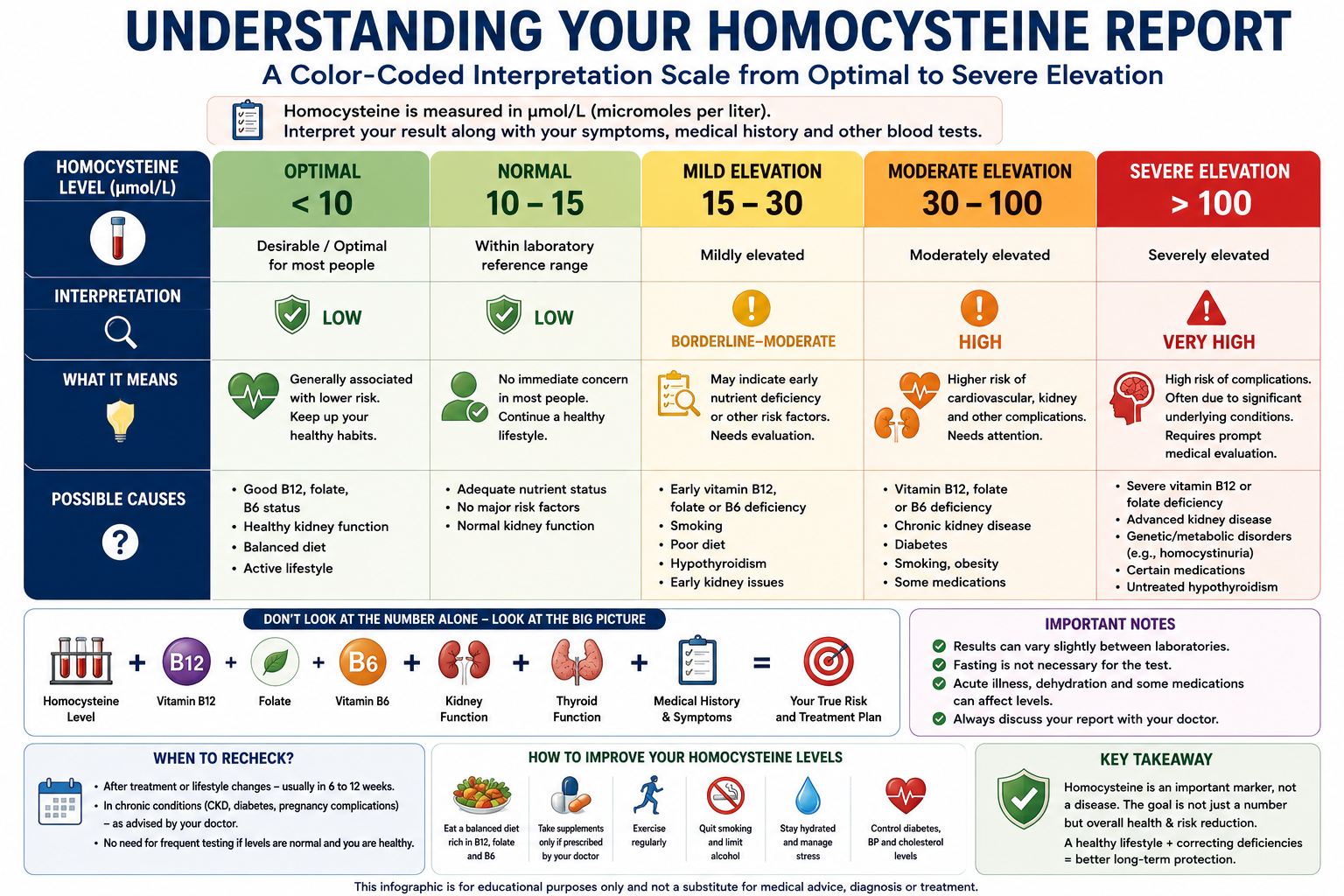
Understanding Your Test Results
Different laboratories use slightly different reference ranges. A practical interpretation is:
Homocysteine Level
Interpretation
<10 µmol/L
Often considered desirable
10–15 µmol/L
Within the reference range in many laboratories; interpret with clinical context
15–30 µmol/L
Mild elevation
30–100 µmol/L
Moderate elevation
>100 µmol/L
Severe elevation; evaluate for significant vitamin deficiency, kidney disease or inherited metabolic disorders
Remember: One number never tells the whole story.
Understanding Your Homocysteine Report
How Can High Homocysteine Be Corrected?
The goal is not simply to lower the laboratory value, but to identify and address the underlying cause.
Step 1: Correct Vitamin B12 Deficiency – Vitamin B12 deficiency is one of the most common reversible causes of elevated homocysteine in India. Some individuals require oral supplementation, while others may need intramuscular injections.Your Treatment should be guided by a healthcare professional.
However, as explained elsewhere – try and add Goat Liver, Lamb and Chicken Liver in your daily diet for getting Natural, High Quality Vit B12 from food.
Step 2: Ensure Adequate Folate Intake – Natural folate-rich foods include Spinach, Fenugreek leaves, Mustard greens, Lentils, Chickpeas and Citrus fruits apart from animal meats. Women planning pregnancy should follow national folic acid recommendations.
Step 3: Vitamin B6 – Vitamin B6 supports the conversion of homocysteine into cysteine. Dietary sources include Fish, Poultry, Mutton, Lamb, Bananas, Potatoes, Chickpeas and Whole grains. High-dose supplementation should not be used without medical supervision, as prolonged excessive intake can cause nerve damage.
Step 4: Riboflavin (Vitamin B2) – Riboflavin is an important cofactor in folate metabolism and may particularly benefit individuals with certain MTHFR genetic variants. Food sources include Milk, Yogurt, Eggs, Almonds, Mushrooms and Animal Meats
Step 5: Eat Adequate Animal Proteins – Methionine metabolism depends on balanced nutrition. Aim for adequate—but not excessive—protein intake from a variety of sources.
Which Vitamins Have the Strongest Evidence?
Nutrient
Evidence for Lowering Homocysteine
Vitamin B12
Strong
Folate (B9)
Strong
Vitamin B6
Moderate to Strong
Riboflavin (B2)
Moderate (especially in selected genetic subgroups)
Choline/Betaine
Emerging; specific indications only
Does Lowering Homocysteine Prevent Heart Attacks?
This is one of the most important questions—and one of the most misunderstood. Large clinical trials have consistently shown that:
However, lowering homocysteine has not consistently reduced heart attacks or cardiovascular deaths in unselected populations.
That does not mean vitamins are ineffective. It only means they should be used to correct documented deficiencies and support normal metabolism, rather than as a substitute for proven cardiovascular prevention strategies such as controlling blood pressure, cholesterol, diabetes, smoking and physical inactivity.
Practical Advice for Indians
If you are vegetarian, older, living with diabetes, taking metformin long-term, or have unexplained anemia or neuropathy, discuss vitamin B12 assessment with your doctoror better still, shift to animal origin meats and organ meats.
If homocysteine is elevated, do not rush to high-dose supplements without identifying the underlying cause. Try and correct the nutritional deficiencies and your lifestyle.
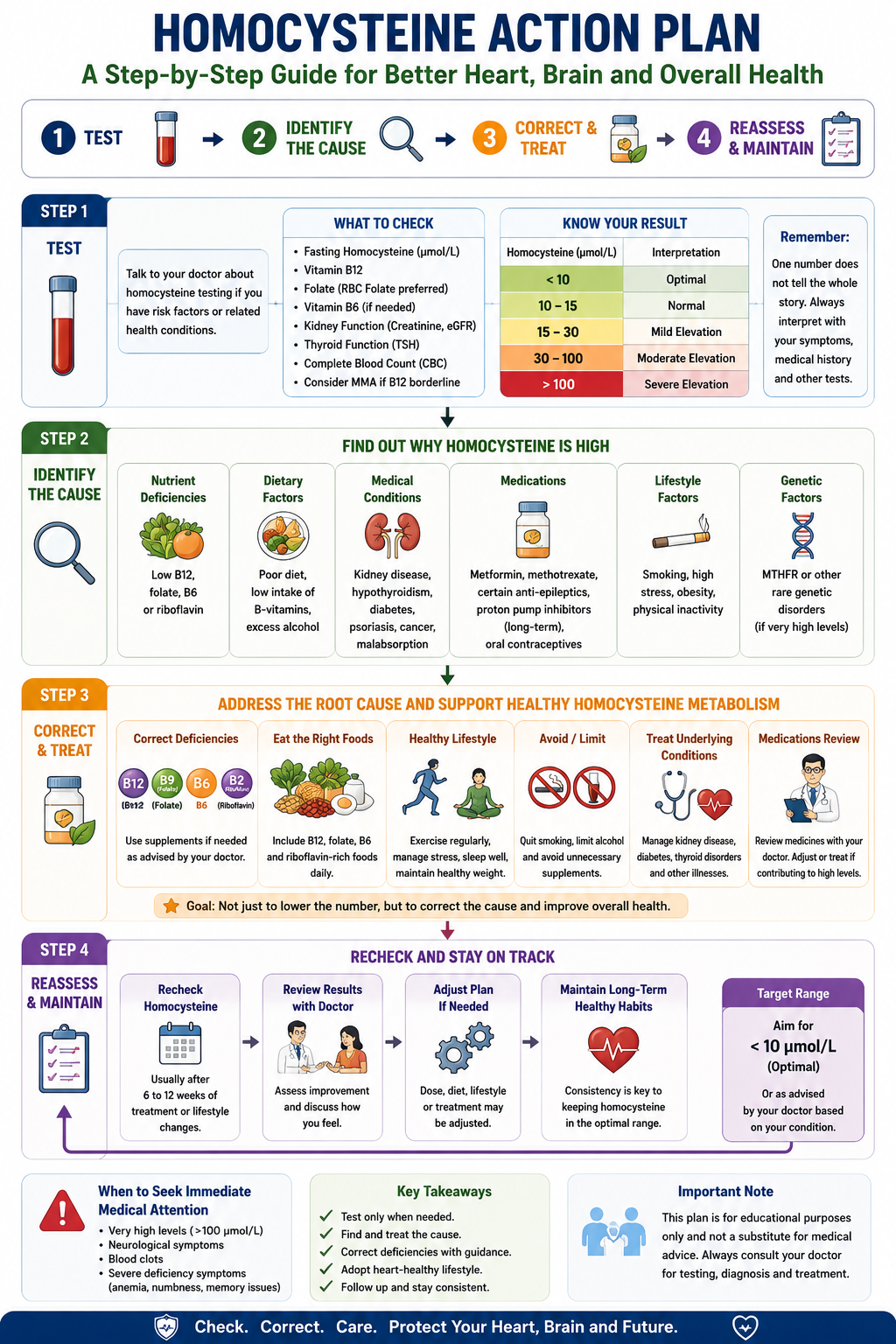
Practical Homocysteine Action Plan for Indians
Frequently Asked Questions
Should I take folic acid if my homocysteine is high?
Only after appropriate evaluation. Folate can correct deficiency, but taking folic acid without recognizing vitamin B12 deficiency may delay diagnosis of neurological complications.
Can diet alone lower homocysteine?
In mild elevations caused by nutritional deficiency, improving intake of vitamin B12, folate and vitamin B6 rich foods such as Animal Organ Meats and Red Meats may certainly help. Some individuals require supplements or treatment of an underlying medical condition.
Should I repeat the test?
Repeat testing depends on the reason for the initial measurement and whether treatment has been started. Your clinician can advise on the appropriate interval.
Key Takeaways
Routine homocysteine screening is not recommended for the general healthy population.
Selective testing may be appropriate in people with vitamin B12 deficiency, premature cardiovascular disease, stroke, chronic kidney disease, long-term metformin use, unexplained neuropathy and certain pregnancy-related conditions.
Elevated homocysteine should always prompt evaluation for reversible causes rather than automatic supplementation.
Correcting vitamin deficiencies is important for overall health, but homocysteine reduction alone should not replace comprehensive cardiovascular risk management.
As part of our Evidence-Explained™ - we present you learnings from a long, 20 years running clinical study on Osteoporosis and Fractures in Americans...
Height and Bone Developments in Children
Childhood linear growth represents a sensitive biomarker of cumulative somatic health, adequate cellular nutrition, and harmonious skeletal development.
Globally—and within...