



A Landmark Study That Changed Medical Thinking. In the late 1970s, diabetes specialists around the world faced a difficult question – Why did so many people continue to develop complications even after being diagnosed and treated?
Part 3 of 10 Part Series on The Silent Death of Pancreas – For Part 2, Click Here
Our Early Understaanding of Diabetes
Doctors knew how to lower blood sugar. What they did not fully understand was how Type 2 diabetes developed over time. Was diabetes simply a disease of high blood sugar? Or had damage been occurring silently for years before diagnosis?
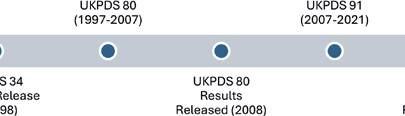
To answer these questions, researchers in the United Kingdom launched one of the largest and most influential diabetes studies ever conducted.
It became known as the United Kingdom Prospective Diabetes Study, or UKPDS.
More than 5,000 newly diagnosed people with Type 2 diabetes were enrolled and followed for nearly 20 years. Even today—almost five decades after recruitment began—UKPDS remains one of the most cited studies in diabetes medicine.
Why Was UKPDS Started?
Before UKPDS, doctors already knew that people with diabetes had a higher risk of:
-
Heart attacks
-
Stroke
-
Kidney disease
-
Blindness
-
Nerve damage
However, many important questions remained unanswered. Researchers wanted to understand:
-
Does lowering blood sugar reduce complications?
-
What happens to insulin production over time?
-
Why does diabetes worsen even after treatment?
-
How quickly do beta cells lose function?
-
Which treatments provide the greatest long-term benefit?
The study was designed to answer these questions through long-term observation rather than short-term experiments.
One of the Largest Diabetes Studies Ever Performed
UKPDS began recruiting participants in 1977. Key facts include:
-
More than 5,000 adults with newly diagnosed Type 2 diabetes
-
Conducted across 23 clinical centers in the United Kingdom
-
Follow-up lasting up to 20 years
-
Multiple treatment strategies evaluated
-
Continuous assessment of blood glucose and clinical outcomes
The size and duration of UKPDS made it one of the most comprehensive investigations ever undertaken in Type 2 diabetes.
New Way of Thinking About Diabetes
One of UKPDS’s most important contributions was showing that Type 2 diabetes is progressive. Earlier thinking often implied that once blood sugar was controlled, the disease itself was largely under control.
UKPDS demonstrated something different. Even when patients received treatment, the ability of the pancreas to produce sufficient insulin generally continued to decline over time.
This helped explain why many people eventually required additional medications and, in some cases, insulin therapy.
Understanding Beta-Cell Function
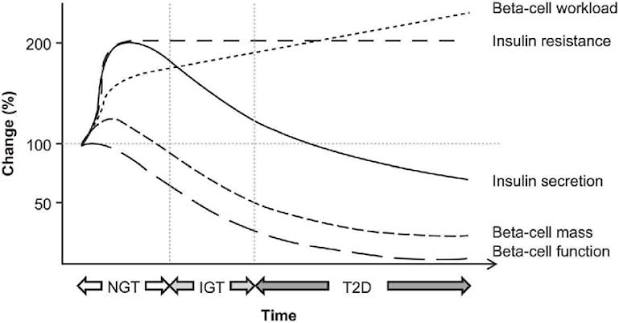
Before discussing the results, it is important to understand what scientists mean by beta-cell function. Beta cells have two key characteristics:
1. Number of Cells
How many beta cells are present within the pancreas? This is referred to as beta-cell mass.
2. Performance of the Cells
How effectively do those cells produce and release insulin when glucose levels rise? This is called beta-cell function. These are not the same thing.
A person may have:
-
fewer beta cells but relatively good function,
-
or many beta cells that function poorly.
UKPDS focused primarily on function, not directly on cell number.
The Famous “50%” Finding
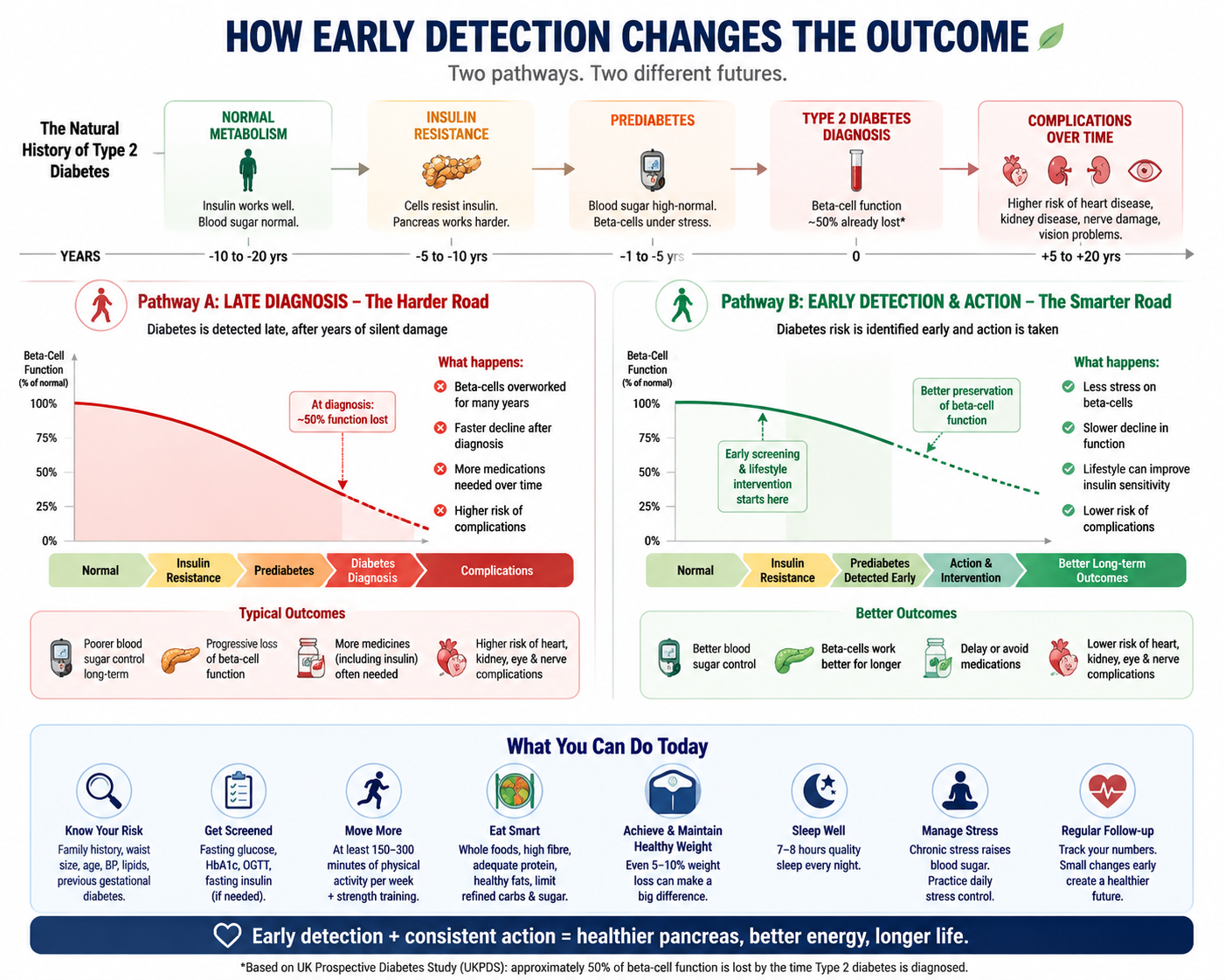
Perhaps the most widely quoted statement associated with UKPDS is: “At diagnosis, approximately 50% of beta-cell function has already been lost.”
This statement is broadly consistent with how the study has been interpreted over the years—but it is important to understand exactly what it means. Researchers did not remove pancreatic tissue or count beta cells under a microscope.
Instead, they estimated beta-cell function using mathematical models based on:
-
fasting glucose,
-
fasting insulin,
-
and the Homeostasis Model Assessment (HOMA).
These models suggested that the insulin-secreting capacity of beta cells had already declined substantially—roughly to about half of normal—by the time Type 2 diabetes was diagnosed. That is very different from saying: “Half the beta cells are dead.”
The study did not directly demonstrate that 50% of beta cells had been destroyed. But that some beta cells are lost over time, while others remain alive and function less efficiently because of:
-
chronic exposure to high glucose,
-
elevated fatty acids,
-
inflammation,
-
oxidative stress,
-
fat accumulation within the pancreas,
-
and prolonged metabolic stress.
This distinction is encouraging because improving the metabolic environment may restore some function in surviving beta cells, especially early in the disease.
What Happens After Diagnosis?
UKPDS also showed that beta-cell function generally continued to decline after diagnosis. This explains why many people experience the following pattern:
Year 1: Diet and exercise may adequately control glucose.
↓
A few years later: One medication becomes necessary.
↓
Later: Two or more medications are required.
↓
Eventually: Some individuals require insulin therapy.
This progression reflects the underlying biology of Type 2 diabetes rather than a personal failure to “control” the disease. However, the rate of progression varies widely and many factors—including weight loss, physical activity and adherence to treatment—can slow the deterioration.
Modern Research Supports Earlier Detection of Diabetes
Since UKPDS, numerous studies have expanded our understanding. Research now shows that:
-
insulin resistance often begins 10–20 years before diagnosis,
-
blood glucose may remain “normal” for years because the pancreas compensates,
-
beta-cell dysfunction starts long before diabetes becomes clinically apparent.
By the time blood glucose crosses the diagnostic threshold, metabolic changes have often been developing silently for many years.
Can Beta-Cell Function Improve?
One of the most exciting developments in diabetes research over the past two decades is the possibility that some beta-cell function may improve if intervention occurs early. Studies such as:
-
DiRECT
-
Diabetes Prevention Program
-
Look AHEAD
-
Virta Health
have shown that substantial weight loss and improved metabolic health can lead to: lower blood glucose, reduced fat within the liver and pancreas, improved insulin sensitivity, and, in some individuals, partial recovery of beta-cell function.
The extent of recovery depends on factors such as disease duration, age, genetics, and remaining beta-cell reserve.
Why This Matters for We Indians
For Indians, the UKPDS findings have particular significance. Many South Asians:
-
develop insulin resistance earlier,
-
accumulate visceral fat at lower BMI,
-
possess lower beta-cell reserve,
-
develop diabetes at younger ages.
This means that by the time diabetes is diagnosed, beta-cell function may already have been declining for years. Early screening, especially for people with a family history of diabetes or other risk factors, becomes critically important.
Biggest Lesson from UKPDS
The greatest contribution of UKPDS was not the “50%” number. Its most important message was this: Type 2 diabetes is a progressive disease that begins long before diagnosis.
That insight shifted medical thinking worldwide. Today, diabetes prevention focuses increasingly on:
-
identifying insulin resistance early,
-
detecting prediabetes,
-
encouraging healthy lifestyle changes,
-
preserving beta-cell function,
-
and delaying progression to overt diabetes.
Key Takeaways
-
The UK Prospective Diabetes Study (UKPDS) fundamentally changed our understanding of Type 2 diabetes.
-
The study estimated that beta-cell function had declined to approximately 50% of normal by the time of diagnosis, based on mathematical modeling—not direct measurement of beta-cell number.
-
Type 2 diabetes develops gradually over many years through insulin resistance and progressive beta-cell dysfunction.
-
Beta-cell function often continues to decline after diagnosis, although the rate varies among individuals.
-
Early lifestyle intervention and evidence-based treatment can improve metabolic health and may preserve or partially restore beta-cell function in some people, particularly when diabetes is diagnosed early.
-
For Indians, who often develop diabetes at younger ages and lower BMI, early screening is especially important.
Select References:
-
UK Prospective Diabetes Study (UKPDS) Group. Overview of 6 Years’ Therapy of Type II Diabetes. Diabetes. 1995
-
Turner RC, Holman RR, Matthews D, et al. UKPDS 16. Diabetes. 1995
-
Holman RR, et al. UKPDS 49: Declining β-cell Function in Type 2 Diabetes. Diabetes. 1999;48:2249–2256
-
DeFronzo RA. From the Triumvirate to the Ominous Octet. Diabetes. 2009
-
Weir GC, Bonner-Weir S. Five Stages of Evolving Beta-Cell Dysfunction. Diabetes. 2004
-
Taylor R. Type 2 Diabetes: Etiology and Reversibility. Diabetologia. 2008
-
American Diabetes Association. Standards of Care in Diabetes (latest edition)
-
International Diabetes Federation. IDF Diabetes Atlas (latest edition)