



Your Diabetes Didn’t Begin When Your Doctor Diagnosed It. It Started a DECADE ago, only if you cared – Why Millions of Indians May Already Have Significant Loss of Insulin-Producing Capacity in Pancreas, Before even Type 2 Diabetes Is Diagnosed.
Our Opinion
A patient and thorough understanding of process of diabetes developing in human body, can SAVE Million Young Indians who may unknowingly tread the same path as us elders. This is our attempt to try and SAFEGUARD health of Young, Adolescent Indians from developing diabetes later in Life by creating evidence based awareness.
Our sincere, honest and humble opinion (maybe unfounded) is that every Indian, repeat every Indian, including us Medicos, is at a DEFINITE risk of developing diabetes at some stage in life – some will have sooner, others will develop later. Develop we all will – should we continue with similar food habits and lifestyles.
We will, certainly be ridiculed for this statement by Med Fraternity and even Others – but if we are able to create awareness of this clear, urgent and hugely life threatening, present danger, the ridicule will surely be worth it.
Part 1 of 10 Part Series on The Silent Death of Pancreas
This is Part 1 of 10 Part Series on Understanding Diabetes and steps to hopefully avoid developing it ourselves and for our loved ones. Every detail is backed by published studies – listed at the end, as references, in respective write ups.
Diabetes – Introduction
Every day, thousands of Indians are diagnosed with Type 2 diabetes. Many leave the clinic shocked. “But I felt completely healthy.”
Unfortunately, feeling healthy does not always mean your metabolism is healthy. One of the most important discoveries in diabetes research is that Type 2 diabetes usually develops silently over many years before it is diagnosed. During this time, your pancreas is already under increasing stress as it works harder and harder to keep blood sugar within the normal range – pancreas was doing job thoroughly diligently..
By the time blood glucose finally rises enough for a diagnosis, much of the pancreas’s insulin-producing capacity may already have declined. This insight, first highlighted by the landmark UK Prospective Diabetes Study (UKPDS) (hyperlinked and a full copy download is also shared here) and supported by later research, fundamentally changed the way scientists understand Type 2 diabetes.
For Indians—who tend to develop diabetes at a younger age and lower body weight than many Western populations—this silent phase is especially important.
UK Prospective Diabetes Study (UKPDS) Copy – UK Prospective Diabetes Study (UKPDS)
India Is Facing One of the World’s Largest Diabetes Epidemics
India is often called the “Diabetes Capital of the World.” While that phrase is used less often today because several countries have also rising diabetes rates, India remains home to one of the world’s largest populations of people living with diabetes – and that should hurt authorities, decision makers and medical fraternity in that order.
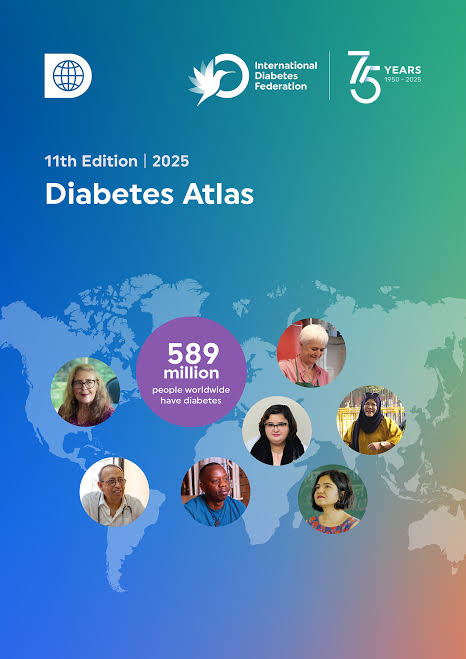
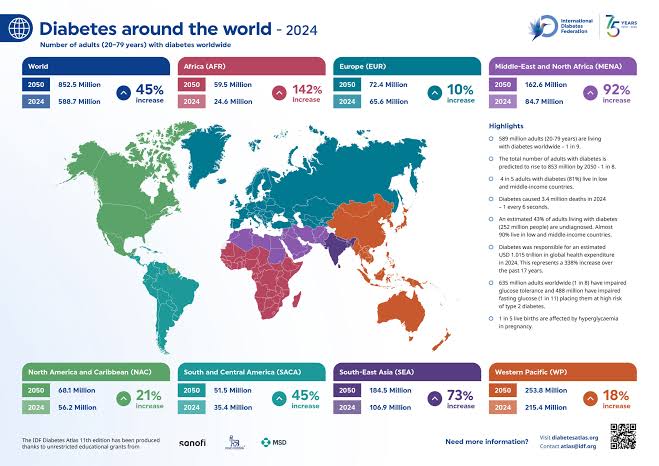
According to the International Diabetes Federation (IDF) Diabetes Atlas 2025:
-
More than 100 million adults in India are living with diabetes.
-
Tens of millions more have prediabetes, placing them at high risk of developing Type 2 diabetes.
-
India ranks among the countries with the largest absolute burden of diabetes globally.
The ICMR–INDIAB Study, one of the largest diabetes surveys ever conducted in India, paints an equally concerning picture. It estimated:
-
Around 101 million adults living with diabetes.
-
Around 136 million adults with prediabetes.
Together, these figures suggest that more than 237 million Indian adults have either diabetes or prediabetes. This represents a substantial proportion of the adult population and highlights the urgent need for earlier detection and prevention.
Perhaps even more concerning is that many people with diabetes remain undiagnosed because early disease often causes few or no symptoms.
Diabetes caused at least USD 1 trillion dollars GLOBALLY and not in India alone, health expenditure in 2025 – a 338% increase over the last 17 years.
Diabetes Is Not a Sudden but a SLOW Disease
Most people imagine diabetes as a condition that begins on the day a doctor says: “Your blood sugar is high. You have diabetes.” Science tells a very different story.
The development of Type 2 diabetes usually occurs gradually over many years through a series of metabolic changes.
Stage 1: Insulin Sensitivity Is Normal
At this stage: Blood sugar remains normal, the pancreas produces the right amount of insulin, Muscles respond efficiently to insulin, Liver appropriately regulates glucose production.
Most healthy young adults fall into this category.
Stage 2: Insulin Resistance Begins
Over time, many people develop insulin resistance. This means that muscle, liver and fat cells become less responsive (couldn’t care less) to insulin. To compensate, the pancreas produces more insulin.
Blood glucose may still remain normal because the pancreas is working harder. This stage can last for several years without obvious, overt symptoms.
Stage 3: Prediabetes Develops
Eventually, the pancreas can no longer keep up with the increasing demand of insulin, starts giving up. Blood sugar begins to rise above normal but has STILL not yet reached the threshold for diabetes. You still are oblivious to the dangers inside. This condition is called prediabetes.
Importantly: Prediabetes is not “mild diabetes.” It is a biologically active disease process during which insulin resistance and declining beta-cell function continue to progress.
Without immediate interventions, many—but probably not all—people with prediabetes will develop Type 2 diabetes. Lifestyle changes can potentially, substantially reduce that risk.
Stage 4: Type 2 Diabetes Is Diagnosed
Diagnosis usually occurs when fasting glucose, HbA1c, or the oral glucose tolerance test exceeds established diagnostic thresholds. By this point, the pancreas has often been under stress for years.
The diagnosis represents the point at which diabetes becomes detectable, not necessarily the point at which it began, many summers ago.
Pancreas Has Been Fighting a Silent and (nay we say) Loosing Battle
The pancreas contains tiny clusters of cells called the Islets of Langerhans. Within these are beta cells, which produce insulin. Insulin is the hormone that helps glucose move from the bloodstream into muscles, liver and other tissues where it can be used or stored.
When insulin resistance develops, beta cells respond by increasing insulin production. Initially, they succeed. But maintaining this higher output day after day, year after year, places considerable stress on the beta cells. Researchers believe that several factors contribute to progressive beta-cell dysfunction, including:
-
Chronic high blood glucose (glucotoxicity)
-
Elevated free fatty acids (lipotoxicity)
-
Fat accumulation within the pancreas
-
Oxidative stress
-
Low-grade inflammation
-
Genetic susceptibility
-
Aging
The result is a gradual decline in the ability of beta cells to secrete sufficient insulin.
Landmark UKPDS Changed How We Think About Diabetes
Before the UK Prospective Diabetes Study (UKPDS), many experts viewed Type 2 diabetes primarily as a disorder of high blood sugar.
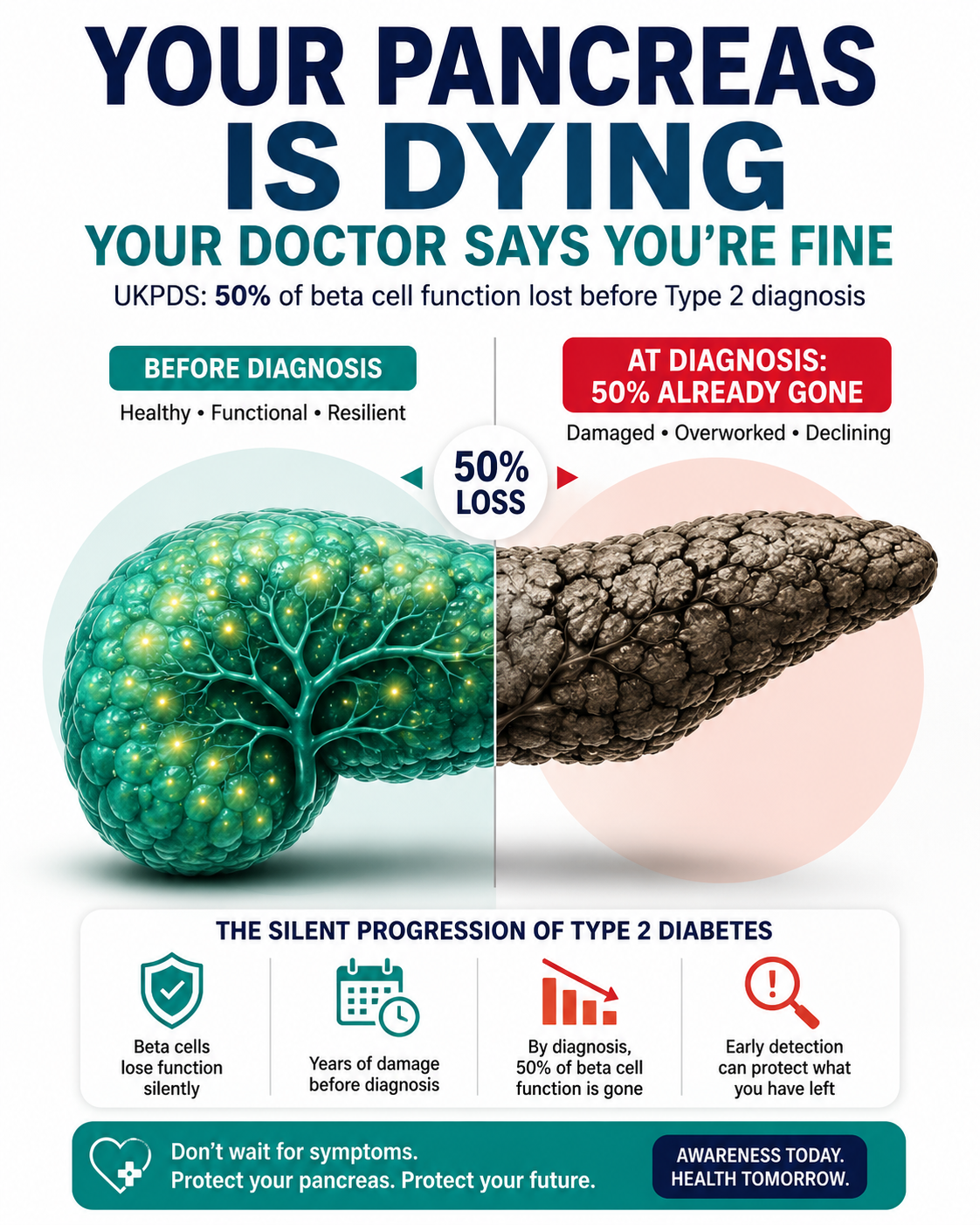
UKPDS demonstrated that the disease process begins much earlier. Using mathematical models of beta-cell function, researchers estimated that beta-cell function had already fallen to about 50% of normal by the time Type 2 diabetes was clinically diagnosed. Read this highlighted text at least 2 times.
This finding has been widely cited for decades because it shifted attention toward earlier detection and prevention. It is important to interpret the result correctly.
The study did not directly measure the number of beta cells or prove that half the cells had been destroyed. Instead, it estimated that the functional capacity of beta cells had declined substantially.
This distinction matters because some degree of beta-cell dysfunction may improve in the early stages with weight loss, improved metabolic control and reduction of excess fat in the liver and pancreas. However, the extent of recovery varies among individuals and is often incomplete, particularly after long-standing diabetes.
We Hate to Say It – Indians Are at a Greater Risk
One of the most important questions is: Why do Indians often develop Type 2 diabetes earlier than many Europeans despite having a lower Body Mass Index (BMI)?
Research has identified several contributing factors:
-
Greater visceral (abdominal) fat at a given BMI
-
Lower muscle mass, CONSEQUENTLY reducing glucose disposal
-
A higher tendency to develop fatty liver
-
Earlier onset of insulin resistance
-
Genetic and developmental influences, including the “thin-fat” phenotype described in South Asian populations
These factors may reduce the metabolic reserve available to cope with insulin resistance. As a result, many Indians develop diabetes:
-
At a younger age
-
At a lower BMI
-
With fewer warning symptoms
This makes continued early screening and PREVENTIVE Steps particularly important.
Why Waiting for Symptoms Is Risky
Early Type 2 diabetes often causes no obvious symptoms. When symptoms do occur, they may include:
-
Increased thirst
-
Frequent urination
-
Unexplained fatigue
-
Blurred vision
-
Slow wound healing
-
Recurrent skin or urinary tract infections
-
Unexplained weight loss (in some individuals)
However, many people experience none of these until blood glucose has been elevated for months or even years. For this reason, relying on symptoms alone is not an effective strategy for detecting diabetes.
Regular screening—especially for people with risk factors such as family history, obesity, gestational diabetes, hypertension or sedentary lifestyle—is essential.
Most Important Message
Perhaps the biggest lesson from modern diabetes research is this: Type 2 diabetes does not suddenly appear.
It develops gradually through years of insulin resistance and progressive loss of beta-cell function. That long silent period represents a critical opportunity – to PREVENT or DELAY.
Healthy eating, regular physical activity, maintaining a healthy weight, adequate sleep, stress management and timely medical screening can slow or delay progression in many people. The earlier these measures begin, the greater the chances of preserving metabolic health.
Key Takeaways
-
Type 2 diabetes typically develops over many years, not overnight.
-
Prediabetes is an important stage where intervention can significantly reduce the risk of progression.
-
The UK Prospective Diabetes Study (UKPDS) estimated that beta-cell function had already declined to approximately 50% of normal at the time of diagnosis, highlighting the importance of early detection.
-
Indians are at particularly high risk because they often develop diabetes earlier and at lower BMI than many other populations.
-
Routine screening is crucial because many people have no symptoms during the early stages of the disease.
-
Protecting beta-cell function through lifestyle measures and appropriate medical care is a key goal of diabetes prevention.
Select References:
-
UK Prospective Diabetes Study (UKPDS) Group. Diabetes. 1995;44:1249–1258.
-
Turner RC, Holman RR, Matthews D, et al. UKPDS 16: Overview of 6 Years’ Therapy of Type 2 Diabetes. Diabetes. 1995.
-
Holman RR. UKPDS 49: Declining β-cell Function in Type 2 Diabetes. Diabetes. 1999;48:2249–2256.
-
Anjana RM, et al. ICMR–INDIAB Study. Lancet Diabetes & Endocrinology. 2023.
-
International Diabetes Federation. IDF Diabetes Atlas, 11th Edition.
-
American Diabetes Association. Standards of Care in Diabetes (latest edition).
-
DeFronzo RA. Diabetes. 2009;58:773–795.
-
Taylor R. Type 2 Diabetes Remission and the Twin Cycle Hypothesis. Diabetologia. 2008.