


What is NAFLD / Why New Name- MASLD and Why Now
Nonalcoholic fatty liver disease (NAFLD) has been renamed to MASLD (Metabolic dysfunction-associated steatotic liver disease). The more severe, inflammatory form of the disease previously known as NASH is now called MASH (Metabolic dysfunction-associated steatohepatitis).
MASLD, formerly known as NAFLD, is the most common condition affecting liver, around the world and affects more than 30% of global population.
These name / nomenclature changes were adopted by global liver experts to reduce stigma and more accurately reflect that the condition is driven by metabolic health issues rather than just “fat” or “alcohol”.
MASLD – Prevalence
The worldwide prevalence of MASLD (Metabolic dysfunction-associated steatotic liver disease) has increased along with that of obesity over the last decades.
In fact, this disease has become the most prevalent chronic liver disease in India also due to its strong association with obesity and lack of physical exercise. Different research reports too peg a prevalence rate exceeding 25% for Indian population.
The rise in the prevalence of these conditions – MASLD and MASH – seems to be largely explained by the exposure to an “obesogenic” environment.
This complex and multidimensional scenario is composed of diverse factors that promote an individuals’ overall energy imbalance such as;
-
increased availability (food supply) and overconsumption of low-nutrient, energy-dense foods; Food these days is available ‘On Tap’ thus fueling conditions like Obesity and MASLD and if un-controlled, progressing to MASH
-
modern sedentary lifestyle, among others, leading a state of excess adiposity
-
Obesity represents the centerpiece in the development of several metabolic complications such as insulin resistance, diabetes mellitus type 2 (T2DM), cardiovascular disease (CVD), and MASLD
MASLD – Metabolic Dysfunction Associated Steatotic Liver Disease is a multifactorial metabolic disorder in which excessive intrahepatic fat accumulation is the hallmark feature. Occasionally, liver fat is accompanied by inflammation that causes more drastic morphological changes in the liver tissue. It is important to remark that besides over-nutrition, certain types of undernutrition paradoxically may promote the development of fatty liver.
Grades / Stages of MASLD
MASLD encompasses a wide spectrum of liver damage that is categorized by histological examination. The least advanced stage of disease, simple steatosis (SS), is characterized by steatosis alone (defined as >5% hepatocytes containing lipid vesicles). Metabolic dysfunction-associated steatohepatitis (MASH), which represents a more severe form of MASLD, is defined by the presence of marked inflammation and hepatocyte ballooning with or without fibrosis.
MASLD is a progressive disease, in which chronic hepatic inflammation is involved in the evolution of MASH to cirrhosis that represents a risk factor for the development of hepatocarcinoma.
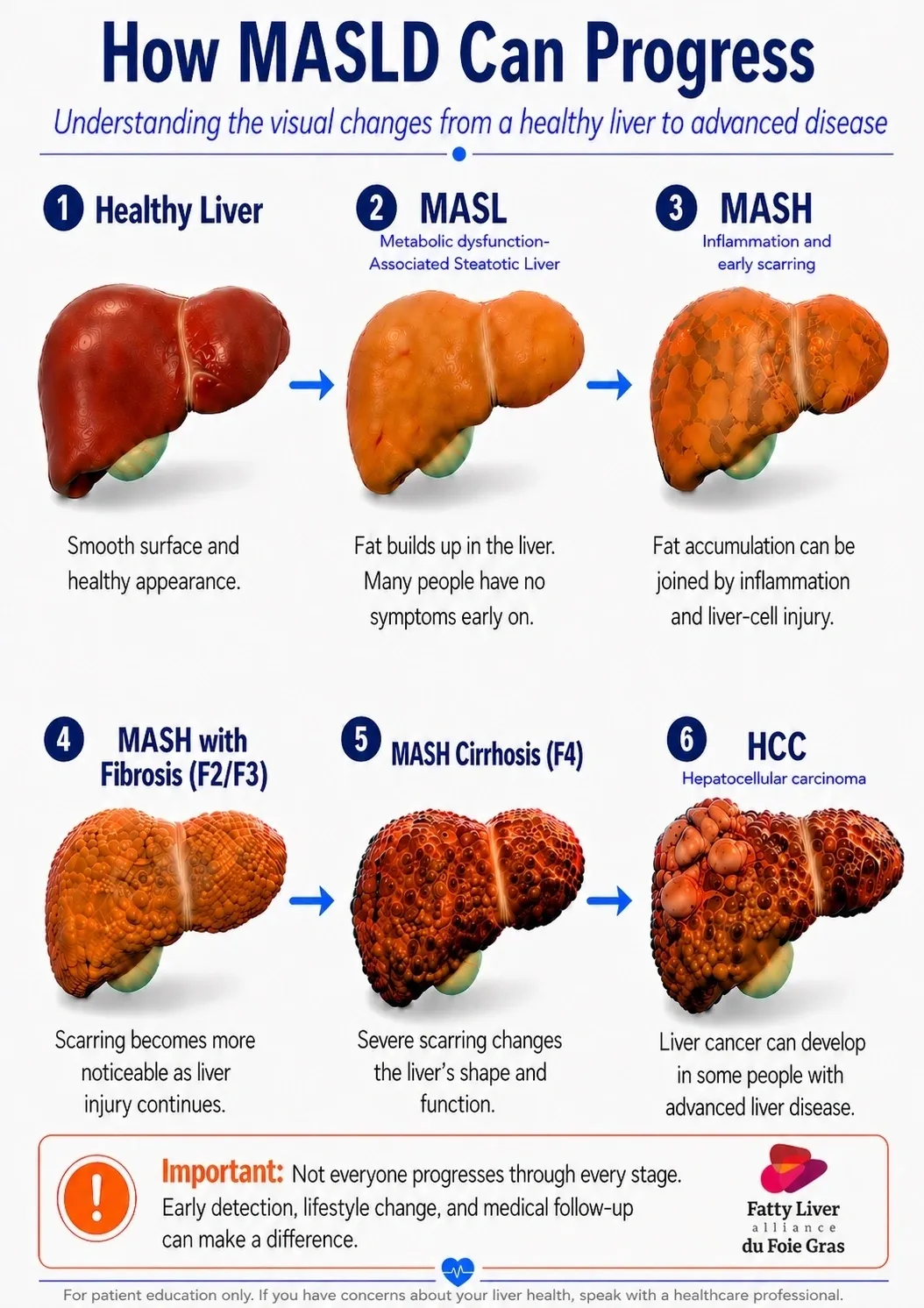

How to Manage MASLD and Hopefully Reverse MASLD
Healthy lifestyle modifications, namely diet and physical activity, are the mainstay of the MASLD therapy and nor so much drugs.
MASLD is part of a complex network of metabolic disruptions in multiple tissues commonly associated with obesity, which consequently makes diet therapy a difficult endeavor.
The present tendency of nutritional intervention leans towards correcting unhealthy dietary factors that promote disease progression. Currently, the optimal nutritional management remains debatable, although there is general consensus that gradual body weight loss is the recommended standard of care for the treatment of MASLD.
Dietary energy restriction is a key element to achieve weight reduction, but its compliance depends largely on self-control, and consequently, diet adherence might become quite challenging in most cases.
Hence, different choices of nutritional interventions have been explored in the MASLD context. This write is meant to serve as a comprehensive overview of the most relevant literature describing nutritional/dietary approaches for the management of MASLD.
Clinical Practice Guidelines – Target Weight Loss
American Association for the Study of Liver Diseases (AASLD) recommends a total weight reduction of at least 3–5% to ameliorate steatosis, whereas improving most of the histopathological features requires a greater degree of weight loss (7–10%).
The European Association for the Study of the Liver (EASL), European Association for the Study of Diabetes (EASD), and European Association for the Study of Obesity (EASO) suggest a 7–10% of total weight loss target. The EASL-EASD-EASO also advises the use of structured programs aimed at lifestyle changes.
EASL-EASD-EASO |
AASLD-ACG-AGA |
|
Energy Intake |
REDUCE by 500 -1,000 Kcal/Day |
REDUCE by 500 -1,000 Kcal/Day |
Macro-Nutrient Composition |
4 Diet Types– Low to Moderate Fat– Moderate to High Carbohydrate– Low Carbohydrate Ketogenic Diets– Mediterranean Diet |
Not SpecifiedOmega-3 Fatty Acids may be considered to treat Hypertriglyceridemia in NAFLD Patients |
Fructose Intake |
Avoid drinks and foods with Fructose and added Fructose/ HFCS |
Not Specified |
Alcohol Intake |
Strictly keep below daily limit of 30 g for Men and 20 g for Women |
NAFLD Patients should not consume heavy amounts of Alcohol |
Micro-Nutrients |
Short Term usage of Vit E at 800 IU/Day strictly in non-cirrhotic, non-diabetic NAFLD Patients |
Short Term usage of Vit E at 800 IU/Day strictly in non-cirrhotic, non-diabetic NASH Patients |
Body Weight Loss Recommendations |
7–10% total weight loss target in Obese / Overweight NAFLD cases |
3–5% total weight loss appears essential in NAFLD cases7–10% total weight loss target is needed to improve histopathological features in NASH, including fibrosis |
Exercise / Physical Activity |
140 – 200 Minutes/ week of moderate intensity aerobic physical activities in 3 to 5 sessions are preferred, including brisk walking, cycling and joggingResistance training has shown benefits in promoting Musculo-skeletal strength which helps in metabolic diseases such as NAFLD |
Moderate intensity exercise regularly |