

Vitamin C: Critically Important for Your Gut Health and Gut Microbiome

What is Vit C – What is its Role in Human Body

Vitamin C, also known as ascorbic acid, is an essential water-soluble vitamin required for the growth, repair, and protection of tissues throughout the body. Since the human body cannot produce or store vitamin C, a regular daily intake through food is necessary to maintain adequate levels, making deficiency a common concern in India.

Vitamin C supports several critical functions that affect overall health, immunity, and recovery.

Key Roles of Vitamin C in the Body

  • Collagen Production: Vitamin C is essential for making collagen, a structural protein that keeps skin, gums, blood vessels, bones, and connective tissues strong and healthy.

  • Antioxidant Protection: It helps protect cells from damage caused by free radicals, which contribute to ageing and chronic diseases.

  • Immune System Support: Vitamin C supports the production and function of white blood cells, helping the body fight infections more effectively.

  • Iron Absorption: It improves the absorption of non-heme iron from plant-based foods, reducing the risk of iron-deficiency anaemia, especially important for vegetarians.

  • Brain and Mood Health: Vitamin C plays a role in producing neurotransmitters that influence mood, focus, and cognitive function.
Vit C Deficiency – Worldwide Issue

Low vitamin C concentrations have been reported in cognitively impaired patients, such as those with Alzheimer’s disease and dementia, and in advanced cancer and severe respiratory tract infections including SARS-CoV-2 infection.

A US survey found that about 13% of the population was deficient, with the overall occurrence of age-adjusted vitamin C deficiency being closer to 7% and higher among lower socioeconomic classes. However, it has also been suggested that because depletion of tissue stores can happen rapidly, short-term or intermittent vitamin C deficiency prevalence in the population could be much higher.

In India – Vitamin C insufficiency is widespread in India, affecting approximately up to 74% of the population. A major population-based study identified severe geographic variances. Deficiency affects roughly 74% of adults over age 60 in North India and 46% in South India.

Vitamins – Modulation of Gut Microbiome

An increasing body of evidence has shown that the gut microbiome is a key regulator of immunity and host defense mechanisms.

Disturbance of homeostasis involving interactions between the gut microbiome and the immune system can adversely influence resistance to viral infections, increase disease risk and alter neurocognitive function.

Although previous studies have recognized that vitamin supplementation can alter the gut microbiome, no vitamins are presently classified as prebiotics (agents that promote the growth of beneficial microorganisms in the gut) by the International Scientific Association for Probiotics and Prebiotics.

A recent study by Pham and colleagues compared the effects of colon-targeted vitamins C, B2 and D on the human gut microbiome and reported that vitamin C produced the most distinct effect on the microbiome, increasing microbial alpha-diversity and short-chain fatty acids.

A large variety of factors act to shape and potentially disrupt individuals’ microbiomes, such as genetics, aging, diet, infections and medications. Team of Researchers led by Dr Sabine Hazan hypothesized that vitamin C administration could modulate the gut microbiome, which is a known regulator of immunity. It is possible that such microbiome changes could contribute to protection from viral illnesses associated with microbiome changes, including SARS-CoV-2 infection, and this is worthy of exploration.

Vit C – New Publication shows promise in Improving Gut Microbiota Diversity

A clinical discovery by Dr. Sabine Hazan has uncovered a powerful new function of Vitamin C. Beyond its well-known antioxidant role, it appears to be a critical fuel for our beneficial gut bacteria.

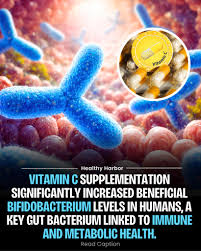
Dr Sabine and Team carried out an extensive Observational Study in 23 participants who received Vit C supplementation from 3 g / day to 25 g/week, for a period of 5 days to 10 days. The findings now published have demonstrated that oral usage of Vit C significantly increases Bifidobacteria levels in gut.

The results indicate that vitamin C increases the abundance of gut bacteria of the genera Bifidobacterium. An earlier study by Otten et al. investigated vitamin C supplementation at a dose of 1 g per day for 2 weeks. They also observed a more than fourfold increase in the mean relative abundance of Bifidobacterium, supporting these new findings by Dr Sabine and her Team

Bifidobacteria – Why does this matter

Bifidobacteria are not passive residents; they are vital for: – Building a robust immune system – Fortifying the gut lining – Combating chronic inflammation – Synthesizing essential nutrients. Members of the genus Bifidobacterium are considered beneficial bacteria and are an indicator of a healthy gut. Bifidobacterium are among the first microbes to colonize the human gastrointestinal tract and are used as probiotics due to their health-promoting properties.

This research suggests that one of Vitamin C’s most profound benefits may be its prebiotic-like effect, nurturing the microbiome that forms the foundation of our overall health. It’s a paradigm shift in understanding how a simple, accessible nutrient works from the inside out.

Conclusion

Vitamin C as a therapeutic agent should be explored specifically for its potential to reverse or ameliorate disorders linked to microbiome dysbiosis, especially  Bifidobacterium deficiencies.

Vit C may be able to restore the gut microbiome (i.e. carry out Refloralization) after Bifidobactrium depletion due to various conditions or acute illness, including respiratory viral illnesses such as SARS-CoV-2 infection.

Incidentally, Bifidobacterium dysbiosis is also intricately linked to Type 2 Diabetes mellitus and a restoration of Bifidobacterium / re-florization with Vit C may have value worth exploring, in managing Type 2DM.

More from the blog

5 of 5 – Essential Vitamins, Minerals and Nutritional Supplements for Sarcopenic Indians

Science supported and Evidence-Based Guide of all essential, Vitamins, Minerals and Supplements that a Sarcopenic Indian must consider. This is last and final, Part 5...

4 of 5 – Breaking the Cycle: How Indians Can Restore Gut Health, Muscles and Age Healthier

This is Part 4 of Our 5 Part Series on Gut Health and Muscle Loss in Indians. You can peruse Part1 here, Part 2 and...

3 of 5 – Gut Dysbiosis Damages Muscles: Link Between Unhealthy Gut, Diabetes & Sarcopenia in Indians

This is Part 3 of 5 of Our Series on Gut Health and Muscle Loss in Indians. You can peruse Part1 here and Part...

Are You at Risk of Sarcopenia? Take This Simple Questionnaire.

An Evidence-Based Screening Tool for Indian Adults - However, we still suggest and request meeting your HealthCare Professional for any Tests and Detailed Examination....