



What Randomized Trials, Meta-Analyses and Clinical Guidelines Really Say About Weekly vs Daily Vitamin D3 Supplementation
Vitamin D3 deficiency has become one of the most common nutritional problems worldwide. In India, despite abundant sunshine, studies consistently show that a large proportion of adults have low vitamin D levels because of indoor lifestyles, limited sun exposure, darker skin pigmentation, air pollution and dietary habits.
One question frequently asked by patients and healthcare professionals is:
Is it better to take vitamin D3 every day, or can one 60,000 IU capsule once a week work just as well?
The answer is more nuanced than many people think. Recent randomized controlled trials, systematic reviews and expert guidelines suggest that weekly vitamin D3 supplementation can be just as effective as daily dosing for correcting vitamin D deficiency—provided the total cumulative dose is comparable. The choice often depends less on biology and more on convenience, adherence and the clinical situation.
Why Vitamin D3 Matters
Vitamin D3 (cholecalciferol) helps regulate calcium and phosphorus absorption and is essential for:
-
Strong bones and teeth
-
Muscle strength
-
Immune function
-
Healthy pregnancy
-
Normal nerve function
-
Long-term metabolic health
Vitamin D deficiency has been linked with osteoporosis, osteomalacia, muscle weakness and increased fracture risk. Research also continues to explore associations with diabetes, cardiovascular disease and immune disorders, although evidence for supplementation in these conditions remains mixed.
Recommended Levels of Vitamin D
Serum concentration of 25(OH)D is the primary indicator of Vitamin D status, reflecting Vitamin D produced endogenously, via sunlight exposure as well as obtained from dietary intake. Concentrations are reported in nanograms per milliliter (ng/mL) in India. While there is still controversy around Vitamin D clinical cut-off points, there are generally accepted values to note.
The Indian Endocrinology Consensus Guidelines define Vitamin D deficiency as 25(OH)D of less than <30 ng/mL. Yet other commonly cited cut-off points include the following:
-
Deficient: <30 nmol/L (<12 ng/mL)
-
Insufficient: 30 to <50 nmol/L (12 to <20 ng/mL)
-
Sufficient: >50 nmol/L (>20 ng/mL)
-
High: >125 nmol/L (>50 ng/mL) is linked to potential adverse health effects
Why 60,000 IU Weekly Is So Common
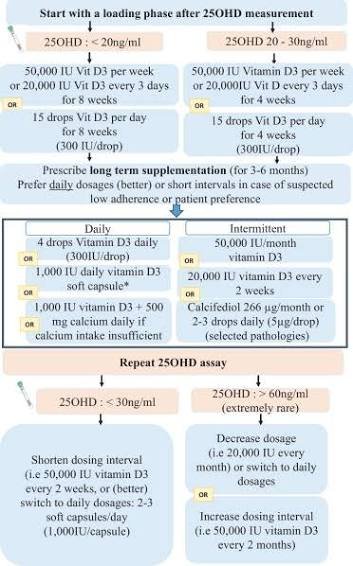
In India, 60,000 IU cholecalciferol has become one of the most commonly prescribed regimens for vitamin D deficiency. Recent Indian expert consensus recommendations (Committee of Expert, Senior Doctors) advise:
-
Vitamin D insufficiency: 60,000 IU once weekly for 8 weeks, followed by monthly maintenance dose
-
Vitamin D deficiency: 60,000 IU once weekly for 12 weeks, followed by monthly maintenance dose
The goal is to restore serum 25-hydroxyvitamin D [25(OH)D] to an optimal range before switching to a lower maintenance schedule.
Daily vs Weekly: What Does the Research Show?
The most comprehensive comparison to date is a 2024 systematic review and meta-analysis that evaluated eight randomized controlled trials involving 542 adults with vitamin D insufficiency or deficiency. The researchers compared weekly cholecalciferol with daily cholecalciferol and found:
-
No statistically significant difference in achieving vitamin D sufficiency
-
Weekly dosing was not inferior to daily dosing
-
The main practical advantage of weekly therapy was reduced pill burden, which may improve adherence for some patients
The authors concluded that, based on current evidence, switching from daily to weekly vitamin D3 does not appear to compromise EFFICACY, although larger high-quality trials are still needed.
Feedback from Clinical Studies
Some patients prefer less frequent dosing, and data shows better adherence. This was demonstrated in a 2006 review published in the journal Clinical Therapeutics that found that once-weekly dosing was associated with improved patient adherence to therapy compared to once-daily dosing.
A 2008 study set out to determine whether the daily, weekly, or monthly use of the same cumulative dose of vitamin D3 would produce similar biological responses. Patients were randomly allocated to one of three identical cumulative doses of vitamin D3, given as 1,500 IU daily, 10,500 IU once weekly, or 45,000 IU once every 28 days. Serum 25(OH)D concentrations changed significantly by day 7 in all groups.
While there were initial differences in serum 25(OH)D concentrations among the groups, there were no significant longer-term differences between the dosing regimens. The researchers concluded that if the cumulative vitamin D dose and the vehicle of administration are the same, then similar serum 25(OH)D concentrations will be attained over time.
A 2018 study compared whether a cumulative dose of vitamin D3 produces the same effects on the serum concentration of 25(OH)D if given daily or monthly. Sixty subjects were randomly assigned to receive 2,000 IU of vitamin D3 daily or 50,000 IU monthly, and serum 25(OH)D concentrations were measured at baseline to day 75.
The researchers concluded that monthly administration of 50,000 IUs is an effective tool for rapidly normalizing 25(OH)D in deficient subjects. Still, daily administration of the same cumulative dose is similarly effective, but it takes longer to reach desirable levels.
Similar conclusions were found in a 2023 meta-analysis of randomized controlled trials. This study aimed to assess the effect of intermittent (weekly and monthly) vitamin D supplementation compared to daily supplementation on improving circulating 25(OH)D levels under similar dosage and duration conditions.
Why Weekly Dosing Works Effectively
Vitamin D is a fat-soluble vitamin. Unlike water-soluble vitamins that are rapidly excreted, vitamin D is stored in body fat and gradually released into circulation. After supplementation:
-
Vitamin D3 is absorbed in the intestine
-
It is converted in the liver into 25(OH)D, the main circulating form measured in blood tests
-
This circulating form has a half-life of approximately two to three weeks, allowing vitamin D levels to remain relatively stable even when supplements are taken weekly instead of daily
This long half-life explains why many endocrinologists consider weekly dosing physiologically reasonable for treating deficiency.
Does Daily Dosing Have Any Advantages?
Possibly but just minor advantages over weekly dosing, however, dosing compliance becomes a challenge with daily dosing.
Although weekly therapy is effective, some studies suggest that daily supplementation may produce just slightly steadier blood concentrations, though not statitically significant, avoiding the peaks and troughs seen after larger intermittent doses. Daily dosing may be preferred for:
-
Individuals already taking multiple daily medications
-
Long-term maintenance after deficiency has been corrected
-
Patients who prefer establishing a daily routine
However, these differences have not consistently translated into superior clinical outcomes, such as better correction of deficiency or improved bone health, when the total vitamin D dose is similar.
Adherence May Be the Real Winner
One of the biggest challenges in treating vitamin D deficiency is not the dose—it is remembering to take the supplement. Weekly regimens can reduce pill burden and may improve adherence, especially for – Older adults, People taking multiple medications and Busy professionals.
The Indian expert consensus specifically notes that tailoring dosing frequency to patient preference may improve long-term compliance. For most people, treatment is divided into two phases:
-
Correction phase: Higher doses for several weeks.
-
Maintenance phase: Lower daily, weekly or monthly dosing based on blood levels and individual risk.
Bottom Line – Our Recommendation
The latest evidence challenges the idea that vitamin D must be taken every day to be effective. Modern randomized trials and a recent meta-analysis indicate that weekly vitamin D3 supplementation can restore vitamin D levels just as effectively as daily supplementation in many adults, provided the overall dose is appropriate.
For people with documented vitamin D deficiency, a 60,000 IU once-weekly regimen remains an evidence-based and guideline-supported approach in many countries, including India. Once deficiency has been corrected, the focus should shift toward an individualized maintenance plan rather than simply continuing high-dose therapy indefinitely.
The message from current research is reassuring: consistency matters more than frequency. Whether vitamin D3 is taken daily or weekly, the goal is the same—achieving and maintaining healthy vitamin D levels safely under appropriate clinical guidance.
Select References:
-
Office of Dietary Supplements, National Institutes of Health.Vitamin D – Health Professional Fact Sheet. Updated June 27, 2025. Accessed June 2, 2026. https://ods.od.nih.gov/factsheets/VitaminD-HealthProfessional/
-
Tripkovic L, Lambert H, Hart K, et al. Comparison of vitamin D2 and vitamin D3 supplementation in raising serum 25-hydroxyvitamin D status: a systematic review and meta-analysis.Am J Clin Nutr. 2012;95(6):1357-1364. doi:10.3945/ajcn.111.031070
-
Tripkovic L, Lambert H, Hart K, Smith CP, Bucca G, Penson S, et al. Comparison of vitamin D2 and vitamin D3 supplementation in raising serum 25-hydroxyvitamin D status: A systematic review and meta-analysis. Am J Clin Nutr 2012;95:1357-64
-
Theodoratou E, Tzoulaki I, Zgaga L, Ioannidis JP. Vitamin D and multiple health outcomes: umbrella review of systematic reviews and meta-analyses of observational studies and randomised trials.BMJ. 2014;348:g2035. Published 2014 Apr 1. doi:10.1136/bmj.g2035
-
Mo M, Wang S, Chen Z, et al. A systematic review and meta-analysis of the response of serum 25-hydroxyvitamin D concentration to vitamin D supplementation from RCTs from around the globe.Eur J Clin Nutr. 2019;73(6):816-834. doi:10.1038/s41430-019-0417-x
-
Dawson-Hughes B, Heaney RP, Holick MF, Lips P, Meunier PJ, Vieth R. Estimates of optimal vitamin D status.Osteoporos Int. 2005;16(7):713-716. doi:10.1007/s00198-005-1867-7
-
Office of Dietary Supplements, National Institutes of Health.Vitamin D Fact Sheet for Consumers. Updated June 27, 2025. Accessed June 2, 2026. https://ods.od.nih.gov/pdf/factsheets/VitaminD-Consumer.pdf
-
Holick MF. Vitamin D deficiency. N Engl J Med 2007;357:266-81.
-
Holick MF. Vitamin D deficiency.N Engl J Med. 2007;357(3):266-281. doi:10.1056/NEJMra070553