



A Science-Backed, Low Effort, Low Investment, Action Plan for Indians to Reduce the Risk of Type 2 Diabetes – Others are also welcome
Part 9 of 10 Part Series on The Silent Death of Pancreas – For Part 8 Click Here
Your Pancreas Is Not Powerless
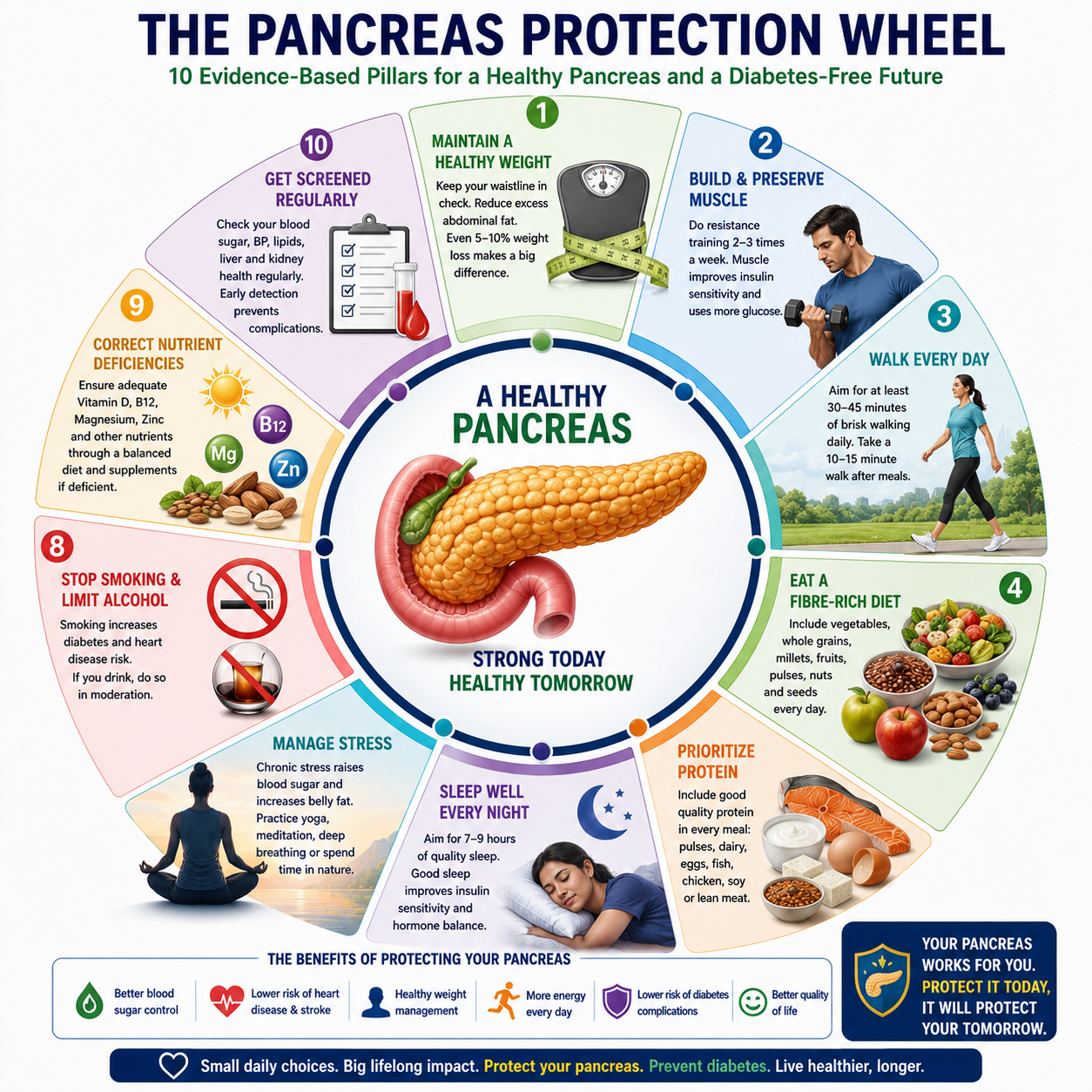
After reading the previous chapters, one important question remains: “What can I do today itself to protect my pancreas?” – A lot actually and this will go a long way in helping and safeguarding your pancreas from potential overwork.
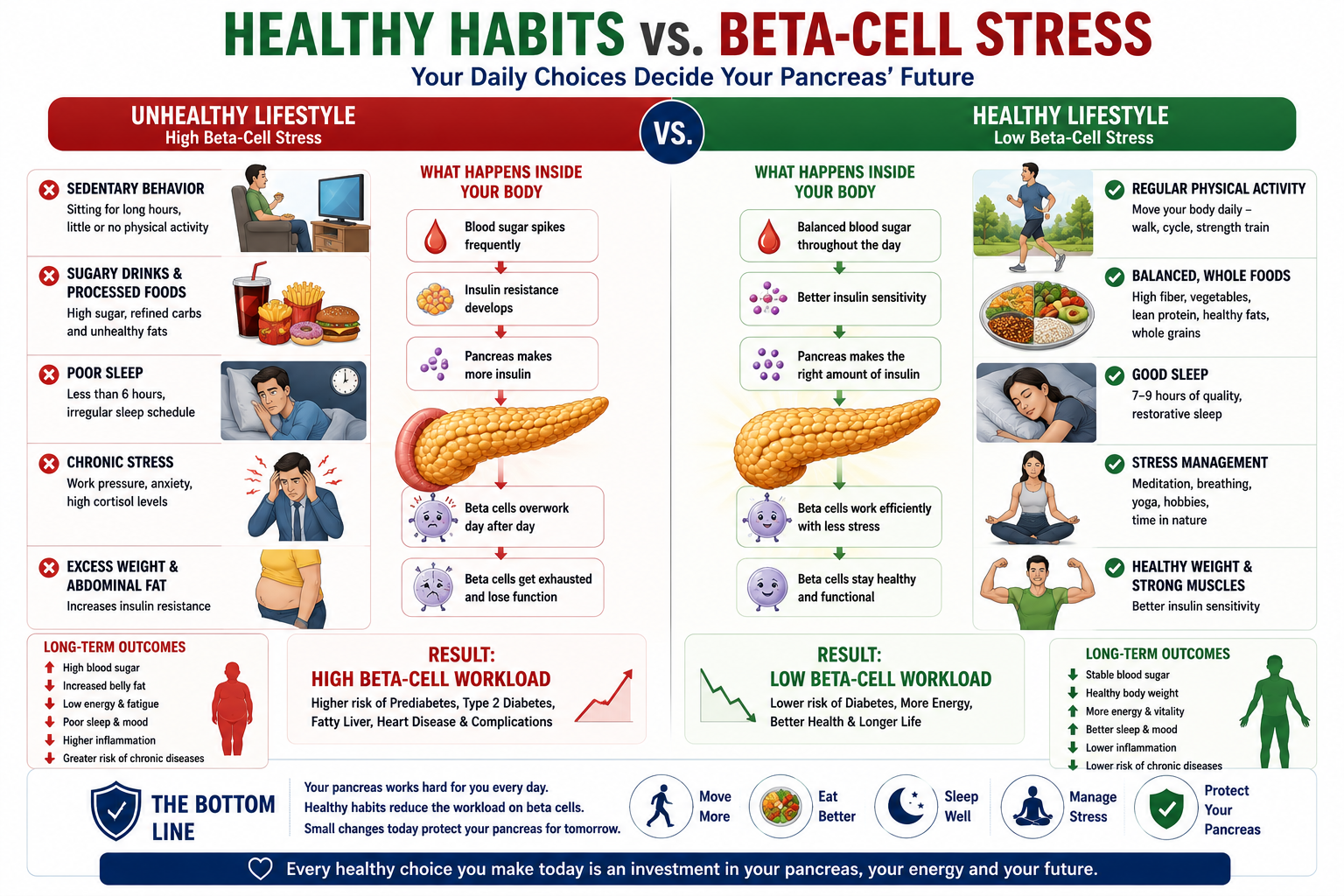
The encouraging news is that although genetics influence diabetes risk, daily habits have a major impact on how hard or relaxed your pancreas must work. Every healthy choice reduces stress on your beta cells. Every unhealthy habit increases it.
This part tries and shares decades of scientific research into one practical, workable blueprint, with low investments of time and money.
Step 1: Maintain a Healthy Waistline—Not Just a Healthy Weight
For Indians, abdominal fat is a stronger predictor of diabetes than body weight alone.
Visceral fat surrounding the liver and pancreas promotes insulin resistance and increases the demand for insulin. Aim to:
-
Monitor waist circumference regularly. Target Size – Males: 34 Inch and Females: 31 Inch, no compromises here. Run, exercise and eat sensibly to get these sizes. No excuses.
-
Reduce excess abdominal fat gradually – Follow above step, you will achieve this goal
-
Focus on sustainable fat loss rather than crash diets
Step 2: Build and Preserve Muscle
Muscle is the body’s largest glucose-using organ. After every meal, healthy muscle removes glucose from the bloodstream with the help of insulin.
Low muscle mass means the pancreas has to work harder. Include resistance training at least 3 -5 times per week, alongside regular physical activity. No excuses, no exemptions, every week, 52 weeks a year and see the transformation in yourself. Consistency matters more than anything. Consistency delivers results.
Examples of exercises include:
-
Resistance bands – can be done at home, if no access to gym
-
Body-weight exercises – can be done at home with some weights only
-
Free weights – can be done at home, if no access to gym
-
Strength machines – if you have access to gym
Step 3: Walk Every Day
Walking is one of the simplest and most effective forms of exercise. Its free, doesnt cost a penny and can be undertaken anytime of the day. We know Inian cities have high air pollution levels, find your own spaces, you know your areas better than anyone. Go out early mornings when traffic and air pollution is relatively less. Go Baby Go, Go Out.
Research consistently shows that regular walking improves:
-
Insulin sensitivity
-
Blood glucose regulation
-
Cardiovascular health
-
Weight management
Even a 10–15 minute walk after meals can help reduce post-meal glucose levels in many people. It does not cost anything. Walking in forests, under tress boosts your immune system, proven with research. Check out our post on NK-Cells. Thank us later.
Step 4: Eat a Fibre-Rich Diet
Dietary fibre slows glucose absorption and supports gut health. Aim to include:
-
Vegetables, Whole fruits, Whole grains, Millets, Lentils, Chickpeas, Beans, Oats, Nuts and Seeds
Increasing fibre intake gradually helps improve tolerance.
Step 5: Prioritize Protein at Every Meal – Our 2nd Most Important Suggestion, after Exercise
Adequate protein helps:
-
Preserve muscle mass
-
Increase satiety
-
Support healthy aging
-
Improve overall dietary quality
Good options for protein include: Dairy, Whey, Eggs, Fish, Red Meat ad lib if possible, Soy and Lentils.
Animal Food Proteins are best sources of high quality, complete, bioavailable proteins – you maynot realize but animal food sources deliver many essentail macro- and micro-minerals along with proteins which may not be possible with plant proteins.
For many Indians, increasing high-quality protein intake is an important nutritional goal. Target 1 to 1.5 gm Protein per Kg Body Weight, daily, everyday.
Yes, animal proteins are expensive, maybe very expensive but money spent here will save money spent in hospitals, someday.
Step 6: Sleep Like Your Pancreas Depends on It
Sleep affects hormones involved in appetite, insulin sensitivity and glucose metabolism. Chronic sleep deprivation has been linked to:
-
Insulin resistance
-
Weight gain
-
Higher diabetes risk
Most adults benefit from 7–8 hours of good-quality sleep each night.
Step 7: Manage Stress
Long-term stress activates hormones such as cortisol and adrenaline. Persistently elevated stress hormones may:
-
Increase blood glucose
-
Promote abdominal fat accumulation
-
Reduce insulin sensitivity
Helpful approaches include: Meditation, Yoga, Deep breathing, Time in nature, Social connection, Regular physical activity. All of these are high returns activities.
Step 8: Stop Smoking and Limit / Avoid Alcohol
Smoking is associated with a higher risk of: Type 2 diabetes, Cardiovascular diseases and Kidney disease.
If you smoke, quitting is one of the most important health decisions you can make. Alcohol should be consumed, if at all, within recommended limits and after discussing individual risks with a healthcare professional.
Step 9: Correct Nutrient Deficiencies
Many Indians have low levels of:
-
Vitamin D
-
Vitamin B12
-
Magnesium
-
Zinc
Correcting documented deficiencies supports normal metabolic health. Our site has extensive details on best sources of foods for all these nutrients. Explore and benefit.
Supplements should be used only to address genuine deficiencies—not as substitutes for healthy eating or prescribed treatments.
Step 10: Get Screened Before Symptoms Begin
Perhaps the most powerful strategy is also the simplest: Don’t wait until you feel unwell. Early testing can detect:
-
Prediabetes
-
High blood pressure
-
Abnormal cholesterol
-
Fatty liver
-
Kidney disease, before irreversible damage develops
Discuss screening intervals with your healthcare provider, especially if you have: Family history of diabetes – diabetes is not genetic but a family may have similar food and exercise habits, Increased waist circumference, High blood pressure, PCOS and History of gestational diabetes for females and lastly, Fatty liver disease.
Pancreas Protection Plate
A practical meal pattern includes:
Half the Plate
-
Non-starchy vegetables
One Quarter
-
Protein-rich animal foods
One Quarter
-
Whole grains or millets with a fruit and few nuts, based on affordability
Limit frequent intake of: Sugar-sweetened drinks and Ultra-processed foods, Refined snacks and desserts.
Message for Every Indian Family
India is often called the diabetes capital of the world, but this trend is not inevitable.
Healthy habits adopted within families—shared meals, daily walks, active children, regular health checks and balanced nutrition—can reduce risk across generations. Protecting your pancreas is not about perfection. It is about consistency.
Key Takeaways
-
Visceral fat reduction is one of the most effective ways to reduce metabolic stress on the pancreas
-
Resistance training and adequate animal proteins help preserve muscle, improving glucose disposal
-
Fibre-rich diets support healthy glucose regulation and gut health
-
Good sleep and stress management are essential parts of diabetes prevention
-
Correct documented nutrient deficiencies but avoid miracle cure claims
-
Early screening allows intervention before substantial beta-cell dysfunction develops
Select References
-
American Diabetes Association. Standards of Care in Diabetes (latest edition)
-
Lean MEJ, et al. DiRECT Trial. The Lancet. 2018
-
Knowler WC, et al. Diabetes Prevention Program. N Engl J Med. 2002
-
Tuomilehto J, et al. Finnish Diabetes Prevention Study. N Engl J Med. 2001
-
Ramachandran A, et al. Indian Diabetes Prevention Programme. Diabetologia. 2006
-
International Diabetes Federation. IDF Diabetes Atlas
-
World Health Organization. Physical Activity Guidelines
-
ICMR–INDIAB Study. Lancet Diabetes & Endocrinology. 2023