



Indian men are facing clear, present and an excessive danger in form of 2 major, massive and heart-breaking issues – a gradually falling TFR (Total Fertility Rate) largely out of choice, as we explain, accompanied with an alarmingly increasing male infertility.
Every town, city and metro of India is dotted with IVF Centres. What pains is that Indians spend tons of money and time at IVF Centers – a fraction of both if shifted to diet, nutrition and lifestyle – can go a long way in reliably reversing male and even female infertility. This is our Master-Piece dedicated to every Indian Male, unfortunately and transiently battling Infertility and has more odds of success than promised by your IVF Center. Take control of your health today with this evidence backed-action plan – go for a cricket team of your own 🙂
Epidemic of Male Infertility
Male infertility in India has reached unprecedented levels. Data from national fertility networks, including a large multi-center study of over 64,000 men conducted by Indira IVF, reveals that over 70% of Indian men evaluated for fertility difficulties exhibit at least one abnormal semen parameter.
Where male factors were once considered a secondary concern, clinical consensus shows that male factor issues now contribute to roughly 50% of all couple infertility cases across India.
Historical epidemiological data indicates that average sperm concentrations among urban Indian men dropped from approximately 60 million/mL in the 1980s to near 20 million/mL in recent years—an annual decline rate of nearly 2.6% since 2000. Our semen volumes are a 3rd of what our Fathers and Grand Fathers had, all thanks to our lifestyle and food habits.
Understanding the physiological drivers of this trend—and separating clinical evidence from internet myths—is critical for addressing male reproductive health in India.
Biochemistry of Seminal Fluid: Fact vs. Fiction
Seminal fluid is a complex secretion produced by the testes, seminal vesicles, prostate gland, and bulbourethral glands. It acts as a protective, nutrient-rich transport medium designed to maintain sperm viability in the female reproductive tract.
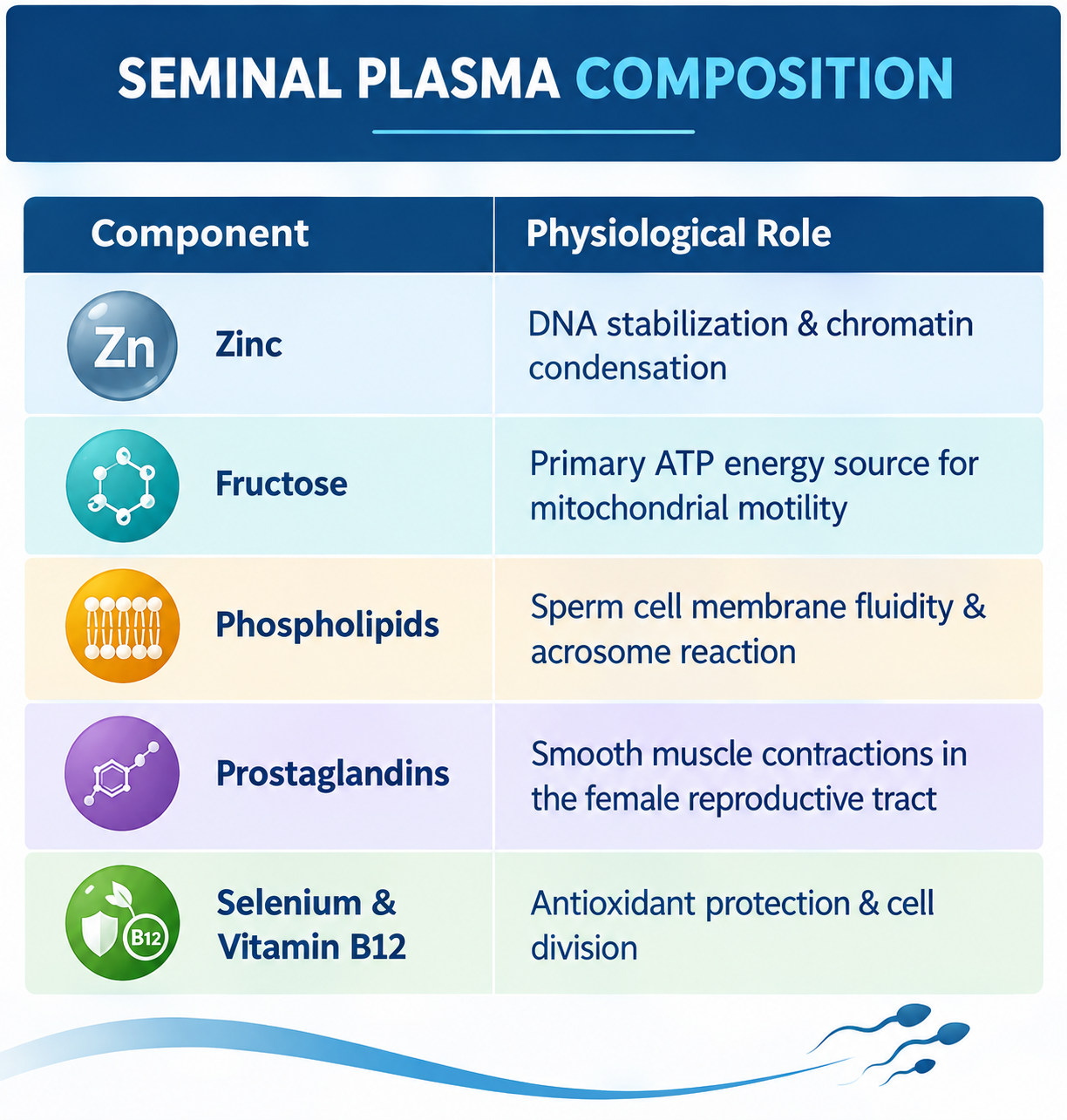
The Nutrient Breakdown:
-
Zinc: The prostate gland concentrates zinc at levels higher than almost any other tissue. Zinc is essential for stabilizing sperm chromatin, protecting against oxidative DNA damage, and supporting spermatogenesis.
-
Fructose: Produced by the seminal vesicles, fructose supplies the energy required for sperm flagellar movement.
-
Phospholipids & Enzymes: Essential for maintaining cell membrane integrity and enabling the acrosome reaction necessary for egg fertilization.
While producing seminal fluid consumes metabolic resources, the claim that frequent release “depletes brain tissue” or “permanently drains testosterone” is medically inaccurate. In a well-nourished individual, the liver, prostate, and local tissues continually synthesize these constituents without impairing systemic organs.
The primary cause of nutrient depletion in Indian men is insufficient dietary intake and metabolic dysfunction, rather than ejaculate frequency.
A basic, simple, common sensical conclusion that MUST BE DEDUCED from a cursory look at Seminal Fluid Composition for Indians is that you must have good food sources of BIOAVAILABLE Zinc, Selenium and Vit B12 – all these 3 Minerals / Vitamin are largely available only from Animal Food Sources. Please check our extensive coberage on massive deficiency of all these 3 ingredients in Indians.
Why Male Infertility Is Rising in India: The Clinical Drivers
Recent cross-sectional and prospective studies in Indian tertiary care centers identify several distinct, modifiable lifestyle and environmental drivers behind declining sperm quality.
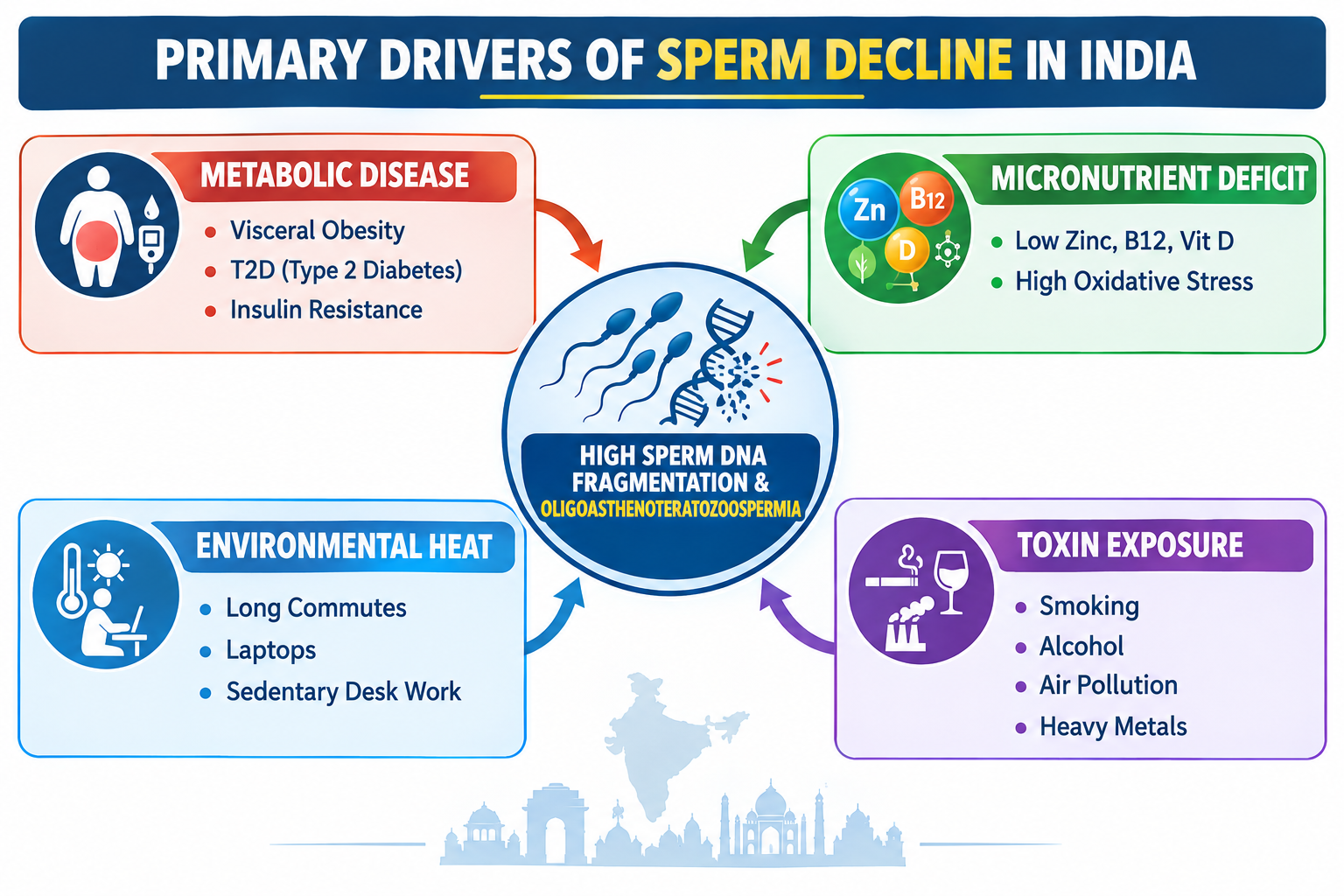
Driver 1: High Rates of Micronutrient Deficiencies
Diets rich in refined carbohydrates and low in bioavailable animal proteins or fortified foods lead to widespread deficiencies across urban and rural India:
-
Zinc Deficit: High consumption of phytate-rich unrefined grains, vegetarian foods, can bind zinc in the gut, reducing absorption and lowering prostate zinc concentration
-
Vitamin B12 Deficit: Over 47% of the Indian population suffers from B12 deficiency due to vegetarian dietary patterns, leading to elevated homocysteine levels and impaired cell division during spermatogenesis
-
Vitamin D Deficiency: Over 70% of Indian males show subclinical Vitamin D deficiency, which directly correlates with lower serum testosterone and reduced sperm motility
Driver 2: The “Thin-Fat” Phenotype & Metabolic Syndrome
Indian men frequently display visceral adiposity (abdominal fat) despite having a normal Body Mass Index (BMI). Visceral adipose tissue contains high levels of the aromatase enzyme, which converts active testosterone into estradiol. This creates a hormonal profile marked by low testosterone, elevated estrogen, suppressed Follicle-Stimulating Hormone (FSH), and impaired sperm production
Driver 3: Scrotal Hyperthermia & Sedentary Lifestyles
Spermatogenesis requires an environment 2–3°C cooler than core body temperature. Modern occupational hazards—including 8–10 hours of desk work, long commutes in tight clothing, driving with heated seats, and placing laptops directly on the lap—raise scrotal temperatures, causing heat stress that triggers sperm apoptosis and high Sperm DNA Fragmentation (SDF)
Driver 4: High Oxidative Stress & Environmental Toxins
Air pollution (PM2.5 exposure), pesticides, heavy metals (lead, cadmium), tobacco use, and alcohol intake generate excess Reactive Oxygen Species (ROS) in seminal plasma. Up to 60% of infertile Indian males present with elevated seminal ROS, which attacks sperm cell membranes and damages genomic integrity
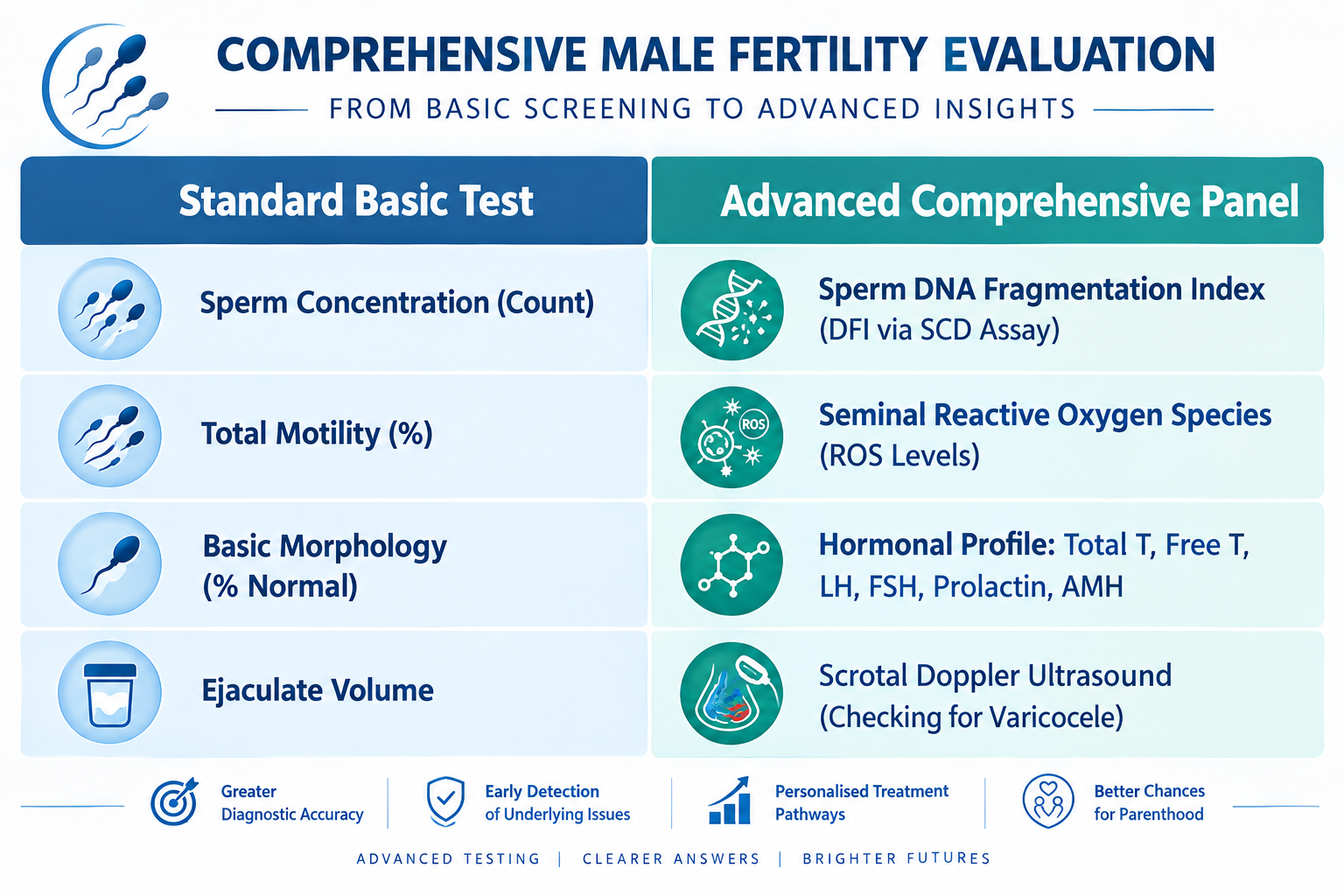
Comparative Diagnostics: Standard vs. Advanced Testing
In standard clinical practice across India, male fertility evaluations rely primarily on basic semen analysis. However, modern guidelines recommend deeper biochemical and physical evaluations.
Evidence-Based Protocol to Reverse Male Infertility
Because sperm takes approximately 72 to 90 days to complete development (spermatogenesis), targeted clinical and lifestyle interventions can yield measurable improvements in semen quality within 3 to 6 months.
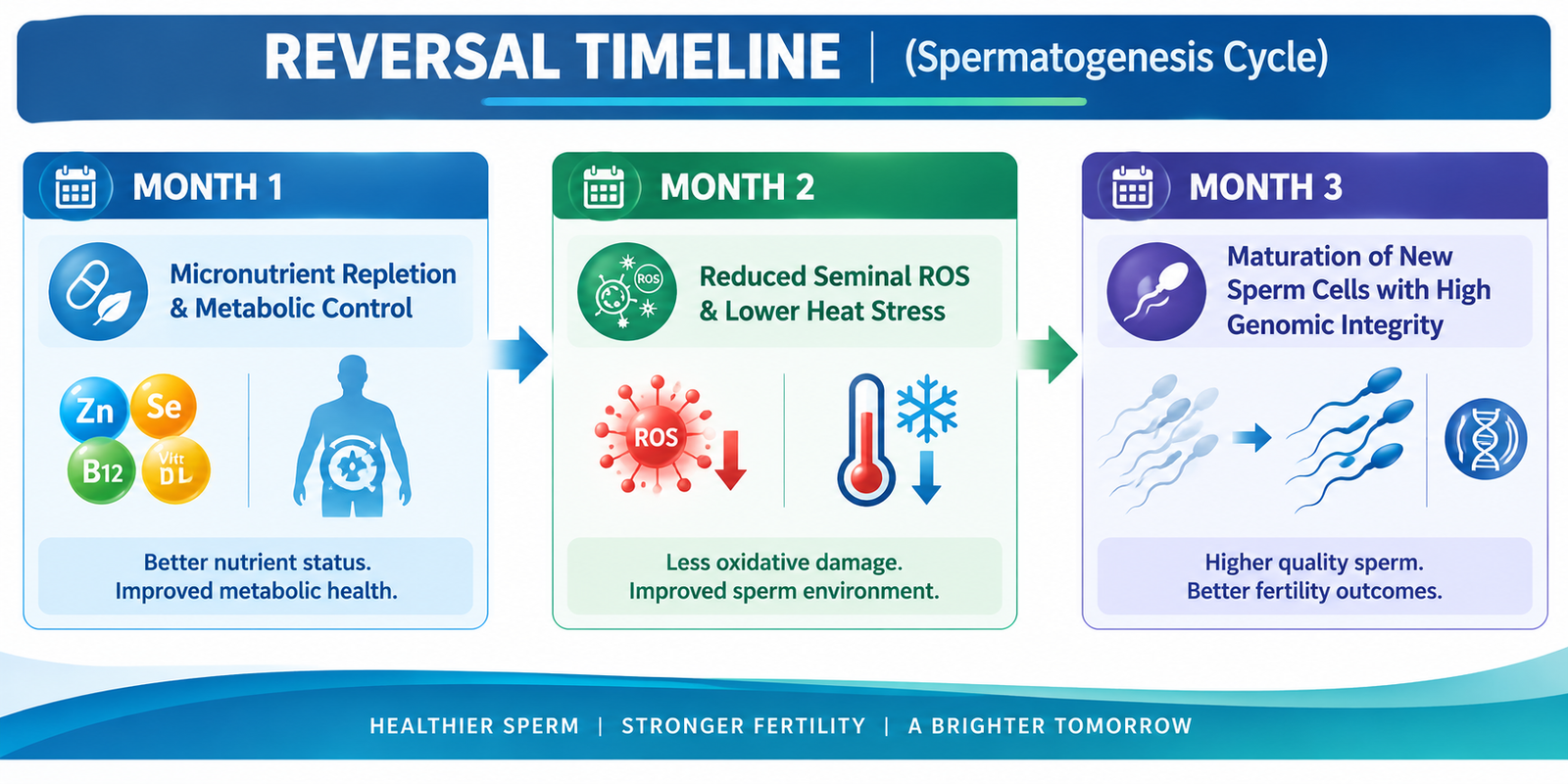
Step 1: Nutritional Repletion & Targeted Supplementation
Clinicians should screen for micronutrient deficits and prescribe bioavailable formulations:
-
Zinc Picolinate or Gluconate (30 – 50 mg/day): Restores prostatic zinc levels, improves sperm concentration, and supports endogenous testosterone synthesis. Zinc Oxide is USELESS for such cases. Ideally get your Zinc from Animal Meats, especially Mutton and Mutton Liver
-
Coenzyme Q10 (Ubiquinol, 200 – 400 mg/day): Improves mitochondrial ATP production within the sperm midpiece, enhancing motility
-
L-Carnitine (2,000 mg/day) + L-Arginine: Accelerates sperm maturation and energy metabolism
-
Active Vitamin B12 (Methylcobalamin, 1,500 mcg/day) & Vitamin D3 (60,000 IU/week short-term): Corrects metabolic deficits and supports cell division. Ideally both these Vitamins MUST be had from food (Mutton Liver / Kalegi) and sunlight
Step 2: Eliminating Scrotal Heat Stress
-
Avoid holding laptops directly on the lap
-
Take frequent standing breaks during long desk-bound work hours
-
Wear loose, breathable cotton underwear to encourage natural thermoregulation
Step 3: Reducing Visceral Adiposity & Metabolic Risk
-
Incorporate progressive resistance training 3 to 4 times weekly to build lean muscle mass, improve insulin sensitivity, and lower peripheral aromatase activity
-
Replace refined sugars, polished rice, and ultra-processed snacks with animal meats, complex carbohydrates, legumes, nuts and clean protein sources such as eggs to reduce systemic inflammation
Step 4: Medical Evaluation for Reversible Structural Factors
-
Varicocele Screening: Varicocele (dilated testicular veins) affects 15–20% of men and up to 40% of infertile men. Scrotal Doppler imaging can diagnose varicoceles, which can be surgically repaired via microsurgical varicocelectomy to restore normal testicular temperature and sperm parameters
Conclusion
The rising rate of male infertility in India is a serious public health challenge. While myths surrounding semen depletion exaggerate basic biological processes, the underlying problem—widespread micronutrient deficiencies, metabolic disease, scrotal heat stress, and environmental pollution—is well-documented by clinical research.
Addressing these modifiable risk factors through early screening, nutritional optimization, lifestyle changes, and targeted medical care allows Indian men to improve sperm quality and restore natural reproductive potential.
Select References
-
Bhoi, N. R., Chandra, V., Murdia, N., et al. (2023). Semen quality parameters among Indian men evaluated for infertility: A 4-year multi-center study. Fertility Science and Research, 10(2), 85–92
-
Chamanmalik, S. I., Nerli, R. B., & Umarane, P. (2025). Lifestyle and hormonal factors affecting semen quality and sperm DNA integrity: A cross-sectional study. Oncoscience, 12, 45–52
-
Agarwal, A., et al. (2021). Male infertility: Comprehensive evaluation and clinical guidelines. The Lancet, 397(10271), 319–333
-
Kothari, R. P. (2016). Zinc levels in seminal fluid in infertile males and its correlation with semen parameters. Journal of Clinical and Diagnostic Research, 10(6), CC05–CC08
-
Puri, R., et al. (2021). Demographics, etiology and outcomes of male infertility in an Indian tertiary care center. National Medical Journal of India, 34(4), 198–203