



As part of our 3-Part Series on Effects of Bisphenols on Male Fertility – this is Part 2 of the Series and it covers exposure: where might Indians encounter BPA and other bisphenols in everyday life? Part 1 established the science behind a 2026 review involving researchers from ICMR–National Institute of Nutrition, Hyderabad.
Bisphenol A (BPA) is not only a “plastic problem.” In India, published research has detected BPA and related bisphenols across food, drinking water, food-contact materials, indoor environments and personal-care products.
The important question is not whether exposure exists—it does—but which sources contribute most, how exposure varies, and what consumers can realistically do to reduce unnecessary exposure.
Indians’ exposure is more complicated than “plastic bottles”
BPA belongs to a larger family of chemicals called bisphenols. The best-known is bisphenol A (BPA), but researchers are increasingly measuring substitutes and analogues including:
-
Bisphenol S (BPS)
-
Bisphenol F (BPF)
-
Bisphenol Z (BPZ)
-
Bisphenol AF (BPAF)
-
other structurally related compounds.
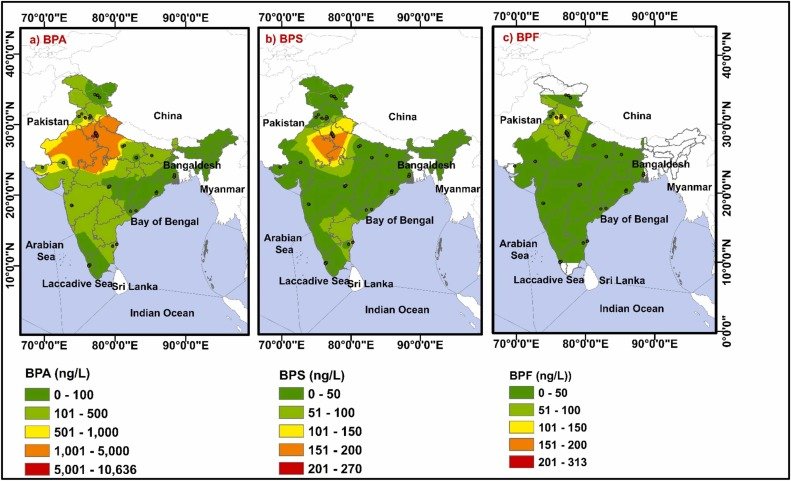
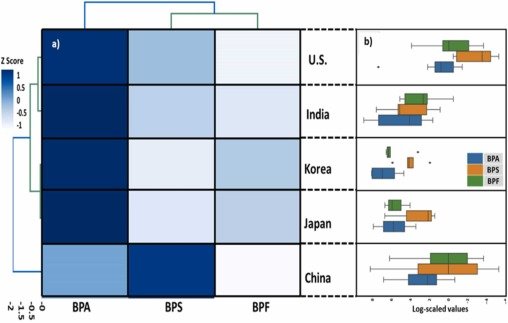
A 2024 Journal of Hazardous Materials review specifically examining India and global exposure found that BPA, BPS and BPF are among the most commonly reported bisphenols in India. Importantly, the study found that the pattern in India differs from the global picture: BPS was the most prevalent bisphenol reported in Indian environmental matrices, whereas BPA tends to dominate globally.
That changes the conversation.
“BPA-free” does not necessarily mean “bisphenol-free”
Replacing one bisphenol with another does not automatically eliminate exposure to endocrine-active chemicals. However, the toxicity and exposure evidence differs among individual compounds, so it would be scientifically incorrect to assume that every BPA substitute is equally harmful. Where are Indians potentially exposed?
The evidence points to several major exposure pathways.
1. Food and food-contact materials
2. Drinking water
3. Take-away and food-delivery packaging
4. Canned and processed foods
5. Personal-care products
6. Thermal paper and receipts
7. Indoor dust and environmental contamination
8. Occupational or product-specific exposure
The relative importance of each source can vary considerably between individuals.
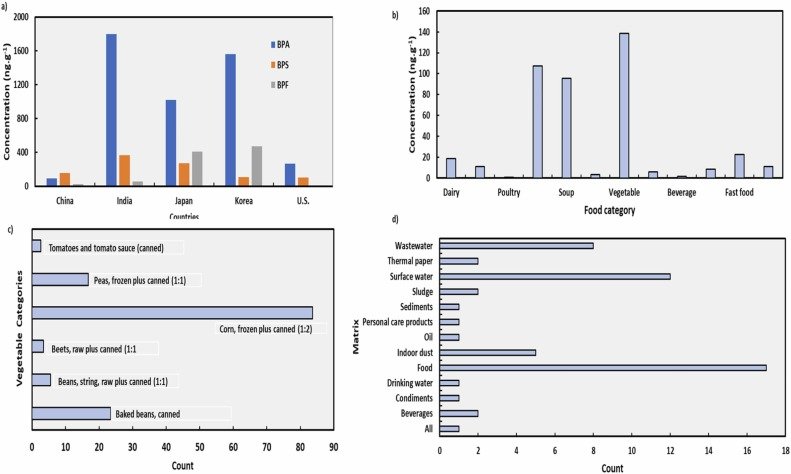
1. Food may be one of the most important exposure pathways
Food is particularly important because BPA and related bisphenols can enter food through food-contact materials or environmental contamination.
A 2024 India-focused review found that, among the environmental matrices assessed, bisphenols were detected at their highest concentrations in food, followed by surface water, wastewater and indoor dust. The review identified vegetables—including corn, beans and other vegetables—and raw or canned vegetables among important contributors in the available Indian evidence.
But there is an important caveat: Finding BPA in food does not automatically mean that the food is unsafe.
Risk assessment requires considering the concentration, amount consumed, frequency of exposure, absorption, metabolism and the relevant toxicological reference value.
2. Indian food basket has already been studied
One particularly useful Indian study examined 25 food types plus drinking water from Delhi and Dehradun. Researchers detected BPA and phthalate compounds across the food basket, with significant differences between the metropolitan Delhi samples and peri-urban Dehradun samples for many contaminants.
Among the reported BPA findings:
-
Potatoes: mean BPA concentration of approximately 73 ng/g
-
Fish: approximately 16 ng/g
-
West Delhi supply water: BPA concentration of approximately 309 ng/L
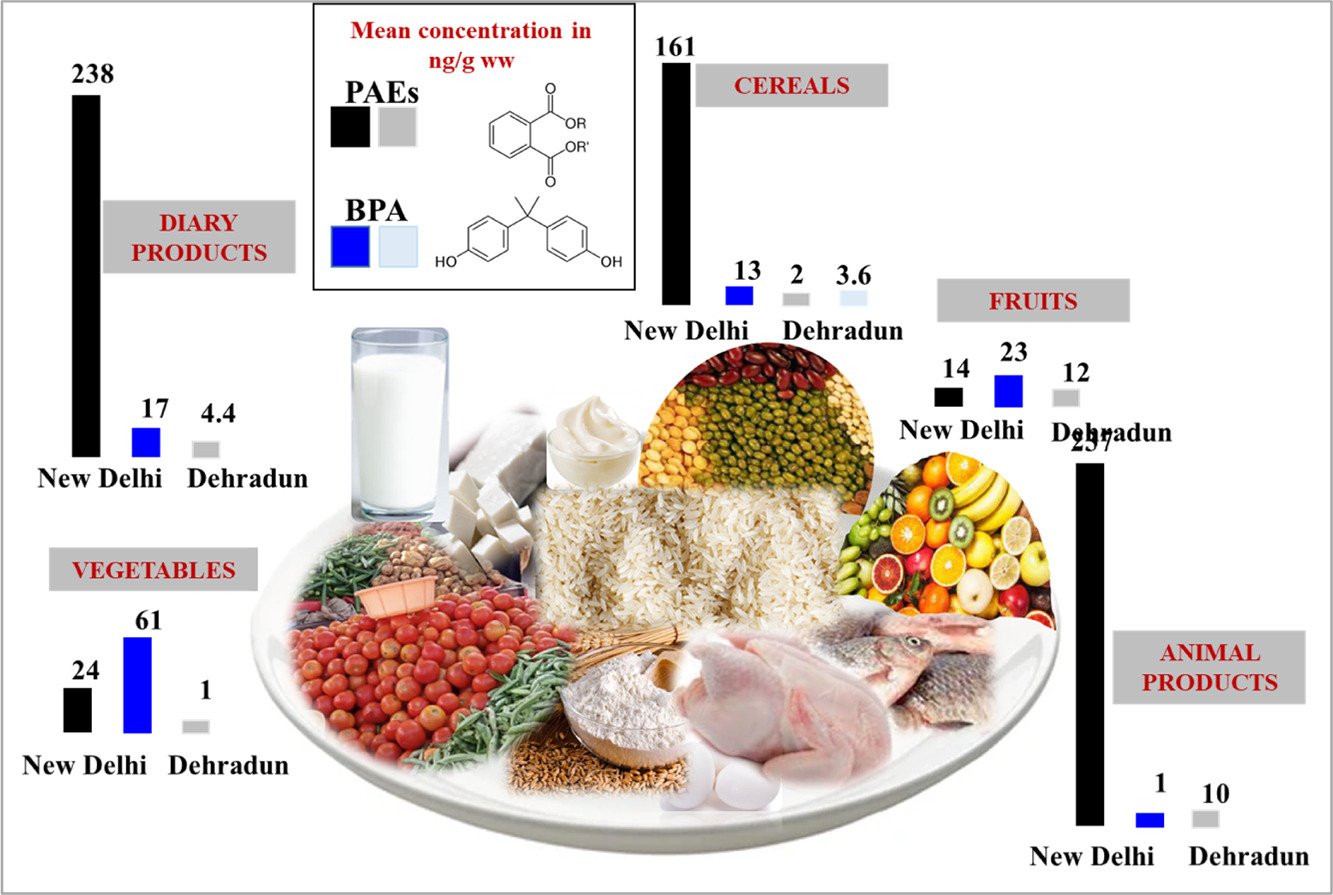
The study also reported substantial geographical differences in contamination and estimated dietary exposure. This is important because it demonstrates that exposure is not simply a matter of whether someone drinks from a plastic bottle.
The overall dietary pattern and food-contact chain matter.
3. Take-away food is another potential pathway
India’s rapid expansion of food delivery and take-away consumption creates another exposure question: What happens when hot food remains in contact with packaging?
An Indian study specifically investigated BPA and phthalic-acid migration from food-contact materials used for take-away food.
The researchers found that higher temperatures and longer contact times increased migration under their experimental conditions, with particularly notable migration from polyethylene pouches using an acidic food simulant. It means that temperature, food chemistry, packaging material and contact duration can influence chemical migration.
4. Drinking water: BPA has been detected in India
A study examining surface water, tap water and packaged drinking water in India found BPA as the most prevalent bisphenol measured in the water samples. The reported mean BPA concentration range was approximately: 980–6,470 ng/L
BPS and BPZ were also detected. However, the researchers’ exposure assessment estimated that total bisphenol intake from the studied tap and packaged drinking water sources was below the then-used EFSA temporary tolerable daily intake of 4 μg/kg body weight/day.
5. Packaged drinking water is not automatically BPA-free
There is a common assumption: “Bottled water = zero chemical exposure.”
The evidence does not support such an absolute statement. The Indian water study detected multiple bisphenols in tap, packaged and surface-water samples.
At the same time, the measured concentrations and calculated exposures need to be interpreted in context.
6. Personal-care products: an often-overlooked pathway
BPA discussions usually focus on food. But Indian research has also investigated bisphenols in personal-care products.
A study examining 114 personal-care products available in India measured eight bisphenols, including BPA, BPS, BPF, BPAF and others. The researchers also analysed urine samples from 52 young adult Indian women.
Bisphenols were detected in both personal-care products and urine, providing evidence that personal-care-product use can contribute to human exposure. The study reported mean urinary concentrations across the measured bisphenols ranging from 0.10 to 10.8 ng/mL. This is an important finding. Exposure does not come exclusively from food.
7. Children are exposed too
Indian biomonitoring research has detected multiple endocrine-disrupting chemicals in children. One study examined urine from 76 Indian children—49 obese and 27 non-obese.
BPA and BPS were among 11 endocrine-disrupting chemicals detected in more than 70% of urine samples of children. Because children have different body size, developmental stages and exposure patterns from adults, childhood exposure remains an important research area.
8. What about receipts?
Thermal paper is another established source of BPA exposure internationally and locally. Thermal receipts have historically used BPA or related developers, and experimental human studies have shown that handling thermal receipts can increase BPA exposure.
However, the strongest Indian exposure evidence is currently around food, water, products and environmental matrices, rather than large Indian population studies specifically quantifying receipt-related BPA exposure.
What does Indian regulations say?
India already regulates food-contact packaging.
FSSAI’s Food Safety and Standards (Packaging) Regulations require food-contact packaging to be food-grade and suitable for the intended product and storage conditions. The regulations also establish migration requirements for plastic packaging and reference relevant Indian Standards, including IS 9845 for migration testing.
There is also an important regulatory development. In October 2025, FSSAI published a draft Packaging Amendment proposing that food-contact materials manufactured with polycarbonate and epoxy resins be free from BPA and its derivatives.
However, we currently have no confirmation that whether this Draft Amendment became a Rule or Not.
Evidence-based exposure map
Potential source |
Evidence in India |
Why it matters |
|---|---|---|
Food |
Strong |
Food is a major environmental matrix for reported bisphenols |
Food packaging |
Strong |
Migration can depend on material, temperature and contact time |
Take-away packaging |
Strong |
Indian studies demonstrate migration under experimental conditions |
Drinking water |
Documented |
BPA, BPS and other bisphenols detected |
Personal-care products |
Documented |
Bisphenols detected in Indian products and urine |
Canned/processed foods |
Reported |
Food-contact materials can be a source |
Indoor dust |
Documented environmentally |
Potential non-dietary exposure pathway |
Thermal receipts |
Established internationally |
Particularly relevant to frequent occupational handling |
Occupational exposure |
Emerging |
Requires more India-specific biomonitoring |
BPA alternatives |
Increasingly important |
BPS/BPF and others are being detected |
What should an Indian consumer actually do?
Reduce unnecessary exposure where practical.
1. Don’t routinely heat food in unsuitable plastic containers – Especially when the manufacturer does not indicate that the container is appropriate for heating.
2. Pay attention to temperature – Heat can influence chemical migration from some food-contact materials.
3. Don’t store very hot food unnecessarily in plastic – Where practical, use appropriate glass, stainless steel or other food-contact materials designed for the purpose.
4. Don’t assume “BPA-free” means “chemical-free” – BPA substitutes such as BPS and BPF are also being investigated.
5. Don’t panic about occasional plastic use – The available evidence does not justify treating every plastic food container as an acute health hazard.
Indians are exposed to bisphenols—but the exposure story is much broader than plastic bottles.
The Indian evidence identifies food, food packaging, drinking water, personal-care products, indoor environments and other consumer products as potential exposure pathways. BPA and its analogues have also been detected in human urine in Indian populations.
Key references
-
Indian and global scenarios of Bisphenol A distribution and its new analogues: Prevalence & probability exceedance, Journal of Hazardous Materials, 2024
-
Endocrine-disrupting chemicals used as common plastic additives: Levels, profiles, and human dietary exposure from the Indian food basket, Science of the Total Environment
-
Detection of bisphenols in Indian surface water, tap water, and packaged drinking water, Environmental Science and Pollution Research
-
Levels of parabens and bisphenols in personal care products and urinary concentrations in Indian young adult women, Science of the Total Environment
-
Estimation of parabens and bisphenols in maternal products and urinary concentrations in Indian pregnant women, Environmental Science and Pollution Research
-
Assessing the Migration of BPA and Phthalic Acid from Take-out Food Containers, Journal of Experimental Biology and Agricultural Sciences
-
Food contamination from packaging material with special focus on Bisphenol-A, Critical Reviews in Biotechnology
-
FSSAI Food Safety and Standards (Packaging) Regulations and subsequent draft BPA-related amendments