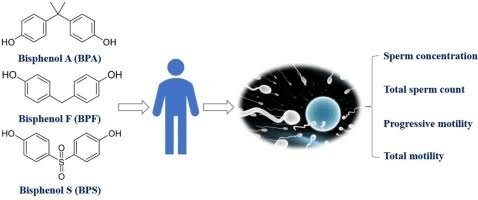
This is our Special 3-Part Series on Role / Association of micro-plastics such as Bis-Phenol A in the incidences of increasing male infertility in Indians. This is Part 1 of the series, based on 8th of May 2026 Research Publication, with research carried out by Researchers at National Institute of Nutrition, Hyderabad, India.
A 2026 review involving researchers from ICMR–National Institute of Nutrition (NIN), Hyderabad, examines a potentially important connection between bisphenol A (BPA), gut microbiome disruption, endocrine (Hormones) signalling, epigenetics (potential risk for next generations) and male reproductive health. But the evidence that BPA causes infertility in Indian men is evolving and we should ideally err on the side of extreme caution to safeguard our reproductive health, by cutting down un-necessary plastics from our lives.
Male Infertility – Globally Growing Problem
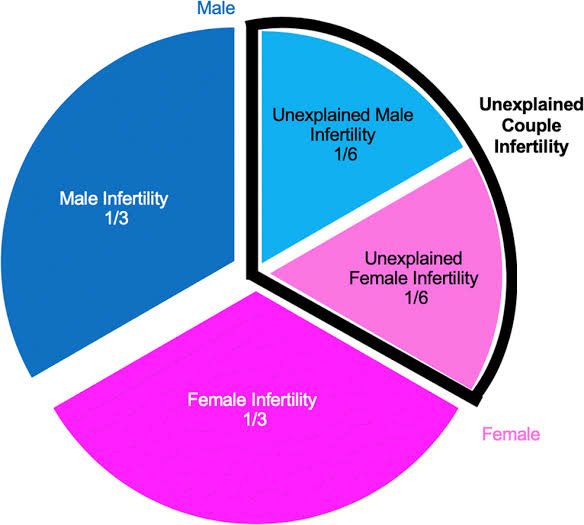
Extent of male and female infertility
Global declines in male fertility, characterized by reduced sperm count, motility, and quality, raised concerns about environmental exposures to estrogen-mimicking endocrine-disrupting chemicals (EDCs), including bisphenol A (BPA), and reproductive dysfunction. BPA exposure in vivo has been shown to alter gut microbial composition, diversity, and metabolites, leading to dysbiosis. Such gut alterations modulate systemic inflammation, estrogen bioavailability, and the endocrine-immune axis, thereby affecting gonadal function.
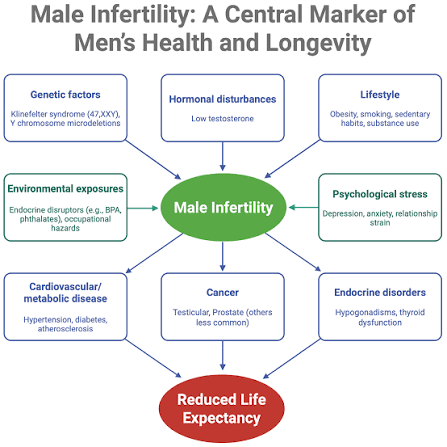
Male Infertility – Marker for Male Health and Longevity
The new scientific question: Is male fertility connected to the gut?
Male infertility is usually discussed through sperm count, sperm motility, sperm morphology, hormones, varicocele, infections, genetics, metabolic health and lifestyle.
A new review published in Frontiers in Endocrinology adds another layer to this discussion: the gut–reproductive axis.
BPA exposure → gut microbiome changes → altered metabolites/inflammation/endocrine signalling → effects on the testis and sperm biology
But there is an important scientific qualification: this is a biological model supported by a mixture of experimental, mechanistic and observational evidence—not proof of a causal BPA–infertility relationship in humans.
What is BPA / Bis-Phenol A?
Bisphenol A (BPA) is a synthetic industrial chemical used in certain plastics and resins and in some food-contact applications.
Where it is Found in Indian Products
Baby feeding bottles: Traces of BPA appear in some infant bottles and sippy cups, even in products labeled “BPA-free”
Food packaging and cans: Epoxy resins coat the inner linings of metal food and beverage cans, apart from plastic packaging being used by take-out food joints and restaurants
Plastic containers: Reusable water bottles, storage containers and tableware utilize polycarbonate plastics containing BPA
Food supply: Studies show BPA and its analogues (like BPS) contaminate food items in India, including vegetables, corn, and beans
Thermal paper: Cash receipt rolls and printed receipts contain BPA coatings. So next do not take and touch the THERMAL cash receipts, go digital
Because BPA can interact with hormone-related biological pathways, it is classified as an endocrine-disrupting chemical in the scientific literature.
Exposure can occur when small amounts migrate from certain materials into food or beverages. The U.S. FDA notes that BPA has been used in polycarbonate plastics and epoxy resins used for food and beverage applications and continues to evaluate the scientific evidence surrounding BPA.
This is an important point for readers: Exposure does not automatically mean disease. Risk of disease depends on factors such as dose, duration, route of exposure, biological susceptibility and the quality of evidence linking exposure with a specific outcome.
What does the 2026 NIN-linked review add?
The review goes beyond the traditional BPA → hormone disruption hypothesis. Its authors examine whether BPA may influence male reproductive health through two interconnected biological pathways:
Pathway 1 — Endocrine and reproductive effects
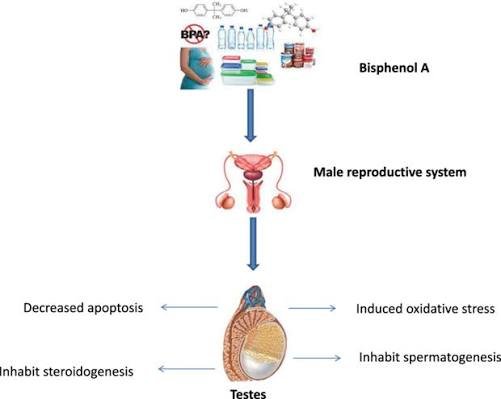
BPA can act through hormone-sensitive pathways and potentially influence:
reproductive hormone signalling;
testicular cellular function;
spermatogenesis;
oxidative stress;
the blood–testis barrier.
Pathway 2 — The gut–testis connection
BPA exposure has been reported in experimental studies to alter:
gut microbial composition;
microbial diversity;
microbial metabolites;
intestinal permeability;
inflammatory signalling.
Those changes could theoretically affect reproductive tissues through systemic signalling. The review specifically discusses the interaction between gut dysbiosis, inflammation, endocrine–immune signalling and gonadal / testes function.
Think of the gut not simply as a digestive tube, but as a large biological ecosystem containing trillions of microorganisms that generate metabolites capable of entering the circulation. A simplified model proposed in the review is:
Potential effects on spermatogenesis and sperm function
This is why the paper’s discussion of gut microbiota is particularly important. The authors note that alterations in gut microbial composition and metabolites could influence systemic inflammation, estrogen availability and endocrine–immune pathways that ultimately affect gonadal / testes function.
BPA and the blood–testis barrier
The review also discusses experimental evidence involving the blood–testis barrier, a specialized structure that helps create an appropriate environment for developing germ cells.
The authors describe evidence suggesting bisphenol exposure can affect intracellular junctional proteins and the blood–testis barrier, alongside oxidative and endocrine effects. These mechanisms could potentially interfere with normal spermatogenesis.
The concern is biologically plausible because sperm production is highly sensitive to hormonal, oxidative, inflammatory and metabolic disturbances.
The NIN-linked review discusses male fertility in the context of reduced sperm count, motility and quality and examines experimental evidence connecting BPA exposure with reproductive dysfunction. There is also broader literature on BPA and human fertility.
A 2025 systematic review examining BPA and human fertility reported associations between BPA exposure and reproductive outcomes, including potential effects on male sperm production. However, systematic reviews of observational evidence still cannot automatically establish causation.
A 2026 systematic review and meta-analysis examining several environmental pollutants—including BPA and phthalates—also investigated associations with infertility and reproductive outcomes, adding to the growing epidemiological literature.
Does BPA cause infertility in future generations?
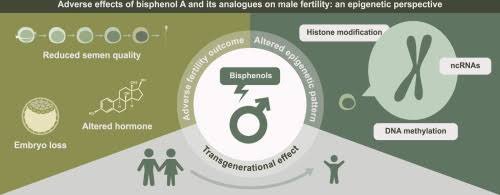
We cannot say that, beyond reasonable doubt, based on this review alone. The Hyderabad paper specifically highlights the need for further investigation into transgenerational effects. Its evidence includes experimental work examining prenatal, direct and lactational exposure and potential effects extending into F1, F2 and F3 generations.
But demonstrating genuine transgenerational inheritance in humans is substantially more difficult than demonstrating a biological change in an exposed animal model.
Researchers are investigating whether BPA-induced epigenetic changes could have reproductive consequences across generations.
BPA is not the only environmental concern The scientific conversation is also moving beyond BPA alone. Researchers are studying BPA analogues and other endocrine-disrupting chemicals.
A 2026 toxicology study examined common and compound-specific pathways involving BPA and its analogues in male infertility using network toxicology, omics analysis and molecular docking.
Another 2026 review examined BPA as a potential local immune disruptor in the male reproductive tract, including possible effects on testicular immune cells and the immune environment supporting sperm development.
What can and should men reasonably do?
At present, there is no clinically validated BPA-detox supplement established by this review. There is also no evidence from this paper that a particular probiotic, vitamin, mineral or herbal formulation can prevent BPA-associated infertility.
A sensible approach is therefore exposure reduction rather than “detoxification.” For example:
avoid unnecessarily heating food in plastic containers even if the product is specifically designed for that use, use glassware for microwaves and steelware for other usages;
follow manufacturer instructions for food-contact containers;
reduce unnecessary exposure to food-contact materials when practical;
maintain a nutrient-dense diet rich in animal proteins, vegetables, fruits, whole grains, legumes, nuts and other minimally processed foods; try and avoid packaged foods as far as possible
avoid smoking and excessive alcohol;
maintain a healthy body weight and regular physical activity;
seek medical evaluation if fertility problems persist.
Male infertility should ideally be medically evaluated rather than self-treated with supplements.
What We Know — and What We Don’t
Question
Current evidence
Is BPA an endocrine-active chemical?
Yes
Can BPA affect biological pathways relevant to reproduction?
Yes – Supported by experimental evidences
Can BPA alter gut microbiota in experimental models?
Yes – Evidence exists
Can gut dysbiosis influence reproductive biology?
Yes – Biologically plausible; active ongoing research
Is BPA associated with sperm/reproductive outcomes in some human studies?
Yes, associations have been reported
Does BPA cause male infertility in all exposed men?
Evidence is emerging
Does BPA explain India’s male infertility burden?
It is better to be safe than sorry
Does BPA cause infertility across human generations?
Not established conclusively – being researched
Can a supplement “detox” BPA and restore fertility?
Area of further research
Is more human longitudinal research required?
Yes
Bottom Line
The important message from the 2026 NIN Hyderabad-linked review is not that “plastics / micro-plastics cause infertility.” It is more scientifically interesting than that.
Researchers are increasingly investigating whether environmental endocrine disruptors such as BPA can interact with the gut microbiome, immune system, endocrine pathways and epigenetic machinery—and whether these interactions could influence male reproductive health.
The gut–testis axis may ultimately prove to be an important piece of the male fertility puzzle. The strongest conclusion today is that BPA is a credible research concern—and a potential cause of male infertility in humans but not the only cause.
As part of our Evidence-Explained™ - we present you learnings from a long, 20 years running clinical study on Osteoporosis and Fractures in Americans...
Height and Bone Developments in Children
Childhood linear growth represents a sensitive biomarker of cumulative somatic health, adequate cellular nutrition, and harmonious skeletal development.
Globally—and within...