



This is arguably our best write up to date on www.vitaminerals.in. We are proud and pleased to bring yet another old gem from the studies published by Cardiologist Dr S. L. Malhotra, who was employed with South-Eastern Railways, Calcutta (now Kolkata), India in the early 1960’s. If you have not read our 2-Part write up on 1st Study by Dr S. L. Malhotra, pls click here and here.
Dr Malhotra challenged the myth of diets rich in Saturated Fats potentially responsible for cardio-vascular risk. On the contrary Dr Malhotra ended up proving the REVERSE – that Saturated Fats (with predominantly short chain fatty acids) are actually, effectively CARDIO-PROTECTIVE. Yes you read it right and no- we are not high. Many informed Cardiologists and Individuals are increasingly realizing protective benefits of Saturated Fats from Dairy / Animal Origin and we leave it to your good judgement, but do read the following – at least 2 times for your better heart health – to make your own opinion.
Executive Abstract
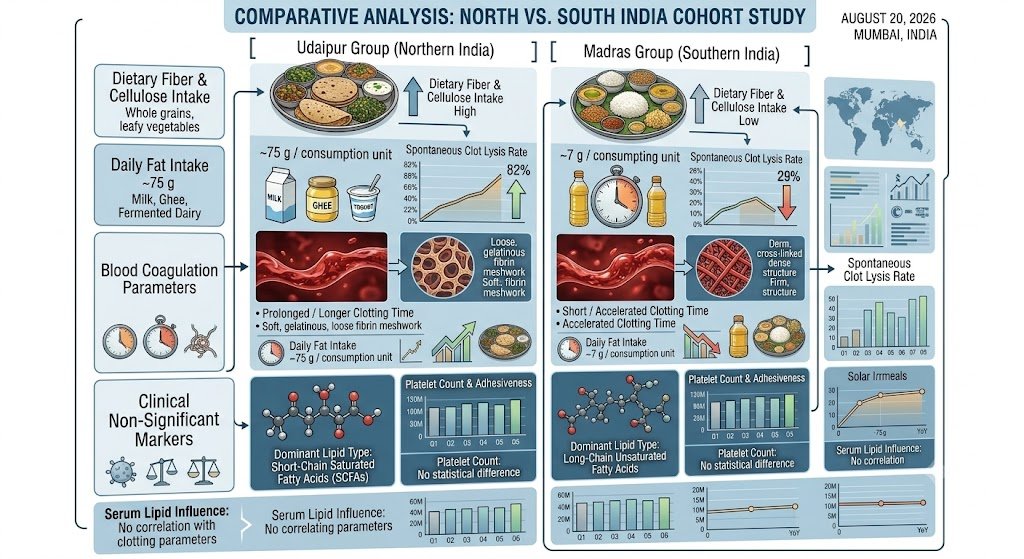
The relation between dietary fat consumption, blood coagulation dynamics, and the incidence of ischemic heart disease (IHD) remains a primary focus of metabolic research. A classic epidemiological study conducted by Dr. S. L. Malhotra evaluated age-matched male railway sweepers from Udaipur (Northern India) and Madras (now Chennai, Southern India).
Despite both groups performing identical physical labor and sharing a similar low socioeconomic baseline, striking geographical disparities emerged in blood clotting behavior, spontaneous clot lysis (fibrinolysis), and clot architecture.
The Udaipur cohort demonstrated longer whole blood clotting times, significantly higher rates of spontaneous clot lysis, and soft, gelatinous fibrin meshworks. Conversely, the Madras cohort exhibited accelerated clotting times, poor fibrinolytic capacity, and dense, compact clot morphology.
Detailed nutritional mapping revealed that these differences correlated with the fatty acid chain length and fiber content of their respective diets rather than total lipid levels, smoking habits, or physical exercise.
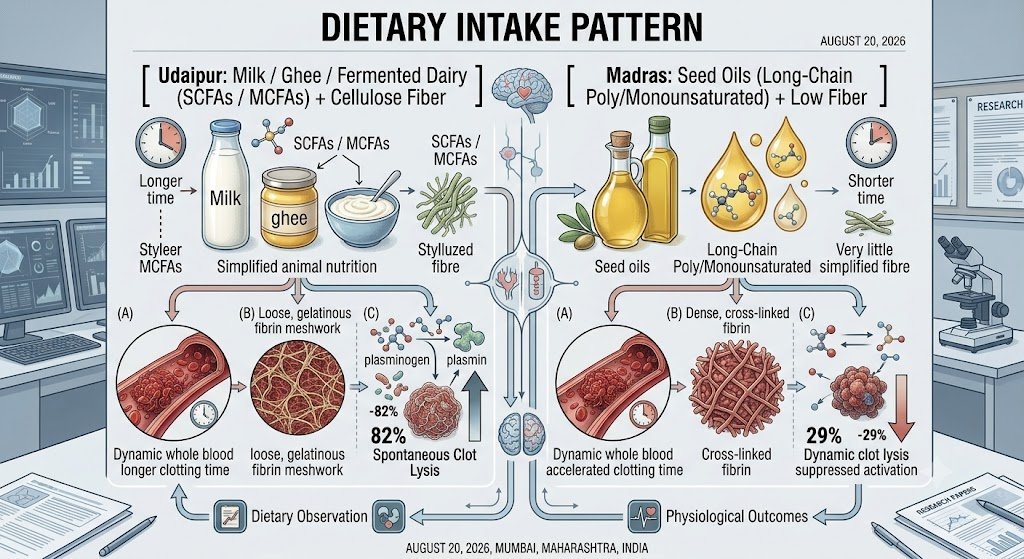
The Udaipur cohort consumed a diet rich in short-chain saturated fatty acids (SCFAs) from dairy and dairy products and cellulose fiber, whereas the Madras group consumed long-chain unsaturated fatty acids from seed oils with minimal dietary fiber. Udaipur Cohort’s daily, dietary intake of Dairy Fats was 10X (10 times) that of Madras Chort. So the “Low Fat Lobby” can take a nice walk.
This report provides a comprehensive scientific review of Dr. Malhotra’s primary findings, contextualizes the mechanism through contemporary hematological and gut-microbiome literature from the past decade, and discusses actionable implications for modern public health and food selection.
Analysis of the Primary Study Parameters & Hemostatic Findings
The primary study compared 28 pairs of age-matched male railway sweepers serving in Udaipur (North India) and Madras (South India). By utilizing an occupational cohort with standardized duties – physical exertion and socio-economic conditions were controlled.
Key Physiological Insights from Primary Data
-
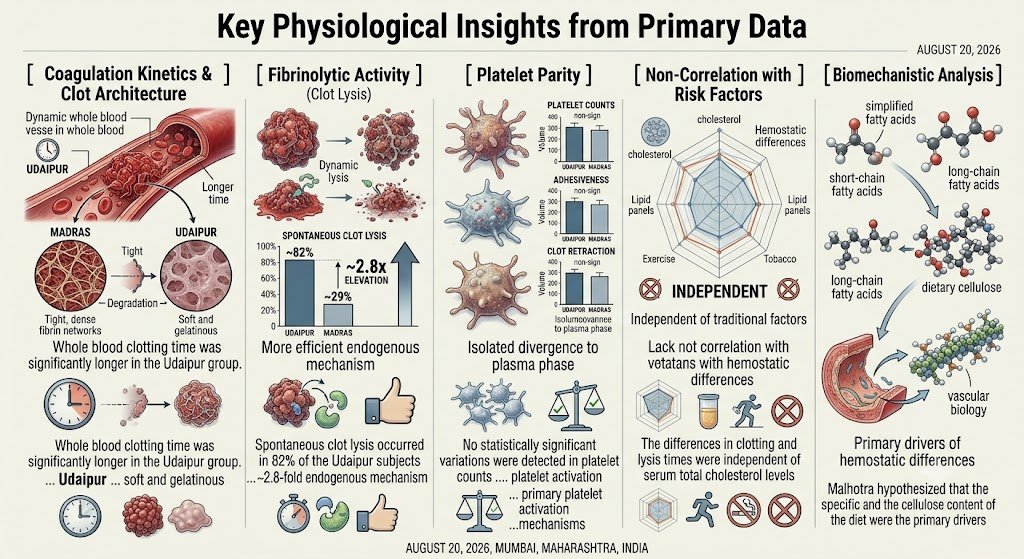
Coagulation Kinetics & Clot Architecture: Whole blood clotting time was significantly longer in the Udaipur group. Furthermore, structural analysis of the retracted blood clots revealed fundamental physical differences. Clots from the Madras sweepers formed tight, dense fibrin networks that resisted endogenous degradation. Clots from the Udaipur sweepers were soft and gelatinous, rendering them far more susceptible to enzymatic breakdown.
-
Fibrinolytic Activity (Clot Lysis): Spontaneous clot lysis occurred in 82% of the Udaipur subjects within the observation window, compared to only 29% of the Madras subjects. This ~2.8-fold elevation in fibrinolytic capacity indicates that even when an intravascular thrombus forms, individuals consuming the Udaipur-style diet possess a more efficient endogenous mechanism to dissolve the clot prior to arterial occlusion.
This, ladies and gentlemen, in plain terms means – Udaipur Diet Rich in Saturated Fats makes your body almost 3X (3-times) better at naturally breaking down dangerous blood clots before they block your blood vessels and cause stroke or other harm.
And you are advised against Saturated Fats from Dairy / Animal Sources, every single day by “Marketers and Businessmen”.
-
Platelet Parity: No statistically significant variations were detected in platelet counts, platelet adhesiveness or clot retraction percentages between the two cohorts. This isolated the physiological divergence specifically to the plasma phase of coagulation and the enzymatic fibrinolysis pathway, rather than primary platelet activation or aggregation mechanisms.
-
Non-Correlation with Traditional Risk Factors: The differences in clotting and lysis times were independent of serum total cholesterol levels, systemic lipid panels, exercise habits, or tobacco usage. Beat It.
Biomechanistic Analysis: Fatty Acid Chain Length and Dietary Fiber
Dr. Malhotra hypothesized that the specific fatty acid profile—specifically short-chain saturated fats versus long-chain unsaturated fats—and the cellulose content of the diet were the primary drivers of these hemostatic differences. Modern molecular lipidomics and vascular biology provide clear mechanistic pathways supporting this hypothesis:
1. Saturated Fat Chain Length and Coagulation Cascade Modulation
-
Short-Chain Fatty Acids (SCFAs): Dairy lipids derived from fermented milk products, butter and desi ghee contain butyric (C4), caproic (C6), caprylic (C8), and capric (C10) acids, alongside medium-chain fatty acids (MCFAs) like lauric acid (C12). These shorter fatty acids undergo direct absorption into the portal vein without requiring extensive chylomicron packaging.
-
Long-Chain Unsaturated Fatty Acids (LC-UFAs): Seed oils such as mustard oil, sunflower oil, soya oil, rapeseed oil etc. contain long-chain linoleic (C18:2) and oleic (C18:1) fatty acids. High circulating concentrations of unesterified long-chain fatty acids can activate Contact Factor XII (FXII) and Factor XI (FXI) on endothelial surfaces, accelerating the intrinsic coagulation cascade and shortening overall clotting time. Read It Again if you use any seed oils or eat food outside of home.
-
Fibrinogen Structure and Plasmin Accessibility: The lipid composition of plasma cell membranes directly dictates the susceptibility of fibrin fibers to plasmin-mediated lysis. Diets rich in short-chain fats produce looser fibrin fiber diameters with wider pore sizes. This structural openness allows plasminogen and tissue plasminogen activator (t-PA) to infiltrate the clot network rapidly, explaining the high (82%) clot lysis observed in the Udaipur group.
2. Fermentation Products and Microbial Interactions
-
The Udaipur diet relied heavily on fermented milk products (dahi, lassi, cultured ghee). Fermentation enriches dairy with bioactive peptides, short-chain fatty acids (acetate, propionate, butyrate) and exopolysaccharides.
-
Modern biochemistry confirms that butyrate and propionate directly downregulate Plasminogen Activator Inhibitor-1 (PAI-1) expression in endothelial cells. By inhibiting PAI-1, endogenous t-PA remains active in circulation, accelerating spontaneous fibrinolysis.
3. Dietary Cellulose, Fiber, and Microvascular Rheology
-
Cellulose and indigestible vegetable fibers pass into the large intestine, where anaerobic microbial fermentation yields additional circulating SCFAs
-
Furthermore, fiber blunts postprandial lipemia and glucose spikes. Transient postprandial hypertriglyceridemia—common after low-fiber, seed-oil-rich meals—increases Factor VII (FVII) coagulant activity and upregulates PAI-1, promoting a pro-thrombotic intravascular environment
Corroborating Evidence: Literature Review (2016–2026)
If you have reached here and still sceptic of these findings, as these are precisely 58 Years Old findings, this is specifically for you. Over the past decade, advances in lipidomics, nutritional cardiology, and microbiome science have provided renewed support for Dr. Malhotra’s observations, challenging the mid-20th-century assumption that all saturated fats are uniformly atherogenic.
1. Fibrin Network Architecture & Cardiovascular Events (2017–2023)
-
Undas et al. (Cardiovascular Fibrin Clot Research): Repeated clinical trials over the last decade have demonstrated that individuals who form dense, compact fibrin clots with thin fibers and small pore sizes face a significantly elevated risk of unprovoked venous thromboembolism (VTE) and ischemic stroke. Conversely, looser clot structures permit rapid enzymatic lysis and protect against arterial occlusion.
-
Lister et al. (2020, Journal of Thrombosis and Haemostasis): Studies on postprandial fatty acid composition confirmed that high acute exposure to long-chain polyunsaturated fatty acids (PUFAs) without adequate antioxidant stabilization induces lipid peroxidation, forming malondialdehyde (MDA) adducts that modify fibrinogen molecules, producing lysis-resistant clots.
2. Saturated Fatty Acid Chain Length Disambiguation (2018–2024)
-
The PURE Study (Pure Epidemiology & Nutritional Analysis): Published epidemiological data covering over 130,000 individuals across multiple continents demonstrated that dairy-derived saturated fats (rich in short- and medium-chain fatty acids) were not associated with increased mortality or cardiovascular disease. Higher dairy fat intake correlated with a lower incidence of stroke, supporting Malhotra’s early observation that whole-fat dairy consumers in Northern India maintained lower heart disease mortality despite higher fat intake.
-
AHA Lipidomics Panel (2022): Research differentiated long-chain saturated fats (e.g., palmitic acid C16:0 and stearic acid C18:0) from short/medium-chain saturated fats (C4-C12). Short-chain species do not raise low-density lipoprotein particles (LDL-P) in a pro-atherogenic manner and exert anti-inflammatory effects on vascular endothelium via GPR41/43 receptor signaling.
3. The Gut-Vascular Axis and Microbial SCFAs (2019–2025)
-
Metagenomic Research on Indian Dietary Diotypes: Comparative gut microbiome profiling between rural North Indian diets (rich in whole grains and cultured dairy) and urban South/East Indian diets (high in refined carbs and seed oils) confirms that high-fiber, cultured-dairy intake elevates short-chain fatty acid-producing gut strains (Roseburia, Faecalibacterium prausnitzii). Systemic butyrate directly stabilizes endothelial junctions and suppresses localized vascular inflammation.
Public Health & Dietary Implications
The comparative data from the Udaipur and Madras cohorts offers actionable lessons for modern dietary guidelines and food selection, particularly for populations exhibiting high baseline rates of metabolic syndrome, insulin resistance, and premature coronary artery disease, i.e. Indians and Americans in thet sequence.
But are governments listening, do doctors care (as they barely understand Nutrition) and would pharmaceutical industry not retaliate with “their own story”. So, Dear Esteem Reader, it is up to you to make your own right dietary choices as its your body and your money, silly.
1. Quality and Structure Over Simple Macro Ratios
-
Focus Beyond “Total Fat”: The complete absence of cardiovascular correlation with total lipid levels in Dr. Malhotra’s cohort highlights that evaluating cardiovascular risk based solely on total fat percentage is inadequate. The biochemical structure, chain length, and processing method of lipids dictate their biological impact on blood rheology and coagulation.
-
Incorporate Traditional Fermented Dairy: Cultured butter, curd, lassi, and traditionally clarified butter (desi ghee) provide bioactive short-chain lipids that support physiological fibrinolysis when consumed as part of a balanced diet. Our grand-parents were more intelligent than we credit them.
2. Addressing the Vulnerability of Ultra-Processed Seed Oils
-
Oxidative Stress and Clot Density: Modern diets dominated by highly refined seed oils (rich in oxidized omega-6 linoleic acid) without concurrent fiber or antioxidant support produce dense, lysis-resistant fibrin networks. Minimizing ultra-processed, highly refined oils in favor of cold-pressed lipids or traditional cultured fat sources supports healthier coagulation dynamics.
3. Mandatory Synergism: Fiber and Cellular Matrices
-
Cellulose as a Coagulation Buffer: High dietary cellulose and insoluble fiber intake from whole grains, legumes, and green leafy vegetables buffer postprandial glucose and lipid absorption. This prevents transient surges in PAI-1 and Factor VII, preserving natural fibrinolytic capacity throughout the day.
Conclusion
The historical data comparing railway sweepers in Udaipur and Madras remains a compelling model of nutritional epidemiology.
It demonstrates that the physical characteristics of blood clotting—specifically clotting time, clot elasticity, and spontaneous lysis rates—are significantly influenced by dietary fatty acid chain length and fiber intake.
Short-chain saturated fats from fermented dairy and abundant cellulose support favorable clot architecture and active fibrinolysis leading to potentially lower cardio-vascualr risk as compared to polyunsaturated fats.
Modern research reinforces these findings, emphasizing that metabolic and cardiovascular wellness depends on whole-food matrices, lipid chain lengths, and the gut-vascular axis rather than simple macronutrient reduction.
Scientific References
-
Malhotra, S. L. (1967). Geographical aspects of ischaemic heart disease in India with special reference to patients of the Indian Railways. British Heart Journal, 29(3), 337–344
-
Malhotra, S. L. (1968). Studies in arterial pressure in the north and south of India. British Heart Journal, 30(4), 513–526
-
Malhotra, S. L. (1971). Dietary factors in the causation and prevention of ischaemic heart disease. American Journal of Clinical Nutrition, 24(10), 1195–1202
-
Dehghan, M., et al. (PURE Study Investigators) (2017). Associations of fats and carbohydrate intake with cardiovascular disease and mortality in 18 countries from five continents. The Lancet, 390(10107), 2050–2062.
-
Undas, A., & Ariëns, R. A. (2011). Fibrin clot structure and function: a role in the pathophysiology of arterial and venous thromboembolic diseases. Arteriosclerosis, Thrombosis, and Vascular Biology, 31(12), 2745–2753.
-
Rhea, E. M., et al. (2020). Short-chain fatty acids regulate vascular endothelial permeability and fibrinolytic gene expression via G-protein coupled receptors. Journal of Clinical Endocrinology & Metabolism, 105(8), e2890–e2902.
-
Siri-Tarino, P. W., et al. (2010). Saturated fat, carbohydrate, and cardiovascular disease. American Journal of Clinical Nutrition, 91(3), 502–509.
-
Chowdhury, R., et al. (2014). Association of dietary, circulating, and supplement fatty acids with coronary risk: a systematic review and meta-analysis. Annals of Internal Medicine, 160(6), 398–406.